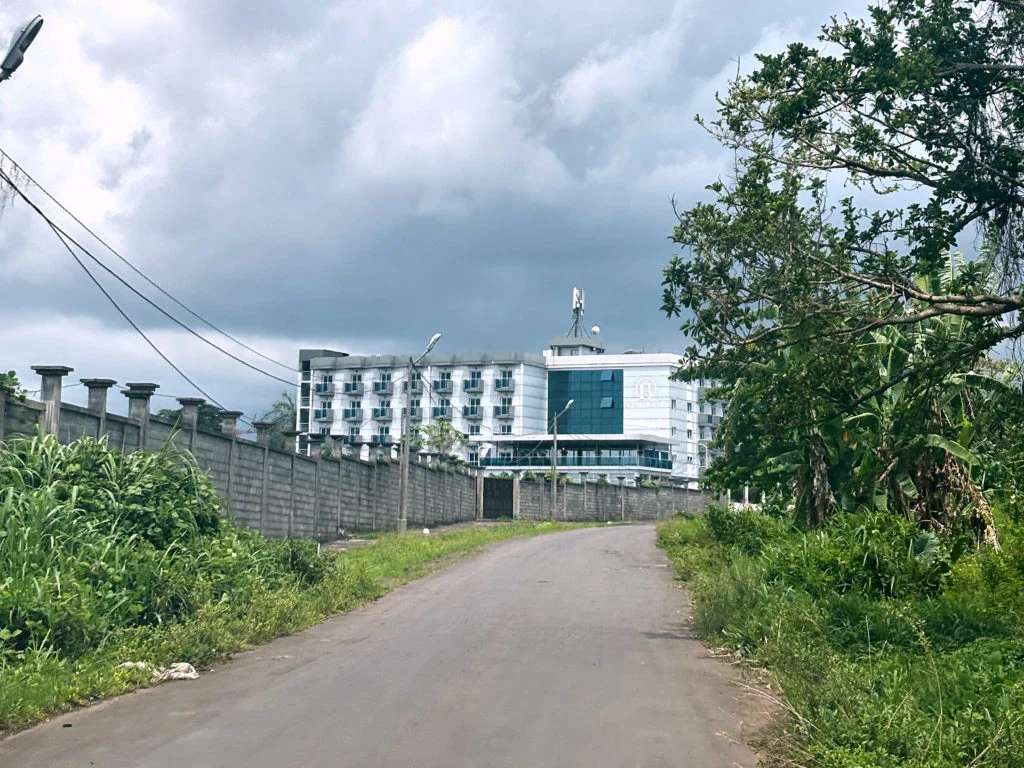
DAKAR, Senegal — In a quiet hotel on the tropical island of Bioko, far from the halls of power in Washington D.C., a group of 17 migrants is living through a nightmare that defies both legal precedent and basic humanitarian standards. Detained in a facility owned by the family of Equatorial Guinea’s long-standing President, Teodoro Obiang Nguema Mbasogo, these individuals—deported from the United States under opaque third-country agreements—now report they are being held in a building that has been repurposed as an impromptu quarantine site for suspected Ebola patients.
The situation, which has sparked outrage among international legal advocates, highlights the harrowing human cost of the United States’ controversial policy of "third-country" deportations. For the 17 detainees—hailing from nations including Angola, Mauritania, and Ethiopia—the hotel has become a prison where their legal rights are ignored and their physical safety is increasingly compromised.
The Ebola Crisis at the Doorstep
The primary cause for alarm among the detainees is the arrival of individuals exhibiting symptoms of the Ebola virus. According to testimonies from two of the migrants, who spoke on condition of anonymity for fear of retribution, medical personnel clad in full hazmat suits arrived at the hotel last week. They transported at least one male patient, suspected of having contracted the deadly virus, to a floor directly below where the migrants are being held.
"Things are getting worse every day," one detainee said in a distressed interview. "It’s very confusing. No one is coming to talk to us. No one is informing us of anything. The hygiene is unimaginable."
The fear escalated this past Sunday when, according to the same sources, a woman was also brought to the quarantine floor by staff who identified her as a suspected Ebola case. The detainees claim they were told by a doctor, speaking in English, to "be careful," yet they have received no masks, disinfectants, or instructions on how to protect themselves from potential exposure.
The geopolitical irony is stark: Equatorial Guinea, a nation in Central Africa, shares no border with the Democratic Republic of Congo, where a persistent Ebola outbreak has claimed over 600 lives. However, the use of the hotel as an isolation center—a role it also performed during the height of the COVID-19 pandemic—suggests that the facility is far from a secure or appropriate site for housing asylum seekers.
A Chronology of Confinement
The odyssey of these 17 migrants began in the United States, where each had previously received court orders that should have provided legal protection against removal to their home countries. Instead, they became part of a sweeping, often clandestine, U.S. immigration enforcement program.
- The U.S. Crackdown: Under the administration of Donald Trump, the U.S. implemented a series of secretive agreements with roughly eight African nations, including Equatorial Guinea. The strategy involved deporting individuals not to their countries of origin, but to third-party nations, effectively creating a legal "black hole" where asylum seekers could be held indefinitely.
- The $7.5 Million Deal: Reports indicate that the U.S. struck a $7.5 million agreement with the government of Equatorial Guinea to facilitate these transfers. Following this arrangement, the Obiang administration designated a family-owned hotel on Bioko island as the primary holding facility.
- The Legal Filing: Earlier this month, a coalition of international human rights lawyers took the drastic step of suing Equatorial Guinea before the African Union’s top human rights body. The suit alleges that the government is in flagrant violation of international law by detaining individuals who were under active U.S. court protections and by subjecting them to inhumane conditions.
- The Current Escalation: As of late this week, the situation has devolved from a matter of illegal detention to a potential public health emergency. With the introduction of suspected Ebola patients into the same complex, the detainees now face a life-threatening environment with zero access to adequate medical care or protective equipment.
The Legal and Ethical Labyrinth
Human rights advocates argue that the U.S. use of Equatorial Guinea as a holding pen is a cynical attempt to circumvent domestic asylum laws. By outsourcing detention to a country known for its systemic corruption and human rights abuses, the U.S. is effectively stripping these migrants of their ability to appeal their cases or seek legal representation.
"These individuals have orders from U.S. judges that should have protected them," said a representative from the lawyers’ coalition. "Instead, they have been rendered invisible, held in a facility where they are denied not just their freedom, but the most basic standards of medical care."
The legal challenges are twofold: first, the challenge to the legality of the U.S. third-country transfers; and second, the challenge to the treatment of the detainees within the host country. Lawyers argue that the U.S. government remains responsible for the safety of these individuals, even after they have been moved across international borders, given the contractual nature of the detention agreements.
Implications of U.S.-Equatorial Guinea Ties
The situation reveals the complex and often uncomfortable relationship between the United States and Equatorial Guinea. While U.S. officials and state department reports frequently cite Equatorial Guinea for its record of torturing and silencing political dissidents, the country remains a critical partner in energy, with U.S. corporations serving as the nation’s largest foreign investors.
The U.S. government also provides military training and financial support to the Equatoguinean government, creating a paradox where American taxpayer dollars support a regime that is actively violating the rights of migrants deported by the U.S. administration. This entrenchment makes it difficult for international observers to pressure President Obiang, who has ruled the country with an iron fist for decades and maintains total control over all facets of the state, including the hotel where the migrants are being held.
Looking Ahead: The Looming Crisis
The intersection of immigration policy and public health threats poses a massive question for both Washington and Malabo. If an Ebola outbreak were to occur within the detention facility, the consequences would be catastrophic. The detainees are already reporting that they have no access to cleaning supplies, face masks, or clear information, leaving them highly vulnerable.
For the international community, the case serves as a grim reminder of the consequences when migration policies are shielded from public scrutiny. As the lawyers continue their push through the African human rights system, the 17 migrants remain in the balance, trapped in a hotel that has become a symbol of the fragility of international law.
Without immediate intervention, the detainees fear that they will be left to suffer in silence, victims of a system that views their lives as secondary to the political goals of the nations that have effectively discarded them. The world watches, but for those in the hotel in Bioko, the silence from the international community remains as suffocating as the uncertainty of their future.