








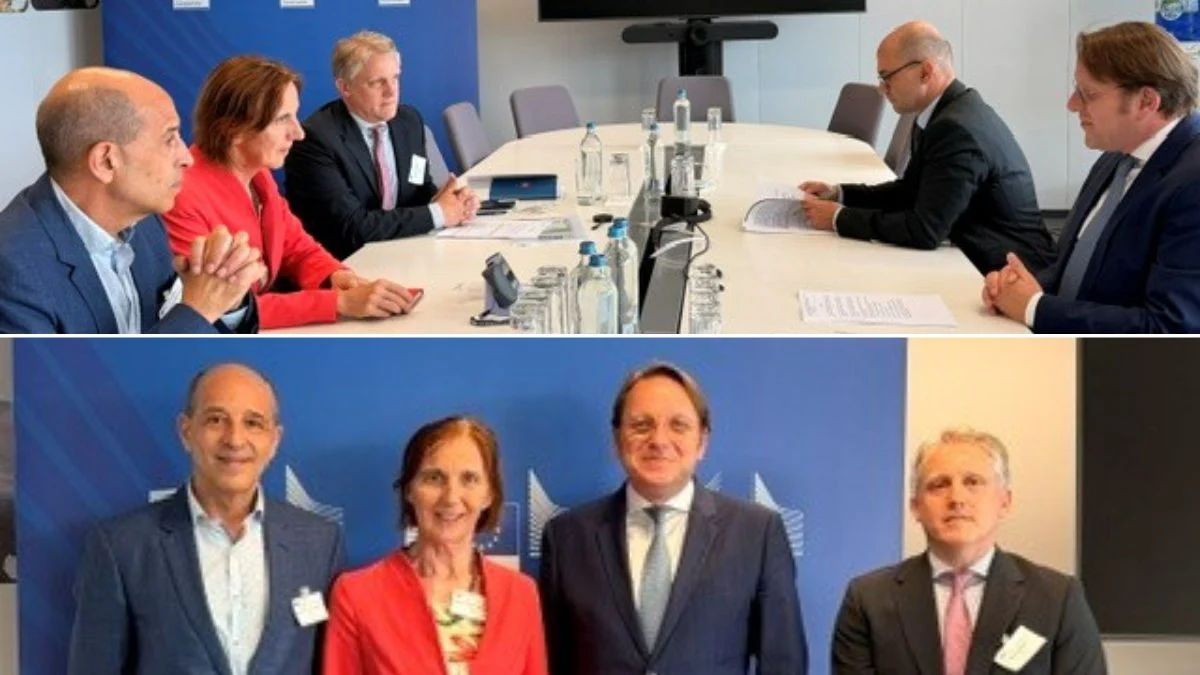
BRUSSELS – In a significant move toward elevating respiratory health on the European Union’s legislative agenda, a high-level delegation from the European Respiratory Society (ERS) convened this week with Olivér Várhelyi, the European Commissioner for Health and Animal Welfare. The meeting, held in the heart of the EU’s administrative hub, served as a critical platform for medical experts to demand a shift in how the bloc addresses the rising burden of lung diseases and environmental respiratory threats.
The delegation, comprised of ERS Secretary General Prof. Ildikó Horváth, President-Elect Dr. Marc Miravitlles, and Director of Advocacy and European Affairs Brian Ward, sought to bridge the gap between clinical reality and political policy. As chronic respiratory conditions continue to rank among the leading causes of morbidity and mortality across the continent, the ERS is pushing for a cohesive, long-term strategy that transcends national boundaries.
The Core Mandate: Main Facts and Strategic Objectives
The primary objective of the meeting was to impress upon Commissioner Várhelyi that respiratory health must be treated as a pillar of European public health security. The ERS representatives presented a comprehensive briefing outlining the urgent need for structural changes in how the EU approaches lung health, focusing on early intervention, sustainable funding for research, and robust environmental protections.
Defining the Crisis
Respiratory diseases—ranging from Chronic Obstructive Pulmonary Disease (COPD) and asthma to rare lung conditions and the long-term sequelae of infectious outbreaks—place an immense strain on European healthcare systems. Despite their prevalence, the ERS argues that these conditions have historically suffered from a lack of high-level political visibility compared to other non-communicable disease (NCD) areas, such as oncology or cardiology.
The ERS delegation highlighted that "respiratory health is the canary in the coal mine for European public health." By failing to prioritize the lungs, the EU is inadvertently failing to address the fundamental impacts of air pollution, smoking prevalence, and the consequences of an aging population.
A Chronology of Engagement: From Advocacy to the Commission
The meeting with Commissioner Várhelyi is the culmination of a multi-year effort by the ERS to institutionalize respiratory advocacy within the European Commission.
- Q3 2024 – Q1 2025: The ERS intensified its data collection efforts, publishing several white papers detailing the socio-economic impact of respiratory diseases on the European workforce. This data served as the foundational evidence for their advocacy efforts.
- Q2 2025: The Society launched the "Breathe Europe" initiative, a cross-disciplinary campaign aimed at engaging MEPs and health attachés on the necessity of integrated lung health programs.
- Early 2026: Following the appointment of new commission leadership, the ERS successfully secured a formal audience with Commissioner Várhelyi’s office, identifying key windows of opportunity to influence the upcoming legislative work programs.
- July 2, 2026: The formal summit in Brussels. The meeting focused on aligning the Society’s clinical expertise with the Commissioner’s mandate to improve health standards and welfare across all Member States.
The Data Behind the Demand: Why Policy Must Change
To justify their call for urgent political action, the ERS delegation brought forth compelling supporting data that underscores the urgency of the situation.
The Economic Toll
Respiratory diseases account for a staggering percentage of lost labor productivity in Europe. The ERS presented figures showing that direct healthcare costs, combined with indirect costs such as absenteeism and disability, run into hundreds of billions of euros annually. By failing to implement aggressive preventative measures—such as stricter air quality standards and better smoking cessation programs—the EU is sustaining unnecessary economic losses.
Environmental Drivers
A major focus of the discussion was the link between the European Green Deal and respiratory outcomes. The ERS provided evidence demonstrating that, while carbon neutrality is a noble goal, the immediate health benefits of reducing PM2.5 and nitrogen dioxide levels are often undervalued in legislative cost-benefit analyses. The Society is advocating for "Health in All Policies," a concept where health impact assessments become mandatory for all environmental legislation.
The Aging Demographic
With Europe’s population aging, the incidence of COPD and interstitial lung diseases is projected to rise significantly over the next two decades. The ERS experts emphasized that without a shift toward decentralized, community-based respiratory care, the current hospital-centric models will become unsustainable by 2040.
Official Responses and Perspectives
The atmosphere during the meeting was described by attendees as "constructive and focused." Commissioner Várhelyi, who oversees a broad portfolio, acknowledged the critical nature of the issues raised by the ERS.
The ERS Position
Prof. Ildikó Horváth noted following the meeting: "Our goal was to ensure the Commissioner understands that respiratory health is not merely a medical specialty—it is a societal necessity. We are asking for a roadmap that includes dedicated funding for lung health research and a firm commitment to clean air standards that protect the most vulnerable."
The Commissioner’s Outlook
While official readouts are standard, the Commissioner’s office expressed a willingness to incorporate respiratory health into the broader EU "Health Union" framework. The focus, according to initial reports, will be on better data collection and standardizing best practices across Member States. Commissioner Várhelyi emphasized the importance of ensuring that health policies remain "evidence-based and implementable," acknowledging that the expertise provided by the ERS is vital for shaping effective regulation.
Implications: The Road Ahead for European Respiratory Health
The meeting represents more than just a formal exchange; it signals a potential shift in the European Commission’s approach to respiratory care. The implications of this engagement are far-reaching for clinicians, patients, and policymakers alike.
1. Standardization of Care
One of the primary goals of the ERS is to reduce the health disparities between different Member States. Currently, a patient’s access to advanced respiratory diagnostics or novel therapies can vary drastically depending on their geography. The ERS is pushing for EU-wide clinical guidelines that ensure every citizen has access to a baseline standard of respiratory care.
2. Research and Innovation
The advocacy efforts are also aimed at securing Horizon Europe funding for respiratory research. The ERS argued that the "lung microbiome," personalized medicine in asthma, and the long-term impact of emerging environmental threats remain underfunded areas. By placing these on the Commissioner’s radar, the Society hopes to see future grant calls specifically targeting these critical knowledge gaps.
3. Policy Integration
The most significant long-term implication is the potential for respiratory health to be integrated into non-health sectors. By working with the Commissioner for Health and Animal Welfare, the ERS is creating a template for cross-departmental collaboration—linking agricultural standards, industrial emissions, and urban planning directly to lung health outcomes.
4. Patient Empowerment
Finally, the advocacy effort is a victory for patient advocacy groups. By bringing these issues to the highest level of European government, the ERS is providing a voice to the millions of Europeans living with chronic respiratory conditions, ensuring their needs are not sidelined in the face of competing political priorities.
Conclusion: A Call for Sustained Action
As the meeting concluded, the message from the ERS was clear: the time for incremental change has passed. The challenges posed by environmental change, aging populations, and the evolving landscape of respiratory disease require a bold, unified, and well-funded European response.
The ERS has pledged to continue its work in Brussels, maintaining a close dialogue with the Commissioner’s team to monitor progress on the topics discussed. For the medical community, the meeting served as a powerful reminder that their voices—when united and backed by rigorous data—have the potential to influence the highest levels of governance.
As the European Commission moves into the next phase of its legislative cycle, the efforts of the ERS will remain a critical touchstone for the future of respiratory health. The society remains steadfast in its mission: to ensure that every citizen in Europe has the fundamental right to breathe clean air and receive the best possible care for their respiratory health, regardless of where they live or their socioeconomic status.
The dialogue between the ERS and the European Commission is far from over; in fact, it may be the beginning of a new era of respiratory health policy in Europe. For now, the medical experts have done their part, laying the groundwork for a healthier, more resilient future. The next chapter belongs to the legislators—and the scientific community stands ready to hold them to their word.
For further information on the ERS’s ongoing advocacy initiatives and to view the detailed policy briefs presented to the Commission, visit the official ERS Advocacy portal.