










BUNIA, Democratic Republic of Congo — The humanitarian response to the most aggressive Ebola outbreak in recorded history is teetering on the brink of collapse. In the conflict-ridden province of Ituri, health authorities confirmed on Saturday that a surge of violence, combined with a demoralizing labor strike among frontline workers, has severely hampered efforts to contain the rapid spread of the Bundibugyo virus.
With the death toll climbing and transmission rates showing no signs of slowing, the intersection of community hostility and institutional neglect has created a "perfect storm" for the pathogen. As of July 18, 2026, health officials report 2,181 confirmed cases and 864 fatalities—numbers that experts warn are likely significant undercounts given the current inability to access remote transmission hot spots.
The Anatomy of a Crisis: Main Facts
The current outbreak is driven by the Bundibugyo strain of the Ebola virus, a rarer and more elusive iteration of the disease that complicates the standard containment playbook. Unlike previous outbreaks where vaccines or standardized experimental treatments were readily available, the current situation is characterized by a lack of approved pharmaceutical interventions.
The disease, which is transmitted through direct contact with infected bodily fluids—including blood, vomit, and semen—thrives in environments where traditional cultural practices and public health mandates collide. In Ituri, the epicenter of the crisis, local customs regarding death and burial—which often involve the physical washing and preparation of bodies by grieving families—have been strictly prohibited by health authorities. This restriction, while medically necessary, has become a primary flashpoint for the violence now plaguing the region.
A Chronology of Escalating Instability
The erosion of public trust and the subsequent rise in violence did not happen overnight. The following timeline outlines the rapid deterioration of the situation in Ituri:
- Early 2026: The Bundibugyo strain is identified in the region. Initial containment efforts are met with skepticism but generally allowed to proceed.
- May 2026: As the virus spreads, the government imposes strict "safe and dignified burial" protocols. Tensions begin to simmer as community leaders push back against the interference with traditional funeral rites.
- June 2026: The first reports of organized mob attacks on treatment centers emerge. Burial teams begin to report intimidation, with some members held captive by local groups.
- Early July 2026: Health workers, citing months of unpaid salaries and deteriorating security, initiate a region-wide strike. The logistical capacity of the response effort is halved overnight.
- July 15, 2026: A significant escalation occurs in the town of Nyakunde. An angry mob storms a hospital facility, forcing staff and patients to flee into the surrounding bush, leaving the center vulnerable and contaminated.
- July 18, 2026: Official authorities hold a press briefing in Bunia, confirming that at least a dozen major attacks on medical infrastructure have occurred in recent weeks, forcing a mass relocation of humanitarian personnel to the relatively safer provincial capital.
Supporting Data and the Burden of Conflict
The statistical reality of the Ituri outbreak is grim. Ituri accounts for nearly 90% of all recorded cases, turning the province into a massive, uncontrolled laboratory for the virus. The data indicates that the mortality rate remains stubbornly high, exacerbated by the fact that individuals who exhibit symptoms are increasingly avoiding formal medical centers for fear of being stigmatized or forcibly detained.
The "strike" factor is perhaps the most overlooked element of the crisis. Because many frontline workers—the very people tasked with contact tracing and sanitation—have not received pay, the surveillance network has largely evaporated. Without active case finding, the virus moves unchecked through rural villages, only coming to the attention of authorities once a cluster of deaths has already occurred.
Official Responses: A Fragile Strategy
During a briefing in Bunia, Pierre Akilimali, the incident manager for the Ebola response, painted a stark picture of the challenges facing his teams. "The attacks are not sporadic; they are becoming a systematic disruption," Akilimali stated. "When you threaten a burial team, you are not just hurting an individual; you are breaking the only chain of defense that keeps the virus from entering a home."
Dr. Adelard Lufongola, the operations manager, corroborated these claims, noting that teams have been held hostage in multiple health zones. "Our workers are being treated as the enemy," he said. "When they go to a cemetery to conduct a safe burial, they are met with hostility, not gratitude."
At the international level, the United Nations has expressed "deep concern." Stephane Dujarric, the U.N. spokesman, highlighted the logistical nightmare of providing aid when the security situation changes by the hour. The U.N. has confirmed that several humanitarian partners have been forced to temporarily relocate staff to Bunia, effectively abandoning the most vulnerable rural populations to the mercy of the outbreak.
Socio-Political Implications
The implications of this crisis extend far beyond the immediate medical concern. The collapse of the Ebola response threatens the long-term stability of the eastern Democratic Republic of Congo.
The Erosion of Trust
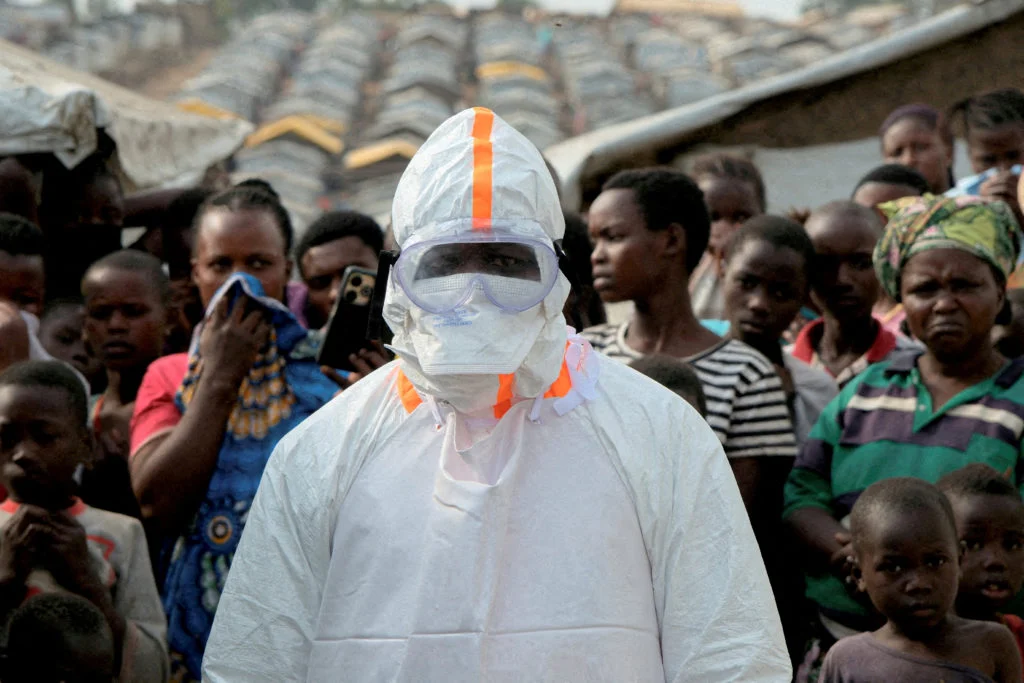
The conflict is rooted in a fundamental disconnect between international aid organizations and the local populace. For many in Ituri, the arrival of foreign health workers in personal protective equipment (PPE) is viewed with suspicion. Rumors circulate that these centers are not for healing, but for experimentation or the harvesting of organs. This paranoia, fueled by historical grievances against state and international actors, makes the job of public health messaging nearly impossible.
The "Empty Field" Phenomenon
Christophe Munyanderu, a prominent civil society leader in Irumu territory, warned that the current exodus of aid workers could be a point of no return. "If the international community pulls out because of the violence, the virus will not disappear," Munyanderu observed. "It will simply become the new status quo, killing quietly in the shadows while the world moves on to other crises."
Risk of Regional Spread
The proximity of these hot spots to international borders remains a primary concern for the World Health Organization (WHO). As displaced persons move to avoid both the virus and the violence, the risk of cross-border transmission increases exponentially. The combination of an uncontrolled viral outbreak and a volatile security environment is the exact recipe for a regional epidemic that could overwhelm the health systems of neighboring nations.
Looking Forward: A Path Out?
The path to curbing the current outbreak is narrow and fraught with danger. Experts argue that a purely medical solution—vaccines or drugs—will remain ineffective until the security situation is addressed. This requires a three-pronged approach:
- Community Engagement: Moving away from top-down directives and involving local tribal and religious leaders in the design of burial and treatment protocols.
- Economic Stabilization: Immediate disbursement of salaries to frontline workers to restore the functionality of the surveillance and response infrastructure.
- Security Guarantees: Engaging local community stakeholders to establish "safe corridors" for health workers, ensuring that medical teams are seen as partners rather than occupiers.
As the situation in Bunia continues to fluctuate, the international community remains on high alert. The death of 864 people is not merely a statistic; it is a testament to a system failing under the pressure of its own contradictions. Until the fear in the community is addressed with as much rigor as the virus in the laboratory, the struggle to contain the Bundibugyo strain will continue to be a race against time—one that, at present, the virus is winning.