











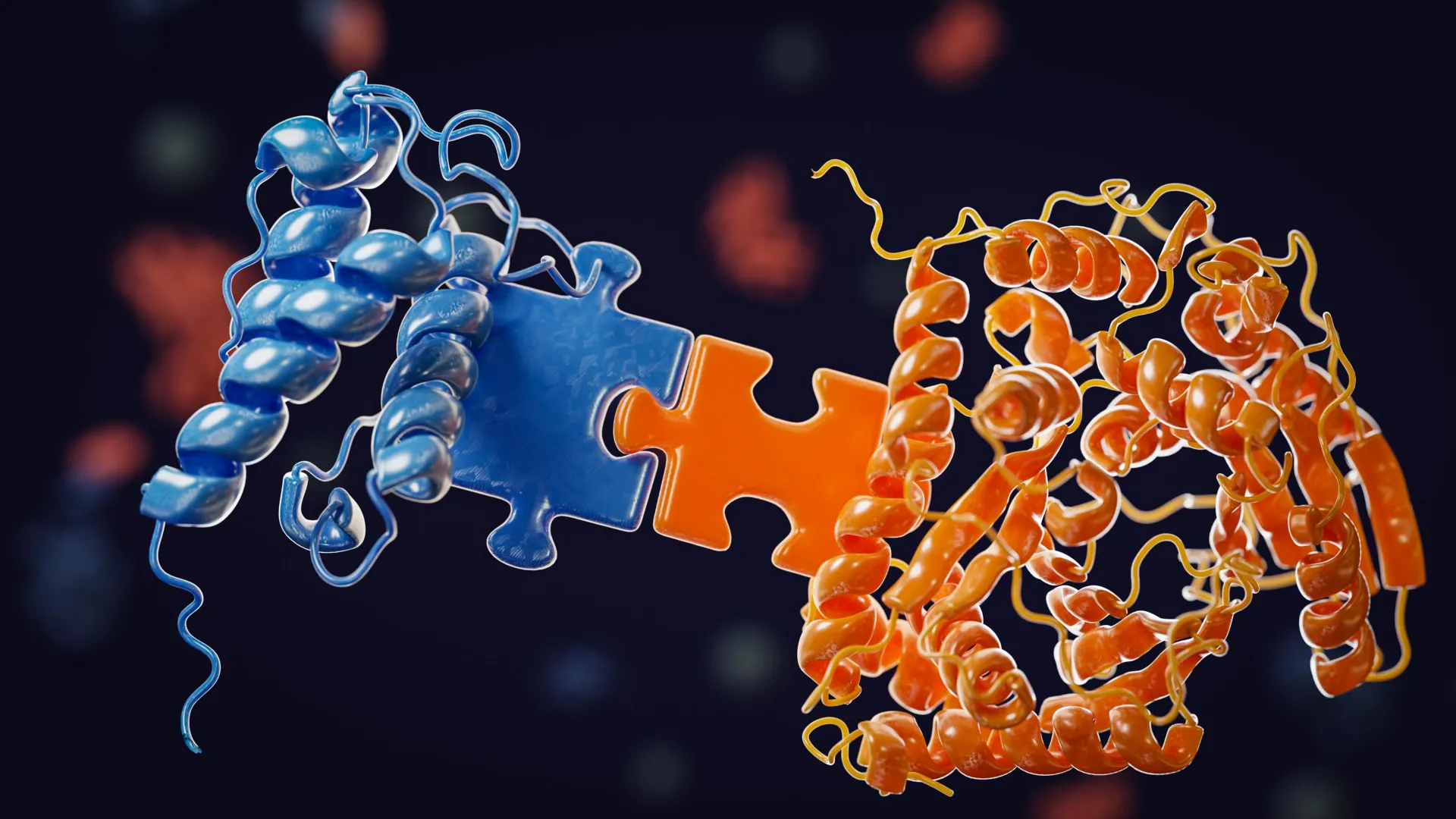
For decades, the pharmaceutical industry has looked toward the microscopic world for inspiration. Bacteria, the unassuming workhorses of the natural world, have long been known to manufacture potent anti-cancer compounds with an efficiency that human laboratories struggle to replicate. Among these are the depsipeptides—complex, cyclic molecules that include the FDA-approved drug Romidepsin (Istodax), used to treat aggressive blood cancers.
While scientists have long observed that bacteria can produce a diverse family of these related drug variants, the precise biological mechanism behind this "mix and match" manufacturing process remained a stubborn mystery. That mystery has finally been solved. In a landmark study published in Nature Communications, a team of researchers from the University of Warwick and Monash University has mapped the complex, elegant "communication network" that allows bacterial enzymes to collaborate in the synthesis of life-saving therapeutics.
This breakthrough not only solves a long-standing puzzle in biochemistry but also provides a blueprint for scientists to engineer bespoke, next-generation cancer treatments with unprecedented speed and precision.
The Mystery of the Missing Pathway
The pursuit of this knowledge began with the observation of FR-901375, a compound chemically related to Romidepsin. While its therapeutic potential was evident, the biological pathway that bacteria utilize to produce it had eluded researchers for years.
Scientists have long aimed to harness "combinatorial biosynthesis"—a process where bacterial enzymes are repurposed to create new drug variants. The theory was sound: if researchers could understand how bacteria swap and change components during drug synthesis, they could manipulate these pathways to create synthetic compounds that are more potent or less toxic than their natural counterparts.
However, progress was stalled by a fundamental lack of understanding. How do these massive protein complexes, known as PKS-NRPS hybrids, "know" when to add a specific component or swap a building block? Without a map of this internal communication, the dream of programmable drug synthesis remained out of reach.
Chronology of a Breakthrough: From Observation to Insight
The road to this discovery was paved with a multidisciplinary approach, blending structural biology, biochemistry, genetics, and advanced computational modeling.
The Era of Curiosity (1980s–2000s)
Researchers identified the potent biological activity of depsipeptides like Romidepsin and FR-901375. While their clinical utility was clear, the "black box" of their production remained closed. Chemists could synthesize these drugs in a lab, but the processes were often costly, inefficient, and lacked the flexibility to create the diverse libraries of variants needed for clinical trials.
The Decoding Phase (2010s–2023)
The collaborative team, led by Dr. Munro Passmore and Professor Greg Challis, began to focus on the modular nature of the bacterial enzymes. They hypothesized that the enzymes were not working in isolation but were part of a highly coordinated assembly line. By applying structural biology techniques to view these protein complexes at an atomic level, the team began to identify the "connectors."
The "Aha!" Moment (2024)
The breakthrough occurred when the team successfully mapped the "docking domains." These small molecular regions act as bridges between the core drug-building machinery and the peripheral enzymes. They discovered that these domains share a conserved connection point, allowing them to interact with multiple enzyme partners. This was the key: the bacteria weren’t using fixed assembly lines; they were using a modular system that allowed for rapid, precise reconfigurations.
Supporting Data: How Nature Builds Molecules
The sophistication of the bacterial manufacturing system lies in its economy. The production of complex depsipeptides is managed by massive protein complexes known as PKS-NRPS hybrids. These systems combine the activities of polyketide synthase (PKS) and nonribosomal peptide synthetase (NRPS).
The Role of Docking Domains
The study identified that docking domains are the linchpins of this system. They facilitate the transfer of intermediate products between different parts of the protein machinery. Because these docking domains are flexible and share a common structural language, the bacteria can "swap" different enzymes into the production line. This allows the organism to generate a variety of related molecules—each with slight structural differences—while maintaining the rigorous precision required for the compound to remain biologically active.
The Evolution of Drug Synthesis
The research also offers a window into the evolutionary history of these pathways. The team concluded that the newly identified compound, FR-901375, likely emerged from a precursor pathway through gene duplication and recombination. Over millions of years, these bacteria refined their internal manufacturing systems, essentially "teaching" themselves how to diversify their chemical output to adapt to environmental pressures. By identifying this evolutionary logic, the researchers have effectively reverse-engineered a process that nature spent eons perfecting.
Official Perspectives: Translating Science into Medicine
The implications of this study are profound, marking a transition from descriptive science to proactive engineering.
Dr. Munro Passmore, the study’s first author and a Research Fellow in the Department of Chemistry at the University of Warwick, emphasized the significance of the "code" they have cracked. "For decades, we’ve known that bacteria can naturally produce multiple versions of powerful anti-cancer drugs, yet we had no idea how they achieved this," said Dr. Passmore. "This work finally cracks that code. We’ve identified how the different enzymes communicate and cooperate to produce these drug variants, something that has eluded researchers because the system is so elegantly economical. It’s the breakthrough we needed to actually engineer these drugs ourselves."
Professor Greg Challis, Monash Warwick Alliance Professor of Sustainable Chemistry, frames the discovery as a shift in strategy for the pharmaceutical industry. "This research gives us a blueprint to do what nature does, but better and faster," Challis noted. "By reverse-engineering nature’s evolutionary logic, we can now design synthetic pathways that generate new anti-cancer drug candidates with properties optimized for clinical use, such as superior potency, improved selectivity, and fewer side effects."
He added, "Our immediate goal is to build an expanded library of candidates for various cancers where new treatments are urgently needed. This discovery is moving us from understanding how the systems work to building new ones."
Implications for Future Cancer Therapies
The primary focus of this work centers on HDAC inhibitors—a class of medicines that block histone deacetylases. These enzymes regulate gene expression, and when they function abnormally, they can drive the development of cancer. By inhibiting these enzymes, Romidepsin and related compounds can effectively "turn off" the genes that allow cancer cells to proliferate.
Expanding the Library
The ability to manipulate these pathways means that researchers are no longer limited to the variants that nature has already provided. By tweaking the docking domains and the associated enzymes, scientists can potentially create "designer" molecules that target specific cancer cell types with greater precision, minimizing the collateral damage to healthy cells—a common pitfall of existing chemotherapy.
Speeding Up Drug Development
Currently, the process of developing a new drug candidate from discovery to clinical trial takes years of labor-intensive synthesis. The ability to program bacteria to manufacture these compounds via combinatorial biosynthesis could drastically shorten this timeline. By using bacteria as living "bioreactors," researchers can generate hundreds of variations of a compound in a fraction of the time it would take to synthesize them using traditional chemical methods.
A New Frontier in Sustainable Chemistry
Beyond oncology, the implications of this discovery could ripple through other areas of medicine. If researchers can successfully harness these docking domains to create custom depsipeptides, the same principles could theoretically be applied to the production of antibiotics, antivirals, and other complex pharmaceutical products. This represents a major leap forward for sustainable chemistry, moving toward a future where drugs are grown rather than manufactured in energy-intensive, solvent-heavy chemical plants.
Conclusion: The Path Forward
The research conducted by the University of Warwick and Monash University represents a fundamental shift in our understanding of molecular biology. By uncovering the "molecular language" of bacterial communication, the team has turned a page in the history of drug discovery.
As the scientific community begins to apply these findings, the focus will turn to the creation of a vast library of optimized anti-cancer compounds. For patients suffering from treatment-resistant cancers, this discovery provides a tangible hope: a future where the next generation of life-saving medicines is not just discovered, but intentionally engineered with the wisdom of the natural world and the precision of modern science. The "mix and match" strategy of bacteria, once a biological enigma, is now the most promising tool in the arsenal of modern oncology.