



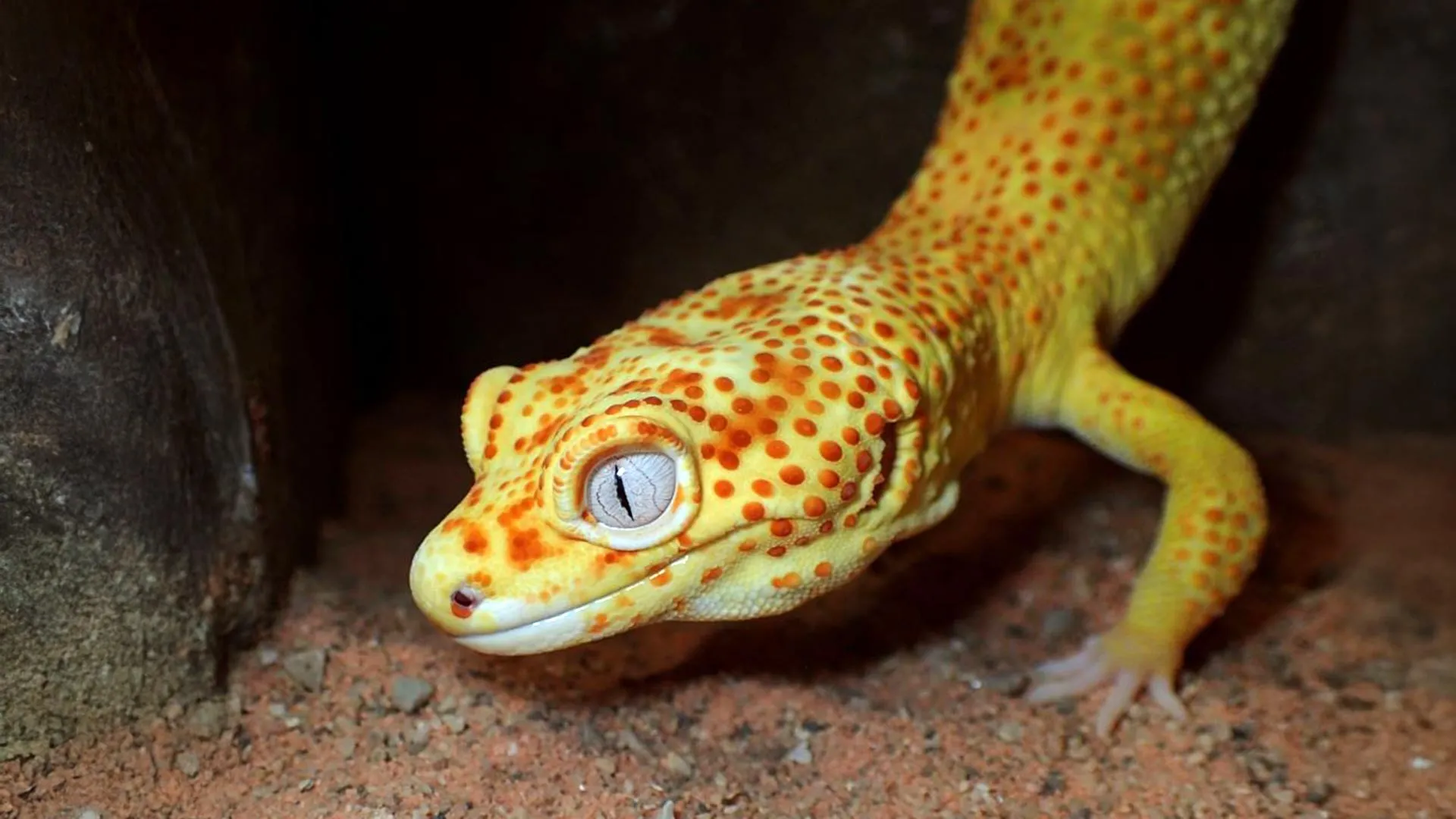
In the quiet, meticulously climate-controlled terrariums of a research facility, a small, vibrant reptile with a pattern of brilliant white and yellow scales is doing something that has sent ripples through the medical community. The "lemon frost" leopard gecko, a creature prized by reptile enthusiasts for its striking appearance, is now at the center of a groundbreaking scientific investigation. Researchers have discovered that this specific color morph possesses a tragic genetic vulnerability: roughly 80% of these geckos develop aggressive, metastasizing tumors early in their lives.
While this is a grim reality for the individual animal, it represents a potential "Rosetta Stone" for oncology. A new study, led by the University of Nottingham and published in the journal BMC Biology, suggests that these geckos may serve as an invaluable new model for understanding the complex mechanisms of tumor formation, evolution, and metastasis.
The Main Facts: A Natural Laboratory for Oncology
The central premise of the research is that nature has already provided what scientists often spend years trying to replicate in a lab: a high-frequency, naturally occurring cancer model. Unlike traditional laboratory mice, which often require scientists to artificially induce tumor growth through chemical or genetic manipulation, the lemon frost gecko develops its tumors spontaneously.
The study, spearheaded by Dr. Ylenia Chiari of the University of Nottingham’s School of Life Sciences, utilized whole-genome sequencing to map the genetic landscape of these tumors. By comparing the DNA of cancerous tissue with healthy cells from the same animals, the team identified a recurring set of genetic mutations. Most notably, many of these mutations map onto the same biological pathways that drive cancer in humans. This suggests that the fundamental "blueprints" of cellular corruption are conserved across vast evolutionary distances, making the gecko a high-fidelity surrogate for studying the disease.
Chronology of a Discovery
The emergence of the lemon frost gecko is a story of human intervention meeting biological consequence. The morph did not evolve in the wild; it appeared as a result of a spontaneous genetic mutation within a large-scale selective breeding colony. Breeders, drawn to the animal’s unique, bright pigmentation, began isolating and propagating the trait.
However, the "lemon frost" phenomenon quickly revealed a dark side. As the population grew, breeders noted an alarming incidence of skin tumors—often described as "iridophoromas"—that were not merely localized but frequently aggressive and metastatic.
- Initial Observations (Pre-2015): Hobbyist breeders and veterinarians began reporting unusual, rapidly growing skin lesions on lemon frost geckos.
- Recognition of a Pattern: It became clear that the cancer was linked to the same genetic mutation responsible for the desired coloration.
- Academic Intervention: Recognizing the potential for medical research, an international team—including experts from the University of Birmingham, Marquette University, the University of Florida, and the University of Trieste—was assembled to conduct a formal genomic analysis.
- Genomic Breakthrough (2023-2024): The team successfully sequenced the gecko genome, identifying specific molecular pathways that explain why the lemon frost morph is so uniquely susceptible compared to other leopard geckos and reptiles.
Supporting Data: Decoding the Reptilian Genome
The research team, which included PhD researcher Brandon Hastings, Dr. Scott Glaberman, Dr. Tony Gamble, Dr. Robert Ossiboff, Virginia Gazziero, and Dr. Giulio Caravagna, employed sophisticated computational tools to analyze the gecko’s genomic data.
The analysis revealed that the genetic changes in the lemon frost gecko involve pathways related to cell cycle regulation, apoptosis (programmed cell death), and DNA repair—the very same mechanisms that falter in human cancer patients. The team adapted software typically used for human cancer diagnostics to parse the reptile’s genome, demonstrating that modern bioinformatics is a versatile tool capable of crossing the species barrier.
The data confirms that the tumors are not random; they follow a predictable trajectory of mutation and spread. By observing these tumors in real-time, scientists can gain insights into the "metastatic cascade"—the process by which cancer cells leave the primary tumor site and colonize other organs. Because these geckos develop cancer at a relatively early age, researchers can study the entire progression of the disease in a fraction of the time it would take to observe similar patterns in longer-lived mammals.
Official Responses and Expert Perspectives
The researchers emphasize that this study is not merely about reptiles; it is about the broader necessity of expanding our "model organisms."
Dr. Ylenia Chiari, the lead investigator, stated: "By studying why some animals are so susceptible to cancer while others are remarkably resistant, we hope to uncover the different ways species have evolved to deal with cancer. Specifically, this gecko could become an incredible model in cancer research because tumors appear naturally at a relatively early age. Together, these natural strategies could inspire new ways of preventing, detecting, and treating cancer in humans."
Brandon Hastings, reflecting on the methodology, noted: "Overall, our paper demonstrates the importance of looking across the tree of life in search of answers that are needed to better understand diseases that can have a profound impact on human life. Methodologically, it also highlights that the variety of genomic software programs developed to analyze human cancers can be adapted to provide meaningful insights in diverse organisms."
Dr. Scott Glaberman added a philosophical dimension to the findings, emphasizing the importance of biodiversity: "We often look inward to solve human problems, but every species has something to teach us. By studying both animals that are vulnerable to cancer and those that resist it, we have far greater power to understand the disease itself. This is one of the many reasons why protecting biodiversity is so important."
Implications: The Future of Cancer Research
The inclusion of the lemon frost gecko in the research canon marks a shift in how we approach the "war on cancer." For decades, the reliance on rodent models has provided immense value, but it has also limited the scope of our understanding. Rodents, while biologically similar to humans in many ways, do not always accurately represent the complexity of cancer progression in humans.
1. Complementing Traditional Models
The gecko does not replace the mouse model; rather, it complements it. By providing a secondary, distinct evolutionary branch to study, researchers can cross-reference their findings. If a therapeutic pathway shows promise in both a mammal and a reptile, the probability of it being a fundamental mechanism of cancer is significantly higher.
2. The Power of Biodiversity
This study serves as a stark reminder that extinction is not just a loss of beauty or ecological balance; it is a loss of potential medical knowledge. Every species that goes extinct takes with it millions of years of evolutionary trial-and-error in fighting, or succumbing to, disease. If we ignore the diversity of the animal kingdom, we limit our own ability to innovate.
3. Ethical Advancements
While using animals in research is always subject to strict ethical oversight, using a naturally occurring cancer model—where the animal is not subjected to invasive, induced procedures—offers a more "natural" observation environment. This allows for the study of how cancers evolve in an organism that is not being chemically forced into a disease state.
4. New Horizons in Diagnostics
The success of the research team in adapting human genomic software to the leopard gecko suggests that we are entering a new era of comparative oncology. As we sequence the genomes of more species, we may find other "sentinel" animals that can act as early warning systems for environmental carcinogens or provide unique insights into how we might block the spread of tumors in our own bodies.
Conclusion: A Small Creature with a Large Legacy
The lemon frost gecko is a cautionary tale for the pet trade and a beacon of hope for medical science. Its existence reminds us that genetic mutations, whether they result in a beautiful coat or a deadly tumor, are the fundamental mechanisms of life. By looking at these small, scaly creatures, researchers are piecing together a puzzle that has remained incomplete for far too long.
The collaboration between the University of Nottingham and its international partners is a testament to the power of interdisciplinary science. As we move forward, the "lemon frost" will likely become a cornerstone of future oncology, proving that the answers to some of our most complex medical mysteries may not be found in a high-tech lab, but in the vibrant, complex diversity of the natural world. Every tumor analyzed in these geckos brings us one step closer to decoding the disease that continues to challenge humanity, proving that even the smallest life forms can have an outsized impact on the future of medicine.