In a landmark achievement for synthetic biology and oncology, an international team of researchers has decoded the sophisticated "mix-and-match" mechanism bacteria use to manufacture complex anti-cancer drugs. This breakthrough, published in Nature Communications, solves a decades-old biological mystery and provides a definitive blueprint for scientists to engineer the next generation of potent, highly targeted cancer therapies.
For years, the pharmaceutical industry has looked toward the microscopic world—specifically the metabolic pathways of bacteria—as a goldmine for drug discovery. However, the elusive nature of how these organisms assemble complex molecules has long hampered progress. By identifying the precise "docking domains" that act as molecular connectors, researchers have moved from mere observation to active engineering, promising to accelerate the development of treatments for cancers that have historically resisted conventional therapies.
The Mystery of Combinatorial Biosynthesis
The core of the challenge lies in a process known as "combinatorial biosynthesis." Scientists have long observed that certain bacteria possess the ability to produce not just one, but a family of closely related anti-cancer compounds. Among these is Romidepsin (marketed as Istodax), an FDA-approved HDAC inhibitor used to treat T-cell lymphomas.
Despite the clinical success of Romidepsin, the biological "assembly line" responsible for its creation remained poorly understood. Researchers struggled to explain how bacterial enzymes coordinated their efforts to produce such structurally diverse yet functionally related molecules. Without understanding the "logic" governing these interactions, the potential to harness these pathways for human-made drugs remained largely theoretical.
The Role of PKS-NRPS Hybrids
The molecules in question, known as depsipeptides, are complex, cyclic structures built from amino acid building blocks and a conserved hydroxy acid pharmacophore. In nature, these are constructed by massive protein complexes called PKS-NRPS hybrids. These hybrids combine the activities of polyketide synthase (PKS) and nonribosomal peptide synthetase (NRPS) enzymes.
The new study confirms that these hybrids function like an automated, modular production line. The key to their efficiency—and their ability to generate variety—lies in their internal communication system.
Unlocking the Mechanism: Tiny Molecular Connectors
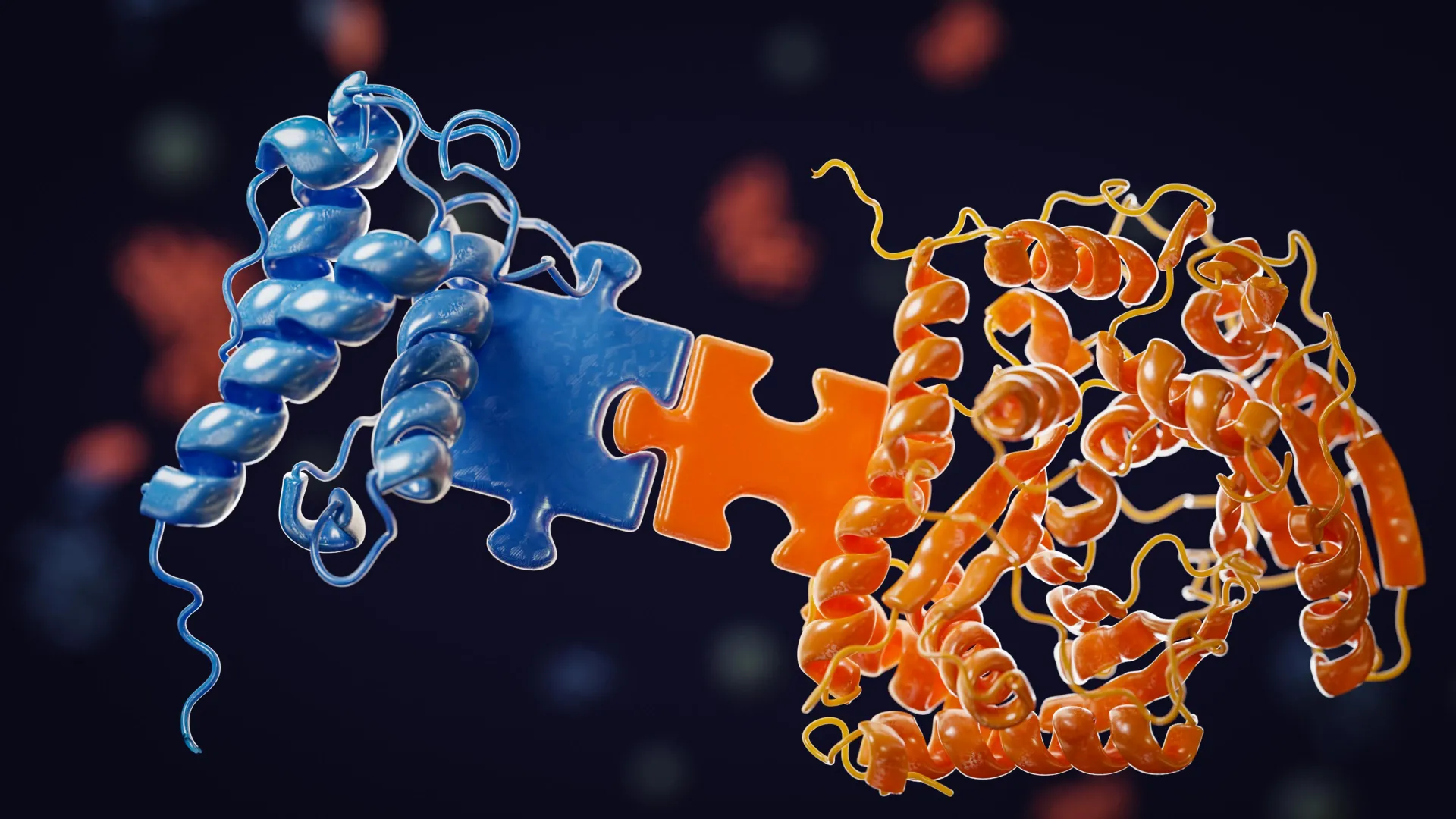
The research team, led by scientists from the University of Warwick and the Monash Warwick Alliance, discovered that the "secret sauce" behind this process is a set of small molecular regions known as "docking domains."
These domains function like biological adaptors. They serve as connectors between the core drug-building machinery and the specific enzymes responsible for adding various chemical components to the molecule. These docking domains share a highly conserved connection point, allowing them to interact with a variety of enzyme partners.
This flexible design allows the bacteria to produce a wide array of related molecules while maintaining the high level of precision required for the resulting compounds to remain biologically active. By "swapping out" certain enzymes at these docking points, the bacteria can naturally generate structural variants, effectively diversifying their chemical arsenal.
Chronology of Discovery: From Mystery to Blueprint
The path to this discovery was neither linear nor simple. It required a multi-decade effort to bridge the gap between observing a phenomenon and understanding its atomic architecture.
- 1990s – 2000s: Researchers identify the clinical efficacy of depsipeptides like Romidepsin and FR-901375. While the chemical structures are mapped, the biological "factory" producing them remains a "black box."
- 2010s: The rise of advanced genomic sequencing allows researchers to identify the gene clusters responsible for these drug-making pathways. However, the physical interactions between the resulting enzymes remain unobserved.
- 2020 – 2023: The research team integrates structural biology, biochemistry, and computational modeling. By visualizing the interaction between docking domains, they finally witness the "hand-off" mechanism where one enzyme passes its product to the next.
- 2024: The study is published in Nature Communications, confirming that the "mix-and-match" system can be replicated in a laboratory setting, effectively proving that the pathway can be engineered.
Official Perspectives: Translating Nature’s Logic
Dr. Munro Passmore, the study’s first author and a Research Fellow at the University of Warwick’s Department of Chemistry, views the findings as a fundamental shift in drug development.
"For decades, we’ve known that bacteria can naturally produce multiple versions of powerful anti-cancer drugs, yet we had no idea how they achieved this," Dr. Passmore explained. "This work finally cracks that code. We’ve identified how the different enzymes communicate and cooperate to produce these drug variants, something that has eluded researchers because the system is so elegantly economical. It’s the breakthrough we needed to actually engineer these drugs ourselves."
Professor Greg Challis, Monash Warwick Alliance Professor of Sustainable Chemistry, emphasizes the practical application of this research. "This research gives us a blueprint to do what nature does, but better and faster," Challis stated. "By reverse-engineering nature’s evolutionary logic, we can now design synthetic pathways that generate new anti-cancer drug candidates with properties optimized for clinical use, such as superior potency, improved selectivity, and fewer side effects."
He added that the immediate goal is to build an expanded library of candidates for various cancers that remain "unmet clinical needs." The transition from understanding the natural system to actively building new ones marks a paradigm shift in pharmaceutical design.
Implications for Future Oncology
The potential impact of this discovery extends far beyond the laboratory. By mastering the ability to engineer these PKS-NRPS pathways, scientists can now potentially create:
- Tailored Potency: By modifying the docking domains, researchers may be able to increase the binding affinity of drugs to specific cancer cell receptors.
- Reduced Side Effects: Improved selectivity means drugs can be engineered to target only cancerous cells, sparing healthy tissue and significantly reducing the debilitating side effects associated with current chemotherapy.
- Expanded Drug Libraries: The ability to generate vast arrays of related compounds will provide clinicians with more options when a patient develops resistance to a primary treatment.
- Faster Development Cycles: Instead of relying on slow, trial-and-error chemical synthesis, researchers can use the bacterial "assembly line" model to rapidly prototype new molecules.
Addressing the Missing Pieces
The study also sheds light on the evolutionary history of these systems. The researchers suggest that the drug-producing pathway for compounds like FR-901375 evolved through gene duplication and recombination, a process that allowed bacteria to iterate on successful molecular templates over millions of years. Understanding this evolutionary history provides a roadmap for "directed evolution"—a laboratory technique that accelerates these natural processes to create better medicines in a fraction of the time.
A New Era of Synthetic Biology
The synthesis of structural biology and computational modeling proved to be the decisive factor in this research. By simulating how docking domains interact, the team was able to validate their laboratory findings, creating a closed-loop system of discovery.
As we look toward the future, the ability to control these microscopic assembly lines offers a compelling alternative to traditional pharmaceutical manufacturing. It suggests a future where cancer drugs are not just discovered by chance in the soil, but are designed with the same precision and efficiency as computer software.
The work of Dr. Passmore, Professor Challis, and their colleagues represents a bridge between the elegance of natural evolution and the power of human ingenuity. By decoding the language of bacterial enzymes, they have provided the medical community with a new set of tools to confront one of humanity’s greatest health challenges. The "mix-and-match" era of cancer drug development has officially begun, and with it, the hope for more effective, personalized, and accessible treatments for patients worldwide.