





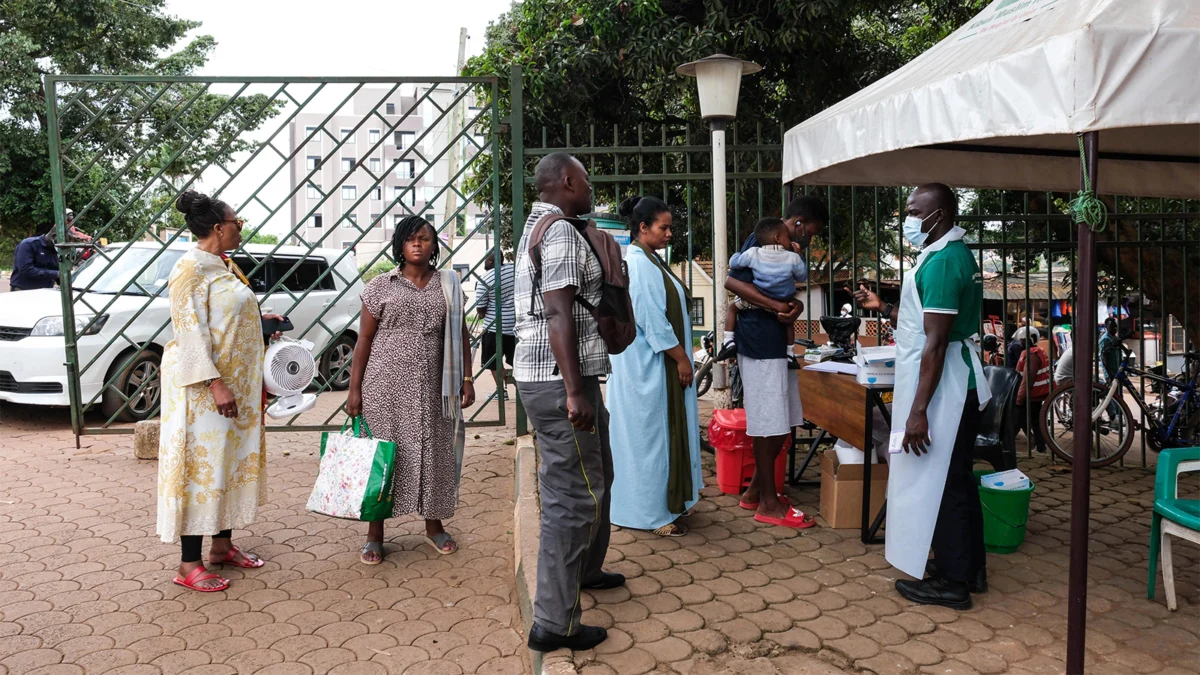
GENEVA/KINSHASA — The World Health Organization (WHO) officially designated the escalating outbreak of the Bundibugyo virus, a rare and lethal variant of Ebola, as a "Public Health Emergency of International Concern" (PHEIC) on Sunday. The declaration follows a period of rapid transmission that has already claimed 88 lives and seen more than 300 suspected cases across the Democratic Republic of the Congo (DRC) and neighboring Uganda.
While the WHO clarified that this event does not mirror the widespread, global pandemic nature of COVID-19—explicitly advising against the closure of international borders—the gravity of the situation is clear. The virus, characterized by its high mortality rate and ease of transmission through bodily fluids, has now surfaced in major urban centers, including the DRC’s capital, Kinshasa, and the conflict-ridden eastern city of Goma.
A Chronology of Silent Spread
The current crisis, while only formally acknowledged by health authorities in early May, appears to have been smoldering undetected for weeks. Dr. Jean Kaseya, Director-General of the Africa Centres for Disease Control and Prevention (Africa CDC), noted that the outbreak likely began as early as April.
The investigative timeline suggests the following progression:
- April 24: A 59-year-old male in the Ituri province of the DRC exhibits initial symptoms of the virus.
- April 27: The patient dies in an Ituri hospital, marking what investigators suspect to be the index case, though the origin of the initial transmission remains unidentified.
- May 5: Health authorities are alerted via social media reports of a cluster of mysterious, fatal illnesses. By this point, the Africa CDC estimates that at least 50 deaths had already occurred, highlighting a critical window of missed detection.
- May 9-10: Confirmation of the Bundibugyo variant is finalized, and initial containment efforts are deployed to Ituri.
- May 12: The WHO issues the PHEIC declaration, citing evidence of geographical spread, including confirmed cases in Kinshasa and the border city of Goma.
The delay in detection—nearly two weeks between the first suspected death and official intervention—has allowed the virus to traverse hundreds of kilometers, moving from the epicenter in Ituri to the country’s densely populated political and economic hubs.
The Bundibugyo Challenge: An Untreated Variant
The strain fueling this outbreak, the Bundibugyo virus, is one of the most enigmatic and dangerous members of the Ebolavirus genus. Unlike the Zaire strain, which has been the target of extensive vaccine development and therapeutic research, the Bundibugyo variant lacks any approved vaccines or specific antiviral treatments.
This is only the third time the Bundibugyo virus has been identified. It was first documented in the Bundibugyo district of Uganda in 2007, where it infected 149 people and resulted in 37 deaths. A second, smaller outbreak occurred in Isiro, DRC, in 2012, claiming 29 lives.
Health officials are currently operating in a "therapeutic vacuum." Dr. Richard Kitenge, chief of operations at the Centre des Opérations d’Urgence de Santé Publique in the DRC, acknowledged the difficulty of the situation but emphasized the country’s resilience. "We have managed enough epidemics in the country without treatment," Kitenge told the Associated Press. "The Zaire virus, which we managed, was also untreated in several epidemics, and not everyone died."
However, reliance on supportive care alone—rehydration and symptom management—places an immense burden on an already fragile healthcare system. With four healthcare workers among the reported fatalities, the risk to the very people tasked with containing the outbreak is critically high.
Geopolitical Conflict and Migration Obstacles
Containment efforts are being severely hampered by a complex "perfect storm" of environmental factors. The eastern DRC, particularly the Ituri and North Kivu provinces, has been a theater of protracted conflict for years. The resurgence of the Rwanda-backed M23 rebel group, alongside militants affiliated with the Islamic State, has created a landscape of insecurity that makes contact tracing nearly impossible.
"There are significant uncertainties to the true number of infected persons and geographic spread," said WHO Director-General Dr. Tedros Adhanom Ghebreyesus. The displacement of hundreds of thousands of civilians, driven by regional fighting and the constant movement of artisanal miners, ensures that the virus has a steady pipeline for transmission across borders into Uganda and South Sudan.
In Mongwalu, a mining town where many of the initial cases were concentrated, officials report that many infected individuals remain in the community, evading identification. This clandestine spread is exacerbated by the region’s high mobility, as traders and displaced families frequently traverse porous borders, often moving between provinces without formal health screenings.
Official Responses and Global Coordination
The international response has mobilized with urgency, though experts remain cautious about its efficacy. On Sunday, a task force of 35 experts from the WHO and the Congolese Ministry of Health arrived in Bunia, the capital of Ituri, accompanied by 7 tons of emergency medical supplies and protective equipment.
Despite the mobilization, the international community is under pressure to learn from the failures of 2024. During the mpox (monkeypox) outbreak in Africa, health experts criticized the global response as sluggish, noting that diagnostic tests, vaccines, and essential medicines failed to reach the frontlines in a timely manner.
The U.S. Centers for Disease Control and Prevention (CDC) has stepped up its involvement, though it maintains that the risk to the American public remains low. "We are working with other health officials to ensure the outbreak is managed and prevent further spread," said Dr. Satish Pillai, the manager of the CDC’s response efforts. The CDC is currently coordinating the "safe withdrawal" of a small number of American personnel stationed in high-risk areas.
Implications for Global Public Health
The declaration of a PHEIC is a powerful administrative tool designed to unlock donor funding and force international cooperation. However, the true challenge lies in the "on-the-ground" reality. The WHO’s decision to advise against border closures is rooted in the fear that strict travel restrictions will drive movement underground, making it even harder to track the virus.
The implications of this outbreak are three-fold:
- Epidemiological Risk: The confirmed presence of the virus in Kinshasa—a city of millions—and the high mortality rate suggest that the official death toll of 88 is likely a significant undercount. If the virus establishes a firm foothold in urban centers, the potential for an explosive, multi-regional epidemic increases exponentially.
- Health Infrastructure Strain: The requirement for specialized isolation wards, which do not currently exist in sufficient numbers, threatens to pull resources away from other essential health services in the DRC, potentially causing collateral damage to the region’s overall health outcomes.
- Trust and Communication: The failure to detect the outbreak for nearly three weeks highlights a gap in community-level surveillance. Building trust with local populations—many of whom are suspicious of government and international interference due to decades of conflict—is essential for successful vaccination, should a vaccine be developed, or for effective quarantine measures.
As the international community watches and waits, the situation in the DRC remains fluid. With a highly contagious virus, a lack of targeted vaccines, and a backdrop of regional warfare, the coming weeks will be a decisive test for global health architecture. For now, the priority remains the stabilization of the epicenter in Ituri and the rigorous screening of travelers moving out of North Kivu.
"The numbers we see today," warned an anonymous official close to the mission, "are only the tip of the iceberg. The real danger is what we haven’t seen yet."