For decades, the pharmaceutical industry has looked toward the microscopic world for inspiration. Bacteria, the unassuming workhorses of the natural world, possess an extraordinary ability: they synthesize complex, potent anti-cancer compounds with an elegance that synthetic chemists have long envied. Yet, a fundamental mystery has hindered progress—while we knew these bacteria produced a diverse family of drug variants, the biological "assembly line" responsible for this variability remained a "black box."
A groundbreaking study, recently published in Nature Communications, has finally cracked this code. By unraveling the communication protocols used by bacterial enzymes, researchers have identified the precise mechanism that allows these organisms to manufacture multiple versions of life-saving cancer drugs. This discovery does more than solve a long-standing scientific riddle; it provides a definitive blueprint for the next generation of oncology treatments.
The Mystery of Combinatorial Biosynthesis
The promise of "combinatorial biosynthesis"—the process of harnessing bacterial machinery to build custom drug variants—has been a cornerstone of modern biotechnology. The concept is seductive in its simplicity: if scientists can understand how nature "mixes and matches" building blocks to create diverse molecular structures, they could theoretically engineer customized therapies in the lab.
However, translating this concept into reality has been fraught with challenges. Researchers struggled to comprehend how bacterial enzymes coordinate their efforts. These biological machines do not act in isolation; they function as highly synchronized production lines. Without understanding the "handshake" protocol between these enzymes, attempts to modify them often resulted in non-functional compounds or stalled production.
The research team, led by scientists from the University of Warwick and the Monash Warwick Alliance, focused their efforts on a specific class of medicines known as HDAC (histone deacetylase) inhibitors. These drugs are vital in treating malignancies such as T-cell lymphomas. The study centered on a well-known, FDA-approved compound called Romidepsin (Istodax) and its elusive, chemically related cousin, FR-901375. While the latter has been known to science for decades, the biological pathway responsible for its creation had remained entirely obscured—until now.
A Chronology of Discovery
The journey to this discovery represents a multi-year effort that integrated various disciplines, from high-resolution structural biology to advanced computational modeling.
The Era of Ignorance
For the better part of thirty years, the existence of FR-901375 and similar depsipeptides—complex cyclic molecules assembled from amino acids—was acknowledged, but their genetic origins were a blank map. Researchers knew that bacteria used massive protein complexes called PKS-NRPS hybrids to synthesize these compounds, but the "logic" of these hybrids was a mystery.
The Breakthrough Approach
The research team took a multipronged approach to penetrate this mystery. By combining:
- Structural Biology: Visualizing the physical shape of the protein complexes.
- Biochemistry: Testing how individual components reacted in controlled environments.
- Genetics: Identifying the specific gene clusters responsible for the biosynthesis.
- Computational Modeling: Simulating the interactions between enzyme modules to predict their behavior.
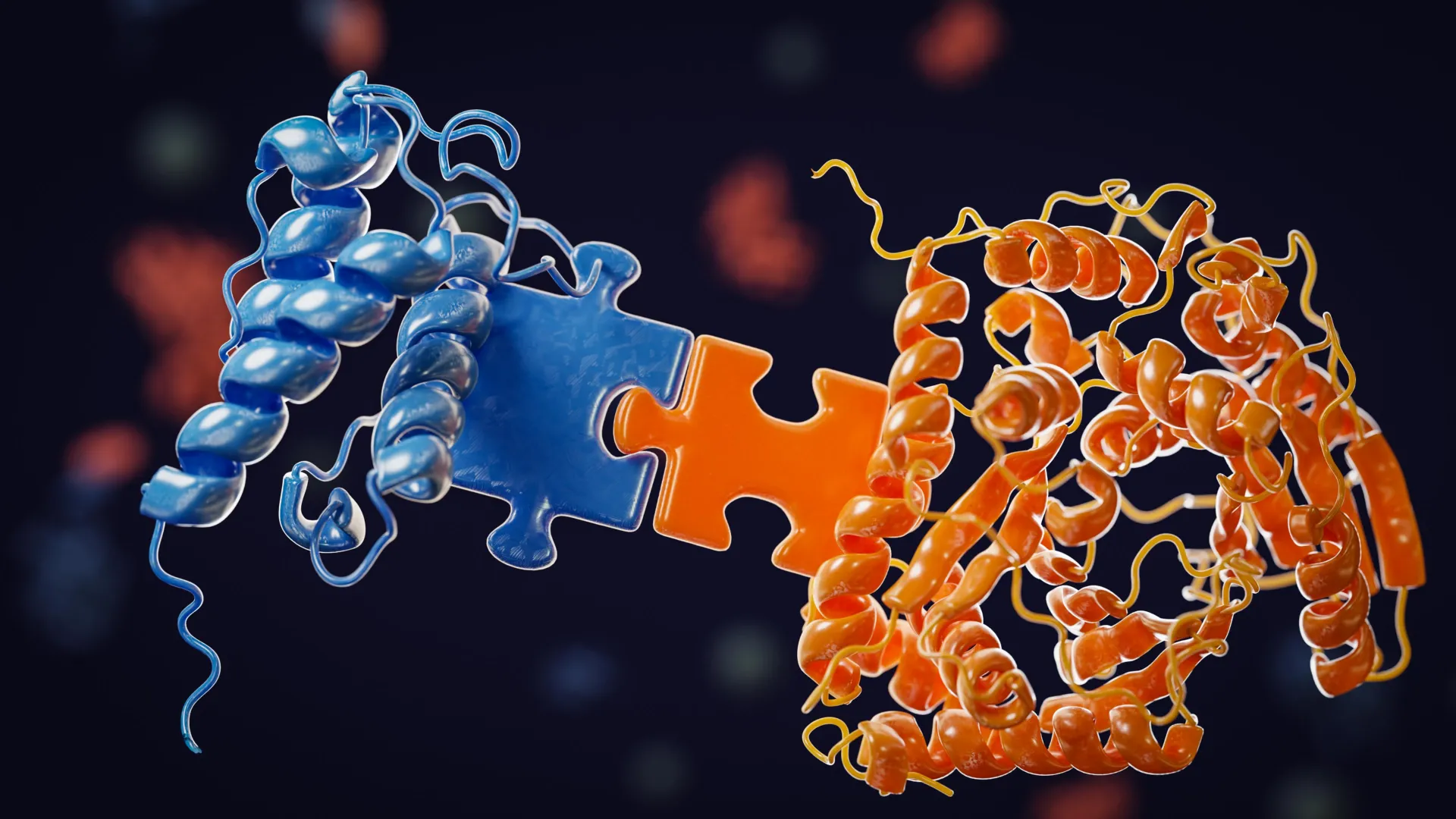
By synthesizing these diverse data streams, the researchers identified a missing piece of the puzzle: "docking domains." These tiny molecular regions act as bridges, or connectors, between the core drug-building machinery and the specialized enzymes that add diverse components to the drug structure.
Decoding the Mechanism: The Role of Docking Domains
The researchers discovered that these docking domains possess a conserved connection point. This design is evolutionary brilliance at its finest. Because the connection point is standardized, it allows the core machinery to interact with a wide array of different enzyme partners.
Think of it as a modular assembly line. Instead of having a fixed machine that only builds one specific car, the bacteria possess a central assembly station with a universal socket. By swapping out the "tools" (the enzymes that add different chemical groups) into that socket, the bacteria can produce a family of closely related compounds.
This mechanism explains the "elegance and economy" mentioned by Dr. Munro Passmore, the study’s first author and a Research Fellow at the University of Warwick. The system is efficient because it does not require a unique, massive protein complex for every single variant of the drug. Instead, it relies on a flexible, reconfigurable architecture that maintains the precision required to produce effective, potent molecules.
Official Perspectives and Expert Insight
The implications of this discovery are far-reaching, signaling a shift from reactive observation to proactive engineering.
"For decades, we’ve known that bacteria can naturally produce multiple versions of powerful anti-cancer drugs, yet we had no idea how they achieved this," said Dr. Passmore. "This work finally cracks that code. We’ve identified how the different enzymes communicate and cooperate to produce these drug variants… It’s the breakthrough we needed to actually engineer these drugs ourselves."
Professor Greg Challis, Monash Warwick Alliance Professor of Sustainable Chemistry, frames the discovery as a transition in scientific methodology. "This research gives us a blueprint to do what nature does, but better and faster," Challis remarked. "By reverse-engineering nature’s evolutionary logic, we can now design synthetic pathways that generate new anti-cancer drug candidates with properties optimized for clinical use, such as superior potency, improved selectivity, and fewer side effects."
The team’s immediate goal is ambitious: to construct an expanded library of drug candidates for cancers that currently lack effective treatment options. By moving from understanding the system to actively building new ones, the team hopes to shorten the development timeline for novel therapies.
Implications for Future Cancer Therapies
The significance of the PKS-NRPS hybrid system cannot be overstated. These complexes are the engines behind some of the most potent natural products in existence. By mastering the "docking domain" logic, scientists are no longer limited to the compounds that bacteria happen to produce in nature.
1. Superior Potency and Selectivity
Many existing cancer treatments suffer from a lack of selectivity, leading to significant side effects as the drugs affect healthy cells alongside cancerous ones. By manipulating the assembly process—specifically by changing the "building blocks" that the docking domains pass along—researchers can theoretically fine-tune the molecular structure of the drug to be more selective, targeting only the cancer cells.
2. Streamlined Drug Development
Traditionally, discovering new drugs involves screening thousands of compounds, a process that is costly, time-consuming, and often yields low returns. With the ability to engineer synthetic pathways, researchers can move toward a "design-build-test" cycle. This reduces the reliance on luck and increases the speed at which a viable drug candidate reaches clinical trials.
3. Evolutionary Insights
The study also provides a window into the evolution of antibiotic and anti-cancer production pathways. The researchers suggest that the compound FR-901375 likely evolved from an ancestral drug-producing pathway through a process of gene duplication and recombination. This suggests that nature has been "hacking" its own assembly lines for millions of years, providing a historical roadmap that scientists can now utilize to create novel compounds.
Conclusion: A New Frontier in Oncology
The ability to decode the "molecular language" of bacterial enzymes marks a turning point in pharmaceutical science. For years, the complexity of HDAC inhibitors and their production pathways seemed insurmountable. Now, with the discovery of the docking domain mechanism, the path forward is clear.
As the scientific community begins to implement these findings, we can expect a new generation of anti-cancer compounds to emerge from laboratory settings. These drugs, born from a fusion of evolutionary biological logic and precise synthetic engineering, hold the potential to transform the prognosis for patients with hard-to-treat cancers.
The "elegantly economical" system used by bacteria is no longer a mystery; it is now a toolkit. As Prof. Challis and his colleagues move forward with building their expanded library of candidates, the medical community waits with anticipation. The microscopic world, once again, has provided the key to solving a macroscopic human crisis. The era of precision-engineered natural drug synthesis has arrived.