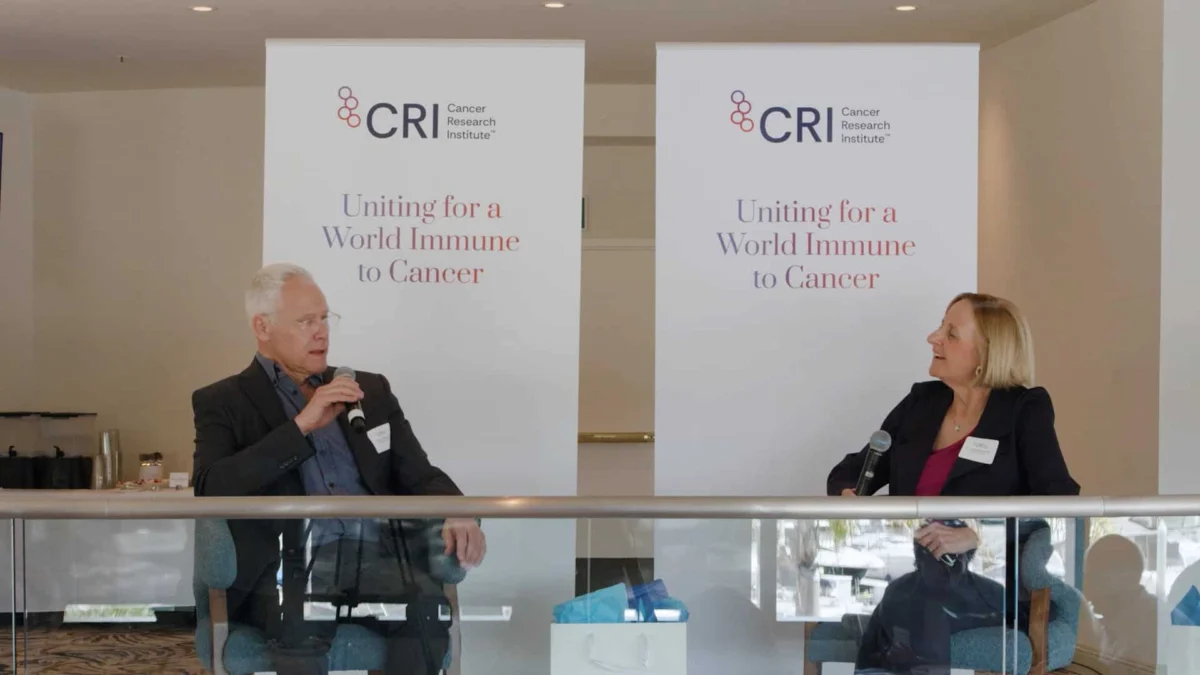
At the 2026 American Association for Cancer Research (AACR) Annual Meeting, the global scientific community turned its attention to a singular, transformative figure in the field of immunology. The Cancer Research Institute (CRI) and the AACR jointly bestowed the prestigious AACR-CRI Lloyd J. Old Award in Cancer Immunology upon Kenneth M. Murphy, MD, PhD.
This accolade, which honors scientists whose body of work has fundamentally shifted the paradigm of cancer research, serves as a testament to Dr. Murphy’s decades-long investigation into the architecture of the immune system. His work has transitioned from the foundational biology of dendritic cells (DCs) to the frontline of clinical immunotherapy, providing the mechanistic blueprints necessary to understand how the body recognizes and eradicates malignant tumors.
Main Facts: A Legacy of Foundational Discovery
The Lloyd J. Old Award is reserved for those whose discoveries have paved the way for new therapeutic interventions. Dr. Murphy’s career is defined by his meticulous dissection of the immune system’s "sentinels"—the dendritic cells.
His research established the definitive role of DC subsets, particularly cDC1 cells, in the orchestration of the immune response. By identifying that these specific cells are uniquely capable of priming CD8+ T cells—the "killer" cells of the immune system—Dr. Murphy provided the missing link in explaining why some patients respond to cancer treatments while others do not.
In a departure from traditional award ceremonies, the 2026 event featured a fireside conversation between Dr. Murphy and the 2025 laureate, Dr. Crystal Mackall. This dialogue underscored a central tenet of modern science: the most revolutionary clinical outcomes are inextricably linked to the slow, deliberate work of basic biological research.
Chronology: From Curiosity to Clinical Application
The trajectory of Dr. Murphy’s research is not a linear path of planned milestones, but rather a winding exploration of biological complexity.
The Early Years: Questioning the Immune Response
Dr. Murphy’s career began with a deceptively simple query: How does the immune system differentiate between types of threats? For decades, he and his team at Washington University in St. Louis have pursued this question, often allowing the biology to dictate the direction of their research rather than forcing a pre-determined hypothesis.
The Breakthrough: Defining the Dendritic Cell
In the early 2000s, the scientific consensus regarding DC function was in its infancy. Dr. Murphy’s lab was pivotal in characterizing the cDC1 subset. They demonstrated that these cells act as the "command and control" centers for the immune system, capturing tumor antigens and presenting them to CD8+ T cells. This work effectively explained why immune checkpoint inhibitors—treatments designed to "release the brakes" on the immune system—often fail if the underlying "engine," the dendritic cell, is not functional or properly activated.
The Modern Era: mRNA and Next-Generation Vaccines
In recent years, Dr. Murphy’s focus has shifted toward the application of these findings in vaccine development. His team has provided critical insights into how mRNA and cDNA vaccine platforms interact with the immune system. His work suggests that the efficacy of these vaccines is not merely a product of the antigen provided, but the manner in which those antigens are presented by dendritic cells to the T-cell population.
Supporting Data: The Mechanics of Immunity
The significance of Dr. Murphy’s work is supported by an evolving body of data that highlights the fragility and specificity of immune activation.
The Role of cDC1 in Anti-Tumor Immunity
Research data presented during the 2026 meeting reinforced that cDC1-driven priming is the gold standard for durable CD8+ T cell responses. When compared to other subsets of myeloid cells, the cDC1 subset demonstrates a superior ability to cross-present tumor antigens, which is essential for initiating a systemic anti-tumor attack.
The Stem-Like T Cell Paradigm
Dr. Murphy highlighted the transition between stem-like T cells and short-lived effector cells as a critical frontier. Data indicates that the "stem-like" population of T cells—those capable of self-renewal—is the engine of long-term tumor control. If these cells are forced to differentiate too quickly into effector cells, the immune system loses its "memory," leading to tumor relapse. Understanding the molecular switches that govern this transition is currently a major objective in the field.
Official Responses and Perspectives
The conversation between Dr. Murphy and Dr. Mackall provided a rare, candid look into the minds of two of the most influential immunologists of the century.
The Nonlinearity of Discovery
"We’re still asking the same question that we started off with," Dr. Murphy noted during the discussion. This sentiment resonated with the audience, serving as a reminder that science is an iterative process. Both speakers agreed that the modern pressure to achieve immediate, "translational" results often undermines the deep, longitudinal research required for true innovation.
The Role of Artificial Intelligence (AI)
Addressing the integration of AI into biomedical research, Dr. Murphy adopted a pragmatic stance. While acknowledging that AI is an "extraordinary tool" for processing the massive datasets now generated by single-cell sequencing and spatial transcriptomics, he cautioned against over-reliance.
"AI is excellent for managing complexity," Dr. Murphy explained, "but it cannot identify the right question. It cannot replace the human intuition required to interpret biological context." Dr. Mackall echoed this, noting that in an era of "information overload," the role of the mentor is to teach young scientists how to synthesize data into meaningful biological insights.
Implications: The Future of Cancer Immunotherapy
The implications of Dr. Murphy’s work extend far beyond the laboratory, shaping the next generation of clinical trials and therapeutic strategies.
Redefining Vaccine Efficacy
For years, the field of cancer vaccines faced cycles of hype followed by clinical failure. Dr. Murphy’s research suggests that many of these failures were due to a misunderstanding of how to "prime" the system. Future vaccine designs are now increasingly focused on targeting the antigen-presenting capacity of the dendritic cell, rather than just the antigen payload itself.
A Call for Basic Science
Perhaps the most significant implication of the 2026 award is the renewed emphasis on basic science. As clinical immunotherapy matures, there is a risk that the field becomes purely transactional—focusing only on drug delivery and trial endpoints. Dr. Murphy’s career stands as a rebuke to this trend. By showing that the most effective cancer treatments are built upon an intimate knowledge of fundamental immune biology, he provides a roadmap for the next generation of researchers.
The Next Frontier
Looking ahead, the collaboration between immunology and other disciplines—such as computational biology and genetic engineering—will define the coming decade. However, the unifying message remains clear: the immune system is a complex, adaptive entity. To conquer cancer, we must stop viewing it as a static target and start viewing it as a dynamic dialogue between the tumor and the immune cell.
As Dr. Murphy’s work continues to evolve, the scientific community is reminded that progress is rarely the result of rigid, top-down planning. Instead, it is the product of sustained, curiosity-driven inquiry—one question, one cell, and one discovery at a time.
Watch the full conversation between Dr. Kenneth M. Murphy and Dr. Crystal Mackall below:
[YouTube Video: The Future of Cancer Immunology: A Fireside Chat]
(Viewers are encouraged to navigate to the 2:16 mark for the start of the discussion.)