











In the formative years of childhood, the alphabet is the foundational tool we use to unlock the world. We learn that ‘A’ is for apple, ‘B’ is for ball, and ‘C’ is for cat. These building blocks are the primary mechanisms for communication, education, and social navigation. Yet, as we mature, we are rarely provided with a similarly structured framework for navigating our internal landscapes—specifically, the complex, often overwhelming architecture of anxiety.
Anxiety, in its evolutionary capacity, is a vital human emotion. It is a biological sentinel designed to protect us from environmental dangers. However, for millions of people, this internal alarm system has become hypersensitive, firing incessantly in the absence of actual threats. Without a standardized language to describe and decode these episodes, many individuals remain trapped in a cycle of physiological distress and cognitive rumination.
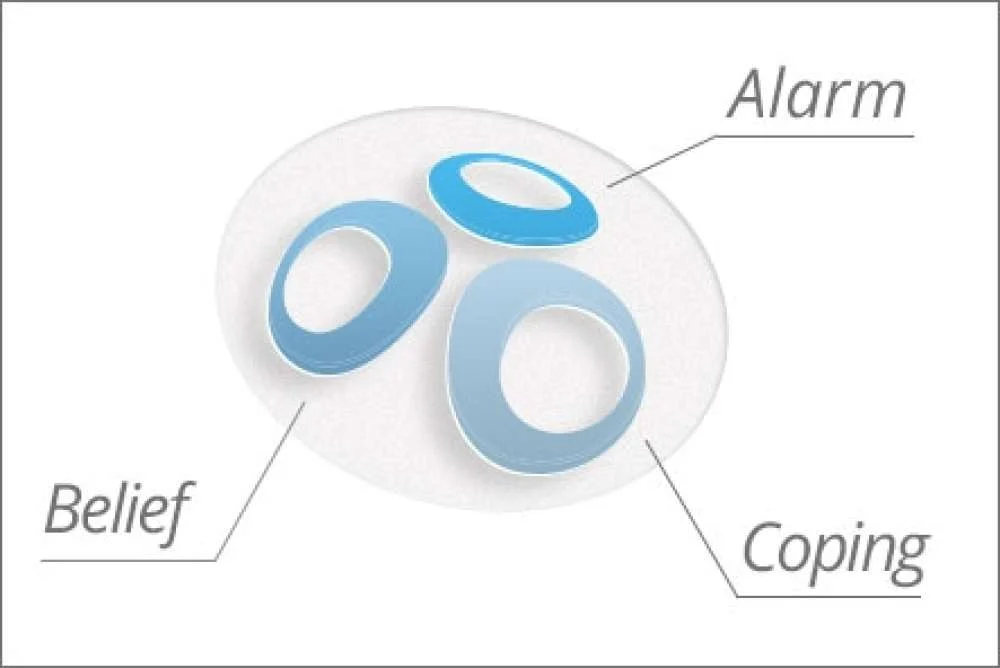
Enter the "Anxiety ABCs"—a mnemonic framework consisting of Alarm, Belief, and Coping. By adopting this systematic approach, individuals are finding a way to bridge the gap between reactive emotional states and proactive mental management.
The Chronology of an Anxiety Episode: From Trigger to Response
To understand how the ABC framework functions, one must first view anxiety not as a monolithic "feeling," but as a chronological process. An anxiety episode does not occur in a vacuum; it follows a predictable trajectory that can be mapped and interrupted.
1. The Onset: The Alarm (A)
The sequence begins with the ‘Alarm.’ From an evolutionary standpoint, the amygdala—the brain’s threat-detection center—is constantly scanning for danger. When it perceives a threat, it triggers the "fight-or-flight" response, flooding the body with cortisol and adrenaline. In modern life, this alarm often misfires. A public speaking engagement, a crowded room, or an ambiguous email can trigger the same physiological response as a physical predator. Recognizing the ‘Alarm’ is the first step in regaining control.
2. The Interpretation: The Belief (B)
Once the alarm sounds, the brain immediately attempts to interpret the signal. This is the ‘Belief’ stage. The brain asks, "What is the nature of this threat?" If an individual suffers from pervasive anxiety, this assessment is often distorted. The mind may catastrophize, assuming the worst-case scenario. This incorrect assessment reinforces the original alarm, creating a feedback loop that sustains the anxiety.
3. The Resolution: The Coping (C)
Finally, the body and mind move to ‘Coping.’ This is the behavioral response to the perceived threat. Whether it is avoidance, reassurance-seeking, or substance use, these actions are designed to lower the internal sense of danger. However, as clinicians note, not all coping mechanisms are created equal.
Supporting Data: Why Standardized Tracking Matters
The efficacy of the ABC framework is rooted in the principles of Cognitive Behavioral Therapy (CBT). According to data from the American Psychological Association (APA), patients who engage in structured "thought-tracking" show a 40% higher rate of symptom reduction compared to those relying on unstructured self-reflection.
The ABCtracker™, a tool specifically designed to operationalize this framework, acts as a clinical mirror. By logging these three components, users transform abstract, terrifying feelings into concrete data points.
- Frequency Analysis: Patients who track their alarms often realize their triggers are not random but follow specific environmental patterns.
- Validity Testing: By documenting their ‘Beliefs,’ users can objectively analyze the evidence for their fears. When written down, a thought such as "Everyone is judging me" often looks significantly less plausible than it feels in the heat of the moment.
- Behavioral Audits: The tracker allows individuals to differentiate between adaptive coping (deep breathing, exercise, grounding techniques) and maladaptive coping (isolation, avoidance, self-medication).
Expert Insights: Official Perspectives from the Clinical Community
Mental health professionals emphasize that the ABC model is not a "cure," but a diagnostic tool for emotional literacy. Dr. Elena Vance, a clinical psychologist specializing in anxiety disorders, notes that "the primary challenge for patients is the feeling of helplessness. Anxiety feels like a wave that knocks you over. The ABC framework provides a surfboard. It doesn’t stop the ocean from moving, but it changes your relationship with the water."
Many healthcare providers are now integrating the ABCtracker™ into their intake processes. The goal is to move the patient from a position of "experiencing" the anxiety to "observing" it. This detachment is crucial. When a patient can say, "My alarm is ringing because I am nervous about the meeting, but my belief that I will be fired is an irrational catastrophization," they have effectively neutralized the power of the episode.
Implications: Moving Toward Emotional Autonomy
The implications of implementing such a structured framework are profound, both for the individual and the broader healthcare system.
The Shift from Reactive to Proactive
Currently, most individuals seek help only when their anxiety reaches a breaking point. By utilizing the ABCs as a daily maintenance tool, individuals can identify "micro-anxieties" before they escalate into panic attacks or generalized anxiety disorders. This shift represents a move toward preventative mental health care.
Destigmatization through Language
One of the greatest barriers to mental health treatment is the stigma associated with "losing control." By reframing anxiety as a misfiring of a normal biological alarm, the ABC model removes the moral weight of the disorder. It is not a failure of character; it is a technical issue of a "sensitive alarm." This language empowers patients to communicate their needs more effectively to their doctors, employers, and loved ones.
The Role of Technology
The digitization of the ABC model through tools like the ABCtracker™ signifies a new era in behavioral health. As telehealth and mental health applications continue to grow, the ability for patients to share their tracked data with their physicians in real-time allows for more tailored treatment plans. Instead of relying on a patient’s memory of the past month—which is often colored by the emotional state of the present moment—doctors can review the actual chronological logs of the patient’s alarms, beliefs, and coping mechanisms.
Conclusion: Mastering the Alphabet of the Mind
The mastery of the ABCs of anxiety is a journey, not a destination. As with any new skill, proficiency requires practice, patience, and persistence. There will be days when the alarm rings loudly, and the beliefs become distorted. However, the framework provides a consistent, reliable structure that persists through the chaos.
By breaking down the complex, visceral experience of anxiety into manageable parts, we take the mystery out of our internal reactions. We learn to listen to the alarm without being controlled by it. We learn to challenge our beliefs rather than accepting them as gospel. And, perhaps most importantly, we learn to choose coping strategies that foster growth rather than stagnation.
The alphabet was our first lesson in understanding the world; the Anxiety ABCs may well be our most important lesson in understanding ourselves. Whether you are working with a physician, a therapist, or simply seeking better tools for self-regulation, the path forward begins with a simple, three-letter inquiry: What is the Alarm? What is the Belief? And how will I Cope?
In answering these questions, we do not just survive the stressors of modern life—we learn to thrive within them, transforming our internal vulnerabilities into a roadmap for emotional resilience. The tools are available, the structure is clear, and the capacity for mastery resides within everyone. The journey begins with the first letter.