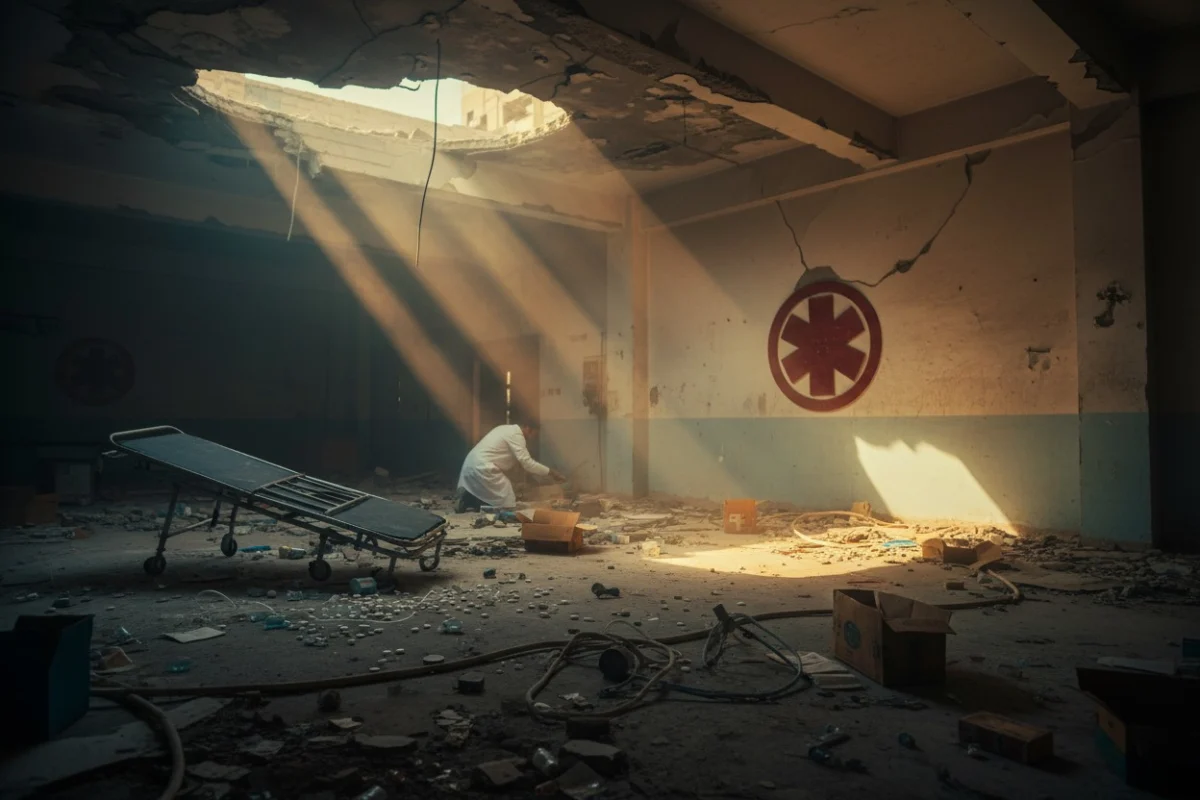
DEIR AL-BALAH, GAZA — The fragile medical infrastructure of central Gaza suffered a critical blow on Saturday morning as Israeli forces conducted a precision strike on the Al-Aqsa Martyrs Hospital compound in Deir al-Balah. The assault, which destroyed essential medical storage facilities, has plunged the hospital into a state of acute crisis, further limiting the territory’s ability to provide life-saving care to a population already devastated by nearly a year of relentless conflict.
The Gaza Health Ministry confirmed that the strike resulted in the death of one Palestinian, while simultaneously wiping out vital stockpiles of medication and surgical consumables. As the primary referral center for the central Gaza Strip, the hospital has been a last refuge for thousands of wounded civilians, journalists, and displaced persons. The destruction of these warehouses represents not merely a loss of physical infrastructure, but a direct threat to the ongoing survival of patients currently being treated within the facility.
A Targeted Blow: The Anatomy of the Strike
According to official statements released by the Gaza Health Ministry, the bombardment utilized high-explosive missiles that caused catastrophic damage to the hospital’s logistics hub. The ministry reported that two of the four medicine warehouses located on the site were pulverized, effectively vaporizing the contents within. The remaining two warehouses sustained severe structural damage, rendering them unusable for the safe storage of medical supplies.
"The destructive force of the missiles used resulted in the complete destruction of two out of four warehouses at the targeted site," the ministry’s statement read. "In addition to the loss of these facilities, the strike inflicted severe and extensive damage to the outpatient clinic facility, which serves hundreds of patients daily."
For the medical staff at Al-Aqsa, the loss of these supplies is a logistical nightmare. The warehouses contained critical quantities of consumables, including intravenous fluids, antibiotics, anesthesia, and wound-dressing kits—items that are already in chronically short supply across the Gaza Strip due to strict border closures and the disruption of humanitarian aid corridors.
Chronology of a Collapsing Health System
The strike on Al-Aqsa is the latest in a series of incidents that have seen Gaza’s medical facilities transformed from places of healing into frontlines of the conflict.
Recent Escalations in Deir al-Balah
The surrounding area of Deir al-Balah has seen a sharp increase in kinetic activity over the past week. On the same day as the hospital strike, local media reported that Israeli drone strikes targeted Salah al-Din Street and Al-Mahatta Street, resulting in two additional fatalities and multiple injuries.
The pattern of violence is consistent with a broader trend observed by medical staff at Al-Aqsa. Just one day prior to the warehouse destruction, an Israeli air strike in central Gaza claimed the life of another Palestinian, as documented by medical sources at the hospital. On the preceding Tuesday, the facility recorded the death of a man who had succumbed to injuries sustained during an bombardment of the Nuseirat refugee camp.
A History of Siege and Survival
The Al-Aqsa Martyrs Hospital has been at the epicenter of the humanitarian catastrophe for months. In May 2024, the facility was overwhelmed when 20 bodies and scores of injured civilians were brought to the gates following a massive Israeli bombardment of the Nuseirat camp. The hospital has also served as the primary destination for journalists injured in the line of duty; in August 2024, Palestinian journalist Salma al-Qadoumi was transported to the facility after sustaining a gunshot wound to the back while documenting operations in Khan Younis.
The Strain on Gaza’s Medical Infrastructure
The cumulative effect of these strikes is the gradual dismantling of a healthcare system that was already operating on the brink of collapse. With 90 percent of Gaza’s population displaced, according to United Nations figures from August 2024, medical facilities like Al-Aqsa have become overcrowded, under-resourced, and increasingly vulnerable.
Loss of Critical Storage Capacity
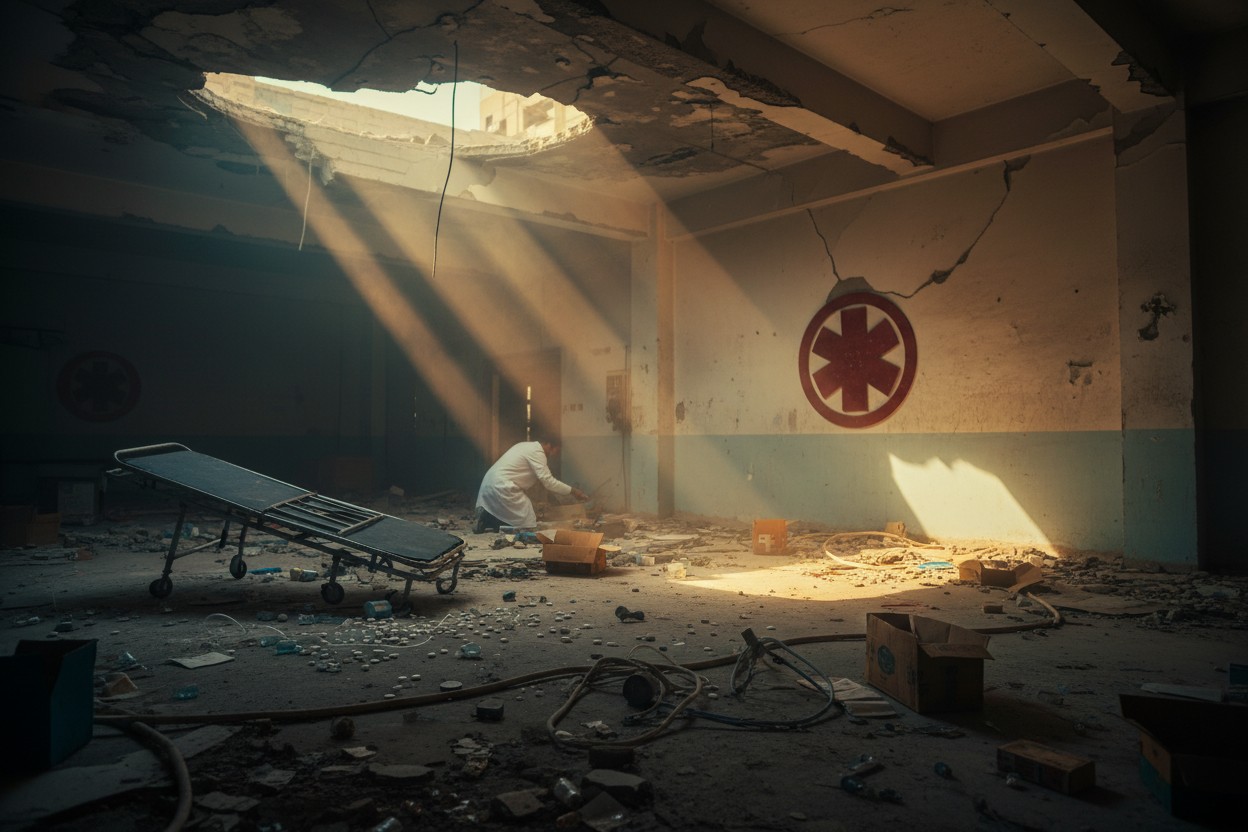
The destruction of the warehouses at Al-Aqsa removes a vital layer of redundancy in the health system. When warehouses are destroyed, the chain of medical delivery is broken. Even if international aid organizations manage to secure supplies to enter Gaza, there is now no safe or stable environment to store them.
Reports from humanitarian agencies have consistently documented attacks targeting civilian infrastructure, including homes, markets, and aid distribution centers. In July, a strike on a hospital-turned-shelter in the Jabalia refugee camp resulted in the deaths of at least two people and the injury of 16 others—many of them children. Such incidents have fostered an environment of profound insecurity, where the "protected status" of medical facilities under international humanitarian law is increasingly disregarded in practice.
The Human Cost: A "World Without Hearts"
The psychological toll of this conflict is as severe as the physical destruction. Reflecting on the conditions in the territory, historical accounts—such as those collected in Matthew Teller’s Daybreak in Gaza—describe a society grappling with the erosion of the meaning of humanity. The constant state of flight and bombardment has left the population not only physically deprived of medicine and shelter but emotionally exhausted. As the infrastructure crumbles, the capacity for the community to care for its own is being systematically erased.
Official Responses and Independent Verification
At the time of this report, the Israeli military has not issued a specific public response regarding the strike on the Al-Aqsa warehouses. In broader communications, Israeli officials have consistently maintained that strikes in Gaza are directed at "militant infrastructure."
In a separate incident this week, the Israel Defense Forces (IDF) targeted a mosque in Gaza City, justifying the attack by claiming the site was utilized for weapons storage. The IDF frequently categorizes the use of civilian sites—including schools and hospitals—by militant groups as a justification for strikes, labeling such locations as legitimate military targets.
However, the Gaza Health Ministry’s accounts remain difficult to verify independently due to the ongoing restriction of international journalists from entering the conflict zone. As war correspondent Marie Colvin famously noted in On the Front Line, "tragedy doesn’t necessarily breed truth," highlighting the immense difficulty of establishing definitive facts in a war zone where propaganda and the fog of conflict often obscure the reality on the ground.
Implications for the Future of Humanitarian Aid
The stalled status of ceasefire negotiations adds a layer of permanence to this instability. While a ceasefire remains technically in place, it has failed to halt the kinetic violence that continues to kill an average of dozens of Palestinians daily. According to records compiled since the ceasefire began on October 10, more than 1,000 Palestinians have been killed, suggesting that the conflict has entered a phase of protracted, low-intensity grinding.
The Path Forward
The destruction at Al-Aqsa Martyrs Hospital sends a chilling message to the international community. If hospitals—the last bastions of civilian safety—are not spared from the destructive force of modern warfare, the prospects for a meaningful humanitarian recovery remain slim.
For the people of Deir al-Balah, the destruction of the medicine warehouses is not just a logistical hurdle; it is a signal that the tools of their survival are being dismantled piece by piece. As global leaders continue to debate the parameters of a lasting peace, the reality on the ground remains defined by the search for life-saving medicine, the burial of the dead, and the desperate attempt to maintain a functioning health system amidst the ruins.
The international community now faces a pivotal moment: to either enforce the protection of medical infrastructure as mandated by international law or to witness the total erasure of the medical capacity required to sustain the survivors of this conflict. Without immediate intervention and the establishment of secure, protected zones for medical storage and treatment, the death toll in Gaza is expected to rise, not only from the direct impact of explosives but from the silent, creeping consequences of a health system that can no longer heal.