Every July, the global disability community observes Disability Pride Month, a commemorative period that serves as both a celebration of resilience and a critical call to action. This annual observance is inextricably linked to the signing of the Americans with Disabilities Act (ADA) on July 26, 1990—a landmark piece of civil rights legislation that fundamentally reshaped the landscape of employment, public accommodations, and government services for millions of Americans.
However, Disability Pride is far more than an anniversary of a legal milestone. It is a radical framework of self-advocacy designed to dismantle the systemic shame and historical stigma that have long marginalized disabled populations. By asserting that disability is not a "tragedy to be overcome" or an identity to be hidden, the movement posits that disability is a natural, vibrant, and essential facet of human diversity.
The Magnitude of the Movement: Key Facts and Data
To understand the necessity of this movement, one must first look at the sheer scale of the population it represents. According to the Centers for Disease Control and Prevention (CDC), one in four adults in the United States lives with some form of disability. Furthermore, the CDC estimates that the majority of people will experience a disability at some point in their lives, whether due to aging, illness, or injury.
Despite this ubiquity, society remains largely structured around the myth of the "non-disabled norm." This misalignment creates a societal "access gap." When we speak of Disability Pride, we are speaking of an insistence that accessibility is not a luxury, but a fundamental requirement for a functioning, democratic society. As the 2026 theme—The World Works Better With Us—suggests, when disabled individuals are fully integrated and supported, the structural benefits extend to the entire population.
Chronology: The Road to Civil Rights
The journey toward the ADA was not granted; it was seized through decades of relentless organizing, protest, and physical sacrifice.
1972: The Birth of the Independent Living Movement
The modern era of disability activism finds its roots in the Independent Living Movement. Led by figures like Ed Roberts—the first disabled student to attend UC Berkeley—the movement challenged the institutionalization of disabled people. The founding of the Center for Independent Living in 1972 established a new paradigm: disabled people, not medical professionals or state institutions, should possess the agency to direct their own lives.
1977: The 504 Sit-In
Five years before the ADA, activists fought for the enforcement of Section 504 of the Rehabilitation Act of 1973. When the government delayed the implementation of regulations that would prohibit discrimination in federally funded programs, disability advocates took action. In San Francisco, activists organized what remains the longest sit-in at a federal building in U.S. history. For 28 days, protesters occupied the Department of Health, Education, and Welfare, refusing to leave until the government signed the regulations into effect.
1990: The Capitol Crawl
The final push for the ADA culminated in the "Capitol Crawl" in March 1990. Approximately 1,000 activists marched on Washington, D.C. In an act of profound civil disobedience, dozens of protesters abandoned their wheelchairs and mobility aids, physically crawling up the 83 stone steps of the U.S. Capitol. The image of eight-year-old Jennifer Keelan pulling herself up those steps became a defining symbol of the movement’s determination, directly pressuring Congress to pass the ADA four months later.
The "Curb Cut Effect" and Architectural Innovation
The philosophy that "the world works better with us" is best exemplified by the "curb cut effect." Originally designed as a hard-fought accommodation to allow wheelchair users to navigate city streets, curb cuts transformed urban mobility for everyone—including parents pushing strollers, delivery personnel with heavy hand trucks, and travelers with luggage.
Similarly, the evolution of closed captioning—developed for the Deaf and hard-of-hearing community—has become an essential tool for the general public, facilitating learning in noisy environments and aiding language acquisition. These innovations prove that accessibility is not a "special interest" project; it is an engine for universal design and human-centered engineering.
Intersectionality: The Disability Justice Framework
While the mainstream disability rights movement of the late 20th century was vital, it often centered on a narrow, white-dominated vision of legal access. In the 21st century, the movement has pivoted toward "Disability Justice," a framework pioneered by BIPOC activists.
In 2005, the performance project Sins Invalid, led by Patricia Berne and Leroy Moore, articulated the 10 Principles of Disability Justice. This framework insists that ableism cannot be tackled in a vacuum. It recognizes that disability is intrinsically linked to systemic racism, economic inequality, and gender identity. By centering the most marginalized—those living at the intersection of multiple systems of oppression—the movement ensures that liberation is inclusive rather than exclusionary.
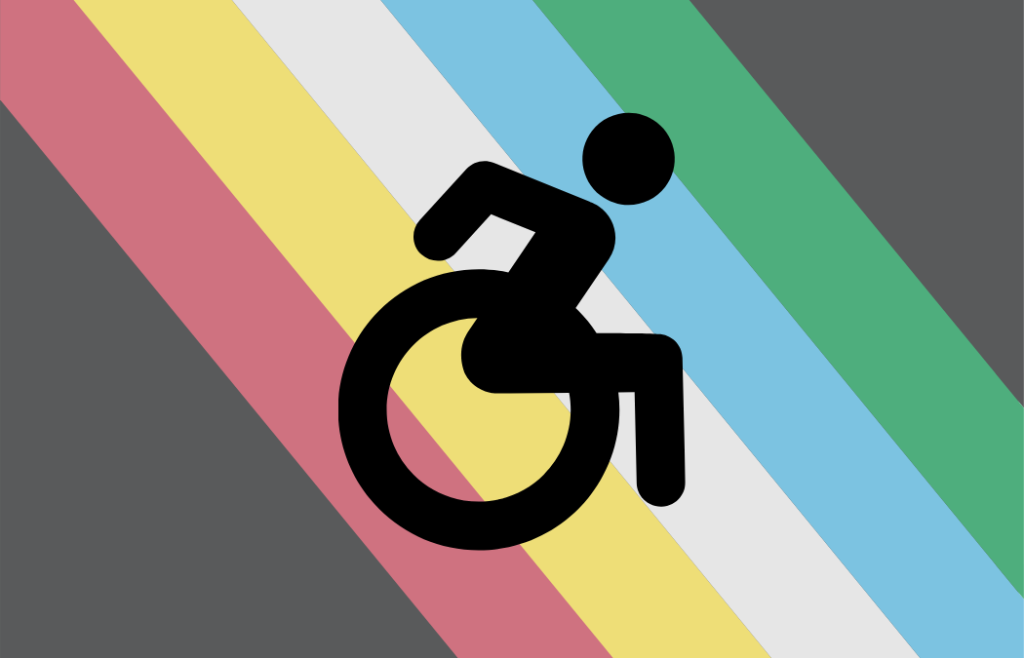
The Symbolism of the Disability Pride Flag
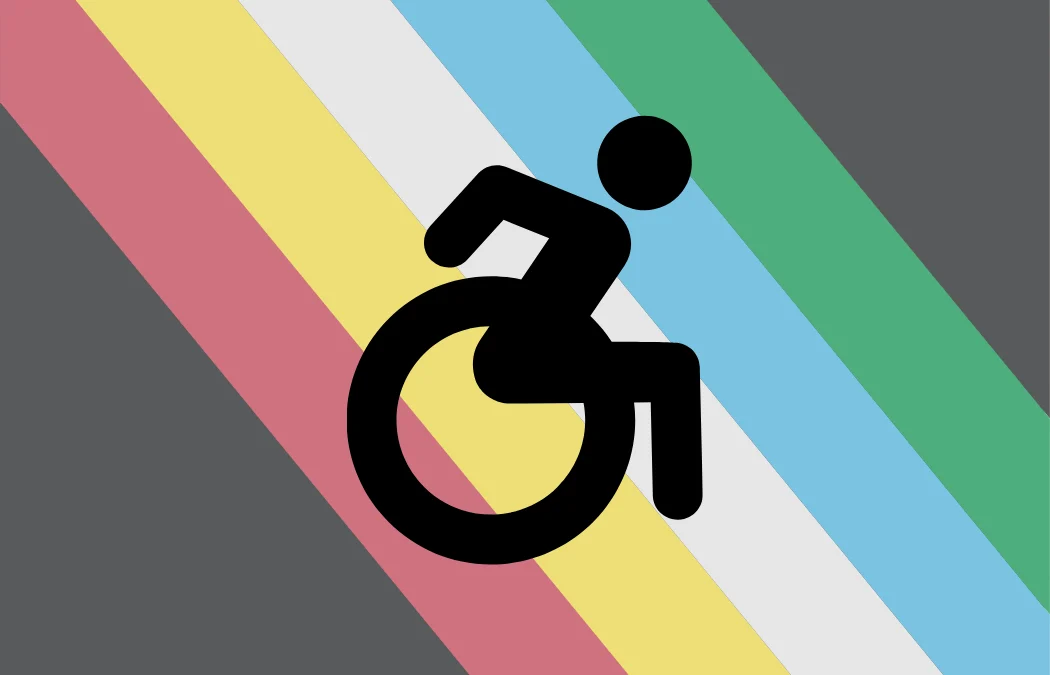
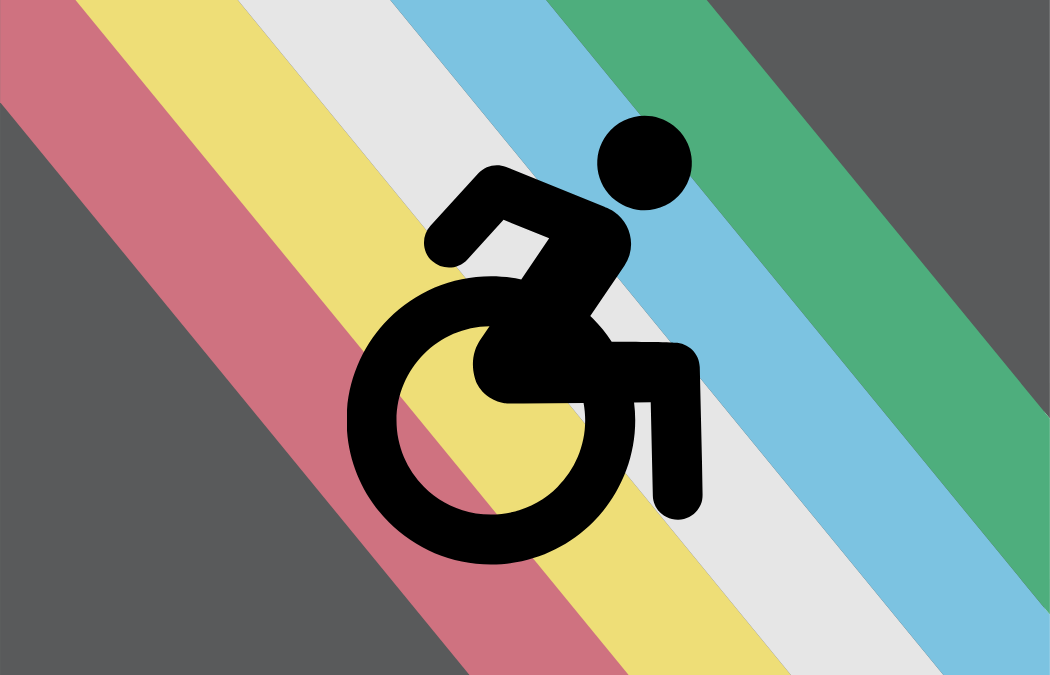
The visual identity of the movement has also evolved to reflect these values. Originally designed by Ann Magill in 2019 and refined in 2021, the Disability Pride flag features five diagonal stripes on a charcoal-gray background:
- Red: Physical disabilities.
- Gold: Neurodiversity.
- White: Invisible and undiagnosed disabilities.
- Blue: Emotional and psychiatric disabilities.
- Green: Sensory disabilities.
The dark charcoal background symbolizes the mourning of those lost to violence, neglect, and state-sanctioned ableism, while the diagonal arrangement of the stripes represents the community "cutting across" societal barriers and refusing to remain on the margins.
Implications: A Call for Continued Advocacy
Despite the progress made since 1990, the disability community currently faces significant headwinds. Recent policy shifts have threatened to undermine the right to independent, community-based living. There is an ongoing struggle against the rollback of integration protections, as well as persistent challenges in securing necessary medical supplies and equitable educational accommodations.
The "pride" in Disability Pride Month is an act of defiance against this climate of exclusion. It is a rejection of the internal and external shame that has historically kept disabled people isolated. By acknowledging that disability is not a personal failure, but a civil rights and social justice issue, the community is building a foundation for future generations.
How to Engage and Celebrate
Celebrating Disability Pride is not reserved solely for those with disabilities; it is a collective responsibility.
- Educate: Familiarize yourself with the history of the movement, particularly the contributions of activists of color.
- Support: Advocate for policies that protect the right to live independently in the community.
- Listen: Center the voices of disabled individuals when discussing accessibility and inclusion.
- Normalize: Recognize that accommodations—such as remote work, flexible scheduling, and sensory-friendly environments—are not just "perks" but essential infrastructure for a diverse workforce.
As we look toward the future, the message remains clear: the world is not merely a place where disabled people exist; it is a place that relies on our presence to function at its highest potential. When we design for the most marginalized, we raise the floor for all of humanity. The world does indeed work better with us.