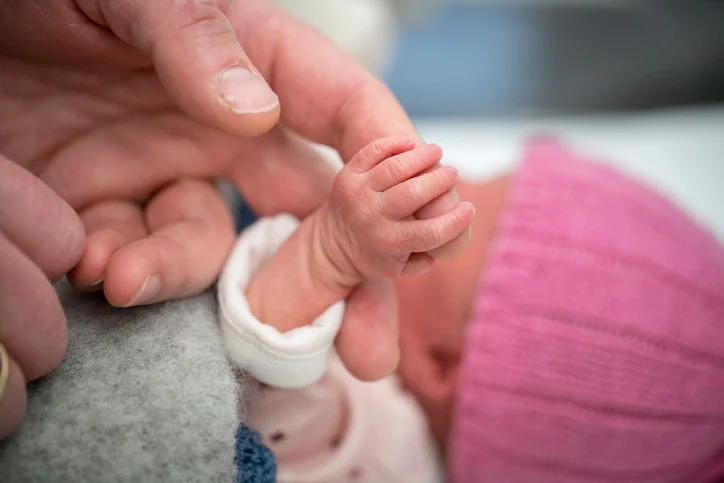











LOS ANGELES, CA – For countless children worldwide living with spasticity, a complex neurological condition often associated with cerebral palsy, the ability to walk, play, and engage in daily life is profoundly challenged. While advancements in medical science offer hope, a critical window of opportunity for a life-altering procedure, Selective Dorsal Rhizotomy (SDR), is frequently missed due to delayed evaluation and referral. Experts at Children’s Hospital Los Angeles (CHLA) are championing earlier intervention, emphasizing that timely assessment and a comprehensive, multidisciplinary approach can dramatically preserve lifelong walking ability and enhance the quality of life for carefully selected patients.
The core message from leading pediatric neurosurgeons, neurologists, orthopedists, and rehabilitation specialists is unequivocal: SDR is most effective when performed before significant functional decline, not as a last resort. This proactive stance aims to empower children to maintain and even improve their mobility well into adulthood, preventing secondary complications and fostering greater independence.
Main Facts: Unlocking Mobility Through Precise Intervention
Spasticity, characterized by involuntary muscle tightness and stiffness, affects millions of children, primarily those with cerebral palsy. This persistent muscle contraction can lead to pain, joint deformities, impaired motor skills, and, crucially, a progressive loss of walking ability. The condition significantly impacts a child’s physical development, social integration, and overall independence.
Selective Dorsal Rhizotomy (SDR) is a highly specialized neurosurgical procedure designed to reduce spasticity by selectively cutting abnormal sensory nerve roots in the spinal cord. By interrupting the aberrant signals that cause excessive muscle tone, SDR can significantly improve muscle control, reduce stiffness, and enhance mobility. The procedure targets only the problematic nerve fibers, leaving healthy motor and sensory functions intact, making it a precise and effective intervention when indicated.
However, the efficacy of SDR hinges on a crucial factor: timing. "Selective dorsal rhizotomy is most effective when a child is still able to walk," explains Dr. Virendra R. Desai, a pediatric neurosurgeon and Surgical Director of the Comprehensive Epilepsy Center at Children’s Hospital Los Angeles. "Unfortunately, surgery often isn’t considered until that ability has clearly declined. By then, the window of opportunity may have closed." This sentiment highlights a widespread challenge in spasticity management: the tendency to delay surgical evaluation until the condition has progressed to a point where the benefits of SDR may be limited.
At CHLA, a leading institution renowned for its pediatric expertise, a collaborative team of specialists from Neurology, Neurosurgery, Orthopedics, and Rehabilitation Medicine works seamlessly to evaluate children with spasticity. Their approach combines rigorous clinical assessment with advanced objective gait analysis, ensuring that each child receives a tailored treatment plan that may include SDR or a range of non-surgical interventions. This integrated model is critical for achieving optimal outcomes, as the management of spasticity is rarely a single-modality solution.
Chronology of Care: The Criticality of Early Evaluation
The journey of a child with spasticity is often marked by progressive challenges. Initially, a young child might exhibit mild spasticity, managing to walk with a somewhat inefficient gait. Parents and even some healthcare providers might perceive this as "doing well," delaying more intensive interventions. However, as Dr. Desai emphasizes, this seemingly stable phase can be deceptive.
"Although these children may appear to be ‘doing well,’ inefficient gait patterns can become harder to sustain as they grow," he notes. "Young children might have the strength to ambulate now, but as they grow older they may lose that capacity. SDR can preserve the ability to walk, well into adulthood." This physiological reality underscores why waiting is detrimental. Over time, persistent spasticity can lead to secondary complications such as muscle contractures, bone deformities, joint pain, and an increased risk of falls. These issues not only exacerbate mobility problems but can also become irreversible, making subsequent interventions more complex and less effective.
The ideal candidate for SDR is typically a younger, ambulatory child with spasticity primarily affecting the lower extremities. Intervening at this stage is about preservation, not restoration. It’s about preventing the decline that would otherwise inevitably occur. Imagine a child who, without SDR, might only be able to walk for ten minutes before needing a rest. After a successful SDR procedure and subsequent intensive physical therapy, that same child could potentially walk for hours, participating fully in school, sports, and social activities. This profound difference in endurance and functional capacity translates into a significantly higher quality of life, greater independence, and a broader range of opportunities throughout their lifespan.
The argument for early intervention is not merely theoretical; it is grounded in a deep understanding of neurodevelopment and biomechanics. The developing musculoskeletal system of a child is more adaptable, and addressing spasticity before irreversible changes set in maximizes the potential for positive neurological and orthopedic remodeling. Delaying intervention until mobility has significantly deteriorated often means that the surgical procedure, while still beneficial, must contend with established deformities and compensatory movement patterns that are harder to overcome. The goal, as Dr. Desai succinctly puts it, is to "preserve walking, not restore it. For the right patient, intervening earlier can make an enormous difference over a lifetime."
Supporting Data: Evidence-Based Efficacy and Advanced Diagnostics
The effectiveness of SDR is not based on anecdotal evidence but is robustly supported by multiple randomized controlled clinical trials. These studies have consistently demonstrated that individuals who undergo SDR experience significantly improved walking ability compared to those managed non-surgically. Furthermore, the benefits are not fleeting. Long-term studies, tracking patients for as long as 30 years post-SDR, have reported remarkable sustained improvements, with many patients maintaining functional walking abilities as if they had never experienced significant issues. This enduring efficacy makes SDR a compelling option for eligible candidates.
Central to identifying these "right patients" and substantiating the benefits of SDR is objective diagnostic data, particularly from advanced gait analysis. CHLA’s John C. Wilson Jr. Motion and Sports Analysis Lab stands as a testament to this commitment. As one of only about two dozen fully accredited pediatric gait labs in the country, it provides invaluable, detailed data on joint motion, forces across the joints, and muscle activation patterns during walking.
Dr. Robert M. Kay, Director of the Jackie and Gene Autry Orthopedic Center at CHLA and Associates Chair in Orthopedics, underscores the lab’s importance: "The gait lab allows us to measure patterns we can’t see on a physical exam. That data helps us distinguish spasticity from other movement patterns and assess whether a child is likely to benefit from SDR." This objective data is crucial for several reasons. Firstly, it provides a quantitative baseline of a child’s mobility challenges, allowing clinicians to precisely identify the biomechanical impairments caused by spasticity. Secondly, it aids in differentiating spasticity from other movement disorders that may present similarly but require different treatment approaches.
Postoperative gait studies further establish a new functional baseline, allowing clinicians to meticulously track whether gains are maintained over time. This continuous monitoring ensures that the comprehensive care plan remains effective and can be adjusted as needed, optimizing the child’s long-term outcomes. The ability to objectively quantify improvements and identify areas requiring ongoing rehabilitation is a cornerstone of CHLA’s evidence-based approach.
Official Responses: The Nuance of Patient Selection and Multidisciplinary Harmony
While the potential benefits of SDR are profound, accurate patient selection is paramount. The procedure is irreversible, making a meticulous diagnostic process essential to ensure that only appropriate candidates undergo surgery. A critical step in this process is distinguishing spasticity from other movement disorders, particularly dystonia, which can present with similar symptoms of muscle tightness but has a fundamentally different underlying physiology.
"Both conditions cause muscle tightness, but the underlying physiology is different," Dr. Desai explains. "SDR can be very effective for spasticity, but it can worsen dystonia." This crucial distinction highlights the complexity of diagnosing pediatric movement disorders. Misdiagnosis can lead to inappropriate treatment, potentially causing harm or, at best, failing to alleviate symptoms.
Dr. Quyen Luc, who leads the Movement Disorders Clinic in CHLA’s Neurological Institute, elaborates on their diagnostic philosophy: "We don’t rely on a single test. We carefully examine how a child moves, how muscles respond to speed and position, and how those patterns change. It’s a comprehensive evaluation." This holistic assessment involves detailed clinical observation, neurological examination, and often, advanced imaging and electrophysiological studies. The combined expertise of neurologists specializing in movement disorders and neurosurgeons skilled in SDR ensures that the intricate nuances of each child’s condition are fully understood.
The collaborative spirit extends beyond diagnosis and surgery. While SDR can be transformative, it is not the sole solution for every child with spasticity. Many children are best managed with a combination of non-surgical interventions, including physical therapy, bracing, oral medications, and botulinum toxin injections. Dr. Kevan Craig, Chief of Rehabilitation Medicine at CHLA, emphasizes the importance of this broader spectrum of care: "If spasticity isn’t treated appropriately, it can permanently affect muscles and joints. Medical management, combined with physical therapy, is critical for reducing pain and supporting joint health and function."
Physical therapy, in particular, plays an indispensable role, both for children undergoing SDR and for those managed non-surgically. "Surgery sets the stage, but long-term gains in mobility depend on intensive rehabilitation," Dr. Desai stresses. Post-SDR, children embark on a rigorous physical therapy regimen designed to capitalize on the reduced spasticity. This involves strengthening weakened muscles, improving balance and coordination, and retraining gait patterns. The success of SDR is not merely the surgical intervention itself, but the dedicated, ongoing commitment to rehabilitation that follows.
This integrated approach, where neurologists, neurosurgeons, orthopedists, and rehabilitation specialists work in concert, ensures that each child receives personalized care tailored to their unique needs. It’s a model of care that places the child at the center, leveraging diverse expertise to achieve the best possible outcomes.
Implications: A Call for Proactive Referral and Lifelong Wellness
The implications of delayed referral for SDR are far-reaching, impacting not only the individual child but also their families, the healthcare system, and society at large. For the child, missing the optimal window for SDR can mean a lifetime of limited mobility, increased pain, greater reliance on assistive devices, and a diminished capacity for independent living. This can translate into reduced participation in educational, social, and vocational activities, affecting self-esteem and overall well-being.
For families, managing severe spasticity without the benefit of timely intervention can be emotionally and financially taxing. The constant need for care, adaptations to the home environment, and ongoing medical appointments can place significant burdens on caregivers. Preserving a child’s walking ability through SDR can alleviate much of this strain, fostering greater independence for the child and providing families with a sense of hope and empowerment.
From a healthcare system perspective, early and effective intervention, while requiring an upfront investment, can lead to substantial long-term savings. Preventing secondary complications such as severe contractures, scoliosis, and chronic pain can reduce the need for more complex and costly orthopedic surgeries, extensive pain management therapies, and long-term institutional care. The economic benefits of a more independent and mobile adult population are undeniable, contributing to workforce participation and reduced reliance on public support systems.
Ultimately, the message from CHLA’s spasticity team is a powerful call to action for pediatricians, general practitioners, and other healthcare providers to consider early evaluation for SDR. "We tailor treatment to what each child needs," Dr. Desai concludes. "That includes recognizing who will benefit from surgery—and making sure that opportunity isn’t missed." This proactive stance is vital for ensuring that every eligible child has the chance to achieve their fullest potential, walking independently and engaging with the world for a lifetime. The commitment to early, comprehensive, and multidisciplinary care is not just about treating a condition; it’s about transforming lives and building a future where mobility is preserved, and opportunities are boundless.
To refer a patient to CHLA’s Spasticity team, please visit [CHLA Referral Link/Information].