










Melbourne, FL – [Date of Publication] – Kalogon, a leader in innovative seating solutions, today announced the launch of Verro, a groundbreaking line of Medicare-coded custom wheelchair cushions designed to provide unparalleled personalized postural support for individuals facing complex seating challenges. Available in two distinct models – the Verro variable-density lattice (Verro Lattice) and the Verro dual-density foam (Verro Foam) – this new product family leverages cutting-edge technology, including proprietary 3D printing, to address the critical needs of wheelchair users for whom standard cushions fall short.
The introduction of Verro marks a significant advancement in the complex rehabilitation technology (CRT) market, offering clinicians and patients highly customizable options that can precisely conform to intricate body contours. With conditions such as windswept posture, pelvic obliquity, and asymmetry often leading to discomfort, pain, and secondary complications, the demand for truly personalized solutions has never been greater. Kalogon’s Verro line, manufactured entirely in-house at their Melbourne, Florida facility, aims to meet this demand head-on, promising a new standard in comfort, support, and pressure management.
Main Facts: Redefining Custom Seating
Kalogon’s Verro line represents a pivotal moment in the evolution of custom wheelchair seating. At its core, Verro is engineered to tackle the most intricate postural support requirements, moving beyond the limitations of conventional cushioning materials and manufacturing processes. The product line, which carries the essential E2609 Medicare code, ensures that these advanced solutions are accessible to a broader population of eligible users.
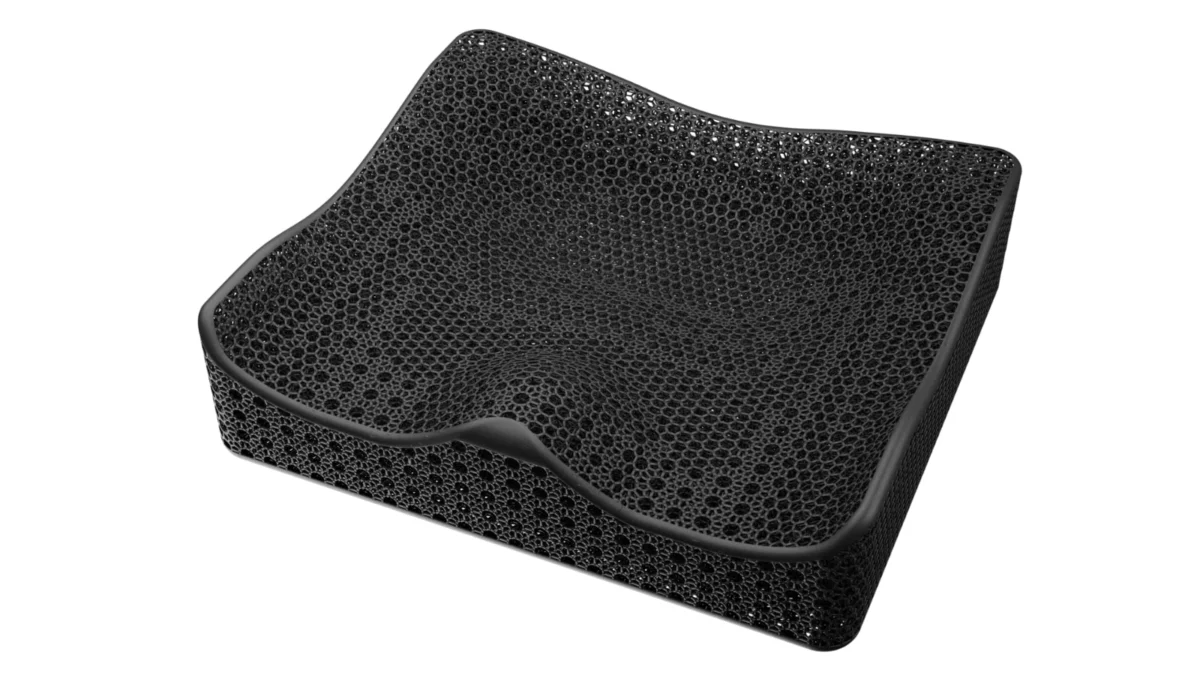
The innovation is primarily showcased in the Verro Lattice model. This cushion utilizes Kalogon’s patent-pending variable-density lattice technology, an advanced 3D-printed elastomer construction. This allows for an unprecedented level of control over firmness across the cushion surface: areas requiring rigid support to maintain proper posture can be made firmer, while regions prone to high pressure can be strategically softened to promote diffusion and prevent skin breakdown. This precision is a game-changer for individuals with highly asymmetrical or unique body shapes that require nuanced support.
Complementing the Verro Lattice is the Verro Foam, a dual-density foam option designed for adaptability and ease of modification. This model features a dense foam base for foundational support, topped with a softer foam layer for enhanced comfort. It caters to users who may benefit from in-field adjustments by seating specialists or those transitioning to contoured seating, offering a blend of support and flexibility.
Both Verro models are ordered through Kalogon’s proprietary "Launch Pad," an interactive, real-time configurator that streamlines the customization process for clinicians. This platform allows for either the selection and refinement of standard contours or the development of entirely custom contours based on detailed patient data, including pressure mapping and seating evaluations. Crucially, Kalogon pledges an industry-leading 14-day turnaround time from order receipt to shipment, drastically reducing the waiting period for critically needed custom solutions.
Chronology: From Smart Seating to Hyper-Personalized Customization
Kalogon’s journey to the Verro launch is rooted in a commitment to innovation in rehabilitation technology. Founded with a vision to revolutionize seating, the company initially gained recognition for its "smart seating solutions," such as the Orbiter Med. These early products demonstrated Kalogon’s aptitude for integrating technology to enhance user comfort and health, particularly through dynamic pressure redistribution and real-time feedback systems.
The development of Verro was a natural progression, born from extensive engagement with clinicians and a deep understanding of unmet patient needs. As Tim Balz, CEO and founder of Kalogon, articulated, "We kept hearing from clinicians that their most complex patients were falling through the cracks." This critical insight highlighted a persistent gap in the market: while standard and even many custom cushions offered general support, they often failed to provide the hyper-personalized precision required for severe postural deformities or highly sensitive pressure areas.
The challenge was clear: how to create a cushion that could not only accommodate but actively correct and support highly individual anatomical variations. The answer lay in exploring advanced manufacturing techniques that offered granular control over material properties. This led Kalogon’s research and development team down the path of 3D printing and elastomer technology. The conceptualization and subsequent patent-pending development of the variable-density lattice was a multi-year endeavor, involving iterative design, material science research, and rigorous testing. The goal was to engineer a material structure that could be firm in one millimeter and soft in the next, responding precisely to the unique contours and pressure points of each individual user.
The introduction of Verro, particularly the Lattice model, represents the culmination of this dedicated research and Kalogon’s strategic expansion beyond "smart" functionality into the realm of truly "intelligent" structural design. It marks a deliberate effort to broaden their product portfolio to serve an even wider and more complex patient population, solidifying their position as an innovator in the CRT space. The meticulous in-house manufacturing at their Melbourne, Florida facility underscores Kalogon’s commitment to quality control and rapid innovation, ensuring that these advanced solutions reach those who need them most, without undue delay.
Supporting Data: The Science Behind Enhanced Postural Support
The challenges faced by individuals with complex seating needs are multifaceted and often severe. Conditions like windswept posture (where the pelvis and lower extremities are rotated to one side), pelvic obliquity (an uneven height of the pelvis), and spinal asymmetry (such as scoliosis) can lead to a cascade of problems. Beyond immediate discomfort, these issues can result in chronic pain, increased risk of pressure injuries (which can be life-threatening and incredibly costly to treat), compromised respiratory and digestive function, and significant limitations in functional independence. Traditional cushions, typically made from uniform foams or gels, struggle to provide the targeted support and offloading required to manage these intricate conditions effectively. They often create new pressure points or fail to stabilize the pelvis and spine adequately, sometimes exacerbating existing deformities.
The Verro Lattice: A Deep Dive into 3D-Printed Precision
The Verro Lattice directly confronts these challenges through its revolutionary patent-pending variable-density lattice technology. At its core, this innovation is an elastomer-based material, selectively 3D-printed layer by layer. Unlike traditional materials, 3D printing allows for the creation of intricate internal geometries. By precisely controlling the size, shape, and distribution of these lattice structures, Kalogon can dictate the material’s firmness and flexibility at a microscopic level.
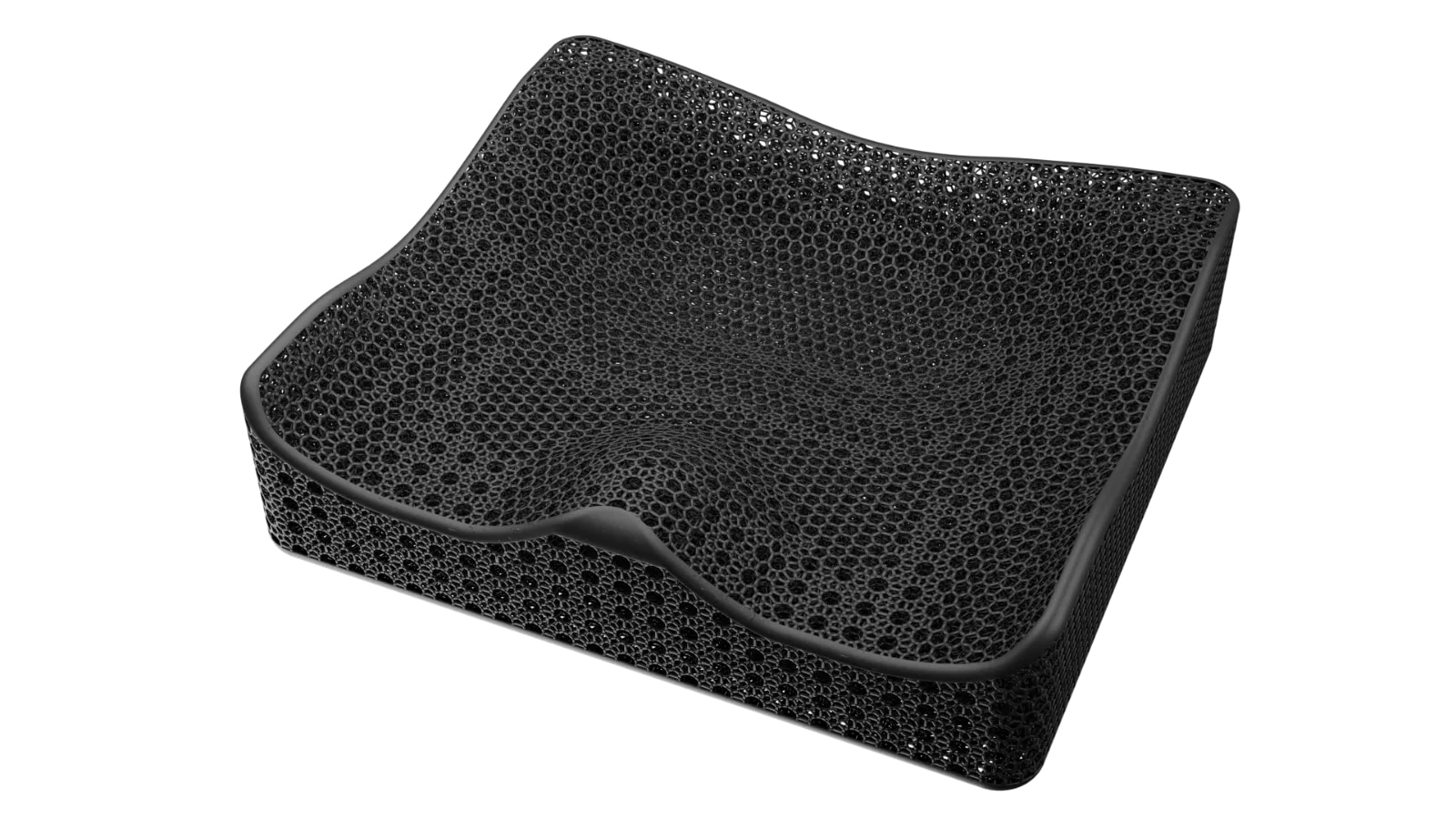
- Targeted Support: Where a patient requires firm support to maintain pelvic alignment or correct a postural deviation, the lattice can be printed with denser, more robust structures.
- Pressure Diffusion: In areas highly susceptible to pressure injury, such as the ischial tuberosities or sacrum, the lattice can be designed with larger, more compliant cells, effectively diffusing pressure over a wider area and conforming intimately to the body’s contours.
- Enhanced Properties: This elastomer construction also offers inherent advantages over traditional foams and gels. It is highly breathable, promoting airflow and regulating temperature, which is crucial for skin health and user comfort, especially for individuals who spend extended periods in their wheelchairs. Furthermore, the material is durable and resilient, maintaining its structural integrity and therapeutic properties over time, unlike some foams that can degrade or "bottom out."
The Verro Foam: Adaptability Meets Comfort
While the Verro Lattice pushes the boundaries of customization, the Verro Foam provides a highly effective and adaptable alternative. Its dual-density construction features a firm foam base, offering a stable foundation for postural support, overlaid with a softer foam topper. This design allows for:
- Comfort and Conformity: The softer top layer cradles the user, providing immediate comfort and mild contouring.
- In-Field Modification: A key advantage of foam is its modifiability. Seating specialists can easily carve or add material to the foam cushion in the field, allowing for fine-tuning after initial fitting or accommodating subtle changes in a user’s condition over time. This flexibility is particularly valuable for patients who are new to highly contoured seating or whose needs may evolve.
- Breathability and Temperature Regulation: While not as inherently breathable as the lattice, modern high-quality foams used in the Verro Foam are designed to offer good airflow and temperature management, surpassing many older foam technologies.
The Ordering Process: Empowering Clinicians with "Launch Pad"
Kalogon’s "Launch Pad" configurator is central to delivering these personalized solutions efficiently. Clinicians can choose from two primary ordering pathways:
- Standard Contour Selection and Refinement: Clinicians can select from a library of pre-designed contours, which can then be precisely refined to match the patient’s specific measurements and postural needs. This offers a balance between customization and streamlined ordering.
- Custom Contour Development: For the most complex cases, clinicians can submit detailed patient data, including pressure mapping results and comprehensive seating evaluation data. This information allows Kalogon’s engineers to design a truly unique, bespoke contour that addresses every nuance of the patient’s anatomy and postural requirements.
The emphasis on a 14-day shipping guarantee is not just a logistical achievement but a critical patient benefit. For individuals awaiting a custom cushion, delays can mean prolonged discomfort, increased risk of skin breakdown, and delayed rehabilitation goals. Kalogon’s rapid turnaround significantly mitigates these risks, reflecting a deep understanding of the urgency often associated with CRT.
Official Responses: A Vision for Patient-Centric Innovation
The launch of Verro has been met with enthusiasm from Kalogon’s leadership and key advisors, who underscore the profound impact this technology is expected to have on both patients and clinicians.
Tim Balz, CEO and founder of Kalogon, articulated the company’s driving philosophy behind Verro: "We kept hearing from clinicians that their most complex patients were falling through the cracks, so we developed a technology that lets us 3D print the cushion with precise, localized control over where the body gets support and where it gets relief." Balz emphasized the transformative power of the variable-density lattice, stating, "With our variable-density lattice, we can create subtle variations across the surface and sides of the cushion that simply aren’t possible with traditional materials. The customization options are hyper-personalized to provide the best comfort, support and fit for every customer.” His statements highlight Kalogon’s unwavering commitment to leveraging advanced engineering to solve real-world clinical problems, pushing the boundaries of what’s possible in seating technology. The focus on "hyper-personalization" is a direct response to the inherent variability of human anatomy and pathology, acknowledging that a one-size-fits-many approach is often insufficient for those with significant needs.
Adding a crucial clinical perspective, Kelly Waugh, MA, PT, ATP, an esteemed advisor to Kalogon, lauded the flexibility and breadth of the Verro line. "Every client is different, and seating specialists need options that reflect that. Verro gives us more ways to match the right solution to each unique person based on their postural support needs, personal preferences and desire for in-field modification," Waugh explained. As a highly experienced physical therapist and Assistive Technology Professional (ATP), her insights are invaluable. She understands firsthand the challenges clinicians face in finding appropriate seating solutions for their diverse patient populations. Waugh concluded, "That flexibility will allow Kalogon to serve a much wider population of people with complex seating needs than before." Her remarks underscore the importance of having multiple, tailored options to address the nuanced requirements of complex rehabilitation, ultimately empowering clinicians to deliver optimal care.
The inclusion of the E2609 Medicare code is another critical aspect of Kalogon’s official strategy. This coding signifies that Verro cushions meet specific standards for "custom fabricated, seating system, back, including any type additions, each," making them eligible for reimbursement under Medicare. This is paramount for accessibility, as the high cost of custom rehabilitation equipment can often be a barrier for patients. By securing this code, Kalogon ensures that Verro is not just technologically advanced but also financially accessible, aligning with their mission to improve the lives of as many individuals as possible. This strategic move demonstrates Kalogon’s understanding of the healthcare landscape and their commitment to facilitating broader adoption of their innovative solutions.
Implications: A Healthier, More Independent Future
The launch of Kalogon’s Verro line carries significant implications for patients, clinicians, and the broader rehabilitation technology market. For patients living with complex postural needs, Verro offers the promise of a dramatically improved quality of life. By providing precise, personalized support, these cushions can significantly reduce the risk of pressure injuries, a common and debilitating complication of prolonged wheelchair use. Beyond prevention, the enhanced comfort and stability afforded by Verro can lead to reduced pain, improved functional posture (which can, in turn, positively impact breathing, digestion, and reach), and ultimately, greater independence in daily activities. The ability to maintain proper alignment can also prevent the progression of deformities, thereby reducing the need for more invasive interventions in the future.
From a clinical standpoint, Verro equips seating specialists and rehabilitation professionals with unprecedented tools to address their most challenging cases. The ability to specify firmness and contour with such granular control, particularly with the 3D-printed lattice, empowers clinicians to prescribe solutions that truly match a patient’s unique biomechanics. The "Launch Pad" configurator, coupled with the rapid 14-day turnaround, streamlines the often-cumbersome process of ordering custom equipment, allowing clinicians to focus more on patient assessment and less on logistical delays. This efficiency can lead to better patient outcomes and a more effective allocation of healthcare resources. The potential for reduced pressure injuries, facilitated by Verro, also translates into significant cost savings for the healthcare system, as treating these wounds is notoriously expensive and resource-intensive.
In the broader market, Verro represents a clear disruption and a beacon of innovation. Kalogon is setting a new benchmark for what is achievable in custom wheelchair seating by integrating advanced manufacturing technologies like 3D printing into medical devices. This move is likely to spur further research and development across the industry, encouraging other manufacturers to explore similar advanced materials and customization techniques. It highlights the growing trend towards personalized medicine, where treatments and devices are tailored to the individual rather than a generic patient profile.
Looking ahead, Verro positions Kalogon as a frontrunner in the evolving field of complex rehabilitation technology. This deliberate expansion into diverse material solutions suggests a future where Kalogon might continue to integrate smart functionalities with advanced structural design, potentially leading to dynamic custom cushions that adapt in real-time. The in-house manufacturing capability provides Kalogon with agility, allowing them to iterate quickly and respond to evolving clinical needs. Ultimately, Verro is more than just a new product; it is a testament to the power of combining innovative engineering with a profound understanding of human needs, promising a healthier, more comfortable, and more independent future for countless wheelchair users worldwide.