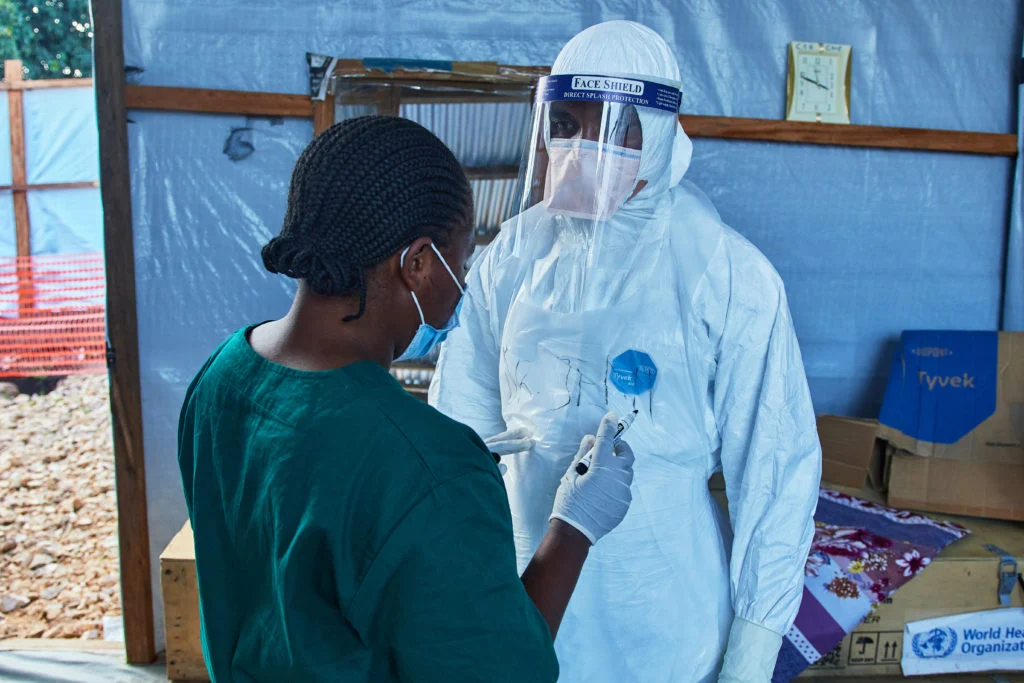
KINSHASA, Congo — The Democratic Republic of the Congo (DRC) is facing a critical juncture in its battle against a lethal resurgence of Ebola. On Thursday, government health officials confirmed that the virus has migrated beyond its primary epicenter in Ituri province, appearing in the provinces of Tshopo and Haut-Uele. This geographical expansion, coupled with a grim milestone of 600 deaths, has reignited fears that the outbreak—already complicated by regional instability and a severe lack of medical resources—is spiraling toward a national emergency.
According to the latest report from the Congolese health ministry, the total number of confirmed cases has surged to 1,759. The emergence of the virus in previously unaffected regions represents a significant failure of containment efforts, forcing health workers to stretch their already thin resources across an even wider, more challenging terrain.
The Anatomy of an Expanding Crisis: Key Facts
The current outbreak, which was officially declared on May 15, 2026, is driven by the Bundibugyo virus, a rare and particularly dangerous strain of Ebola. Unlike more common variants that have been studied extensively, the Bundibugyo strain lacks both an approved vaccine and established, standardized treatments, leaving medical teams to rely on experimental protocols.
The situation in Tshopo is particularly concerning. Health officials identified two new suspected cases in Kisangani, the provincial capital. Of these, one case has been traced back to the Nia-Nia health zone in Ituri, providing a clear path of transmission. However, the second case remains an epidemiological mystery; it bears no apparent geographical link to known clusters, suggesting that the virus may be circulating in the community via undetected chains of transmission. The lack of clarity surrounding this second case has triggered an urgent investigative response from the Ministry of Health and the World Health Organization (WHO).
A Chronology of the Outbreak
The current crisis did not appear suddenly; it was the result of a "silent" transmission period that lasted for weeks before official detection.
- Pre-May 2026: The Bundibugyo virus begins circulating in rural, hard-to-reach areas of Ituri province. Because of the region’s isolation and the ongoing civil conflict, early cases were misidentified or ignored.
- May 15, 2026: Following a spike in unexplained deaths, the Congolese government and the WHO officially declare a fresh Ebola outbreak.
- Late May – June 2026: Despite international alerts, the virus gains a foothold in Ituri. Attacks on health centers and the displacement of local populations create "super-spreader" conditions, allowing the virus to travel with fleeing civilians.
- Early July 2026: Clinical trials for experimental treatments are launched in Bunia, marking the first time modern medical interventions have been applied to this specific strain.
- July 9, 2026: The government announces that the virus has reached Tshopo and Haut-Uele, pushing the death toll to 600.
Supporting Data and the Burden of Conflict
The statistical reality of the outbreak is stark. With 1,759 confirmed cases and a mortality rate nearing 35%, the logistical burden on the Congolese health infrastructure is immense. The data indicates that the virus thrives in regions where the "social contract" has fractured.
The epicenter, Ituri, is a landscape defined by protracted conflict. Frequent attacks on health centers have forced many facilities to suspend operations, leaving populations vulnerable and without access to triage or quarantine. When patients cannot be safely isolated, the risk of community-wide transmission increases exponentially.
Moreover, the "funding gap" has become a recurring theme in reports from international aid agencies. Following the reduction of USAID support—a vital component in previous Ebola containment efforts—the frontline workers in Goma and Bunia are struggling to secure basic personal protective equipment (PPE), sanitation supplies, and rapid diagnostic tests. Without a massive infusion of international capital and logistical support, health experts warn that the virus could gain a permanent foothold in the country’s more densely populated urban centers.
Official Responses: Navigating a Medical Vacuum
The Congolese government, in coordination with international partners, is attempting to pivot from a purely reactive stance to a more proactive surveillance strategy. The recent launch of clinical trials at the Evangelical Medical Center in Bunia is a centerpiece of this effort. Researchers are testing therapeutic candidates that, while not yet fully approved, offer the only glimmer of hope for patients who have already contracted the virus.
However, Dr. Justin Kabumba, reporting from Goma, notes that scientific progress is being overshadowed by the security environment. "It is difficult to conduct a clinical trial when the participants are fleeing from violence," he stated. The government’s call for a humanitarian corridor has been met with mixed results, as various insurgent groups continue to occupy critical transit routes, effectively cordoning off affected villages from medical intervention.
The World Health Organization has issued a call for transparency, urging local leaders to report suspected cases immediately. Yet, due to a deep-seated distrust of government officials and foreign medical workers—a legacy of previous health crises and political instability—many families continue to hide symptomatic relatives, inadvertently fueling the spread of the disease.
Implications for Public Health and Global Security
The implications of the current outbreak are global. The Bundibugyo strain’s lack of a vaccine makes it a high-priority threat for global health security. If the virus reaches major trade hubs or international transit points, the potential for cross-border transmission increases.
The Economic Cost
Beyond the immediate loss of life, the economic impact on the DRC is devastating. Agriculture in the affected provinces is grinding to a halt as farmers fear working in fields, and local markets—the lifeblood of the rural economy—are being shut down to prevent large gatherings. As these regions descend into economic instability, the propensity for further civil unrest grows, creating a vicious cycle where health crises trigger conflict, and conflict prevents health interventions.
The Moral Imperative
The international community faces a moral reckoning. As the death toll mounts, the delay in funding and the lack of a standardized vaccine program for this specific virus highlight the disparities in global healthcare. While the world has made strides in combating the Zaire ebolavirus, the relative neglect of the Bundibugyo strain has left a vulnerable population to face a silent killer.
"A free press is a cornerstone of a healthy democracy," notes the reporting team from the ground. "But in the face of this outbreak, the most vital currency is trust." Without reliable information, adequate funding, and a cessation of hostilities in the eastern regions, the efforts to contain the 600-strong death toll will likely remain a race against time that the authorities are currently losing.
As of the latest reports, the government is intensifying its contact-tracing operations in Kisangani. Whether these efforts can contain the spread before the virus establishes a permanent, uncontrollable presence in the city remains the most urgent question facing the nation today. The world watches, but for the people of Tshopo and Ituri, the response must be more than mere observation—it must be a comprehensive, well-funded, and secure humanitarian intervention.