




Ten weeks after the United States and Israel launched a targeted bombing campaign against Iranian military installations on February 28, 2026, the American economy is reeling from an unprecedented energy-driven crisis. What began as a strategic military operation has metastasized into a severe domestic economic emergency, characterized by a 56% surge in gasoline prices and the highest inflationary spike the nation has witnessed in three years. As the Strait of Hormuz—the world’s most critical maritime oil chokepoint—remains shuttered, the resulting global supply collapse has left U.S. policymakers, households, and industrial sectors scrambling to navigate a volatile and uncertain future.
Chronology of a Crisis: From Strikes to Supply Shock
The current economic turbulence can be traced back to the final days of February. Following intelligence reports suggesting Iranian proxy activity in the region, U.S. and Israeli forces initiated a series of strikes aimed at degrading Iran’s military infrastructure. While the initial military objectives were met, the regional response was swift and catastrophic for global trade.
By early March, Tehran signaled a retaliatory move that would bypass conventional naval combat: the total blockade of the Strait of Hormuz. Through a combination of naval maneuvers, mine-laying, and direct threats against merchant vessels, Iran successfully halted the transit of oil from Saudi Arabia, Iraq, Kuwait, the United Arab Emirates, and Qatar.
Unlike the 1973 oil crisis, which involved a targeted embargo against specific nations, the current blockade is a blanket closure. This has effectively stripped the global market of millions of barrels of daily crude production. By mid-April, the "oil shock" migrated from the international markets to the local gas pump. The U.S. Department of Labor’s latest data reflects a nation in the grip of a supply-side squeeze, with gasoline prices accelerating at a pace not seen since the post-pandemic recovery era.
Supporting Data: The Anatomy of Inflation
The Labor Department’s Tuesday report provides a grim quantitative assessment of the current state of the American economy. The Consumer Price Index (CPI) rose by 3.8% relative to April 2025—a figure that serves as the steepest year-over-year increase since 2023. Monthly inflation accelerated by 0.6% in a single month, a jump driven almost exclusively by a 5.4% increase in gasoline prices.
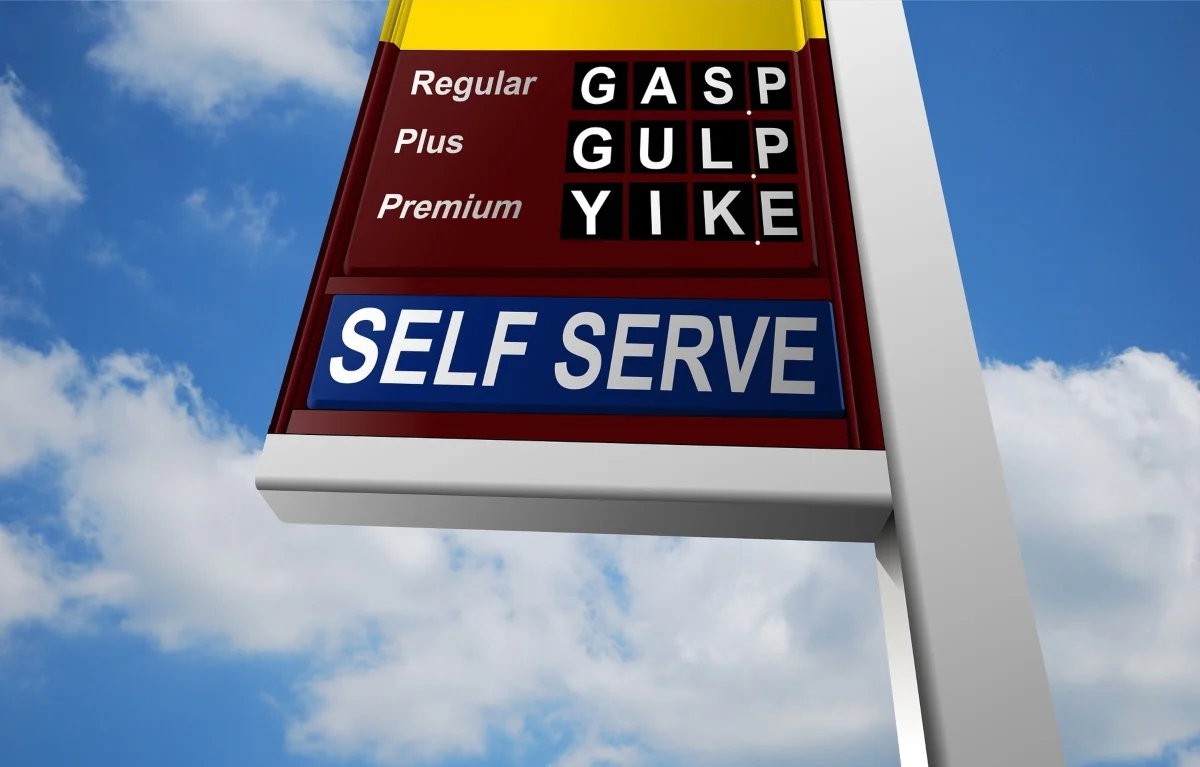
According to AAA, the national average for a gallon of regular gasoline has climbed to $4.517. This represents a 44% increase compared to the same timeframe last year. Beyond the pump, the cascading effects are beginning to manifest in broader consumer data. Transportation costs for goods have surged, placing upward pressure on everything from fresh produce to durable consumer electronics.
Perhaps most concerning for economic stability is the erosion of real wages. The report confirms that when adjusted for inflation, average hourly wages fell by 0.3% in April compared to the previous year. This is the first year-over-year decline in three years, signaling that the "nominal" pay raises granted by many employers are being entirely cannibalized by the rising cost of living. Workers are effectively taking a pay cut despite the tightening labor market.
Official Responses and Strategic Vulnerabilities
The White House and the Federal Reserve are currently under immense pressure to mitigate the fallout. To dampen the price spikes, the U.S. Strategic Petroleum Reserve (SPR) has been drawn down at an aggressive, unsustainable rate. Originally designed as a "last resort" buffer against supply disruptions, the SPR is currently hovering at dangerously low levels, fueling concerns that the government is running out of tools to manage the crisis.
President Donald Trump has publicly signaled his frustration with the current monetary policy. In recent appearances, the President has leveled sharp criticism at the Federal Reserve and its outgoing chair, Jerome Powell, for failing to implement aggressive interest rate cuts that might stimulate a slowing economy.
The focus of the financial world has now shifted to Kevin Warsh, the President’s nominee to replace Powell. Warsh’s confirmation hearings, scheduled for this week, have become the epicenter of a fierce debate. Senators are expected to press Warsh on whether he favors a "dovish" policy to support growth or if he will prioritize fighting the persistent inflationary pressures that the current energy crisis has unleashed. Whether Warsh can unify the Federal Open Market Committee (FOMC) behind a cohesive strategy remains a subject of intense speculation on Wall Street.
The Human Toll: Families and the "New Normal"
While economists debate interest rates and geopolitical maneuvering, the human cost of the crisis is playing out in living rooms across America. A recent poll conducted by PBS News/NPR/Marist highlights the severity of the situation: 56% of Americans describe the current cost of living in their area as unaffordable, with 12% labeling it as completely unsustainable.
Grace King, a 31-year-old administrative assistant from Ames, Iowa, serves as a case study for the middle-class experience. King has been forced to overhaul her family budget, cutting out all discretionary spending, including online retail and non-essential travel.
"The pressure is everywhere—from the groceries to the gas to fill up the tank," King noted in an interview with PBS NewsHour. "My commute is short, but even the minor errands are starting to feel like a financial gamble."
King’s experience is echoed in the data, which shows that residents in Western states, already burdened by high state fuel taxes and stringent environmental regulations, are seeing pump prices significantly higher than the national average. For these households, the energy crisis is not a headline—it is a daily logistical and financial struggle.
Implications for the 2026 Midterm Elections
With the November 3 midterm elections approaching, the economic crisis has become the defining issue of the campaign. The Republican Party, which currently holds slim majorities in both chambers of Congress, is acutely aware that inflation is a "voter-turnout killer."
Political analysts suggest that the failure to reopen the Strait of Hormuz has become a major liability for the current administration. Reports from the New York Times indicate that diplomatic efforts have largely stalled. Attempts by the White House to enlist China as a mediator to influence Iranian authorities have yielded no concrete results, leaving the administration with few options beyond military posturing or further draining the nation’s energy reserves.
The opposition party is leveraging this narrative, arguing that the administration’s foreign policy failures have directly led to the current "energy crunch." As the election cycle accelerates, the ability—or inability—of the government to stabilize gasoline prices will likely determine the balance of power in Washington for the remainder of the presidential term.
A Future Without Clear Resolution
As the nation enters the second quarter of 2026, the horizon remains clouded. The Federal Reserve, initially poised to begin a series of interest rate cuts, has adopted a "wait and see" posture. This caution is born of the fear that the energy shock will lead to "second-round effects"—where higher energy costs become embedded in the wage-price spiral, leading to long-term structural inflation that is far more difficult to combat than temporary spikes.
Energy analysts warn that without a breakthrough in the diplomatic impasse or a significant shift in regional military dynamics, the U.S. faces a period of "stagflationary" risk. The Strategic Petroleum Reserve, while a necessary buffer, is not a permanent solution, and its depletion has removed a vital safety net.
For the American public, the reality is one of diminished purchasing power and increased uncertainty. For policymakers, the crisis has exposed the fragility of the nation’s energy security framework. The strategies developed over the past fifty years to handle energy shocks are being tested against a new, more complex geopolitical reality. Whether the current administration can pivot to a solution that restores market stability remains the most pressing question facing the country as it looks toward the winter months and the upcoming electoral judgment.