



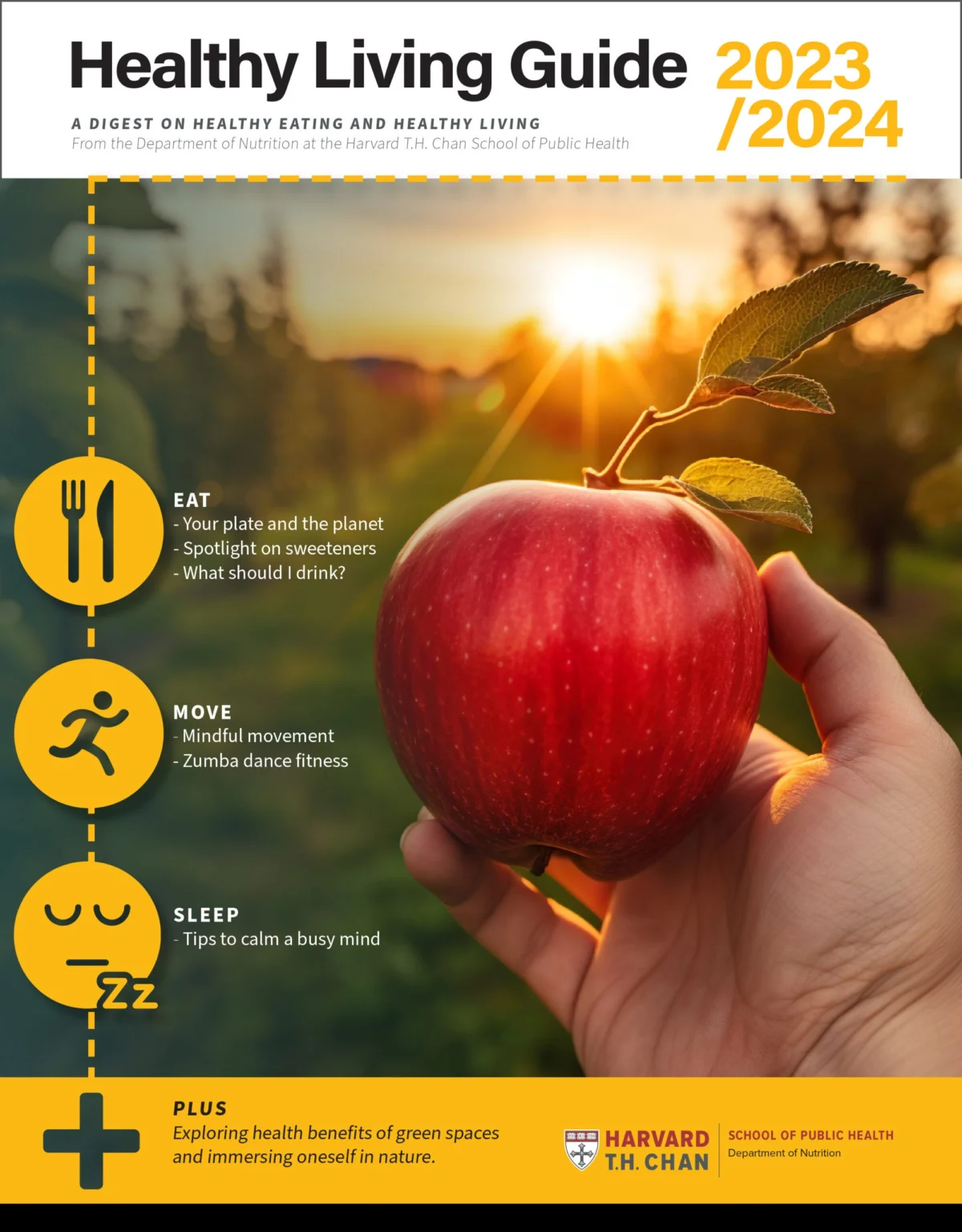
"The apple in your hand is the body of the cosmos." This poetic assertion by the late Zen master Thich Nhat Hanh serves as the foundational philosophy for the fourth edition of the Healthy Living Guide, recently released by the Harvard T.H. Chan School of Public Health’s Department of Nutrition. As we navigate a complex global landscape where food security, mental health, and environmental sustainability intersect, this latest digest arrives not merely as a collection of dietary tips, but as a roadmap for holistic, mindful existence in 2024.
Main Facts: A Holistic Approach to Public Health
The 2023-2024 Healthy Living Guide marks a pivotal shift in how the Department of Nutrition approaches wellness. While previous editions focused heavily on the mechanics of macronutrients and exercise regimens, this year’s installment integrates the burgeoning field of mindfulness as a primary pillar of physical and planetary health.
The guide is anchored by the recent launch of the Thich Nhat Hanh Center for Mindfulness in Public Health. This center represents a formal institutional commitment to researching how mindfulness—the practice of maintaining a non-judgmental state of heightened or complete awareness—can be scaled from individual habit to population-level policy.
Key pillars of the 2023-2024 edition include:
- Mindful Eating: Examining the intersection of our food choices with personal well-being and the health of the planet.
- Nutritional Science: Decoding the latest research on ultra-processed foods and their correlation with mental health outcomes.
- Physical Activity: Exploring diverse modalities of movement, including the physiological and psychological benefits of rhythmic exercise like Zumba.
- Circadian Health: Analyzing the science of sleep "chronotypes" and their long-term impact on metabolic and cognitive health.
Chronology: A Decade of Evolution in Nutritional Guidance
The journey toward this year’s comprehensive guide did not happen in a vacuum. The Department of Nutrition has spent years transitioning from prescriptive, one-size-fits-all dietary advice to a more nuanced, evidence-based understanding of lifestyle medicine.
- 2020-2021: The inaugural editions of the Healthy Living Guide were published as a direct response to the global pandemic, focusing on building immune resilience and managing stress through nutrition.
- 2022: The scope expanded to include environmental sustainability, highlighting the "Planetary Health Diet" and the importance of food sourcing.
- 2023: A landmark year marked by the official inauguration of the Thich Nhat Hanh Center. This period saw the integration of Eastern contemplative practices with Western epidemiological research.
- 2024: The current edition synthesizes these strands, emphasizing that public health cannot be separated from the "mindful" interaction between the human body and the environment.
Supporting Data: The Science Behind the Lifestyle
The strength of the Healthy Living Guide lies in its commitment to peer-reviewed evidence. This year’s edition addresses several pressing health crises with robust data:
The Ultra-Processed Food (UPF) Paradox
Recent research highlighted in the guide suggests that the consumption of ultra-processed foods is not merely a weight-management issue, but a mental health one. Studies indicate that diets high in UPFs—characterized by artificial additives, high sugar content, and excessive processing—are linked to increased rates of depression and anxiety. The guide provides actionable strategies to swap these items for whole-food alternatives, focusing on nutrient density rather than calorie counting.
The Chronotype Revolution
The guide delves into the biology of the "internal clock." Understanding one’s chronotype—the natural inclination to sleep at certain times—is presented as essential for optimizing health. The literature summarized in the guide suggests that "night owls" (those with a late chronotype) face unique metabolic risks when forced into early-morning schedules, a phenomenon known as "social jetlag." The guide offers evidence-based strategies to align lifestyle choices with individual biological rhythms to mitigate these risks.
Movement as Medicine
The section on physical activity moves beyond the gym-centric model. By highlighting the efficacy of Zumba and other social-movement practices, the guide validates the importance of "joyful movement." Research suggests that when exercise is intrinsically motivated by enjoyment and social interaction, adherence rates increase significantly compared to structured, solitary exercise programs.
Official Responses and Expert Perspectives
Experts from the Harvard T.H. Chan School of Public Health emphasize that the 2024 guide is a response to the "epidemic of distraction."
"We are living in an era where the act of eating is often decoupled from the experience of nourishing oneself," says a representative from the Department of Nutrition. "By integrating the principles of the Thich Nhat Hanh Center, we are attempting to restore that connection. If we can encourage a population to eat with intention, we simultaneously reduce the burden of chronic disease and decrease our collective carbon footprint through more conscious food choices."
Furthermore, the Center’s researchers note that mindfulness is not an "add-on" to health, but the foundation upon which diet and exercise succeed. Without the mental capacity to observe one’s habits, knowledge of "what" to eat is often rendered useless by behavioral patterns that resist change.
Implications: A Sustainable Future for All
The implications of this year’s Healthy Living Guide extend far beyond the individual reader. The document serves as a blueprint for a shift in public health policy.
1. Planetary Health
By advocating for mindful eating, the guide indirectly promotes a more sustainable food system. Mindful consumption often leads to a reduction in food waste and a preference for locally sourced, plant-forward ingredients—choices that are inherently more sustainable for the planet.
2. Mental Health Parity
By treating nutrition as a mental health intervention, the guide helps destigmatize the role of diet in psychological wellness. It empowers individuals to take agency over their mental state through physical, tangible actions like meal preparation and consistent sleep hygiene.
3. Empowerment through Education
The inclusion of printable tip sheets and summary charts is designed to democratize health information. By making these resources accessible, the Department of Nutrition aims to bridge the health literacy gap, ensuring that evidence-based guidance is available to anyone with an internet connection, regardless of their socioeconomic background.
Moving Forward: How to Use the Guide
The 2023-2024 Healthy Living Guide is designed to be an interactive companion for the year ahead. Readers are encouraged to:
- Download the Printable PDF: Keep a physical copy in the kitchen or workspace as a consistent reminder of health goals.
- Test Your Knowledge: Utilize the "Healthy Living Knowledge" quiz to identify personal blind spots in your health habits.
- Engage with the Community: The guide points toward online articles and resources that foster a sense of shared responsibility for health, encouraging readers to see themselves as part of a larger, global community of health-conscious individuals.
As we move through 2024, the call to action is clear: health is not a destination or a quick-fix resolution. It is a continuous, mindful practice. By shifting our focus from the abstract concepts of "dieting" to the concrete, mindful act of living, we can improve our own lives while contributing to the health of the "cosmos" that sustains us.
Whether you are looking to refine your sleep schedule, improve your diet, or simply find a moment of peace in a busy day, the latest Healthy Living Guide provides the tools necessary to navigate the year with clarity and intention.
Click here to download the printable 2023-2024 Healthy Living Guide (PDF)