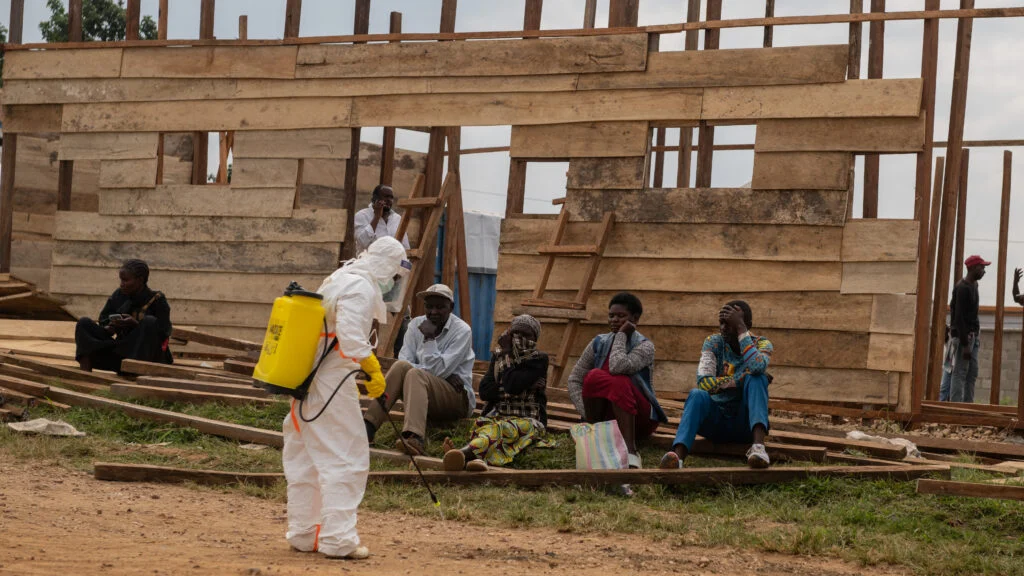
DAKAR, Senegal — A humanitarian emergency of harrowing proportions is unfolding across the dense, conflict-ridden forests of eastern Democratic Republic of Congo (DRC) and spilling over into neighboring Uganda. According to the Africa Centres for Disease Control and Prevention (Africa CDC), the current Ebola outbreak—driven by the rare and particularly lethal Bundibugyo strain—has established itself as the most aggressive in the recorded history of the disease at this stage of development.
In its first month alone, the virus has claimed more than 200 lives, leaving health authorities scrambling to contain a pathogen that currently lacks the widely available, proven vaccines that have mitigated previous Zaire-strain outbreaks in the region. With 894 confirmed cases and a staggering number of suspected contacts, the international community is facing a critical shortfall in funding, personnel, and access.
The Magnitude of the Crisis: A Statistical Breakdown
The data released this Thursday by Dr. Wessam Mankoula, a medical epidemiologist at Africa CDC, paints a grim picture. The current outbreak is three times more virulent than the 2000 Uganda outbreak, which, at a similar one-month milestone, had recorded only 281 cases.
The surge is relentless: cases have increased by 38% in the last week alone, spreading across 32 distinct health zones. The epicenter remains the eastern Congolese province of Ituri, which accounts for over 90% of all confirmed infections. While 74 patients have successfully recovered, the mortality rate and the velocity of transmission suggest that the situation is far from reaching a plateau.
The Challenge of the Bundibugyo Virus
Unlike the Zaire ebolavirus, which has been the culprit in the vast majority of Congo’s 16 previous outbreaks, the Bundibugyo strain presents unique diagnostic and therapeutic challenges. Because the Zaire virus has been the primary focus of global research, effective, approved vaccines have been developed for it. The Bundibugyo strain, however, has no such defense. Experimental monoclonal antibodies are currently under development, but their deployment in the field remains in the nascent stages.
Chronology: A Delayed Detection with Deadly Consequences
The tragedy of this outbreak is compounded by a significant delay in detection. While the virus is suspected to have begun circulating well before mid-May, it was not officially confirmed until May 15. This window of unchecked transmission allowed the virus to gain a foothold in remote areas before public health interventions could be mobilized.
- Pre-May 15: Unidentified febrile illnesses were reported in remote Ituri villages; however, testing protocols were not yet optimized for the specific Bundibugyo signature.
- May 15: Official confirmation of the outbreak. By this point, the virus had already permeated multiple health zones.
- Late May – Early June: Rapid expansion of the virus from Ituri into North and South Kivu, and eventually across the border into Uganda.
- Current Status: The outbreak is now categorized as a regional emergency, with two confirmed deaths already reported in Uganda.
The "Invisible" Danger: Barriers to Contact Tracing
The most significant obstacle to curbing the virus is the inability of health authorities to identify and isolate contacts. According to epidemiological standards, for the 894 confirmed cases, the system should be actively monitoring between 17,000 and 35,000 potential contacts.
"We are currently tracking only about 4,000 individuals," Dr. Mankoula stated. "That is less than 15% of the necessary coverage. We are still far from controlling the situation."
Insecurity and Displacement
The operational environment in Ituri is arguably one of the most difficult in the world for public health intervention. Decades of civil conflict have displaced nearly a million people. In a region characterized by dense, impenetrable forests and infrastructure that barely exists, health workers struggle to reach villages that are days away by foot.
Furthermore, the region is home to thousands of artisanal miners—a highly mobile population that traverses remote sites, often crossing porous borders. This mobility turns individual miners into potential "super-spreaders," moving the virus from deep forest camps to transit hubs and urban centers before authorities are even aware of an infection in a specific sector.
Official Responses and the Funding Gap
The international response, while robust in its initial pledges, has been lethargic in its execution. Of the more than $900 million promised by global donors to fight the outbreak, only $90 million—a mere 10%—has been released to the front lines.
The Personnel Deficit
The lack of physical presence on the ground is just as pressing as the financial one. Africa CDC estimates that a minimum of 540 trained personnel are required to adequately manage the containment efforts. Currently, only 84 are deployed. This massive deficit in human capital means that surveillance, vaccination (where applicable), and treatment centers are severely understaffed.
Dr. Mankoula was candid in his assessment of the bureaucracy: "We’re keeping our fingers crossed that those new pledges will be fast-tracked. We will be following up with member states and partners to ensure these commitments are turned into actual money released to the affected countries."
Implications: A Regional and Global Concern
The implications of this outbreak extend far beyond the immediate humanitarian toll.
Public Health Risks
If the transmission continues at the current 38% weekly growth rate, the local health infrastructure—already weakened by conflict—will collapse entirely. A total collapse would not only cause a surge in Ebola-related mortality but would also lead to an increase in preventable deaths from malaria, cholera, and other common endemic diseases, as resources are diverted or facilities are abandoned.
Economic and Social Instability
The mineral-rich nature of the Ituri region makes it a cornerstone of the local economy. The disruption of mining operations, the closure of markets, and the restriction of movement necessary to stop the virus will inevitably lead to food insecurity and economic hardship for the millions of people who already live on the brink of poverty.
Global Security
The history of Ebola outbreaks has taught the international community that localized outbreaks can quickly become international security threats. With the virus already crossing borders into Uganda, the threat of further regional spread is high. As people flee the violence in eastern Congo, the risk of carrying the pathogen into neighboring countries increases.
Conclusion: A Call for Urgent Action
The situation in eastern Congo and Uganda is a stark reminder of the vulnerability of remote, conflict-affected regions to emerging pathogens. The Bundibugyo strain has exposed critical weaknesses in the global health architecture: a lack of pre-positioned funding, the difficulty of conducting surveillance in unstable regions, and the slow pace of research for rare viral strains.
The path forward requires more than just rhetoric. It demands:
- Immediate Liquidity: Donors must fulfill their pledges to ensure the $810 million gap is bridged immediately.
- Logistical Innovation: Utilizing drone technology, satellite imagery, and localized community networks to reach the thousands of mobile miners and displaced persons who remain outside the scope of current contact tracing.
- Scientific Acceleration: Fast-tracking the development and field-testing of therapeutics specifically designed for the Bundibugyo virus.
"We are at a precipice," warned experts at the Africa CDC. With the virus currently outpacing the response, the coming weeks will be decisive. Without an immediate surge in resources and a coordinated, secure path for health workers to enter the most remote areas, the world may be witnessing the beginning of a long and devastating chapter in the history of viral hemorrhagic fevers.
As the death toll continues to rise, the people of Ituri and the surrounding border regions wait to see if the global community will act with the urgency that this crisis demands, or if this outbreak will be allowed to burn through the region until it is checked by nothing more than the exhaustion of human hosts.