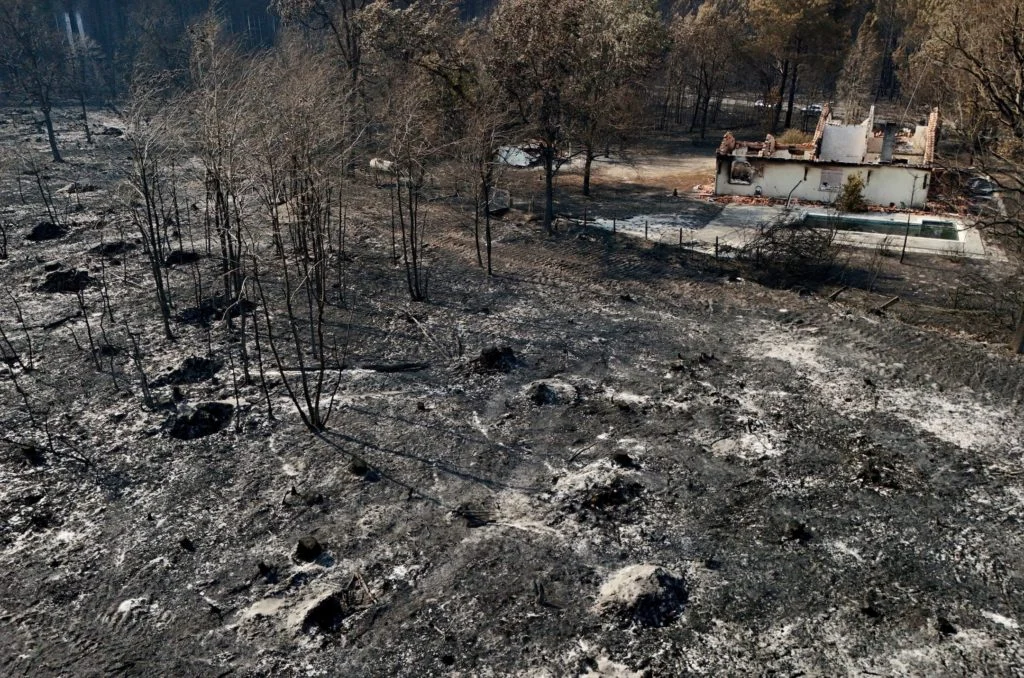
Across the European continent, a harrowing transformation is unfolding. From the sun-drenched vineyards of France to the rugged landscapes of Spain and Portugal, a series of explosive wildfires has decimated vast swathes of land, forcing more than 330,000 residents to flee their homes. As flames consume critical "forest heritage" and push emergency services to their absolute breaking point, the tragedy has claimed at least 15 lives, leaving a charred trail of destruction that experts warn is a harbinger of a new, volatile reality.
The Scale of the Catastrophe: Main Facts
The current fire crisis is not merely a collection of isolated incidents; it is a systemic failure of environmental stability caused by extreme heat and drought. With nearly half a million acres reduced to ash, the geographic breadth of the fires has strained the European Union’s collective emergency response network.
The fires are marked by a terrifying "synchronicity"—a phenomenon where multiple nations are simultaneously battling blazes that would typically require the full focus of a single country’s resources. Water bombers and ground crews, once considered sufficient for standard fire seasons, are now being stretched across borders as the continent faces a fourth major heat wave. For residents like Christophe Peres of the Gironde region in France, the experience has been one of total powerlessness. "It has eaten everything in its path," Peres remarked, noting that the sheer speed of the firefront left communities with little time to react or defend their livelihoods.
A Chronology of the Burn
While wildfires have long been a feature of the Mediterranean summer, the current season has diverged from historical norms in both timing and ferocity.
- Early Onset: The fire season began significantly earlier than in previous decades. By mid-summer, while most of Europe was preparing for the peak of the tourist season, the land had already been "cooked" by an initial, record-breaking heat wave.
- The Heat Dome Effect: Over the last six weeks, a high-pressure system—often described by meteorologists as a "heat dome"—has effectively parked itself over the continent. This has acted as a giant dehydrator, stripping the moisture from forests and farmlands.
- The Escalation: As temperatures soared, the "tinderbox" conditions allowed small ignitions to erupt into uncontrollable firestorms. By late summer, the crisis had moved from a national concern to a pan-European emergency, with countries like Ireland—which historically faced lower risks—beginning to witness fires on their own fringes.
- Ongoing Threat: With several weeks of the fire season remaining, the threat of further outbreaks remains high. Meteorologists and fire scientists fear that the accumulated drought in the soil means even a slight increase in temperature or a shift in wind patterns could trigger another wave of catastrophe.
Supporting Data: Climate Change and the "New Normal"
The connection between these wildfires and anthropogenic climate change is no longer a matter of academic debate; it is an observational reality. Ciaran Nugent, Vice President of the International Association of Wildland Fire, points to a disturbing shift in the frequency of extreme weather events.
Studies indicate that heat wave events that would statistically occur once every 50 years are now surfacing every five years. This acceleration is directly tied to the increase in global average temperatures. Over half of Europe is currently experiencing either drought or near-drought conditions, rendering vast landscapes highly flammable.
The "synchronicity" of the fires is perhaps the most dangerous data point for emergency managers. When France, Spain, Portugal, and other nations are all burning at once, the shared European resource pool—such as cross-border firefighting aircraft and specialized personnel—becomes paralyzed. The system is designed to handle one or two major crises at a time, not a continent-wide ignition.
Official Responses and Strategic Shifts
In response to the crisis, European officials are beginning to pivot from a philosophy of "reaction" to one of "systemic adaptation."
The Limits of Firefighting
The current emergency response infrastructure, while among the most advanced in the world, is proving insufficient against the current intensity of the blazes. Governments in Spain and France have invested heavily in aerial firefighting and professional crews, but as Nugent notes, "we are reaching the limits of what we can do in terms of response." The sheer scale of the heat-driven fires renders traditional firefighting techniques largely ineffective once a fire enters its most aggressive, wind-driven phase.
Policy and Landscape Management
The European Commission has released policy papers outlining a radical shift in how the continent should approach its land. The primary objective is to move away from purely reactive firefighting toward proactive land management. Key components of this strategy include:
- Restoring Grazing and Agriculture: A significant portion of the fire risk is driven by the abandonment of rural farmland. As the agricultural population ages and younger generations move to urban centers, vast tracts of land that were once kept clear by grazing and farming have become overgrown with dense, flammable brush. Integrating traditional farming practices back into these landscapes is now being viewed as a critical fire-prevention tool.
- Investment in Detection: The EU is prioritizing funding for advanced fire detection and monitoring systems, utilizing satellite imagery and AI-driven predictive modeling to catch ignitions before they spiral into firestorms.
- Knowledge Sharing: Southern European nations, which have historically dealt with more frequent fires, are acting as mentors for countries in Northern and Western Europe that are only now beginning to grapple with this "new" threat.
Implications: The Future of the European Landscape
The fires of this season serve as a grim warning for the future. The reality is that the European landscape is fundamentally changing. The "forest heritage" that residents like Christophe Peres mourned is not just being burned; it is being replaced by ecosystems that may not recover in the same form.
The economic implications are equally staggering. Beyond the immediate loss of homes and infrastructure, the cost to tourism, agriculture, and carbon sequestration is immeasurable. Forests that were intended to serve as carbon sinks are now becoming net carbon emitters as they burn, creating a feedback loop that further fuels the climate crisis.
A Call for Integrated Action
If there is any hope for avoiding a record-breaking fire season next year, experts argue that the response must be multi-faceted and immediate. It is not enough to simply buy more water bombers. The solution requires a fundamental restructuring of how Europe views its rural spaces.
"The real work is going to happen on the land," says Nugent. This means re-engaging with the countryside, managing fuel loads, and protecting rural communities with a scientific rigor that matches the intensity of the changing climate. The European Union’s member states are currently in a race against time. While the technical tools exist, the political and social will to reshape the landscape—to keep farmers on the land and to treat fire prevention as a national security issue—remains the greatest challenge.
As the smoke clears over the charred remains of the Mediterranean and Western Europe, the message is clear: the fire season is no longer a seasonal event to be endured; it is a permanent feature of a warmer world. The question now is whether European society can adapt its landscapes as quickly as the climate is forcing them to burn.