In a development that signals a profound shift in the intersection of American jurisprudence and religious practice, over 5,000 churches across the United States have formally designated their properties as “ICE-free zones.” This unprecedented act of institutional defiance marks the largest coordinated religious resistance to federal immigration enforcement in the nation’s history. By securing a landmark federal court ruling, these congregations have effectively established a legal buffer between their internal operations and the enforcement arms of the Department of Homeland Security (DHS).
This escalation comes as the nation grapples with a deepening divide over immigration policy, pitting the executive branch’s aggressive deportation agenda against a diverse coalition of faith-based organizations determined to preserve “sensitive locations” for their congregants.
The Legal Landscape: A Landmark Ruling
The catalyst for this movement was a pivotal decision handed down by U.S. District Judge F. Dennis Saylor IV. In a ruling that has sent shockwaves through federal immigration policy circles, Judge Saylor—a jurist appointed by President George W. Bush—granted a preliminary injunction that severely restricts the ability of Immigration and Customs Enforcement (ICE) and Customs and Border Protection (CBP) to conduct warrantless arrests on church grounds.
Under the terms of this order, federal agents are prohibited from entering these designated properties to execute arrests without prior authorization from the highest levels of DHS headquarters. The protection extends beyond the sanctuary walls themselves, encompassing a 100-foot perimeter around each declared location. This effectively creates a “no-go zone” for agents unless there is an immediate, demonstrable threat to public safety.
The legal strategy behind this move was born from necessity. When the current administration moved to rescind policies established during the Biden era—policies that had largely codified houses of worship as “sensitive locations” off-limits to routine enforcement—religious leaders turned to the courts. They argued that the withdrawal of these protections created a climate of fear, leading to a significant decline in church attendance as vulnerable congregants feared detention during services.
Chronology of the Conflict: From Policy to Litigation
The current standoff is the result of a multi-year erosion of administrative guardrails.
- The Biden-Era Baseline: Under the tenure of former DHS Secretary Alejandro Mayorkas, federal guidelines explicitly categorized schools, hospitals, and places of worship as sensitive locations. Enforcement actions in these areas were strictly curtailed, requiring high-level approval and reserving such measures for only the most urgent, high-priority cases.
- The Shift in Enforcement: Upon the inauguration of the current administration, the policy was rapidly reversed. The administration returned broad discretionary powers to field officers, effectively removing the “sensitive location” designation. This shift was intended to facilitate a more robust deportation strategy.
- The Judicial Pushback: Sensing the existential threat to their ministry, a coalition of denominations—including the American Baptist Churches USA, the Alliance of Baptists, the Metropolitan Community Churches, and various synods of the Evangelical Lutheran Church in America—filed a series of lawsuits.
- The Saylor Ruling: In the ensuing legal battle, Judge Saylor’s decision served as a firewall. While he denied standing to some plaintiffs, such as certain Quaker societies who failed to prove direct harm, he granted the request for 5,320 congregations. The court’s logic centered on the religious freedom protections inherent in the First Amendment, weighing them against the government’s interest in immigration enforcement.
The Scope of the Sanctuary: Defining the “Protected Space”
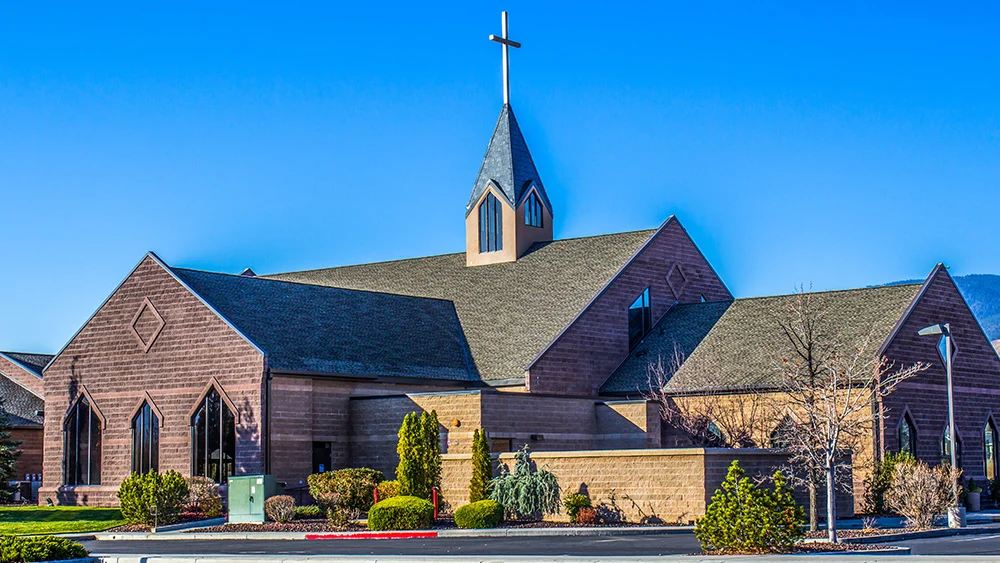
The list of protected sites is vast and diverse, ranging from urban storefronts to massive, sprawling religious complexes. The definitions of “sanctuary” in this litigation are broad, encompassing not just the main sanctuary hall, but peripheral areas vital to community life.
For instance, the First United Church in Bloomington, Indiana, successfully petitioned to include its parking lots, playgrounds, courtyards, and memorial gardens as part of its protected zone. Similar measures were taken by the Atonement Lutheran Church in Muskego, Wisconsin, which secured protection for its garage, outdoor amphitheater, and patio. In New Hampshire, the Lutheran Outdoor Ministries of New England successfully included its entire campground, conference centers, and cabins under the umbrella of the injunction.
These geographic designations reflect the reality of modern ministry, where churches function as community hubs, daycares, and social service centers. By extending the legal protection to outdoor spaces, these churches have effectively expanded the definition of “sanctuary” into the public square.
Supporting Data and Regional Flashpoints
The sanctuary movement is not happening in a vacuum; it is part of a broader, more volatile debate taking place in cities across the country. Portland, Oregon, has emerged as a particularly intense battleground. Rev. W. J. Mark Knutson of Augustana Lutheran Church has become a prominent face of this movement, having provided long-term sanctuary to migrants like Juan Francisco Aguirre-Velasquez.
The city’s political climate has further complicated the situation. Mayor Ted Wheeler’s “stand-down” orders to local police—designed to minimize interaction with protesters—have led to accusations that Portland has become a “militant sanctuary city.” This environment has seen clashes between activists and various groups, with independent journalists and demonstrators alike caught in the crossfire of a city where the rule of law is being interpreted through competing ideological lenses.
Meanwhile, the southern border remains a primary pressure point. Reports from the Del Rio sector indicate that thousands of migrants, including a significant influx of Haitian families and individuals traveling from the African continent, are attempting to enter the country. These demographic shifts, coupled with the administration’s "catch-and-release" policies, have fueled public frustration and intensified the demand for more aggressive interior enforcement—the very enforcement these 5,000 churches are now resisting.
Implications: A Symbolic or Practical Victory?
The central question remains: Will this ruling actually stop ICE, or is it a largely symbolic gesture?
Jessica Vaughan, a policy analyst at the Center for Immigration Studies, suggests that the practical impact may be more limited than the headlines imply. “Most of ICE’s work is conducted in jails or through carefully planned, data-driven fugitive operations,” Vaughan notes. “They are not actively patrolling the streets or conducting random sweeps of church parking lots.”
Vaughan argues that the vast majority of those targeted by ICE are individuals with prior criminal records or those who have already been processed through the legal system. In such cases, the “exigent circumstances” clause in Judge Saylor’s order would likely allow agents to continue their work. However, the ruling serves as a powerful “chilling effect” on federal operations, potentially discouraging agents from entering any space that could trigger a high-profile legal challenge or public relations crisis.
Official Responses and Future Outlook
The administration has yet to issue a formal directive on how it plans to navigate the “100-foot perimeter” rule, but tensions remain high. On one side, advocates for stricter enforcement argue that these churches are obstructing the rule of law and providing a safe harbor for individuals who have violated immigration statutes. On the other, faith leaders maintain that the moral imperative of providing sanctuary transcends current political policies, viewing their actions as a defense of the marginalized.
The disclosure of these 5,000 locations remains a point of contention. While the churches initially requested that their identities be kept confidential due to fears of harassment or retaliation, Judge Saylor denied the request. He reasoned that because these are public-facing institutions, the locations are already matters of public record. This transparency, however, keeps the issue in the spotlight, ensuring that every time an ICE vehicle passes near one of these 5,000 sites, it will be monitored by local activists and community observers.
As the legal appeals process looms, the sanctuary church movement stands as a testament to the endurance of American civil society. Whether through judicial interpretation or legislative action, the struggle over where the government’s power ends and religious autonomy begins is likely to define the immigration discourse for the foreseeable future. The 5,000 churches have drawn their line in the sand—or, more accurately, in their parking lots and playgrounds—and the federal government is now forced to contend with a new reality where the church is not merely a place of worship, but a legal stronghold.