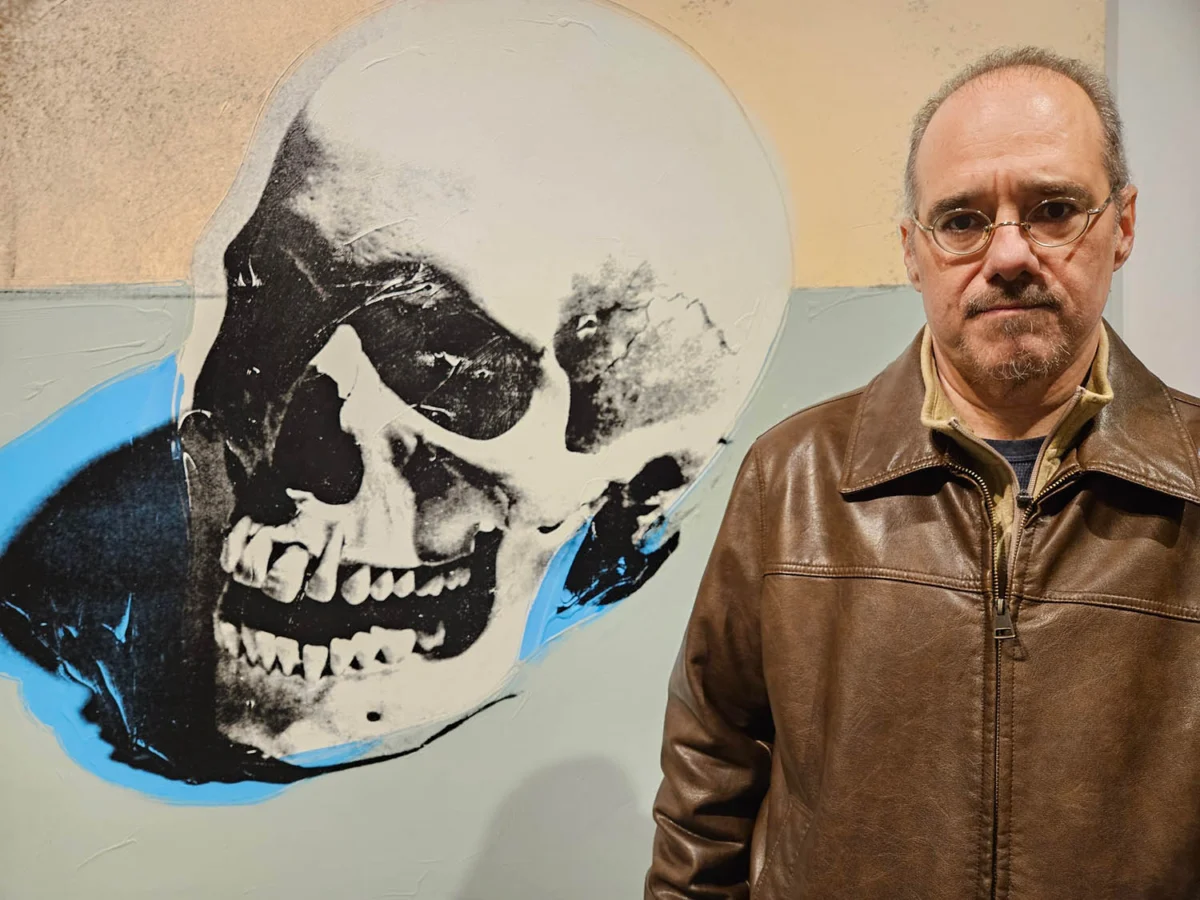
The field of psychology has lost one of its most ardent defenders of human dignity and a fierce critic of the medicalization of the human soul. Brent Dean Robbins, Ph.D., a seminal figure in humanistic psychology and a transformative educator, passed away on April 28, 2026. His death marks the end of a career dedicated to challenging the hegemony of the Diagnostic and Statistical Manual of Mental Disorders (DSM) and advocating for a more compassionate, person-centered approach to mental distress.
Robbins was not merely an academic; he was a philosopher-practitioner who sought to bridge the gap between abstract existential thought and the practical realities of clinical care. As the founder of the Psy.D. program in clinical psychology at Point Park University, he shaped a generation of clinicians to see beyond symptoms and into the profound depth of the "lived experience."
The Passing of a Visionary: Main Facts and Immediate Legacy
Brent Dean Robbins’ death was confirmed by colleagues and family, following a courageous journey with cancer—a battle he documented with the same transparency and philosophical rigor that characterized his professional life. Robbins was a professor of psychology at Point Park University in Pittsburgh, Pennsylvania, where he served as a cornerstone of the Department of Psychology for decades.
Throughout his career, Robbins distinguished himself as a leading voice in the "critical psychiatry" movement. He was a frequent contributor to Mad in America, a platform dedicated to rethinking psychiatric care, and a prominent member of the American Psychological Association’s (APA) Division 32 (Society for Humanistic Psychology). His work was defined by a singular, unwavering thesis: that modern psychology has become too reliant on biological reductionism, effectively "anesthetizing" the human experience by treating emotional pain as a mere chemical imbalance rather than a meaningful response to life’s circumstances.

He is survived by a large family and a vast network of former students and colleagues who credit him with shifting the trajectory of psychological education in the United States. In his final wishes, Robbins requested that support be directed toward organizations that continue his work, specifically highlighting Mad in America as a beneficiary of his legacy.
A Chronology of Influence: From Philosophical Roots to Institutional Change
The trajectory of Brent Dean Robbins’ career reflects a lifelong commitment to the "human" in human science.
The Early Years and Academic Foundation
Robbins’ intellectual journey began with a deep immersion in phenomenology and existentialism. Unlike many of his contemporaries who favored the burgeoning "brain-as-computer" metaphor of the late 20th century, Robbins looked to thinkers like Martin Heidegger, Maurice Merleau-Ponty, and Martin Buber. He sought to understand the "ontology" of the person—what it truly means to be in the world.
The Point Park Revolution
Perhaps his most tangible legacy began with the establishment of the APA-accredited Psy.D. program in clinical psychology at Point Park University. At a time when clinical training was increasingly standardized toward Cognitive Behavioral Therapy (CBT) and pharmacological management, Robbins envisioned something different. He created a program with a distinctive focus on humanistic and community psychology. This program became a sanctuary for students who felt that traditional clinical training ignored the socio-political and existential dimensions of suffering. Under his guidance, Point Park became a hub for "post-medical model" psychology, producing clinicians trained to treat patients as subjects with agency rather than objects of study.

The Battle for the DSM
In the early 2010s, as the American Psychiatric Association prepared to release the DSM-5, Robbins became a central figure in the international protest against the manual’s expansion. He served as a co-editor of the "Open Letter to the DSM-5," which garnered thousands of signatures from mental health professionals worldwide. Robbins argued that the new diagnostic categories were pathologizing normal human variations—such as grief, shyness, and childhood exuberance—essentially turning the "human condition" into a series of billable disorders.
The Final Chapter: Love and Loss
In 2025, following his cancer diagnosis, Robbins’ work took on a more personal, poignant tone. He engaged in high-profile dialogues about the nature of mortality, the importance of "real living as meeting," and the future of a psychology that must eventually grapple with the finitude of life. His final months were spent ensuring that his philosophical foundations were firmly planted in the institutions he helped build.
Supporting Data: The Intellectual Pillars of Robbins’ Work
To understand the impact of Brent Dean Robbins, one must look at his two most influential literary contributions, which serve as the data points for his critique of modern society.
1. The Medicalized Body and Anesthetic Culture (2018)
In this seminal work, Robbins explored the concept of the "Cadaver" vs. the "Memorial Body." He argued that modern medicine treats the living human body as if it were already a corpse—a machine to be fixed—rather than a "lived body" that feels, relates, and remembers. He coined the term "Anesthetic Culture" to describe a society that seeks to numb pain at any cost, thereby stripping individuals of the growth that often accompanies suffering.

His research highlighted a disturbing trend: as we increase our use of psychiatric medications to suppress "negative" emotions, we simultaneously diminish our capacity for profound joy and authentic connection. He advocated for the "Recovery of Lived Experience," urging clinicians to help patients inhabit their bodies and their lives fully, even when it is painful.
2. Drugging Our Children (Co-edited Volume)
Robbins was deeply concerned with the "pediatric psychopharmacology explosion." In this volume, he and his colleagues provided data-driven critiques of how pharmaceutical profiteers pushed antipsychotics and stimulants on younger and younger populations. Robbins pointed to the "narrowing of human suffering," where the complex social realities of a child—poverty, trauma, or a failing education system—were ignored in favor of a "chemical imbalance" narrative. He provided a roadmap for non-pharmacological interventions, emphasizing the need for community support and systemic change.
Official Responses and Tributes
The announcement of Robbins’ passing has triggered a wave of tributes from the highest echelons of the psychological community.
Robert Whitaker, founder of Mad in America, noted: "Brent was a bridge-builder. He had the academic rigor to challenge the establishment on its own terms, but he had the heart of a poet. He didn’t just want to change psychology; he wanted to save the human soul from being reduced to a data point."

Point Park University released a statement honoring his decades of service: "Dr. Robbins was the heart of our psychology department. His commitment to social justice and the dignity of every person was not just something he taught; it was something he lived. Our Psy.D. program stands as a living monument to his vision of a more humane world."
The Society for Humanistic Psychology (APA Division 32) remarked on his leadership: "Brent was a clear, resonant voice during a time of great confusion in our field. He reminded us that the core of psychology is not the diagnosis, but the relationship between two human beings. His absence leaves a void that will be felt for years to come."
Former students have flooded social media with stories of Robbins’ mentorship. Many describe him as a teacher who "opened a path" when they felt disillusioned by the mechanistic nature of modern clinical training. He was known for his ability to make complex continental philosophy accessible and relevant to the "messy" reality of the therapy room.
Implications: The Future of Psychology Without Brent Dean Robbins
The death of Brent Dean Robbins comes at a precarious time for the field of psychology. As Artificial Intelligence begins to enter the realm of mental health and the "neuro-biological" model continues to dominate research funding, the humanistic perspective faces significant challenges.

The Crisis of Meaning
Robbins’ work implies that the current mental health crisis is not merely a biological one, but a "crisis of meaning." His passing raises the question: who will carry the mantle of this critique? Without his voice, there is a risk that the movement toward "depathologizing" human experience may lose its intellectual anchor in the academy.
The Survival of Humanistic Training
The Psy.D. program at Point Park University now faces the challenge of maintaining its "distinctive focus" without its founder. Robbins proved that a humanistic program could achieve APA accreditation and thrive in a competitive market. The continued success of this program will be a litmus test for whether there is still a place for "person-centered" training in a world increasingly focused on "evidence-based" (often code for short-term and manualized) treatments.
A Call to Action
Robbins’ life work suggests that the "future of psychology" depends on its ability to embrace the very things it often tries to eliminate: vulnerability, mystery, and the inherent dignity of the individual. His call to support Mad in America and similar organizations serves as a final directive to his followers: the fight against the over-medication of distress and the narrowing of human experience must continue.
In the end, Brent Dean Robbins’ legacy is not found in a list of publications or titles, but in the shift in perspective he gifted to his students and readers. He taught that "all real living is meeting"—a reminder that in a world of screens and scripts, the most radical act a psychologist can perform is to truly meet another person in their suffering, without judgment, and without a label.