By [Your Name/Journalist Desk]
Health and Human Services Secretary Robert F. Kennedy Jr. has unveiled a new, high-stakes federal initiative aimed at overhauling the diagnostic landscape for autism spectrum disorder (ASD). The program, which seeks to modernize identification processes and clinical support, arrives at a moment of profound tension between the federal health establishment and the broader scientific community.
While the stated goal of the project is to alleviate the crushing wait times and resource limitations currently plaguing families, the announcement has been overshadowed by Kennedy’s continued promotion of debunked theories regarding the causes of autism and his use of rhetoric that many in the neurodiversity community find deeply offensive.
The Core Initiative: ARPA-H and the "SPECTRA" Mandate
The newly announced program will be housed under the Advanced Research Projects Agency for Health (ARPA-H), the high-risk, high-reward funding wing of the federal government. The initiative, officially dubbed SPECTRA (Systems for Phenotypic Evaluation, Clinical Trajectories, Response, and Agency), is designed to move beyond mere symptom-based diagnosis.
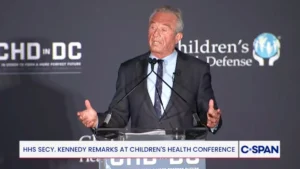
According to Secretary Kennedy, the initiative is a response to a "broken" status quo. "We are not satisfied simply for describing autism and managing its consequences," Kennedy stated during his keynote address at a conference hosted by Children’s Health Defense, the anti-vaccine organization he formerly chaired. "We are asking what drives the different forms of autism, and why developmental trajectories differ, why some children regress, and which interventions work for them."
The program is currently calling for organizations—ranging from academic labs to private tech firms—to submit proposals for "solutions." These solutions are expected to encompass novel tools and diagnostic technologies that can drastically shorten the current, often multi-year, path to a clinical assessment. While the White House has yet to disclose the specific financial appropriations for these grants, the involvement of ARPA-H suggests a focus on technological disruption rather than traditional clinical research.
The initiative will be led by Program Manager Russell Shilling. Shilling, who brings a personal connection to the role as the father of two children on the autism spectrum, previously served on the Medical and Science Advisory Committee for Autism Speaks.
Chronology of a Shifting Policy Landscape
To understand the current climate surrounding federal autism policy, one must view the events of the last eighteen months as a series of strategic pivots.
- June 2025: The National Institutes of Health (NIH) launched the Autism Data Science Initiative, awarding $50 million across 13 distinct research projects. This initiative was met with cautious optimism by the scientific community, as it prioritized data-driven exploration of environmental and genetic factors.
- September 2025: President Trump and Secretary Kennedy held a high-profile summit on autism, where they publicly questioned vaccine safety and suggested potential links to Tylenol use during pregnancy—claims that have been consistently rejected by major medical organizations, including the CDC and the American Academy of Pediatrics.
- Late 2025 – Early 2026: Throughout this period, insurance providers began a significant retreat from covering Applied Behavior Analysis (ABA) and other long-term autism therapies, largely driven by widespread allegations of systemic billing fraud within the industry.
- September 2026: During the Children’s Health Defense conference, Kennedy officially pivots from general discourse to policy action, announcing the SPECTRA initiative under the auspices of ARPA-H.
Supporting Data: A System Under Duress
The impetus for a new diagnostic model is, inarguably, grounded in reality. Data from the Centers for Disease Control and Prevention indicates that the prevalence of autism has climbed steadily over the last two decades. However, the infrastructure to support these diagnoses has failed to keep pace.
The Diagnostic Bottleneck
For many families, the road to an autism diagnosis is a marathon of bureaucracy. Current diagnostic models are heavily reliant on highly specialized developmental pediatricians and child psychologists—a workforce that is currently facing an acute shortage. Families in rural and underserved areas frequently report wait times of 18 to 36 months to secure an appointment. By the time a child receives a diagnosis, they have often missed critical windows for early intervention, which is widely considered the "gold standard" for improving long-term outcomes.

The Financial Crisis in Care
The "headwinds" facing the sector are not limited to diagnosis. The autism therapy market has been rocked by financial instability. A recent investigative report highlighted how private equity-backed therapy chains have come under intense scrutiny for fraudulent billing practices, leading to a "pull-back" from insurance companies that now view claims from these providers with extreme skepticism. This has left parents caught in the middle, struggling to find authorized care as providers close their doors or are dropped from insurance networks.
Official Responses and Expert Skepticism
The reaction from the scientific community has been a mixture of pragmatic hope and deep-seated apprehension.
Helen Tager-Flusberg, director of the Center for Autism Research Excellence at Boston University, expressed a measured sentiment regarding the technological focus of the new initiative. "It’s exciting that ARPA-H is focusing on autism, and I think the idea of exploring ways that technology can transform aspects of diagnosis, interventions, and support is timely," she noted in a recent exchange. However, she tempered her enthusiasm with a warning: "We can only hope that the review process will lead to an unbiased selection of projects!"
Others in the field are more critical. Many researchers who have spent decades studying the genetic and neurological foundations of autism view the current administration’s focus as a distraction. The consistent promotion of the debunked vaccine-autism hypothesis by Secretary Kennedy—most recently punctuated by his labeling of autistic children as "damaged"—has eroded trust between the federal health apparatus and the researchers tasked with carrying out these mandates.
"There is a fear," said one researcher who requested anonymity, "that this program isn’t about science at all. It’s about searching for a ’cause’ that aligns with a pre-existing ideological agenda, rather than following the data where it actually leads."
Implications: Where Does the Field Go From Here?
The launch of the SPECTRA initiative signals a fundamental shift in how the federal government intends to address neurodevelopmental conditions. By leveraging the ARPA-H model, the administration is betting that technology can bypass the traditional, slow-moving academic peer-review process.
The Risk of Politicized Research
The primary implication of this move is the potential for the politicization of autism research. When federal funding is directed by leaders who publicly endorse discredited theories—such as the link between vaccines and autism—the legitimacy of the research output is inherently compromised. If the projects selected for funding under SPECTRA focus exclusively on validating the administration’s preferred theories, the scientific community may find itself at odds with federal directives, leading to a potential brain drain or a refusal to participate in federally funded studies.
The Need for Nuance
Conversely, if the initiative succeeds in developing tools for early screening and remote diagnosis, it could provide much-needed relief to thousands of families. The promise of "data-driven" understanding of the microbiome and genetic factors is a valid and robust area of inquiry. If the initiative remains focused on these legitimate biological pathways, it could mark a rare instance of alignment between the current administration and the broader scientific community.
The Burden on the Community
Ultimately, the most significant impact will be felt by the autism community itself. Autistic self-advocates have been vocal in their opposition to the language used by Secretary Kennedy. Terms like "damaged" are viewed by many as a regression in the fight for disability rights and neurodiversity acceptance. The challenge for the administration, moving forward, will be to demonstrate that they are truly committed to the "quality of life" for autistic individuals, as they claim, rather than merely using the community as a backdrop for a broader political agenda.
As the request for proposals for the SPECTRA initiative begins to circulate, the scientific community will be watching closely. Whether this program becomes a landmark in the evolution of autism care or a cautionary tale of politicized science remains to be seen. What is certain, however, is that the stakes for the millions of families currently navigating the complexities of autism have never been higher.