










Life for country music sensation Trey Lewis is currently moving at a velocity that matches his newfound physical stamina. For the Alabama-born artist, the rapid trajectory of his music career—marked by viral hits, high-profile publishing deals, and sold-out tour dates—is no longer just a professional triumph. It is a reflection of a profound, years-long journey of reclamation that has fundamentally altered how he approaches his body, his craft, and his future.
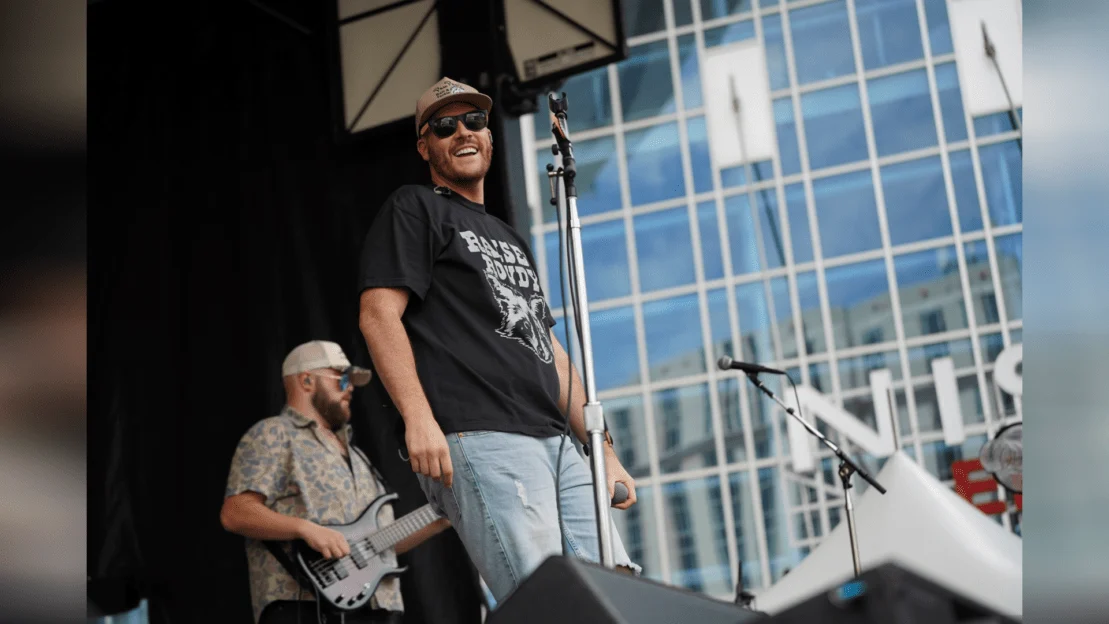
As Lewis prepares to take the stage in Bristol, Tennessee, this weekend, fans might be treated to more than just a stellar musical performance. It isn’t unusual for the singer to drop into an impromptu set of pushups or engage in high-intensity mobility drills between guitar riffs. While not yet a permanent feature of his setlist, these moments of movement are emblematic of a broader, deeper commitment to fitness—a testament to a man who, in his own words, was once the "fat kid" in high school who could barely manage a walk around the track while his peers lapped him.
"I was out there one time squatting onstage and jumping all around," Lewis recalls with a laugh. "Now, I can hit all my notes and still jump around. It’s pretty amazing."
The Chronology of Change: Nineteen Years of Sobriety
The foundation of Lewis’s current success was laid nearly two decades ago. In June, the singer celebrated his 19th year of sobriety, a milestone that serves as the bedrock for every accomplishment that has followed. Growing up in Alabama, immersed in the classic sounds of Hank Williams Jr. and Lynyrd Skynyrd, Lewis did not view music as a viable career path during his youth. In fact, he didn’t even pick up a guitar until he had permanently closed the door on his struggle with alcohol.
"I didn’t write songs when I was out there drinking and doing all that stuff," Lewis says. "I didn’t get a guitar until I got sober. So music, in a way, became my new addiction—my drug of choice."
For years, Lewis honed his craft in the unforgiving trenches of the Nashville music scene. His breakthrough came in 2020 with the raunchy, unapologetic breakup anthem "Dicked Down in Dallas." The song went viral, catapulting him into the national spotlight and securing his place as a road-hardened performer. This success led to a prestigious Sony Music Publishing deal, songwriting credits for industry heavyweights like Tracy Lawrence and Cole Swindell, and the launch of an introspective project under the moniker "Thomason."
However, while his professional life was soaring, his physical health remained a volatile variable. Despite the clarity of his sobriety, Lewis battled a lifelong addiction to food that led to two separate, massive weight-loss cycles. It was a cycle of high-intensity restriction followed by burnout, leaving him struggling to maintain his progress while navigating the chaotic, unpredictable nature of a touring lifestyle.
The Turning Point: Finding the Right Path
Lewis’s journey with weight loss has been a complex, often cyclical battle. Initially, he attempted to mirror his success in alcohol recovery by applying the principles of a 12-step program to his diet. While he successfully shed over 100 pounds, the regimen was unsustainable.
"I ate the same thing every day for three years," Lewis admits. "And then I just went through some life stuff. I was like, ‘I’m either going to get drunk or eat a cheeseburger.’"
When "Dicked Down in Dallas" began its meteoric rise, the reality of touring proved to be a catalyst for weight gain. Living on the road—fueled by pizza, chicken fingers, and a lack of consistent sleep—Lewis eventually saw the scale climb back up to 320 pounds. He was performing at a high level professionally, but he was failing to provide his body with the fuel and maintenance required for the demands of his career.
The pivot point came in an unlikely form: a cold plunge. While hosting a podcast focused on substance abuse and mental health, Lewis found himself sitting in a friend’s cold tub, struck by the profound irony of his situation. "We were talking about recovery topics and mental health," he remembers, "but the whole time I’m sitting there thinking that while I’m talking about mental health, sobriety, and spirituality, look at me. I’m not taking care of myself physically."
Expert Collaboration: The Justin Todd Protocol
To bridge the gap between his mental health and his physical conditioning, Lewis connected with Justin Todd, a renowned Nashville-based performance specialist known for his work with professional athletes and fellow artists like Kameron Marlowe. Todd, who also shares a personal history of sobriety, understood that Lewis didn’t need a generic weight-loss plan; he needed a lifestyle overhaul.
The two struck a deal: if Todd provided the cold plunge access, Lewis would commit to training three days a week. Todd’s approach was tactical and long-term. Recognizing that Lewis had little experience with structured athletics, Todd began with a full-body movement assessment. The goal wasn’t to add weight to a bar, but to ensure the singer could move efficiently, correcting the physical imbalances caused by years of hunching over a guitar on a tour bus.
"We weren’t concerned with throwing a bunch of weight on the bar," Todd explains. "We weren’t going to find our success in that with Trey."
To keep the process engaging, Todd integrated play into the program. Sessions included basketball, pickleball, and disc golf—activities that disguised the cardiovascular work as competition. If Lewis hit a three-pointer, he’d earn a reduction in sets; if he missed a free throw, he’d pay the price in reps. This, combined with a newfound daily routine—waking at 6 a.m., meditation, prayer, and a commitment to the sauna—solidified the habit.
Supporting Data: From "The Fat Kid" to Peak Performance
The results of this consistent, multifaceted approach have been quantifiable. Lewis currently holds steady at 225 pounds, a weight that allows him to navigate his high-energy performances with ease. More importantly, the metrics of his fitness have shifted from the scale to performance indicators:
- Strength Gains: What began as learning to press an empty bar has evolved into consistent high-rep sets on the bench press.
- Endurance: Lewis, who once struggled to walk around a track, now breezes through three-to-four-mile runs as part of his weekly conditioning.
- Recovery: During a recent seven-hour fishing trip that involved extensive canoeing, Lewis found himself entirely un-sore the following day, while his significantly younger companion struggled with exhaustion.
- Consistency: Under Todd’s guidance, Lewis established a near-perfect attendance record at the gym, prioritizing his health even during bouts of illness.
The Philosophy of "Showing Up"
The implications of Lewis’s transformation extend far beyond his physique. By removing the stress of weight-fluctuation and poor stamina, Lewis has unlocked a new level of focus in his songwriting. He views his health journey through the same lens as his music: it requires showing up, regardless of the mood or the circumstances.
"It’s the same thing with songwriting or any of this other stuff," Lewis says. "You just have to show up. That’s more than half the battle. Then you do the work."
This mindset has resonated with his fanbase. At his performance during June’s CMA Fest, Lewis was awarded a plaque for his double-platinum hit "Dicked Down in Dallas." As he accepted the honor, it was clear that the award was not just for the song, but for the man he had become in the years since its release.
Looking Ahead
For the 38-year-old artist, the goal is no longer about hitting a specific number or achieving a certain aesthetic. It is about longevity and the ability to fully inhabit the life he has worked so hard to build. With new music on the horizon—including his latest single, "2 Inches"—and a full slate of tour dates, Lewis is poised to continue his upward trajectory.
By integrating physical performance into his artistic identity, Trey Lewis has proven that the most important "gig" is the one he performs for himself every morning. Whether he’s in the sauna, on the running track, or standing under the stage lights, he is finally in control—and for the first time in his life, he has no intention of looking back.