









Main Facts: The Shift from Individual Illness to Collective Trauma
In recent years, the United States has witnessed a staggering surge in mental health diagnoses. According to recent clinical estimates, as many as 5,000 individuals are diagnosed with Post-Traumatic Stress Disorder (PTSD) every day in the U.S. While traditional psychiatry has long categorized trauma, anxiety, and depression as isolated, endogenous illnesses—biological malfunctions within the individual—a growing chorus of critics and clinicians suggests a more systemic origin. They argue that what the country is experiencing is not a series of disconnected biochemical imbalances, but rather a phenomenon of "emotional contagion" fueled by pervasive societal turmoil.
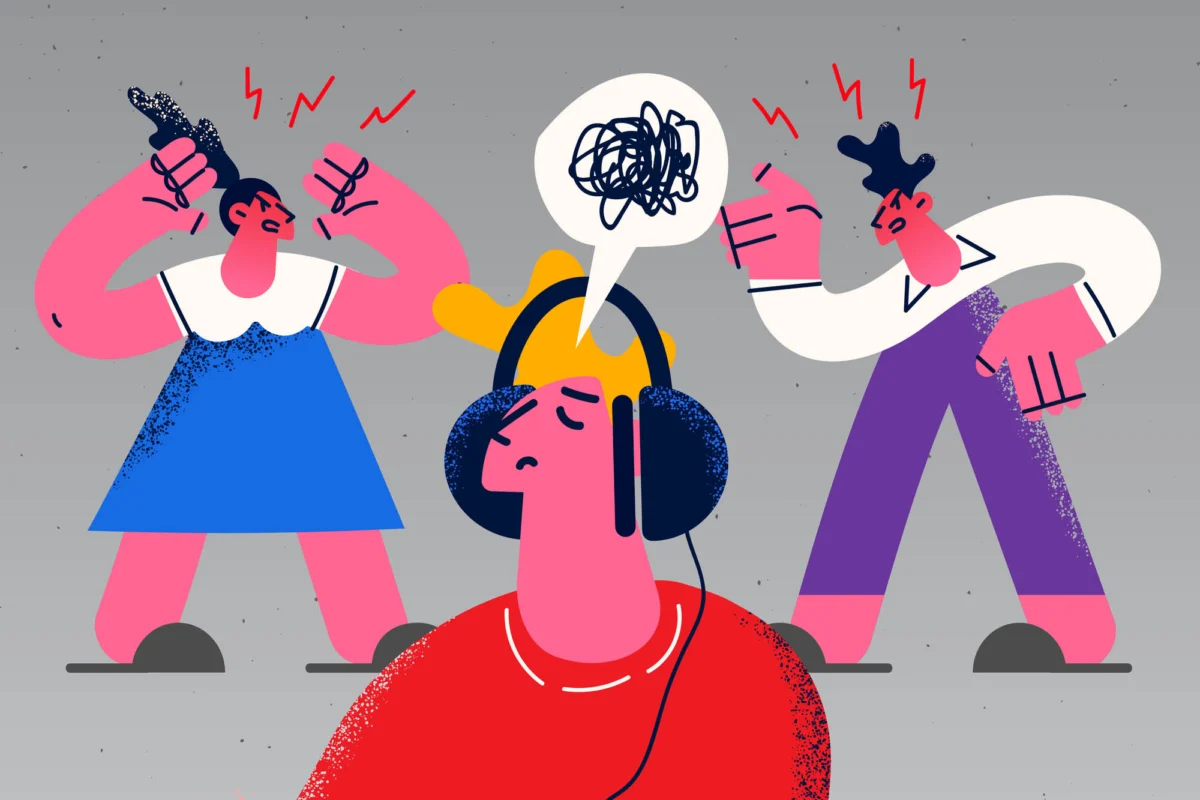
The core of this perspective posits that dark emotions—hate, anger, fear, anxiety, and gloom—are not merely internal states but are transmissible across populations. This contagion is exacerbated by a relentless 24-hour news cycle, social media "doomscrolling," and a succession of national tragedies. When individuals exhibit symptoms of helplessness, hypervigilance, and hopelessness, they may not be suffering from a faulty brain "thermostat," as pharmaceutical advertisements suggest, but are instead reacting naturally to a toxic environment.
The distinction between a clinical diagnosis and a natural reaction is becoming increasingly blurred. Many who do not meet the full criteria for PTSD are nonetheless suffering from Post-Traumatic Stress Symptoms (PTSS). Similarly, those who avoid a diagnosis of Major Depressive Disorder (MDD) may still struggle with persistent dysphoria or dysthymia. These conditions, critics argue, are often reactive responses to unemployment, economic instability, political polarization, and the breakdown of familial and social structures.
Chronology: Two Decades of Compounding Atrocities
To understand the current state of the American psyche, one must look at the cumulative effect of the last 25 years. Analysts suggest that the U.S. is currently feeling the weight of chronic, pervasive traumatization that has built up over a quarter-century of high-impact events.
- The Turn of the Millennium and 9/11: The 2001 terrorist attacks marked a paradigm shift in the national consciousness, introducing a permanent state of hypervigilance and the "Global War on Terror."
- The 2008 Financial Crisis: The economic collapse led to widespread loss of housing and stability, planting seeds of cynicism and systemic distrust that persist today.
- The Rise of Digital Connectivity (2010–Present): The advent of the smartphone and social media transformed how trauma is consumed. For the first time, atrocities in distant cities—or distant countries like Ukraine and Iran—could be witnessed in real-time, with audio and video transmitting the raw emotions of victims directly into the palms of millions.
- The Era of Mass Shootings: Over the last decade, the frequency of mass casualty events has accelerated. Between July 2 and July 14 of this year alone, 36 people were killed and 177 injured in mass shootings across the U.S.
- The COVID-19 Pandemic and Political Polarization: The isolation of the pandemic, coupled with a "renegade" political atmosphere and increased corruption, has fractured the social contract.
This chronology suggests that the "epidemic" of mental illness is actually a chronological accumulation of "emotional residue." Each event leaves behind a layer of fear and disillusionment that is never fully processed before the next trauma occurs.
Supporting Data: The Mechanics of Emotional Contagion
The theory of emotional contagion is supported by the sheer scale of secondary and vicarious trauma. Data from the Gun Violence Archive indicates an average of 1.5 mass shootings per day in the United States. While the primary victims are those killed or injured, the circle of impact is exponentially larger.
The Ripple Effect of Violence
For every shooting, the emotional fallout affects:
- Direct Witnesses and Bystanders: Immediate survivors who often develop acute PTSS.
- Extended Networks: Neighbors, schoolmates, and workmates who lose a sense of safety in their daily environments.
- The General Public: Millions of individuals who consume the event via news feeds.
Research into emotional contagion suggests that emotions can travel via voice and video. When major networks play recordings of injured people or the sounds of gunfire, they are not just transmitting information; they are spreading "dark emotions." This creates a state of "vicarious traumatization," where individuals who have never personally experienced a violent crime begin to exhibit the same hypervigilance and fear as those who have.
The Myth of the Biochemical Imbalance
A significant point of contention in modern psychiatry is the "biochemical imbalance" theory. Despite decades of pharmaceutical marketing, many researchers point out that there is no definitive evidence that depression or anxiety is caused by a simple lack of serotonin or dopamine. Instead, these states are often "reactive conditions" to noxious events. The diagnosis of a "disorder" via the DSM-5-TR often ignores the context of the patient’s life, treating a logical response to a chaotic world as a biological defect.

Official Responses: The Pharmaceutical "Thermostat"
The psychiatric establishment and the pharmaceutical industry have responded to this influx of suffering by doubling down on medication. When initial treatments fail, the standard protocol is often to add more medications—polypharmacy—rather than addressing the environmental or social stressors.
The Marketing of Atypical Antipsychotics
A prominent example is the marketing of drugs like Vraylar (cariprazine). Frequently prescribed for Major Depressive Disorder or Bipolar Disorder, its exact mechanism remains unknown. However, advertisements often frame the drug as a "thermostat" for brain chemicals. This metaphor suggests that a patient can simply "turn down the dial" on their darkness.
Critics argue that this approach is not only scientifically questionable but socially irresponsible. By framing the issue as a chemical dial, it places the burden of "cure" entirely on the individual, effectively "blaming the patient" for their reaction to a traumatized society. It also ensures a steady stream of revenue for "Big Pharma," which benefits from the pharmaceuticalization of social and political despair.
The Institutional Ostrich Effect
There is a growing concern that psychiatrists and clinical psychologists are "living like an ostrich," ignoring the broader emotional life of the nation. By focusing strictly on the DSM-5-TR’s narrow measurements, they fail to see that the U.S. itself could be diagnosed with an emotional disorder. The institutional response remains focused on the "geographical vacuum"—treating the patient as if they live in a bubble, unaffected by the corruption, violence, and divisiveness surrounding them.
Implications: Moving Toward Emotional Regulation and Social Reform
The implications of a society-wide emotional contagion are profound. If trauma is contagious, then the current path of individualized pharmaceutical treatment is akin to treating a flu epidemic by giving everyone a cough drop while ignoring the virus’s spread through the water supply.
The Risk to Vulnerable Populations
The "forgotten ones"—the homeless, the street people, and the persistently mentally ill—are the most susceptible to this invisible emotional turmoil. In a society where revenge, vindictiveness, and bitterness circulate freely, these fringe populations often bear the brunt of the collective’s unaddressed anger and fear. The breakdown of the family unit and the fractionation of social relationships only serve to deepen this isolation.
Beyond the Pill: New Strategies for Healing
To combat the epidemic of dark emotions, experts suggest moving beyond the pharmaceutical model toward more holistic, psychosocial adjustments:
- Emotional Regulation: Teaching individuals cognitive reappraisal—the ability to relabel and reframe their experiences. For example, acknowledging that "the world is currently in a dangerous period" rather than internalizing fear as a personal failing.
- Decision-Making Skills: Empowering individuals to make wise choices regarding their media consumption and social environments.
- The "Geographical Cure": In some cases, removing oneself from a toxic social or political environment is a more effective "treatment" than any medication.
- Societal Reform: Addressing the root causes of trauma—such as gun violence, economic inequality, and political corruption—is the only way to reduce the "emotional residue" that fuels contagion.
Conclusion: A Nation at a Crossroads
The United States is currently beset by a hidden emotional turmoil. While the DSM-5-TR does not recognize "National Emotional Disorder" as a diagnosis, the symptoms are evident in the rising rates of cynicism, demoralization, and PTSD.
As long as the medical community views these issues through the narrow lens of individual biochemistry, the root causes will remain unaddressed. Recognizing that emotions are contagious and that our mental health is inextricably linked to our social and political reality is the first step toward a true recovery. The question remains: will the psychiatric establishment step out of the box, or will it continue to prescribe "thermostats" for a house that is increasingly on fire?