





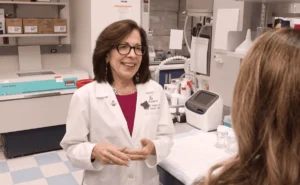


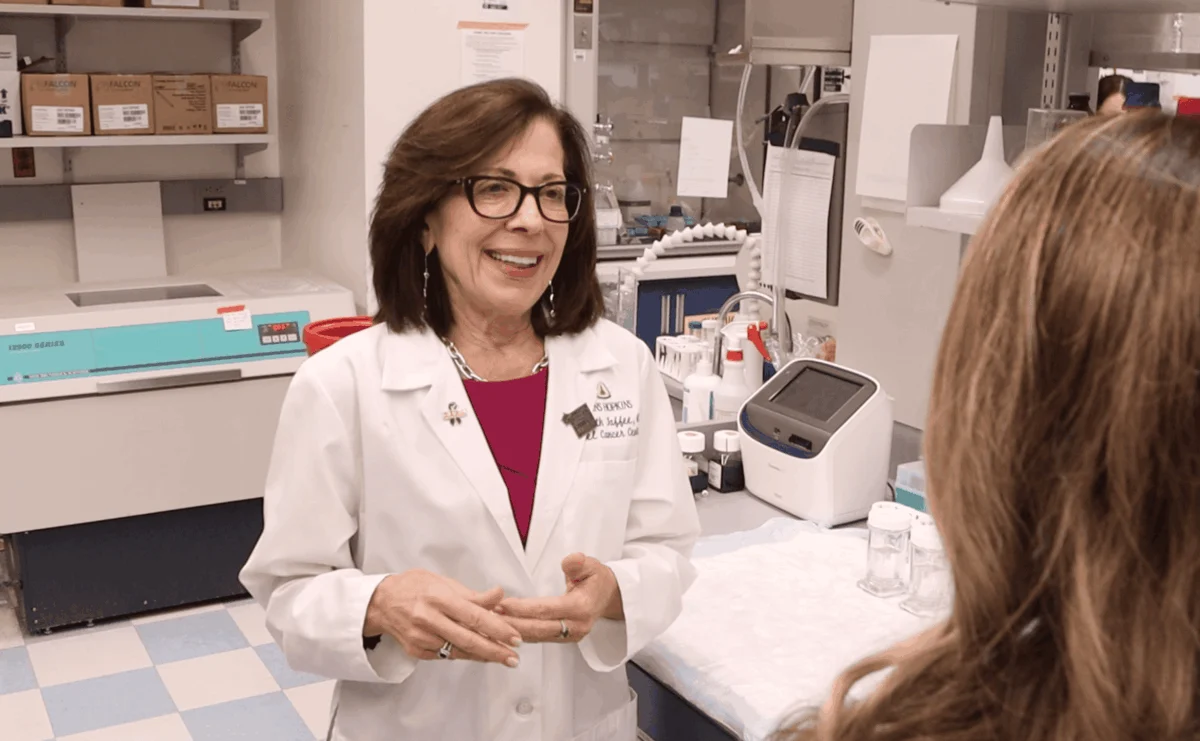
In the landscape of oncology, few diagnoses carry the same weight of finality as pancreatic cancer. It is a disease defined by its stealth, its lethality, and its historical resistance to conventional medicine. Yet, for Dr. Elizabeth Jaffee, a pioneering oncologist and Deputy Director of the Sidney Kimmel Comprehensive Cancer Center at Johns Hopkins, the fight against this malignancy is not merely a professional endeavor—it is a deeply personal mission rooted in the loss of a loved one and fueled by the promise of the human immune system.
As we observe Pancreatic Cancer Awareness Month, the medical community stands at a watershed moment. After decades of relative stagnation, the field is witnessing a paradigm shift. By moving beyond simple drug discovery and into the realm of precision immunology, researchers like Dr. Jaffee are transforming our understanding of how to detect, treat, and potentially prevent one of the most aggressive cancers known to science.
The Genesis of a Lifelong Commitment
The trajectory of Dr. Jaffee’s career was set in 1986, a year that marked both a personal tragedy and a professional awakening. Her uncle, only 51 years old, was diagnosed with pancreatic cancer. The speed of his decline—passing away just 90 days after his diagnosis—left an indelible mark on his niece, who was then a medical intern.
"Those 90 days or so between his diagnosis and his death left a lifelong impression on me," Dr. Jaffee recalls. Three years later, during her fellowship in medical oncology, she encountered a patient with metastatic pancreatic cancer. Despite the advancements in medicine at the time, the clinical reality remained grim. The physician’s role was limited to palliative care, managing pain rather than fighting the disease itself. This powerlessness, experienced in the face of such profound human suffering, crystallized her resolve.
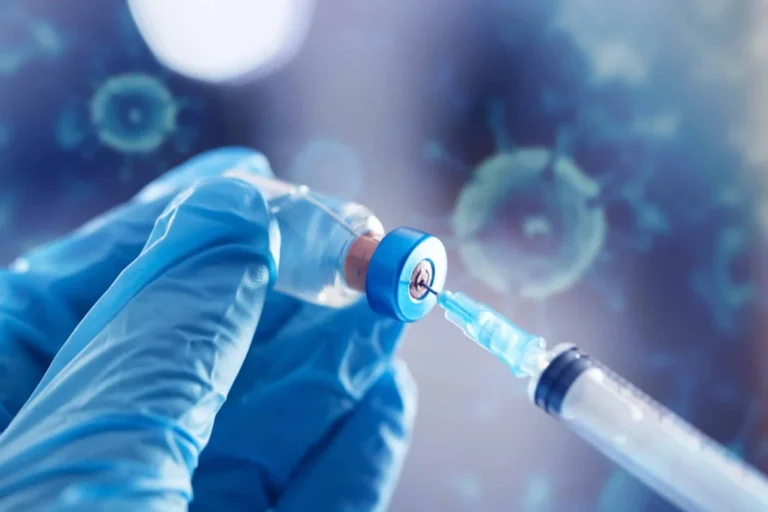
Drawing on her college background in immunology, Dr. Jaffee began to look toward the horizon. At a time when the field was dominated by cytotoxic chemotherapy, she hypothesized that the most powerful medicine was already present within the patient: their own immune system. Inspired by the success of vaccines in infectious disease, she made a defining decision to dedicate her life to harnessing the immune system as a weapon against pancreatic cancer.
A Chronology of Scientific Persistence
The Early Frontier (1997–2000)
Dr. Jaffee’s initial clinical foray into cancer vaccines began in 1997. At the time, the standard of care offered little hope for long-term survival; even after successful surgery, 80% of patients faced recurrence within two years. Her approach was revolutionary: vaccinate patients after surgery to "teach" their immune systems to recognize and mop up microscopic cancer cells that had evaded the surgeon’s scalpel.
Between 1997 and 2000, she treated six patients with a first-generation vaccine. While the sample size was small, the results were galvanizing. Five patients showed measurable immune responses, and some remained disease-free for over a decade. Most poignant was the case of a 71-year-old patient who experienced persistent inflammation at his vaccine injection sites for two decades—a hallmark of an active, enduring immune response. He ultimately succumbed to heart disease, not the cancer that had once threatened his life.
Unmasking the Tumor’s Defenses
The challenge in treating pancreatic cancer is that it is a master of camouflage. Unlike melanoma or lung cancer, which often possess high mutational burdens that make them "visible" to the immune system, pancreatic tumors are often "cold." They surround themselves with a dense, fibrous "stroma" that acts as a physical wall, while simultaneously secreting immunosuppressive signals that neutralize T-cells.
"The exciting news is that we are beginning to understand these protective mechanisms," says Dr. Jaffee. Current research is now focused on multi-pronged attacks:
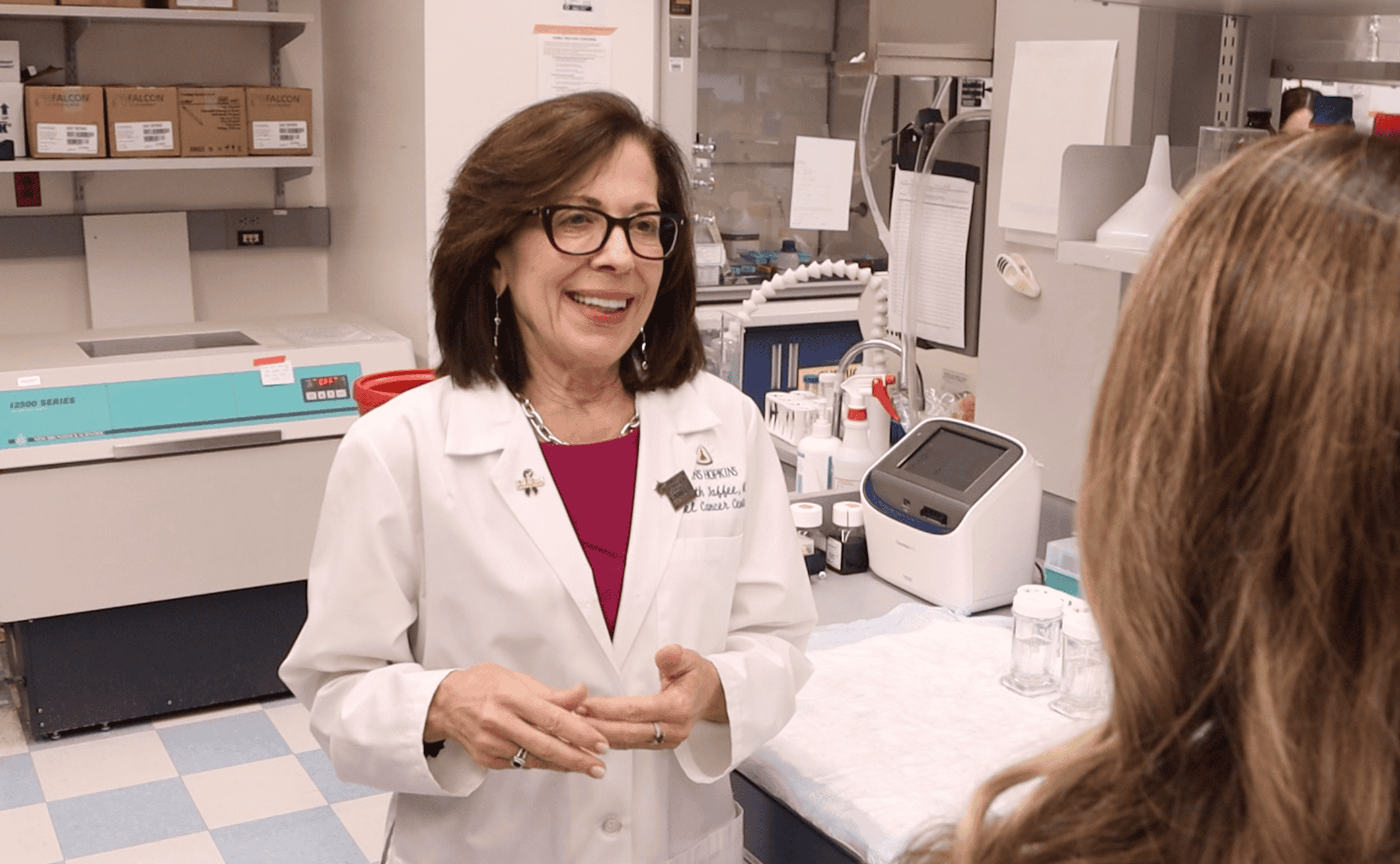
- Targeting Mutations: New therapies are being developed to inhibit the KRAS mutation, a driver found in the vast majority of pancreatic cancers.
- Remodeling the Environment: Scientists are working to degrade the dense fibrous tissue surrounding tumors, essentially "opening the gates" for immune cells to infiltrate.
- Personalized Vaccines: Modern mRNA technology is being leveraged to target specific proteins unique to a patient’s tumor profile.
Supporting Data: The Ripple Effect of Immunotherapy
While Dr. Jaffee’s work focuses on the pancreas, she notes that the entire field of oncology has been energized by the Phase 3 INTerpath-001 study. This landmark trial demonstrated that adding a personalized mRNA cancer vaccine to the checkpoint inhibitor Keytruda (pembrolizumab) significantly reduced the risk of recurrence or death in patients with melanoma.
This result serves as the "proof of concept" the field has long awaited. It provides the first robust Phase 3 evidence that therapeutic cancer vaccines can change the natural history of cancer. For researchers who have spent decades championing this approach, it is a validation of their patience and persistence.
From Treatment to Prevention: The Second-Generation Leap
Perhaps the most ambitious frontier in Dr. Jaffee’s work is the transition from treatment to prevention. Her team has developed a second-generation vaccine targeting mutated KRAS. In recent studies involving individuals at high risk for pancreatic cancer, the vaccine successfully induced immune responses that remained detectable for up to two years.
In some participants, even small, precancerous pancreatic cysts showed signs of resolution on MRI scans. This suggests that the immune system, when properly "primed," may be able to eliminate nascent cancer cells before they develop into invasive, life-threatening disease.
Implications for Future Clinical Practice
The vision of the future is clear: an era where pancreatic cancer is identified by risk stratification rather than by advanced, symptomatic disease. However, achieving this requires overcoming two significant hurdles:
- Defining the Precancerous Microenvironment: Researchers must map the biology of the pancreas in its earliest stages. Understanding how immune cells, inflammatory signals, and surrounding tissues interact is essential to designing interventions that stop cancer in its tracks.
- Risk Stratification: Since pancreatic cancer is relatively uncommon in the general population, universal screening is not viable. The next wave of innovation must involve high-sensitivity blood-based biomarkers, molecular diagnostics for pancreatic cysts, and sophisticated imaging to identify the "at-risk" population who would benefit most from preventive vaccination.
A Message of Hope
For those currently navigating the diagnosis, or for families who have lost someone to this disease, Dr. Jaffee’s message is one of cautious but profound optimism. "We are no longer simply trying to find another drug," she explains. "We are approaching the disease from multiple directions: understanding its earliest development, identifying individuals at risk, detecting it earlier, and developing treatments that can prevent recurrence."
The scientific momentum is undeniable. With the integration of chemotherapy, immunotherapy, and genetic-based vaccines, the clinical community is moving toward a future where the word "pancreatic" no longer serves as an automatic synonym for "hopeless."
Dr. Elizabeth Jaffee remains at the forefront of this struggle. As an Associate Director of the CRI’s Scientific Advisory Council and a leader at the Bloomberg-Kimmel Institute for Cancer Immunotherapy, she continues to translate the lessons learned from those first six patients into the next generation of life-saving care. For her, the front lines of the battle against cancer have moved from a place of mourning to a place of discovery—and for millions of patients, that is the most important progress of all.