










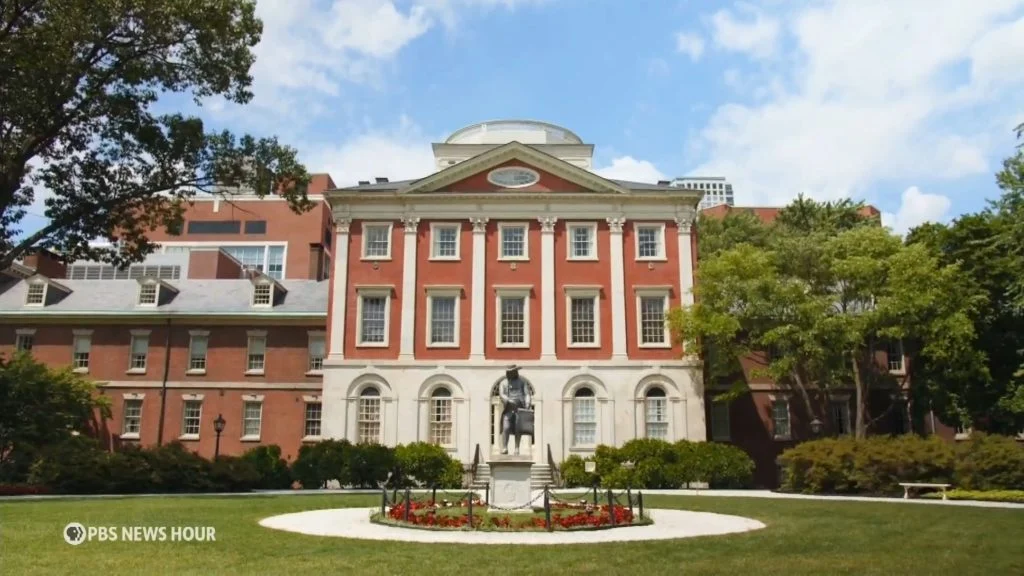
In the heart of Philadelphia, where the foundations of American democracy were laid, another pillar of civilization stands as a testament to the nation’s enduring commitment to public welfare. The Pennsylvania Hospital, the oldest chartered hospital in the United States, is currently celebrating its 275th anniversary. However, the most significant milestone in this commemorative year is the unveiling of a dedicated museum within the hospital’s original Pine Building—a space that bridges the gap between colonial-era medicine and the high-tech, equitable healthcare systems of the 21st century.
As part of the CANVAS series, which explores the intersection of health and the arts, senior arts correspondent Jeffrey Brown recently toured the facility to uncover how this venerable institution is preserving its legacy while reflecting on the evolution of medical practice.
The Genesis of Public Health: A Colonial Vision
Founded in 1751 by Dr. Thomas Bond and the polymath Benjamin Franklin, the Pennsylvania Hospital was born from a radical vision for the era. At a time when medical care was largely a private luxury reserved for the affluent, the hospital’s charter explicitly mandated "the reception and cure of poor sick persons free of charge."
This mission, codified nearly a quarter-century before the Declaration of Independence, set the precedent for the American public health model. Today, the institution operates as a sophisticated, high-tech teaching hospital under the University of Pennsylvania Health System, but the Pine Building serves as a living archive. Curated by Stacey Peeples, who has spent 25 years navigating the institution’s depths, the museum is not merely a collection of artifacts; it is a repository of the human struggle against mortality, pandemic, and injury.
A Chronology of Care: From Yellow Fever to COVID-19
To understand the significance of the new museum, one must look at the timeline of the hospital’s service, which mirrors the volatile history of Philadelphia itself.
- 1751: Dr. Thomas Bond and Benjamin Franklin secure the charter for the nation’s first hospital dedicated to the poor.
- 1793: The hospital faces its first major test of resilience during the devastating Yellow Fever epidemic, establishing its role as a frontline responder.
- 1804: The construction of the nation’s first surgical amphitheater marks a pivot point in medical education, transitioning from private mentorship to public demonstration.
- 19th and 20th Centuries: The institution becomes a trailblazer in maternity care and mental health, areas of medicine that were frequently neglected or misunderstood in earlier eras.
- 2020–Present: The hospital navigates the COVID-19 pandemic, drawing upon centuries of institutional knowledge to manage a modern global health crisis.
Preserving the "Life of an Institution"
The museum’s collection is uniquely intimate. Unlike galleries that feature polished, curated displays of prestige, the Pennsylvania Hospital Museum highlights the mundane, daily mechanics of survival.
Stacey Peeples, who describes her transition from a hospital-fearing individual to a dedicated archivist, emphasizes the human element of the archives. "We don’t have a door that we can open and magically see what it would have looked like to be here," Peeples explains. "But when you see these records—the receipt books capturing details on staffing and inventories—you see the people who were dropping off the food, the linens we needed, all the activity that it took to make this institution run every single day."
The museum features a reconstructed apothecary, the nation’s first medical library with texts dating back to the 18th century, and the original petition for the hospital written by Franklin’s own hand. These artifacts provide a window into the logistical backbone of medical history, reminding visitors that medicine is as much about social organization as it is about clinical discovery.
The Surgical Amphitheater: Performance and Pain
Perhaps the most striking exhibit is the 1804 surgical amphitheater. For the modern observer, it is easy to conflate the dramatic, fast-paced nature of medical dramas like The Pitt with the reality of historical surgery. However, the amphitheater represents a different kind of performance.
"They were performing because they had an audience," Peeples notes. Surgeons would lecture and operate simultaneously before a gallery of students. In an era before anesthesia, these surgeries were grueling, visceral affairs. Visitors today can stand in the same space where the foundations of modern surgical technique were developed, a stark contrast to the hospital’s modern, non-invasive diagnostic tools, such as the high-tech Anatomage Table, which allows students to explore human anatomy digitally without a single incision.
Leadership, Diversity, and the Future of Care
The museum’s mission extends beyond the history of tools and techniques; it is also a platform for addressing the demographic history of medicine. Alicia Gresham, the CEO of the hospital, views the museum as an essential space for highlighting the contributions of those who have historically been sidelined in medical narratives.
"This is a great example of not just pioneering the care and pioneering the science, but also creating space for leaders, women leaders, and women leaders of color," Gresham states. By documenting the presence and influence of diverse figures within the institution, the hospital is rewriting the narrative of medical authority.
Gresham also points to the persistent relevance of the hospital’s founding principles. "When you think about care in the late 1700s, you could only get a doctor if you had money," she explains. "The idea of a public hospital was that now anybody could get care." This remains the central tension of modern American healthcare: the debate over accessibility, cost, and the responsibility of institutions to their surrounding communities.
Implications for Modern Medicine
Why does a 275-year-old museum matter in the era of Artificial Intelligence and genomic medicine? According to the curators and administrators at Pennsylvania Hospital, the answer lies in the concept of institutional continuity.
1. The Ethics of Access
The hospital’s history serves as a mirror for modern policy makers. The same questions of "who deserves care" and "how do we fund the sick" that faced Benjamin Franklin remain at the forefront of contemporary political discourse. By framing these issues within a historical context, the museum invites the public to view current health crises not as isolated events, but as part of a long, ongoing project of societal improvement.
2. The Humanization of Technology
As medicine becomes increasingly digitized, there is a risk of losing the human touch that defined early care. The museum serves as a corrective, reminding both practitioners and patients that behind every medical record is a human life. The focus on the apothecary, the staff, and the patient records underscores that medicine is a social, communal act.
3. Education as Performance
The shift from the 1804 surgical amphitheater to modern, digital learning underscores the evolution of medical education. The museum encourages visitors to reflect on what has changed—such as the mastery of anesthesia and the reduction of surgical mortality—and what remains the same: the necessity of mentorship, the importance of observation, and the shared commitment to the "cure of poor sick persons."
Conclusion: A Window into the Evolution of Care
The Pennsylvania Hospital Museum is more than a walk down memory lane; it is an active participant in the hospital’s future. By inviting the public to engage with the grit, the failures, and the triumphs of the past, it fosters a deeper understanding of the medical field.
As Stacey Peeples suggests, the goal is for visitors to walk away with a sense of perspective. "I want them to look at a document and find something they can take away… inspiring anyone to come in and learn a little bit more about health care and about medicine and how that has evolved."
In an era defined by rapid technological change, the Pennsylvania Hospital Museum provides a necessary anchor, grounding the complexities of modern medicine in the enduring human values that first inspired its founding. Whether one is a medical professional or a curious member of the public, the museum offers a profound reminder that the history of medicine is, at its core, the history of humanity’s attempt to care for one another.