










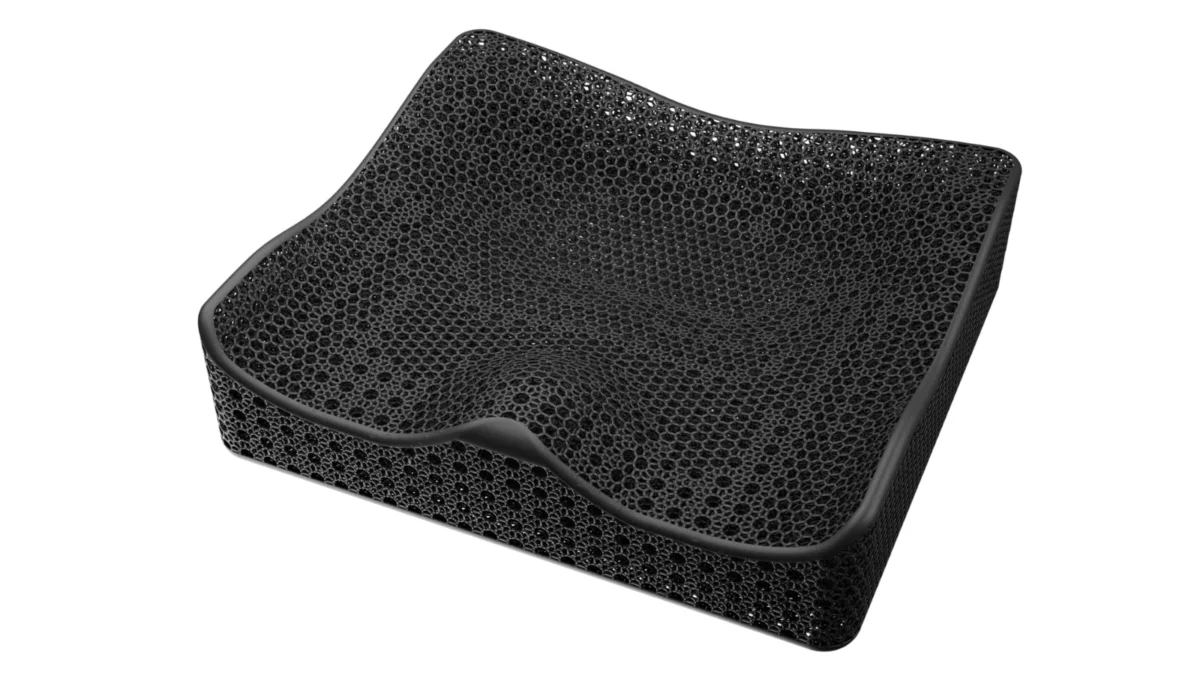
MELBOURNE, FLA. – [Date of Publication] – Kalogon, a leader in smart seating solutions, has announced the groundbreaking launch of Verro, an innovative line of Medicare-coded custom wheelchair cushions designed to revolutionize postural support for individuals with the most complex seating needs. This new offering, comprising two distinct models – the Verro variable-density lattice (Verro Lattice) and the Verro dual-density foam (Verro Foam) – represents a significant leap forward in personalized rehabilitation technology, leveraging advanced manufacturing techniques to deliver unprecedented levels of comfort, support, and pressure redistribution.
The introduction of Verro addresses a critical unmet need within the complex rehab technology (CRT) market. Standard, off-the-shelf cushions often fall short for individuals presenting with significant postural challenges such as windswept posture, pelvic obliquity, or severe asymmetry. These conditions demand a precise, body-conforming fit that can only be achieved through bespoke solutions, which Verro is engineered to provide with remarkable efficiency and precision. By integrating state-of-the-art 3D printing and sophisticated material science, Kalogon aims to mitigate the risks associated with inadequate seating, including pressure injuries, discomfort, and functional limitations, thereby significantly enhancing the quality of life for wheelchair users globally.
Addressing the Critical Need for Custom Solutions
For countless individuals relying on wheelchairs, the cushion beneath them is far more than just a soft surface; it is a critical component of their overall health, mobility, and independence. However, for those with complex anatomical variations or severe postural deviations, finding a truly effective seating solution has historically been a significant challenge. Conditions like windswept posture, where the pelvis and lower extremities are rotated to one side, or pelvic obliquity, an uneven tilt of the pelvis, create unique pressure points and necessitate highly specialized support to maintain proper alignment and prevent complications. Traditional cushions, often made from uniform materials, struggle to provide the nuanced, localized support required to accommodate these intricate body contours. The consequence is often increased discomfort, progressive deformity, and a heightened risk of developing debilitating pressure injuries, which can lead to prolonged hospitalizations and severely diminish a person’s functional capabilities.
Kalogon’s Verro line emerges as a direct response to this profound clinical need. Recognizing the limitations of existing solutions, the company has channeled its expertise in smart seating into developing custom cushions that are not merely shaped to a body, but engineered to interact dynamically with its unique pressures and contours. This targeted approach promises to deliver a level of personalized care previously unattainable for many, shifting the paradigm from generic support to truly tailored therapeutic intervention.
The Dual-Path Approach: Verro Lattice and Verro Foam
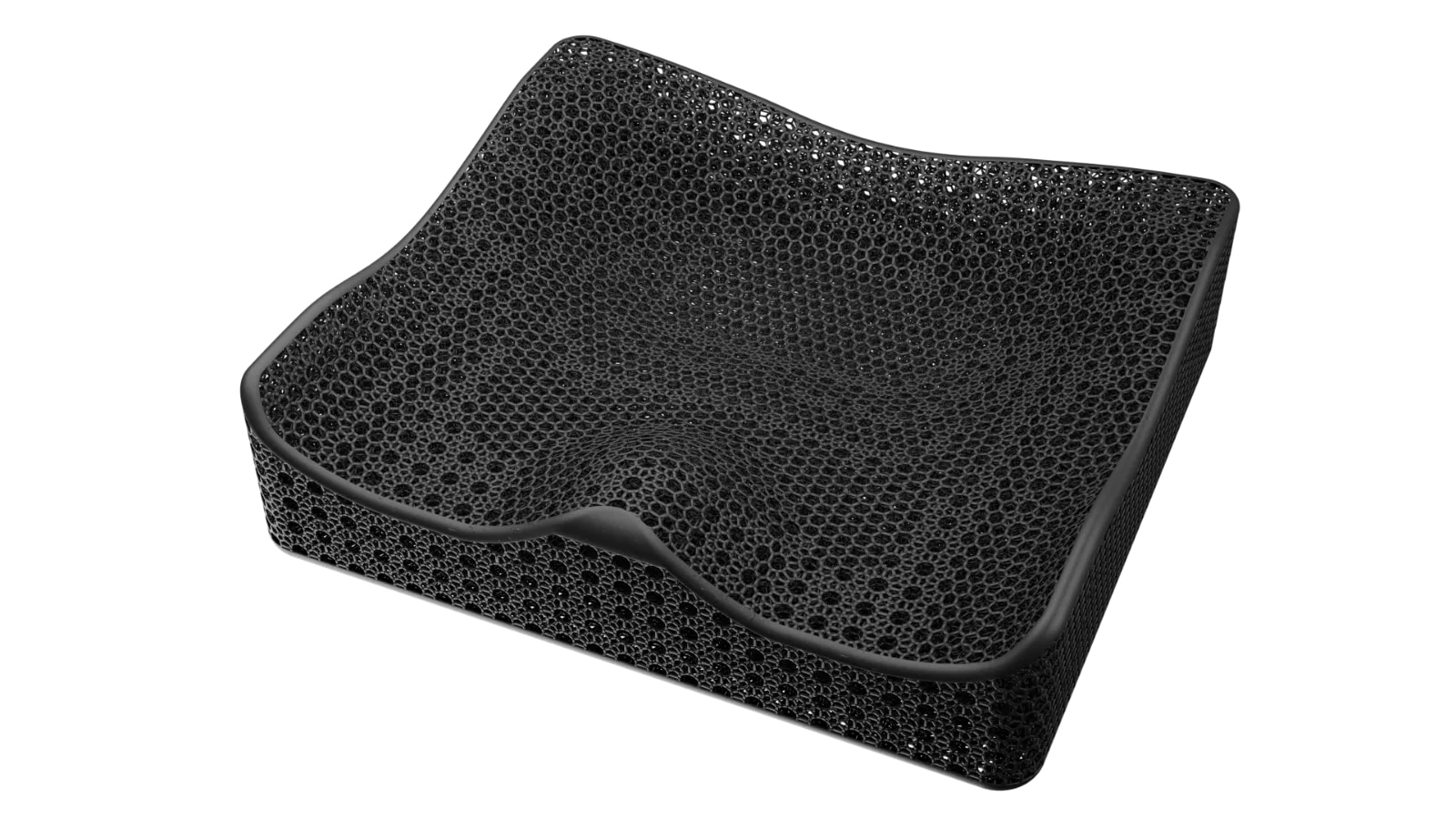
Central to Verro’s innovative strategy is its dual-model offering, providing clinicians and users with options tailored to specific needs and preferences. The Verro Lattice model introduces a patent-pending variable-density lattice technology, a groundbreaking advancement within the complex rehab tech market. This 3D-printed elastomer construction allows for the precise modulation of firmness across the cushion’s surface: areas requiring robust postural support are engineered to be firmer, while regions susceptible to high pressure are designed with increased softness for optimal diffusion. This intricate control over material properties is a hallmark of additive manufacturing and sets Verro Lattice apart from conventional seating solutions.
Complementing this high-tech approach, the Verro Foam model offers a dual-density foam construction, featuring a dense foam base for foundational support topped with a softer foam layer for comfort and adaptability. This option is particularly appealing for clinicians who prioritize the ability to make in-field modifications after initial fitting or for users transitioning to contoured seating who may benefit from a more adaptable material. Together, these two constructions ensure that Verro can cater to a wide spectrum of complex postural requirements, balancing cutting-edge technology with practical clinical utility.
The Journey to Verro: Innovation Driven by Clinical Imperative
The development of the Verro line is a testament to Kalogon’s commitment to innovation driven by real-world clinical challenges. It represents a methodical journey from identifying critical unmet needs within the complex rehab community to pioneering advanced manufacturing techniques to address them effectively.
Identifying the Gaps in Complex Rehabilitation
The genesis of Verro can be traced back to persistent feedback from clinicians and seating specialists. As Tim Balz, CEO and founder of Kalogon, articulated, "We kept hearing from clinicians that their most complex patients were falling through the cracks." This poignant observation highlighted a significant void in the existing market for truly personalized seating solutions. These "cracks" referred to patients whose unique anatomies and severe postural challenges could not be adequately accommodated by standard or even semi-custom cushions. The limitations of traditional materials – whether basic foams, gels, or air bladders – meant that achieving precise, localized support and effective pressure relief simultaneously was often an impossible task. Clinicians faced the dilemma of compromising on either support for stability or softness for pressure management, often leading to suboptimal outcomes for their most vulnerable patients. This clinical imperative spurred Kalogon to re-evaluate conventional approaches and explore entirely new manufacturing paradigms.
Pioneering 3D Printing for Postural Precision
Kalogon’s response to this challenge was to embark on an ambitious research and development phase, focusing on technologies that offered unparalleled precision and customization. The decision to integrate 3D printing, specifically with elastomer materials, was a pivotal moment. Additive manufacturing, or 3D printing, provides an unprecedented level of control over the internal geometry and material density of a product. This capability directly addressed the core limitation of traditional manufacturing: the inability to create subtle, localized variations in firmness and support within a single, continuous structure.
The patent-pending variable-density lattice technology is the direct outcome of this pioneering effort. By leveraging sophisticated computational design and advanced 3D printing processes, Kalogon engineers could meticulously map out areas of a cushion that required more rigidity for stabilization (e.g., to correct pelvic tilt) and areas that needed to be softer for pressure diffusion (e.g., under bony prominences). This iterative process of design, prototyping, and testing allowed the company to fine-tune the lattice structure, ensuring that each part of the cushion performs its specific function with optimal efficacy. This technological leap represents not just an incremental improvement but a fundamental re-imagining of how custom seating can be manufactured and deployed.
From Concept to Medicare-Coded Reality
The journey from innovative concept to a commercially viable and clinically accessible product involved rigorous development, testing, and validation. Kalogon’s commitment extended beyond technological prowess to ensuring that their solution met the practical needs of patients and healthcare providers, particularly concerning accessibility and affordability. Securing the E2609 Medicare code for Verro was a crucial step in this process. This coding signifies that Verro cushions meet specific standards for custom-fabricated seating, allowing eligible patients to access these advanced solutions through Medicare reimbursement. This makes the technology not just innovative, but also attainable for a broader population, removing a significant barrier to adoption for individuals who desperately need highly specialized seating.
Furthermore, Kalogon’s decision to manufacture all Verro cushions in-house at their Melbourne, Florida, facility underscores their dedication to quality control, rapid turnaround, and local economic contribution. This vertical integration ensures that the precision inherent in the design process is maintained throughout manufacturing, from initial body capture to the final product. The entire chronology, from identifying a critical clinical gap to developing a cutting-edge solution and making it accessible through established healthcare channels, highlights Kalogon’s holistic approach to advancing complex rehab technology.
Unpacking Verro’s Advanced Technology and Design
The Verro line is more than just a new product; it’s a showcase of advanced engineering and material science applied to a critical area of healthcare. Its two distinct constructions, Verro Lattice and Verro Foam, offer specialized benefits, while its ordering process redefines efficiency and precision.
The Revolutionary Variable-Density Lattice
At the heart of the Verro Lattice model lies Kalogon’s patent-pending variable-density lattice technology. This innovation represents a paradigm shift in how custom cushions are constructed. Unlike traditional methods that rely on carving or layering materials with uniform properties, the Verro Lattice is created through an additive manufacturing process – 3D printing. Using an advanced elastomer, the printer builds the cushion layer by layer, allowing for an intricate internal structure.
The term "variable-density" is key here. It means that the density and geometry of the lattice structure can be precisely controlled at every point across the cushion’s surface and even within its depth. Where the body requires firmer support to maintain alignment (e.g., along the sides of the pelvis for stability in cases of windswept posture), the lattice is printed with a denser, more rigid structure. Conversely, in areas prone to high pressure and potential skin breakdown (e.g., under the ischial tuberosities), the lattice is designed with a softer, more compliant structure that allows for greater deformation and pressure diffusion. This level of granular control is virtually impossible with conventional foam, gel, or air-filled cushions.
Beyond precise support and pressure relief, the open, interconnected nature of the lattice structure offers significant advantages in terms of breathability and temperature regulation. Air can circulate freely through the cushion, preventing heat and moisture buildup, which are common contributors to skin breakdown and discomfort in traditional seating. This makes Verro Lattice particularly beneficial for users who experience issues with temperature control or who are at high risk for skin integrity challenges. The inherent durability of the elastomer also ensures long-lasting performance and consistent support over time.
The Adaptability of Dual-Density Foam
While the Verro Lattice pushes the boundaries of additive manufacturing, the Verro Foam model provides a robust and adaptable alternative, catering to different clinical philosophies and user preferences. This construction features a dense foam base, engineered to provide stable foundational support and maintain the cushion’s overall shape and integrity. Layered on top is a softer, more compliant foam topper. This dual-density approach offers a combination of firm support where needed and gentle cushioning for comfort and pressure distribution.
The primary advantage of Verro Foam lies in its adaptability for post-fitting modifications. While the initial shape is custom-contoured based on the user’s body capture, seating specialists can make minor adjustments in the field, such as trimming or adding material, to fine-tune the fit as the user’s needs evolve or as they adapt to the new seating. This flexibility is highly valued by clinicians who work with patients new to complex contoured seating or those whose conditions might require ongoing minor adjustments. Furthermore, foam constructions are familiar to many clinicians and users, making the transition to a custom solution smoother for some. While it may not offer the extreme micro-level customization of the lattice, Verro Foam still provides a significantly superior level of personalized support compared to standard off-the-shelf options, combining comfort, stability, and the practical benefit of in-field adaptability.
The Science of Personalized Pressure Management
Both Verro constructions fundamentally rely on the science of personalized pressure management. The goal is not just to provide a soft surface, but to redistribute pressure away from vulnerable areas while maintaining optimal postural alignment. For the Verro Lattice, this is achieved by intelligently varying material stiffness to create localized zones of support and relief. For the Verro Foam, the precise contouring combined with the dual-density layers works to envelop the user’s unique shape, increasing the surface area contact and thus reducing peak pressure points.
Effective pressure management is crucial in preventing pressure injuries (also known as bedsores or decubitus ulcers), which are a pervasive and serious complication for wheelchair users, especially those with limited mobility or sensation. By distributing pressure evenly and supporting anatomical structures correctly, Verro cushions contribute directly to a preventative care strategy, leading to better health outcomes and reducing the need for costly and painful interventions.
Streamlined Ordering for Unprecedented Speed: The Launch Pad Advantage
Kalogon has also innovated the ordering process for Verro, recognizing that efficiency and accuracy are paramount in complex rehab. Every Verro cushion begins with a precise capture of the user’s body shape. This critical data is then fed into Kalogon’s interactive real-time configurator, aptly named “Launch Pad.” Clinicians have two distinct pathways to place an order:
- Clinician-Specified Shape and Dimensions: Seating specialists can manually input precise measurements and desired contours based on their clinical assessment and expertise. This method allows for a high degree of clinician control and input, leveraging their direct interaction with the patient.
- 3D Scan Data: For the highest level of anatomical precision, clinicians can submit 3D scan data. This might come from advanced body scanners that create a digital replica of the user’s seated posture, or from converting manual measurements into a 3D model. This method ensures that the cushion perfectly mirrors the user’s unique contours, capturing even the most subtle asymmetries.
Regardless of the chosen method, Kalogon boasts an industry-leading turnaround time, committing to shipping every Verro cushion within 14 days of receiving the order. This efficiency is a stark contrast to the typical industry standard, where custom seating solutions can often take weeks or even months to produce. A rapid turnaround is not just a convenience; it’s a critical factor for patients whose postural needs are urgent, or who may be transitioning out of acute care settings. It means quicker access to essential support, potentially preventing further complications and improving immediate comfort. This streamlined, precise, and rapid ordering process is as revolutionary as the cushion technology itself.
Navigating Reimbursement: The Significance of Medicare Code E2609
The assignment of the E2609 Medicare code to Verro cushions is a pivotal achievement for Kalogon and, more importantly, for patients. This code specifically designates "Custom Fabricated Wheelchair Cushion, Any Material, Includes Any Cover." For a medical device to receive a Medicare code, it must meet stringent criteria demonstrating its medical necessity, effectiveness, and appropriate application.
The E2609 code signifies that Verro cushions are recognized as medically necessary, custom-fabricated durable medical equipment (DME). This recognition is crucial for several reasons:
- Accessibility: It enables eligible Medicare beneficiaries (and often, by extension, those with other private insurance plans that follow Medicare guidelines) to obtain these advanced custom cushions with partial or full reimbursement. Without such a code, the cost of custom solutions would be prohibitive for many, severely limiting access.
- Clinical Validation: The process of obtaining a Medicare code involves scrutiny of the product’s design, function, and clinical benefit. This implicitly validates Verro’s capability to address complex seating needs effectively.
- Market Integration: It facilitates the integration of Verro into the broader healthcare system, allowing providers to prescribe and dispense the cushions knowing that a clear pathway for reimbursement exists.
By ensuring Verro is Medicare-coded, Kalogon has removed a significant barrier to entry for patients, making its cutting-edge technology accessible to those who need it most, thereby maximizing its potential impact on public health and patient well-being.
Voices from the Forefront: Kalogon’s Vision and Expert Endorsement
The launch of Verro is underscored by the passionate commitment of Kalogon’s leadership and the endorsement of seasoned experts in the field of complex rehabilitation. Their statements articulate not only the technological prowess of the new cushions but also the profound human impact they are expected to have.
CEO Tim Balz on Bridging the "Cracks" in Patient Care
Tim Balz, CEO and founder of Kalogon, articulates the core motivation behind the Verro line with compelling clarity. His statement, "We kept hearing from clinicians that their most complex patients were falling through the cracks, so we developed a technology that lets us 3D print the cushion with precise, localized control over where the body gets support and where it gets relief," directly addresses the clinical imperative that drove Verro’s development. This reflects a company culture rooted in listening to the challenges faced by healthcare professionals and responding with innovative solutions.
Balz further elaborates on the unique advantages of 3D printing, stating, "With our variable-density lattice, we can create subtle variations across the surface and sides of the cushion that simply aren’t possible with traditional materials. The customization options are hyper-personalized to provide the best comfort, support and fit for every customer." This highlights Kalogon’s deep understanding of additive manufacturing’s potential to transcend the limitations of conventional production. The emphasis on "hyper-personalized" customization underscores a patient-centric philosophy, recognizing that true effectiveness in complex seating stems from an individualized approach that respects the unique biomechanics of each user. Balz’s vision extends beyond mere product development; it’s about empowering clinicians with tools that allow them to deliver optimal care, ensuring that no patient, no matter how complex their needs, is left without a viable solution.
Advisor Kelly Waugh on Expanding Clinical Possibilities
The enthusiastic endorsement from Kelly Waugh, MA, PT, ATP, an esteemed advisor to Kalogon, provides crucial validation from a clinical perspective. As a physical therapist and Assistive Technology Professional (ATP), Waugh possesses an intimate understanding of the complexities of seating and mobility. Her statement, "Every client is different, and seating specialists need options that reflect that. Verro gives us more ways to match the right solution to each unique person based on their postural support needs, personal preferences and desire for in-field modification," speaks to the practical utility and versatility of the Verro line.
Waugh’s emphasis on "options" and "flexibility" is particularly insightful. She acknowledges the diverse needs of clients and the varied approaches clinicians take. The availability of both the high-precision Verro Lattice and the adaptable Verro Foam means that seating specialists are equipped with a broader toolkit, allowing them to make more informed and tailored decisions. Her conclusion, "That flexibility will allow Kalogon to serve a much wider population of people with complex seating needs than before," succinctly captures the profound impact Verro is expected to have. It’s not just about a new product, but about expanding the demographic that can benefit from truly effective, customized seating, thereby elevating the standard of care across the complex rehab community. Waugh’s endorsement lends significant credibility to Verro’s clinical relevance and its potential to make a tangible difference in patient lives.
Far-Reaching Implications: Transforming Lives and the CRT Landscape
The launch of Kalogon’s Verro line carries significant implications, promising to transform not only the lives of individual wheelchair users but also the broader landscape of complex rehab technology.
Enhanced Quality of Life for Wheelchair Users
The most direct and profound implication of Verro is its potential to dramatically enhance the quality of life for individuals with complex seating needs. For many, inadequate seating leads to chronic discomfort, pain, and the ever-present threat of pressure injuries. By providing hyper-personalized postural support and superior pressure redistribution, Verro cushions can:
- Reduce Pain and Discomfort: A perfectly contoured cushion minimizes pressure points and supports the body in optimal alignment, leading to greater comfort during prolonged sitting.
- Prevent Pressure Injuries: This is perhaps the most critical benefit. By diffusing pressure away from vulnerable bony prominences and promoting breathability, Verro significantly lowers the risk of developing these debilitating and costly wounds.
- Improve Functional Independence: Correct postural support can improve trunk stability, freeing the upper extremities for functional tasks like propulsion, reaching, and self-care. This translates to greater independence in daily activities.
- Enhance Respiratory and Digestive Function: Proper spinal alignment, facilitated by effective seating, can positively impact respiratory capacity and digestive processes.
- Boost Psychological Well-being: Reduced pain, increased comfort, and greater independence contribute significantly to improved mood, self-esteem, and overall mental health. Users can participate more fully in social, educational, and vocational activities.
In essence, Verro is not just a cushion; it is a gateway to a more comfortable, healthier, and more engaged life for wheelchair users who have long struggled with suboptimal seating.
Empowering Clinicians with Advanced Tools
For seating specialists, occupational therapists, and physical therapists, Verro represents a powerful new tool in their clinical arsenal. The challenges of fitting complex clients with off-the-shelf or even traditional custom solutions are immense, often involving compromises and iterative adjustments. Verro empowers clinicians by:
- Increasing Precision and Predictability: The ability to leverage 3D scan data and precisely control material properties (Verro Lattice) or offer adaptable options (Verro Foam) allows for more accurate and predictable outcomes.
- Expanding the Scope of Care: Clinicians can now confidently address a wider range of complex postural challenges, knowing they have a solution that can meet intricate anatomical demands.
- Streamlining the Workflow: Kalogon’s 14-day turnaround time significantly reduces the waiting period for patients, allowing clinicians to implement effective seating interventions more rapidly. The Launch Pad configurator simplifies the ordering process, freeing up valuable clinical time.
- Enhancing Clinical Satisfaction: Providing patients with truly effective solutions that improve their health and comfort is a source of immense professional satisfaction for clinicians.
By offering cutting-edge technology combined with an efficient ordering process, Kalogon supports clinicians in delivering the highest standard of care, ultimately elevating the practice of complex rehabilitation.
Shaping the Future of Complex Rehab Technology
Verro’s launch is poised to have a ripple effect across the complex rehab technology industry. It sets new benchmarks for what is achievable in custom seating:
- Pioneering 3D Printing in CRT: Verro Lattice’s patent-pending variable-density lattice technology establishes 3D printing as a viable, scalable, and superior manufacturing method for highly personalized medical devices in this sector. This could inspire further innovation in material science and additive manufacturing applications for other assistive technologies.
- Raising the Bar for Customization: The "hyper-personalized" approach challenges other manufacturers to explore more advanced methods of tailoring solutions, moving beyond generic sizing or basic customization.
- Driving Efficiency in Manufacturing and Delivery: Kalogon’s commitment to a 14-day turnaround time will likely pressure competitors to improve their own production and delivery schedules, ultimately benefiting patients across the industry.
- Focus on Preventative Care: By directly addressing the root causes of pressure injuries and postural deterioration, Verro reinforces the importance of preventative care within CRT, potentially leading to a reduction in secondary complications and associated healthcare costs.
A Commitment to Domestic Manufacturing and Accessibility
Finally, Kalogon’s decision to manufacture all Verro cushions in-house at their Melbourne, Florida, facility carries its own set of implications. It underscores a commitment to quality control, ensures supply chain stability, and contributes to domestic job creation. Furthermore, the strategic pursuit of the E2609 Medicare code demonstrates Kalogon’s dedication not just to innovation, but to making that innovation accessible and affordable for the patients who need it most. This dual focus on advanced technology and practical accessibility positions Verro as a transformative force in the complex rehab market, poised to make a lasting positive impact on the lives of wheelchair users worldwide.
Kalogon.com