







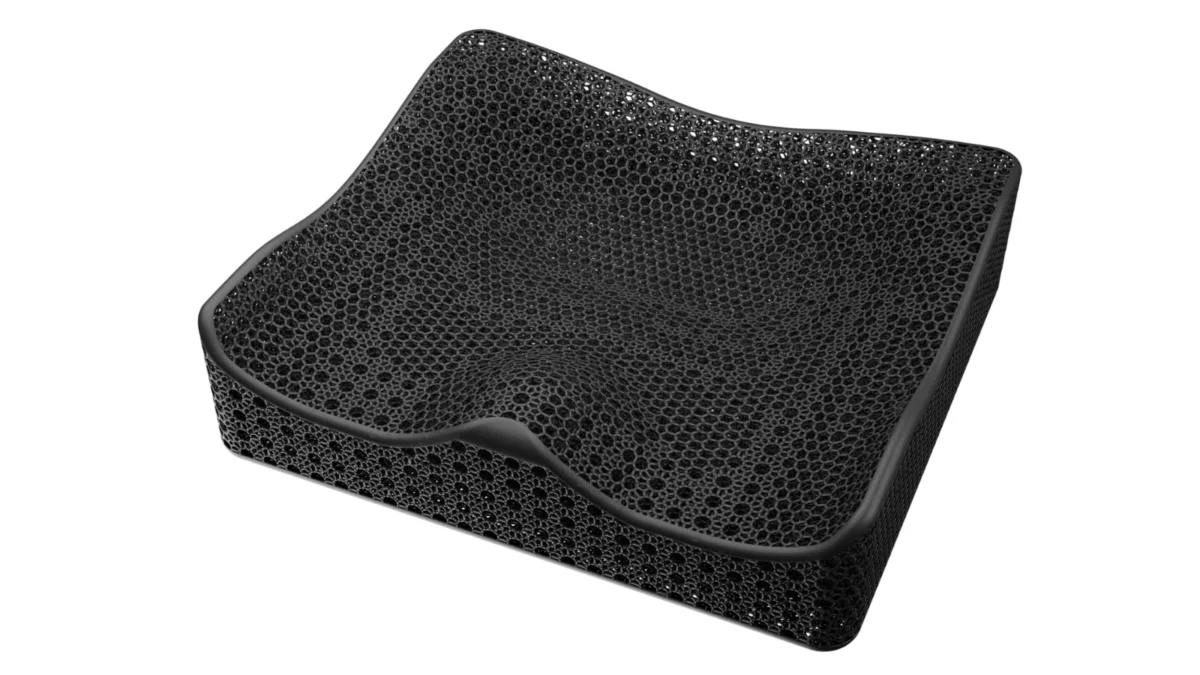
MELBOURNE, FL – [Date of Publication] – Kalogon, a leader in advanced seating solutions, has announced the official launch of Verro, an innovative line of Medicare-coded custom wheelchair cushions. Designed to address the highly specific and often complex postural support needs of individuals, Verro leverages groundbreaking 3D-printed variable-density lattice technology alongside traditional dual-density foam options. This development marks a significant leap forward in personalized rehabilitation technology, promising enhanced comfort, stability, and pressure management for wheelchair users who have long struggled to find adequate support from standard seating products.
The Verro line, available in two distinct models – the Verro Variable-Density Lattice (Verro Lattice) and the Verro Dual-Density Foam (Verro Foam) – is meticulously engineered for patients presenting with challenging conditions such as windswept posture, pelvic obliquity, and asymmetry. These conditions demand a level of precision and body-conforming fit that conventional, off-the-shelf cushions simply cannot provide. By integrating cutting-edge manufacturing processes with deep clinical understanding, Kalogon aims to bridge a critical gap in the complex rehab technology (CRT) market, ensuring that even the most intricate seating requirements are met with unparalleled accuracy and efficiency.
The introduction of Verro, with its E2609 Medicare code, signifies not only a technological advancement but also a commitment to accessibility. Medicare coding is crucial for patients, as it facilitates reimbursement, making these sophisticated custom solutions financially viable for a wider population. Manufactured in-house at Kalogon’s state-of-the-art facility in Melbourne, Florida, Verro embodies a blend of American innovation, quality craftsmanship, and a patient-centric design philosophy.
The Genesis of Verro: Addressing Unmet Needs in Complex Rehab
Kalogon’s journey to develop Verro is rooted in a fundamental understanding of the challenges faced by both clinicians and patients within the complex rehab sector. For years, the company has been recognized for its pioneering "smart seating solutions," which have consistently pushed the boundaries of what is possible in assistive technology. However, the most profound insights often emerge from direct feedback from the frontline of patient care.
According to Tim Balz, CEO and founder of Kalogon, the impetus for Verro came directly from persistent concerns voiced by clinicians. "We kept hearing from clinicians that their most complex patients were falling through the cracks," Balz explained, highlighting a systemic issue where individuals with severe postural deviations or unique anatomical configurations could not achieve optimal seating outcomes with existing products. This feedback underscored a critical unmet need for truly individualized solutions capable of delivering precise, localized support and pressure relief.
The limitations of traditional manufacturing methods for custom cushions became increasingly apparent. Conventional techniques, often relying on hand-carved foam or gel inserts, struggle to achieve the intricate variations in firmness and contour required for conditions like windswept posture – where the pelvis and femurs are rotated to one side – or pelvic obliquity, an uneven tilt of the pelvis. These conditions not only cause discomfort but can also lead to severe secondary complications, including pressure injuries, spinal deformities, and functional limitations.
Driven by this clinical imperative, Kalogon embarked on developing a technology that could overcome these limitations. The result is the patent-pending variable-density lattice technology at the core of the Verro Lattice model. This innovation allows for unprecedented control over the material properties across the cushion surface, enabling the creation of subtle yet significant variations in support where the body needs to be held firmly in position, and softness where pressure diffusion is paramount. The journey from identifying a pervasive problem to engineering a sophisticated solution like Verro exemplifies Kalogon’s dedication to advancing the field of rehabilitation technology.
Unpacking Verro’s Advanced Cushion Constructions
The Verro line distinguishes itself through its two unique construction types, each tailored to different clinical needs and user preferences, while collectively covering a broad spectrum of complex seating requirements.
Verro Variable-Density Lattice (Verro Lattice): Precision Through 3D Printing
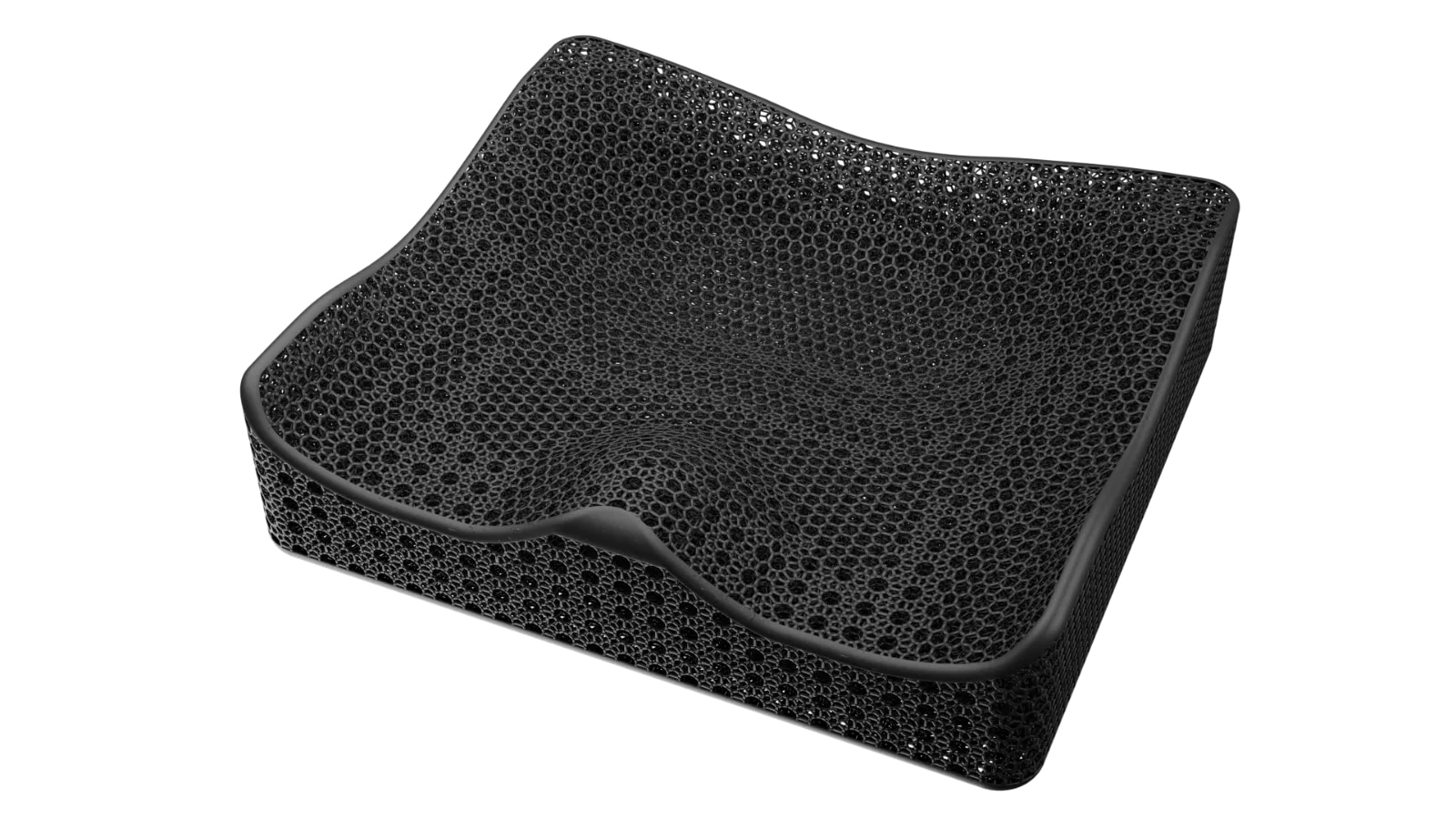
At the vanguard of the complex rehab tech market, the Verro Lattice model represents a significant technological leap. It utilizes Kalogon’s patent-pending variable-density lattice technology, an advanced 3D-printed elastomer construction. This method allows for a revolutionary degree of control over the cushion’s physical properties. Instead of uniform firmness, the lattice can be precisely engineered to vary in density and structure across its surface. This means:
- Firmer Zones: Strategically placed areas of increased density provide robust support, holding the body in the correct postural alignment. This is crucial for stabilizing the pelvis, controlling abduction/adduction, and managing asymmetries.
- Softer Zones: Other areas are designed with lower density, allowing for optimal pressure diffusion. This helps to offload vulnerable bony prominences, reducing the risk of pressure injuries, a common and debilitating complication for long-term wheelchair users.
The benefits of this 3D-printed elastomer construction extend beyond precise support. The open lattice structure inherently promotes superior breathability and temperature regulation. For individuals who spend extended periods in their wheelchairs, managing heat and moisture buildup is critical for skin integrity and overall comfort. The Verro Lattice design addresses these concerns, contributing to a healthier microclimate around the user.
Verro Dual-Density Foam (Verro Foam): Adaptability and Familiarity
Recognizing that clinical approaches and user preferences vary, Kalogon also offers the Verro Foam model. This option features a dual-density construction, combining a dense foam base with a softer foam topper. While not utilizing 3D printing, the Verro Foam still offers significant advantages over standard cushions:
- Dense Foam Base: Provides foundational support and stability, ensuring the user maintains a consistent posture.
- Soft Foam Topper: Enhances comfort and offers an initial layer of pressure distribution.
A key advantage of the Verro Foam is its adaptability. Seating specialists who prefer the ability to perform in-field modifications – making minor adjustments to the cushion after the initial fitting – will find this model particularly appealing. Foam can be more easily shaped or trimmed by experienced clinicians to fine-tune the fit. Furthermore, for users who are new to highly contoured seating, the foam option may offer a more familiar feel while still providing advanced support.
The strategic choice between Verro Lattice and Verro Foam empowers clinicians to select the most appropriate solution based on a comprehensive assessment of the user’s postural needs, skin integrity risks, activity level, personal comfort preferences, and the potential for future modifications. Both models are designed to be part of a complete seating system, working in conjunction with other wheelchair components to optimize overall user function and well-being.
Streamlined Ordering: Efficiency Meets Customization
One of the persistent challenges in the custom wheelchair cushion market has been the protracted turnaround times, often leaving patients waiting weeks or even months for essential equipment. Kalogon has directly addressed this issue with an innovative ordering process designed for speed and precision, all managed through their proprietary "Launch Pad" interactive real-time configurator.
Clinicians and seating specialists have two primary pathways to order a Verro cushion, ensuring flexibility to integrate with existing clinical workflows:
-
Direct Scan Data Submission: For clinics already equipped with advanced body scanning technology, specialists can directly upload precise digital scan data of the user’s body. This method captures every nuance of the individual’s contours and postural deviations, providing Kalogon with the exact blueprint needed to manufacture a truly custom cushion. This option is ideal for clinicians who have invested in 3D scanning equipment and are proficient in its use.
-
Interactive Configurator on Launch Pad: For those without their own scanning capabilities, or who prefer a more guided approach, Kalogon’s Launch Pad offers an interactive real-time configurator. This intuitive platform allows clinicians to input specific measurements, select desired contours, and define areas of support and relief based on their clinical assessment. The configurator provides visual feedback, enabling specialists to virtually design the cushion to meet the patient’s unique needs. This method democratizes access to custom seating, making it available to a broader range of clinical practices.
Regardless of the chosen ordering path, Kalogon has committed to an industry-leading turnaround time. The company guarantees shipment within 14 days of receiving the order. This efficiency is a game-changer, drastically reducing the waiting period for patients and enabling faster access to critical seating interventions. The ability to quickly provide custom solutions can significantly impact a patient’s rehabilitation journey, preventing further complications and improving their quality of life sooner. This accelerated timeline is a direct result of Kalogon’s in-house manufacturing capabilities and their streamlined digital workflow, setting a new benchmark for responsiveness in the CRT sector.
Official Responses: Voices of Innovation and Expertise
The launch of Verro is met with enthusiastic endorsements from key figures within Kalogon and respected advisors in the rehabilitation community, underscoring the product’s significance and potential impact.
Tim Balz, the visionary CEO and founder of Kalogon, articulated the core philosophy driving Verro’s development. His statement emphasizes the hyper-personalized nature of the solution: "With our variable-density lattice, we can create subtle variations across the surface and sides of the cushion that simply aren’t possible with traditional materials. The customization options are hyper-personalized to provide the best comfort, support and fit for every customer." Balz’s comments highlight Kalogon’s commitment to pushing technological boundaries to meet individual patient needs, moving beyond the limitations of generic solutions. He sees the 3D printing capability not just as a manufacturing method, but as a tool for clinical precision, allowing for micro-adjustments that translate into significant improvements in patient outcomes. This dedication to individualized care is a hallmark of Kalogon’s approach to smart seating.
Adding a crucial clinical perspective, Kelly Waugh, MA, PT, ATP, a highly respected advisor to Kalogon, lauded the flexibility that Verro brings to seating specialists. Waugh, whose expertise as a physical therapist and assistive technology professional is widely recognized, emphasized the importance of choice in meeting diverse client needs. "Every client is different, and seating specialists need options that reflect that. Verro gives us more ways to match the right solution to each unique person based on their postural support needs, personal preferences and desire for in-field modification," Waugh stated. Her insights validate Verro’s dual-model approach, acknowledging that a one-size-fits-all solution, even in custom seating, is often insufficient. The ability to choose between the high-precision 3D-printed lattice and the adaptable dual-density foam empowers clinicians to make truly patient-centered decisions. Waugh’s endorsement underscores that Verro is not just a technological marvel but a practical, clinically relevant tool that will allow Kalogon to serve a much wider population of people with complex seating needs than before.
These official responses collectively paint a picture of a company driven by innovation, guided by clinical expertise, and deeply committed to improving the lives of individuals with mobility challenges. The synergy between technological advancement and practical application is clearly evident in the development and anticipated impact of the Verro line.
Implications: Reshaping the Landscape of Complex Seating
The introduction of Kalogon’s Verro custom wheelchair cushions carries profound implications for the complex rehab technology (CRT) market, patient care, and the broader future of personalized medical devices.
Elevating Patient Outcomes and Quality of Life:
The most direct implication of Verro is the enhanced quality of life for individuals with complex seating needs. By providing hyper-personalized postural support, Verro can significantly:
- Reduce Pressure Injury Risk: Precise pressure diffusion in vulnerable areas is critical for preventing pressure ulcers, a leading cause of morbidity and healthcare costs for wheelchair users.
- Improve Postural Stability: Correcting conditions like windswept posture and pelvic obliquity can alleviate pain, improve respiratory function, enhance functional reach, and contribute to overall comfort.
- Increase Functional Independence: A stable and comfortable seating base allows users to engage more effectively in daily activities, from self-care to vocational pursuits, fostering greater independence and participation in society.
- Enhance Comfort and Endurance: Custom contours that perfectly match the body reduce discomfort, allowing users to tolerate longer periods in their wheelchairs without fatigue or pain.
Setting New Industry Standards:
Kalogon’s patent-pending variable-density lattice technology, particularly its 3D-printed elastomer construction, sets a new benchmark for customization and precision in the CRT market. This innovation challenges traditional manufacturing paradigms and could spur other manufacturers to explore similar advanced production techniques. The commitment to a 14-day turnaround for custom products is also a significant disruption, addressing a long-standing frustration for clinicians and patients alike. This efficiency could become a new expectation across the industry.
Advancing Personalized Medical Devices:
Verro exemplifies the growing trend of personalized medicine and the power of additive manufacturing (3D printing) in healthcare. The ability to create devices that are uniquely tailored to an individual’s anatomy and pathology represents the future of medical technology. This approach moves away from mass-produced solutions that often fail to meet the diverse needs of patients, towards highly specific interventions that optimize outcomes. The success of Verro could pave the way for similar innovations in other areas of orthotics, prosthetics, and assistive technology.
Expanding Access through Medicare Coding:
The E2609 Medicare code for Verro is a critical factor in its potential impact. Without appropriate reimbursement, even the most advanced technology remains inaccessible to many. Medicare coverage significantly broadens the population that can benefit from Verro, ensuring that financial barriers do not preclude individuals with complex needs from receiving the optimal seating solutions they require. This also acknowledges the medical necessity and therapeutic value of such highly customized cushions.
Fostering Innovation and Economic Growth:
Kalogon’s in-house manufacturing in Melbourne, Florida, not only ensures quality control but also supports domestic innovation and job creation. The continuous research and development required to bring products like Verro to market contribute to the growth of the advanced manufacturing and medical technology sectors.
In conclusion, Kalogon’s Verro line is more than just a new product; it represents a paradigm shift in how complex seating needs are addressed. By combining cutting-edge 3D printing with a deep understanding of clinical requirements and a commitment to patient accessibility, Verro promises to empower individuals with greater comfort, stability, and independence, while simultaneously elevating standards across the rehabilitation technology landscape. Clinicians and seating specialists are encouraged to contact Kalogon at Kalogon.com to learn more about ordering Verro and integrating this transformative solution into their patient care protocols.