





Melbourne, FL – Kalogon, a recognized innovator in smart seating solutions, has announced a significant leap forward in assistive technology with the launch of Verro, its new line of Medicare-coded custom wheelchair cushions. Designed to address the highly specific and often complex postural support needs of wheelchair users, Verro introduces a groundbreaking approach to personalized seating, featuring both patent-pending variable-density 3D-printed lattice technology and advanced dual-density foam options. This development promises to redefine comfort, support, and pressure management for individuals who have historically struggled to find adequate solutions with standard cushioning.
The Verro line, available in two distinct models – Verro variable-density lattice (Verro Lattice) and Verro dual-density foam (Verro Foam) – is meticulously engineered for users whose unique body contours and postural challenges demand a precision fit beyond the capabilities of conventional products. Conditions such as windswept posture, pelvic obliquity, and various forms of asymmetry, which can lead to significant discomfort, pressure injuries, and functional limitations, are directly targeted by Verro’s bespoke design capabilities. With its Medicare E2609 coding, Kalogon aims to make these advanced solutions accessible to a wider population, reaffirming its commitment to improving the quality of life for those with the most complex seating requirements.
Main Facts
Kalogon’s Verro custom wheelchair cushion line represents a pivotal innovation in the complex rehab technology (CRT) market. At its core, Verro offers an unprecedented level of personalization, driven by cutting-edge manufacturing processes. The flagship Verro Lattice model utilizes a novel, patent-pending variable-density lattice technology. This 3D-printed elastomer construction allows for precise, localized control over the cushion’s firmness, creating areas that are firmer to provide essential postural support where the body needs to be held in position, and softer zones to effectively diffuse pressure in vulnerable areas. This nuanced approach is a direct response to the limitations of traditional materials, which struggle to achieve such subtle yet critical variations across a single surface.
Complementing the lattice option, the Verro Foam model provides an alternative construction featuring a dense foam base topped with a softer foam layer. This dual-density design is tailored for users who may benefit from adaptability and potential in-field modifications, or those new to highly contoured seating. Both Verro models are designed to integrate seamlessly into a clinical workflow, with ordering facilitated through Kalogon’s interactive real-time configurator, Launch Pad. Clinicians can initiate orders either by utilizing Kalogon’s proprietary 3D body scanner for a recommended precise capture or by submitting existing scan data from other compatible systems.
A notable commitment from Kalogon is its expedited manufacturing and shipping process, pledging delivery within 14 days of receiving an order—a significant improvement over typical industry turnaround times. This rapid deployment ensures that patients can receive their custom solutions much faster, reducing waiting periods and accelerating the benefits of improved seating. All Verro cushions are manufactured in-house at Kalogon’s state-of-the-art facility in Melbourne, Florida, underscoring the company’s dedication to quality control and efficient production. The E2609 Medicare code further enhances accessibility, making these advanced custom cushions available under reimbursement guidelines for qualified individuals.
Chronology: Kalogon’s Journey to Hyper-Personalized Seating
Kalogon’s launch of Verro is not an isolated event but rather a logical progression in a company dedicated to leveraging technology for improved patient outcomes in seating. Founded with a vision to innovate in the realm of assistive devices, Kalogon first garnered attention for its "smart seating solutions," such as the Orbiter Med. These earlier innovations often focused on dynamic pressure management and data-driven insights to prevent pressure injuries and enhance comfort. The experience gained from developing and deploying such sophisticated systems laid the groundwork for the intricate engineering now present in the Verro line.
The genesis of Verro itself stems from a persistent challenge identified through extensive engagement with clinicians and seating specialists. As Tim Balz, CEO and founder of Kalogon, articulated, "We kept hearing from clinicians that their most complex patients were falling through the cracks." This critical feedback highlighted a glaring unmet need within the complex rehab technology sector: a significant cohort of individuals whose unique anatomical presentations and severe postural deviations could not be adequately accommodated by existing custom seating options. Traditional custom molding processes, while offering some degree of personalization, often lacked the granular control and material versatility required for truly bespoke support and pressure relief across the entire seated surface.
The development process for Verro was, therefore, an intensive period of research and development, likely spanning several years, focusing on materials science, advanced manufacturing techniques, and clinical biomechanics. The decision to integrate 3D printing technology was a strategic one, recognizing its unparalleled ability to create complex geometries and variable material properties within a single object. This represented a departure from conventional foam fabrication or air/gel insert combinations, offering a paradigm shift in how custom cushions could be designed and manufactured. The patent-pending status of the variable-density lattice technology underscores the novelty and proprietary nature of Kalogon’s engineering breakthrough.
The official launch of Verro marks a significant milestone, not just for Kalogon, but potentially for the entire CRT industry. It signifies a maturation of advanced manufacturing techniques, particularly 3D printing, from prototyping to mainstream, Medicare-coded medical device production. This launch positions Kalogon at the forefront of personalized assistive technology, demonstrating a commitment to solving the most challenging seating problems by embracing cutting-edge digital fabrication methods. By combining technological prowess with direct clinician input, Kalogon has meticulously crafted a solution designed to meet a critical, underserved need in the rehabilitation community.
Supporting Data: The Science Behind Precision Postural Support
The efficacy of Kalogon’s Verro line is rooted in a deep understanding of biomechanics, material science, and the clinical realities of complex seating needs. For individuals living with conditions like windswept posture (where the pelvis and trunk rotate to one side), pelvic obliquity (one side of the pelvis is higher than the other), or severe asymmetry due to scoliosis or neurological conditions, proper seating is not merely about comfort; it is a critical component of health, function, and independence. Incorrect or inadequate seating can lead to a cascade of debilitating issues, including:
- Pressure Injuries (Bedsores): Sustained pressure over bony prominences, exacerbated by shear forces, can lead to tissue breakdown, infection, and significantly impact quality of life.
- Progressive Deformity: Without proper support, existing postural deviations can worsen over time, leading to increased pain, functional limitations, and potentially requiring more invasive interventions.
- Respiratory and Digestive Compromise: Poor trunk support can restrict lung expansion and diaphragm movement, affecting breathing, and can also interfere with digestive processes.
- Functional Limitations: An unstable or uncomfortable seating base can hinder a user’s ability to reach, propel their wheelchair, or participate in daily activities, thereby reducing independence.
- Pain and Discomfort: Chronic pain is a common complaint among wheelchair users with complex postures, and effective cushioning is paramount for pain management.
Traditional custom cushions, often made from carved foam or molded gel/air composites, face inherent limitations in addressing these complex needs. While they offer more customization than off-the-shelf products, their ability to create truly variable and localized support densities across a continuous surface is restricted by the nature of their materials and manufacturing processes. Carving foam, for example, can create contours but struggles to vary firmness within a single block. Gel or air inserts offer some pressure distribution but may lack the structural stability for precise postural correction or the ability to prevent migration of the user.
This is where Kalogon’s patent-pending variable-density lattice technology emerges as a transformative solution.
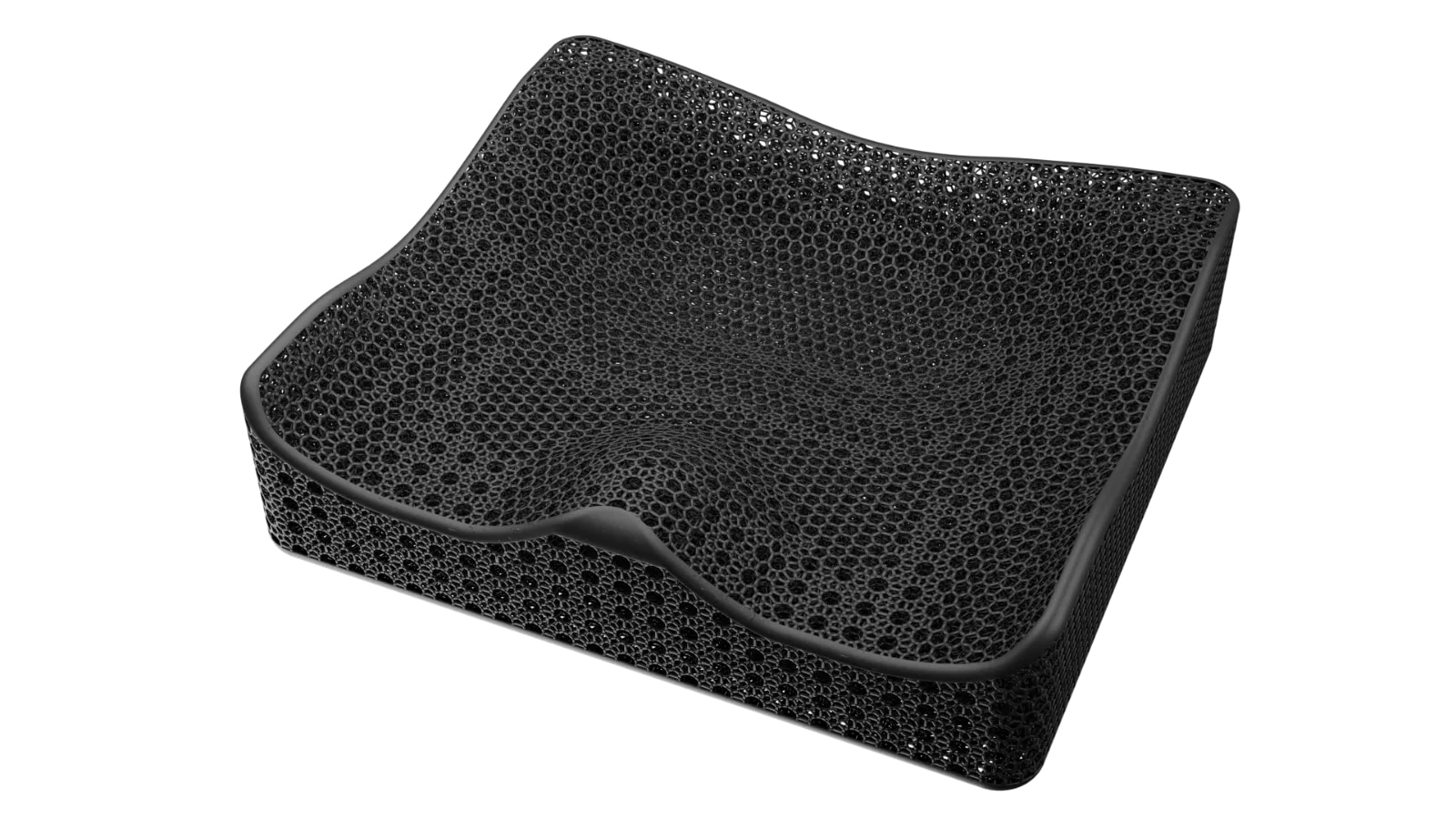
- Precision of 3D Printing: Additive manufacturing, or 3D printing, allows for the creation of intricate, non-uniform geometries that are impossible with traditional molding or subtractive manufacturing. In the case of Verro Lattice, this means engineers can design a complex internal structure where the density, thickness, and pattern of the lattice cells can be varied at a microscopic level across the cushion’s surface. This digital control translates directly into physical properties:
- Localized Support: Where a patient requires firm support to correct a pelvic tilt or maintain a neutral spine, the lattice can be designed with denser, stiffer structures.
- Targeted Pressure Relief: In areas susceptible to pressure ulcers, such as the ischial tuberosities or coccyx, the lattice can be engineered with more open, compliant structures that deform readily to distribute pressure over a larger area, effectively "floating" the bony prominences.
- Shear Reduction: The flexibility and variable compliance of the elastomer can also help mitigate shear forces, which are a major contributor to pressure injury development.
- Material Science and Elastomers: While the specific elastomer material isn’t detailed, 3D-printable elastomers offer a unique combination of flexibility, durability, and resilience. They can withstand repeated compression cycles without significant degradation, maintaining their supportive and pressure-diffusing properties over time. Furthermore, the open lattice structure inherently promotes airflow, addressing a common issue of heat and moisture buildup associated with traditional foam or gel cushions, thus enhancing breathability and temperature regulation for the user.
The Verro Foam option, while not employing 3D printing, still offers a sophisticated solution with its dual-density construction. The dense foam base provides foundational support and shape retention, while the softer foam topper offers a compliant, comfortable interface with the user’s body. This combination allows for a degree of "give" that can be beneficial for initial fitting and also enables seating specialists to perform minor in-field modifications, adjusting the cushion’s contours or adding inserts to fine-tune the fit as the user’s needs evolve. This adaptability is particularly valuable for users new to custom contoured seating or those whose conditions might change over time.
Beyond the technical specifications, the practical implications of Verro are significant. The Medicare E2609 code is crucial, as it classifies Verro as a "Custom Fabricated Wheelchair Cushion," indicating that it meets specific criteria for complex customization and allowing for reimbursement through Medicare. This dramatically improves access for many patients who otherwise might not be able to afford such specialized equipment. Kalogon’s commitment to a 14-day shipping window is also a vital "supporting data" point. In an industry where custom orders can often take weeks or even months, reducing this waiting period means faster intervention, quicker relief from discomfort, and a more rapid improvement in patient outcomes, potentially preventing the worsening of conditions during prolonged waits. This efficiency is a testament to Kalogon’s vertically integrated manufacturing process in Melbourne, Florida, which ensures quality control and streamlined production.
Official Responses: Vision, Flexibility, and Empowerment
The launch of the Verro line is underpinned by a clear vision articulated by Kalogon’s leadership and validated by key industry advisors. Tim Balz, CEO and founder of Kalogon, emphasizes the company’s direct response to a critical clinical need. His statement, "We kept hearing from clinicians that their most complex patients were falling through the cracks, so we developed a technology that lets us 3D print the cushion with precise, localized control over where the body gets support and where it gets relief," encapsulates the problem-solving ethos behind Verro. Balz’s focus on "precise, localized control" highlights the paradigm shift enabled by 3D printing, moving beyond generalized support to highly specific, anatomical customization. He further elaborated on the capabilities, noting, "With our variable-density lattice, we can create subtle variations across the surface and sides of the cushion that simply aren’t possible with traditional materials. The customization options are hyper-personalized to provide the best comfort, support and fit for every customer." This speaks to Kalogon’s belief that true personalization is the key to unlocking optimal outcomes for complex seating challenges, directly addressing the limitations inherent in previous manufacturing methods. The emphasis on "hyper-personalized" underscores a commitment to treating each user as a unique individual with distinct needs, rather than fitting them into predefined categories.
The clinical perspective is robustly represented by Kelly Waugh, MA, PT, ATP, an esteemed advisor to Kalogon. Her insights reinforce the practical benefits for both clinicians and patients. "Every client is different, and seating specialists need options that reflect that. Verro gives us more ways to match the right solution to each unique person based on their postural support needs, personal preferences and desire for in-field modification," Waugh stated. As a physical therapist and assistive technology professional, Waugh understands the nuances of client assessment and the importance of having a versatile toolkit. Her endorsement validates Verro’s dual-model approach, acknowledging that while the cutting-edge lattice offers unparalleled precision, the foam option provides critical flexibility for certain clinical scenarios, such as allowing for adjustments as a patient’s condition changes or during the initial adaptation period to a new custom cushion. Waugh’s concluding remark, "That flexibility will allow Kalogon to serve a much wider population of people with complex seating needs than before," succinctly summarizes the expansive potential of the Verro line, confirming its capacity to reach and positively impact a greater number of individuals who have historically been difficult to serve effectively.
These official responses collectively paint a picture of a company driven by innovation and a profound understanding of user needs. They highlight Kalogon’s strategic alignment with clinical realities, developing solutions that are not only technologically advanced but also practically applicable and impactful in improving patient care. The synergy between engineering innovation and clinical expertise is evident, positioning Verro as a thoughtfully designed answer to long-standing challenges in custom wheelchair seating.
Implications: Reshaping the Landscape of Assistive Seating
The introduction of Kalogon’s Verro custom wheelchair cushion line carries significant implications for various stakeholders within the healthcare and assistive technology ecosystem, promising to reshape how complex seating needs are addressed.
Impact on Patients: For individuals with significant postural challenges, Verro represents a profound improvement in quality of life. The hyper-personalized support and pressure relief offered by the variable-density lattice or the adaptable dual-density foam can lead to:
- Enhanced Comfort and Reduced Pain: By precisely conforming to unique body contours and distributing pressure away from vulnerable areas, Verro can significantly alleviate chronic discomfort and pain associated with prolonged sitting.
- Prevention of Pressure Injuries: The meticulous pressure diffusion capabilities, especially of the 3D-printed lattice, can drastically reduce the risk of developing costly and debilitating pressure ulcers, a major concern for wheelchair users.
- Improved Postural Alignment: Corrective support can help maintain optimal posture, potentially slowing the progression of deformities, enhancing respiratory and digestive function, and improving overall physical well-being.
- Greater Independence and Participation: A stable, comfortable, and supportive seating base empowers users to engage more actively in daily life, enhancing their ability to propel their chairs, perform tasks, and interact with their environment, thereby fostering greater independence.
- Faster Access to Solutions: Kalogon’s commitment to a 14-day turnaround means patients experience less waiting time, leading to quicker relief and intervention.
Impact on Clinicians and Seating Specialists: Verro provides seating specialists (Occupational Therapists, Physical Therapists, Assistive Technology Professionals) with an advanced toolset to tackle their most challenging cases.
- Expanded Treatment Options: Clinicians now have more precise and technologically advanced options for patients who previously "fell through the cracks," enabling them to achieve better outcomes for complex presentations.
- Increased Confidence in Prescriptions: The ability to specify exact support and pressure relief zones through digital configurators offers greater certainty in achieving the desired therapeutic effect.
- Efficiency in Workflow: The streamlined ordering process via Launch Pad and rapid manufacturing reduce administrative burden and wait times, allowing clinicians to focus more on patient care.
- Educational Opportunities: The introduction of novel technologies like variable-density 3D printing may spur new educational programs and skill development for seating professionals, enhancing their expertise.
Impact on the Complex Rehab Technology (CRT) Market: Verro’s launch is poised to be an innovation driver within the CRT sector.
- Technological Advancement: The successful integration of 3D printing into Medicare-coded medical devices sets a new benchmark for customization and advanced manufacturing in assistive technology. This could inspire other manufacturers to explore similar high-tech solutions.
- Market Competition: Kalogon’s entry into this specialized custom cushion segment with such advanced technology will likely intensify competition, potentially leading to further innovation across the industry to match or exceed Verro’s capabilities.
- Redefining "Custom": Verro elevates the definition of "custom" from mere molding to digitally fabricated, precisely engineered solutions, pushing the boundaries of what is considered achievable in personalized seating.
- Accessibility and Reimbursement: The E2609 Medicare code is crucial. It validates the medical necessity and sophistication of these custom solutions, potentially influencing future reimbursement policies for similarly advanced assistive devices.
Future Outlook for Kalogon and Broader Healthcare: This strategic expansion with Verro solidifies Kalogon’s position as a leader in innovative seating solutions. The company’s in-house manufacturing in Florida positions it well for scalability and quality control. Looking ahead, Kalogon might explore:
- Further Product Diversification: Expanding the Verro line with additional materials, forms, or integrated smart features (e.g., pressure sensing, temperature control) building upon its existing "smart seating solutions" expertise.
- Integration with Other Technologies: Developing ecosystems that connect Verro cushions with other assistive technologies or telehealth platforms for remote monitoring and adjustments.
- Research and Development: Continuing to invest in R&D to refine existing technologies and explore new frontiers in personalized medical devices, potentially extending 3D printing applications to other areas of rehabilitation.
While the benefits are substantial, some considerations for the broader adoption of such advanced technologies include the need for comprehensive clinician training on the new ordering and assessment protocols, and ongoing research to demonstrate long-term durability and clinical effectiveness across diverse patient populations. However, Kalogon’s Verro line undoubtedly marks a significant step forward, harnessing the power of advanced manufacturing to deliver truly individualized, high-impact solutions for some of the most vulnerable individuals in the healthcare system, moving closer to a future where assistive technology is as unique as the individuals it serves.