In a landmark study that promises to redefine how we understand systemic disease, an international team of researchers led by Helmholtz Munich and Ludwig Maximilians University (LMU) has unveiled a groundbreaking artificial intelligence platform named "MouseMapper." By integrating advanced tissue-clearing techniques with deep learning, the researchers have achieved something previously thought to be impossible: the ability to map cellular-level disease progression across an entire organism in 3D.
The findings, recently published in the prestigious journal Nature, reveal that the impact of obesity is far more pervasive than previously documented. Beyond the well-known metabolic stressors, the research uncovered widespread systemic inflammation and previously unidentified nerve damage, specifically within the trigeminal nerve system. Crucially, the discovery of similar molecular signatures in human tissue suggests that these findings provide a vital window into the biological reality of obesity in human patients.
The Technological Leap: From Dissection to Digital Visualization
Traditionally, biological research has been hampered by the "silo effect." To study the heart, scientists removed the heart; to study the liver, they sectioned the liver. This reductionist approach meant that the interconnected nature of the body—how a fatty liver might influence the delicate neural pathways of the face—was largely obscured.
The development of MouseMapper by a team led by Professor Ali Ertürk, Director of the Institute for Biological Intelligence (iBIO) at Helmholtz Munich, shatters these constraints. The platform functions as a foundation-model-based deep learning framework capable of analyzing massive, whole-body imaging datasets.
The Methodology of Transparency
To achieve this, the team employed a multi-stage process:
- Fluorescent Tagging: Researchers utilized advanced molecular markers to tag nerves and immune cells, allowing them to glow under specialized microscopic observation.
- Tissue Clearing: Through state-of-the-art chemical protocols, the team rendered the mice completely transparent. This step preserved the structural integrity and the fluorescent signals of the organs, allowing for high-resolution imaging of the intact body.
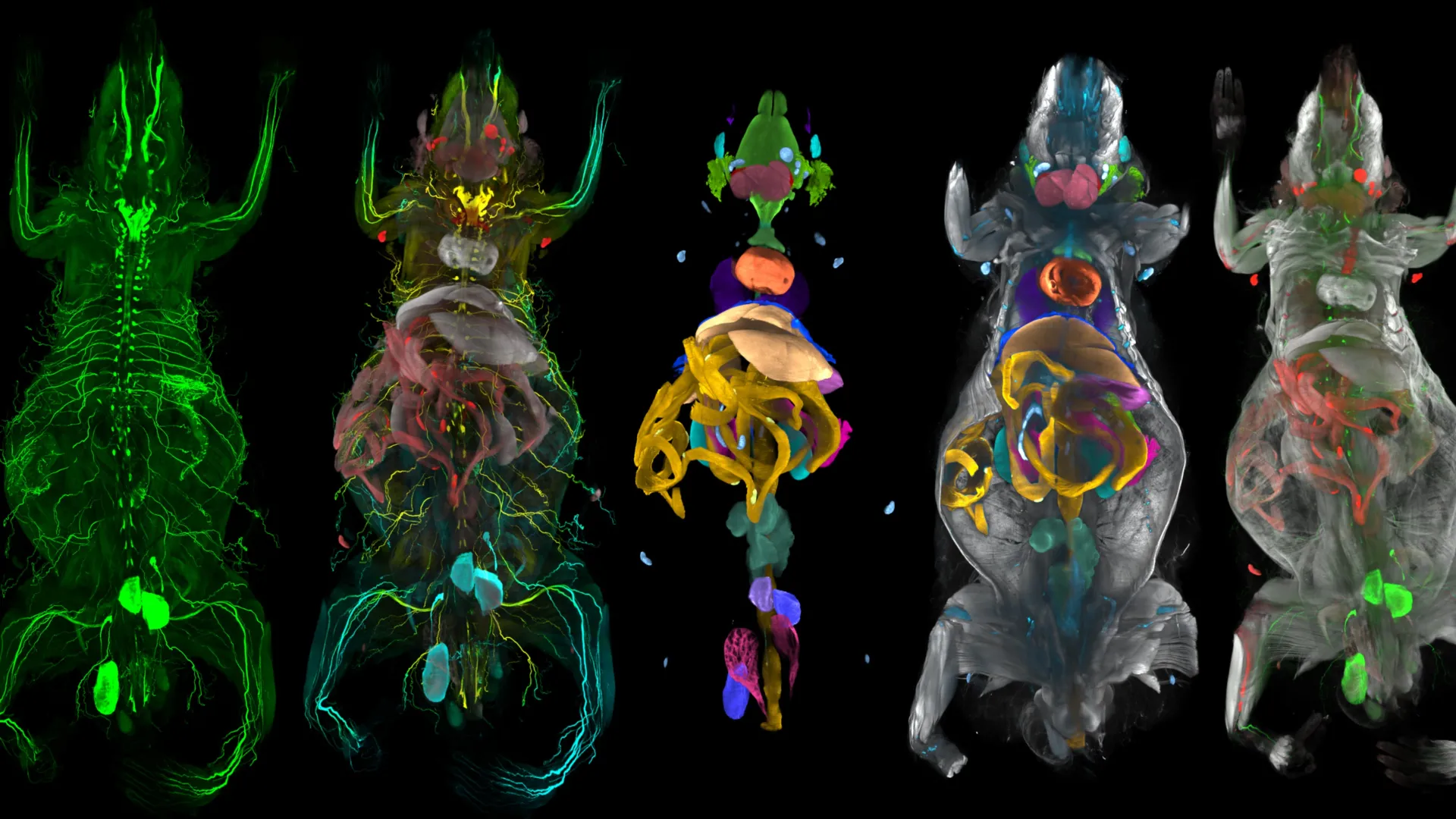
- Light-Sheet Microscopy: Using high-speed, high-resolution light-sheet imaging, the researchers captured 3D data representing tens of millions of cellular structures.
- AI Segmentation: MouseMapper then processed these vast datasets, automatically segmenting 31 distinct organ and tissue types, mapping nerve networks, and identifying immune-cell clusters without the need for manual, region-specific selection.
As Ying Chen, co-first author of the study, notes, "MouseMapper is built on a foundation model, which means it generalizes far beyond the data it was originally trained on." This versatility allows the AI to adapt to different biological contexts, making it a robust tool for future scientific inquiry.
Chronology of Discovery: Uncovering the Obesity-Nerve Link
The research team began their investigation by establishing a controlled environment: mice were placed on a high-fat diet to induce obesity and metabolic syndrome, mirroring the conditions of human diet-induced obesity.
Identifying the "Invisible" Damage
Once the obese mice were imaged via the MouseMapper pipeline, the AI immediately began flagging anomalies. While inflammation in the liver and adipose tissue was expected, the researchers were stunned to find significant alterations in the peripheral nervous system.
The most profound discovery centered on the trigeminal nerve. This nerve is the largest of the cranial nerves and is responsible for sensation and motor control in the face. In the obese mice, the trigeminal nerve exhibited a marked reduction in branches and nerve endings.
Behavioral Confirmation
To ensure these anatomical findings were not merely artifacts of the imaging process, the researchers conducted behavioral tests. The obese mice showed a significant decrease in responsiveness to sensory stimuli compared to their lean counterparts. This physiological impairment aligned perfectly with the structural degradation identified by the AI.
Connecting to Human Biology
The final piece of the puzzle involved validating these results against human data. Through spatial proteomics—a technique used to map the location of proteins in tissues—the team analyzed human trigeminal ganglion tissue. They discovered that the same molecular signatures associated with nerve remodeling and inflammation in mice were present in humans living with obesity. This established a critical link, suggesting that the neurological toll of obesity is a conserved biological phenomenon, likely present in millions of people globally.
Implications for Modern Medicine
The implications of this study extend far beyond the study of obesity. By providing a "whole-body" view of disease, MouseMapper offers a new paradigm for understanding systemic conditions such as diabetes, cancer, neurodegenerative disorders, and autoimmune diseases.
A New Tool for Drug Discovery
Current drug development often focuses on a single target within a single organ. However, many systemic diseases cause collateral damage that is only discovered during late-stage clinical trials. MouseMapper allows researchers to screen the entire body for unintended effects, potentially identifying drug toxicities or beneficial systemic impacts much earlier in the development pipeline.
"Our goal is to create a comprehensive framework for understanding how diseases affect the body as an interconnected system," says Professor Ali Ertürk. He envisions a future where scientists can perform "in silico" (computational) experiments on digital twins—detailed, cell-level atlases of the mouse body.
The Path Toward "Digital Twins"
The team has made their datasets publicly available, inviting the global scientific community to contribute to this emerging field. The long-term vision is to create a high-fidelity, queryable digital model of the mouse. If successful, this could drastically reduce the number of animal experiments required for research while accelerating the speed at which new, effective treatments reach the clinic.
Official Responses and Scientific Context
The research, while led by Helmholtz Munich and LMU, represents a massive collaborative effort involving multiple German research foundations, the European Research Council, and the Nomis Foundation.
Dr. Doris Kaltenecker, a senior scientist at the Institute for Diabetes and Cancer (IDC) and co-first author, emphasized the necessity of this holistic approach. "We revealed previously unknown structural and molecular changes in the trigeminal ganglion and its facial branches, and the same molecular signature was conserved in human tissue," she stated. "This kind of finding simply cannot emerge from studying one organ at a time."
The study has been met with significant enthusiasm from the scientific community, as it provides a tangible solution to the "black box" problem of whole-body disease analysis. By bridging the gap between molecular-level proteomics and whole-organism anatomy, the researchers have effectively opened a new door in pathology.
Looking Ahead: The Future of Holistic Biology
The work published in Nature is merely the beginning of the MouseMapper project. As the AI framework continues to learn from new datasets, its ability to categorize, predict, and analyze will only grow more precise.
The integration of artificial intelligence into biological imaging represents a fundamental shift in how we perceive the body. No longer just a collection of parts, the body is now being viewed as a dynamic, interconnected network—a "system of systems" that can be mapped, understood, and ultimately, healed.
As we continue to battle the global obesity epidemic and the complex, systemic diseases that often accompany it, tools like MouseMapper will be essential. By allowing us to see the "hidden" damage—the subtle nerve degradation, the quiet inflammation in unexpected tissues—researchers are finally gaining the clarity needed to design interventions that address the body as a whole.
The era of whole-body digital biology has arrived, and with it, the promise of a more precise, comprehensive, and effective approach to the medicine of the future.
Acknowledgments
This research was supported by the European Research Council (Consolidator Grant CALVARIA to A. Ertürk; grant 949017 to M. Rohm), the German Research Foundation (DFG) under Germany’s Excellence Strategy within the Munich Cluster for Systems Neurology (SyNergy, ID 390857198, EXC 2145), DFG SFB 1052 (A9) and TR 296 (P03), the Collaborative Research Centre CRC 1744, the German Federal Ministry of Education and Research (NATON collaboration, 01KX2121, and HIVacToGC), the Vascular Dementia Research Foundation, the Nomis Heart Atlas Project Grant (Nomis Foundation), the Else-Kröner-Fresenius-Stiftung, the Edith-Haberland-Wagner Stiftung, the Helmut Horten Foundation, the EFSD and Novo Nordisk A/S Programme for Diabetes Research in Europe (to D. Kaltenecker), and the China Scholarship Council (to Y. Chen).