






In an era where digital transparency often arrives in fragmented bursts on social media platforms, the U.S. Food and Drug Administration (FDA) has once again stirred debate regarding its oversight of the infant formula industry. Recent communications, disseminated via informal channels like X (formerly Twitter), point to a new agency summary claiming that recent testing of over 300 infant formula samples confirms the safety of the domestic supply. However, for parents, advocacy groups, and food safety experts, a one-page summary is far from a reassurance. As the debate over infant nutrition reaches a boiling point within the "Make America Healthy Again" (MAHA) movement and legislative halls, the fundamental question remains: Is the current regulatory framework sufficient to protect our most vulnerable population?
The Current State of Affairs: FDA Findings vs. Public Skepticism
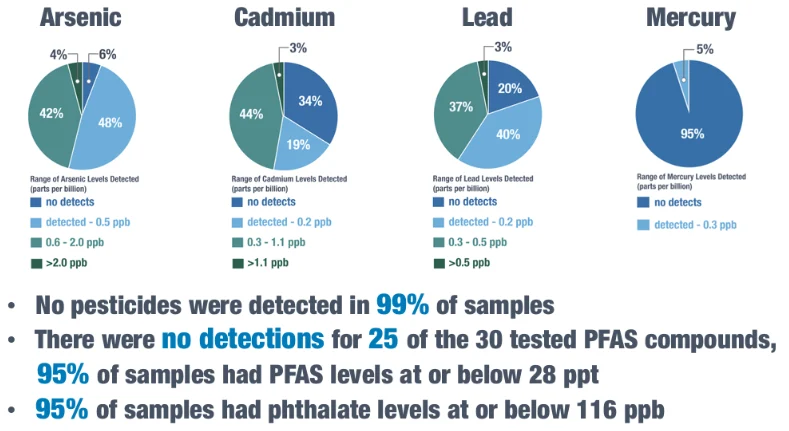
The FDA’s recent release—a concise, one-page document—serves as the centerpiece for the agency’s current stance on the safety of infant formula. According to the data provided, the agency screened more than 300 samples for contaminants. While the results suggest a "clean" bill of health for the tested batches, the brevity of the report has left many industry observers wanting.
Critics argue that a single-page summary lacks the granular data necessary to provide true public confidence. When dealing with products intended for infants—who are uniquely susceptible to pathogens due to developing immune systems—transparency is not merely a courtesy; it is a clinical necessity. The absence of a more comprehensive, publicly accessible, and detailed technical report has fueled speculation that the agency is prioritizing administrative optics over deep-dive investigative rigor.
Chronology: A History of Recalls and Regulatory Lag
To understand the current tension, one must look back at the volatile history of the formula industry over the past several years.
- The 2022 Crisis: The industry-wide supply chain breakdown, catalyzed by the Abbott Nutrition recall, highlighted the extreme fragility of the domestic infant formula market. It exposed a lack of redundancy in production and severe lapses in microbial safety standards.
- The ByHeart Contamination: More recently, the company ByHeart faced significant scrutiny following a recall linked to potential botulism contamination. This incident was particularly alarming because it involved a newer, "premium" brand, shattering the assumption that only legacy manufacturers were prone to systemic failures.
- The Advertising Controversy: As the ByHeart recall unfolded, the grassroots advocacy group "Rad Moms" brought to light a disturbing reality: despite serious safety concerns, influencer marketing campaigns for the tainted product continued to run on social media platforms for months. Reports suggest that even as recently as March 2026, advertisements for recalled product lines were reaching consumers, potentially putting infants at risk due to remaining stock on retail shelves.
- 2026 Legislative Action: Recognizing that the status quo is untenable, the U.S. Senate recently passed a bill aimed at modernizing safety protocols. The legislation mandates that manufacturers perform routine testing for Cronobacter and Salmonella and, crucially, requires them to report positive findings to the FDA in real-time.
Supporting Data and the Microbial Threat
While the FDA’s recent testing focuses on general safety, food safety experts like Bill Marler have long argued that the industry faces a systemic "microbial debt." Cronobacter sakazakii and Salmonella are not merely abstract risks; they are lethal pathogens that can thrive in dry powder manufacturing environments.
The manufacturing process for powdered formula is inherently complex. Unlike liquid pasteurized formula, which undergoes a heat-treatment process that kills most vegetative pathogens, powdered formula requires a drying stage where contamination can occur post-pasteurization.
The Heavy Metal and PFAS Factor
Beyond pathogens, the conversation has expanded to include environmental contaminants. PFAS (per- and polyfluoroalkyl substances) and heavy metals have become a focal point of concern. While federal limits for these substances in formula are currently being debated, the consensus among pediatric nutritionists is that "less is better." Because infants consume formula as their sole source of nutrition for months, even trace amounts of environmental toxins represent a higher physiological burden than they would for an adult.
Official Responses and the Legislative Pivot
The FDA maintains that the current supply is safe, pointing to the results of their most recent sampling as evidence of a robust monitoring program. However, the legislative push in the Senate suggests that Congress disagrees with the adequacy of current voluntary reporting structures.
The proposed legislation represents a shift from "voluntary compliance" to "mandatory transparency." By requiring companies to report positive pathogen tests, the FDA will move from a reactive role—investigating after a child is sick—to a proactive role, where potential outbreaks are intercepted before the product reaches the nursery.
The MAHA Movement’s Influence
The "Make America Healthy Again" (MAHA) movement has successfully brought the quality of processed infant nutrition to the forefront of the national health dialogue. By framing formula safety as a matter of national security and public health, the movement has applied pressure on regulators to move away from industry-friendly policies. This political climate has made it increasingly difficult for the FDA to remain passive in the face of safety concerns.
Implications: The Path Forward for Parents
For parents caught in the middle of this regulatory tug-of-war, the confusion is understandable. With conflicting reports and the lingering memory of empty store shelves, how should a parent navigate the market?
- Prioritize Liquid, Pasteurized Options: When possible, experts suggest opting for liquid, pasteurized formula. The pasteurization process significantly reduces the risk of microbial contamination compared to powdered alternatives.
- Breastfeeding Support: Public health agencies continue to emphasize that, where feasible, breastfeeding remains the gold standard for avoiding many of the industrial contaminants associated with formula production.
- Vigilance with Recalls: The "Rad Moms" situation serves as a grim reminder: do not rely on advertisements or influencer endorsements to determine the safety of a product. Parents must actively monitor the FDA’s recall list and cross-reference batch codes on their cans, regardless of what the marketing campaigns suggest.
- Demand Greater Accountability: Advocacy is the only mechanism that will force the industry to change. Supporting legislation that mandates rigorous testing and transparency is essential for long-term reform.
Conclusion: A Call for Systemic Reform
The safety of infant formula is not a political issue; it is a fundamental human rights issue. When the primary food source for infants is compromised, the failure is not just individual—it is systemic. While the Senate’s recent bill is a positive "first step," it is only the beginning.
True safety will only be achieved when manufacturers are held to the highest possible standards of transparency and when the FDA shifts its posture from an administrative regulator to a rigorous, proactive watchdog. As Bill Marler and other food safety advocates have emphasized, our infants deserve a system that is designed for safety, not just convenience. Until that system is fully realized, the responsibility falls on parents to remain informed, skeptical, and proactive in protecting the health of the next generation.
The era of "taking it on faith" is over. In the face of microbial threats and environmental contaminants, the future of infant nutrition must be built on the bedrock of verifiable, transparent, and mandatory safety protocols.