










Introduction: A High-Stakes Confirmation
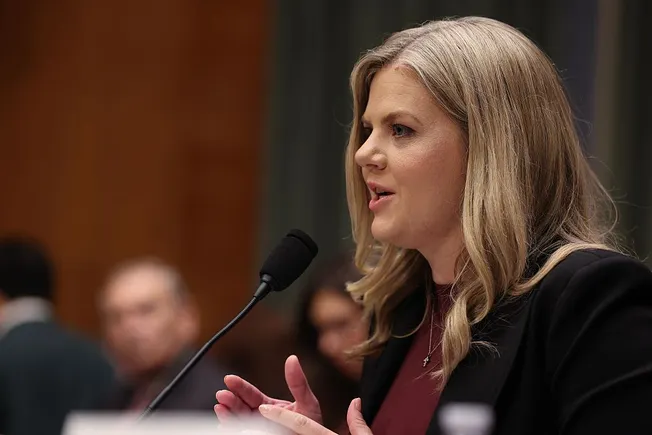
In a high-stakes Congressional hearing that underscored the growing friction between political ideology and public health science, Dr. Heidi Overton faced a grueling vetting process on Thursday. Nominated by President Donald Trump to lead the Food and Drug Administration (FDA), Overton, a physician and current White House domestic policy adviser, attempted to strike a delicate balance: satisfying the ideological demands of the administration while reassuring a skeptical Senate committee that she would serve as a firewall against political interference.
If confirmed, Overton would inherit an agency that has endured a volatile 18-month period defined by internal attrition, executive overreach, and a fundamental questioning of its scientific authority. Her testimony focused on three central pillars: a commitment to the rule of law regarding controversial medical mandates, a promise to revitalize the American biotechnology sector in the face of Chinese competition, and a pledge to restore stability to an agency that has been reeling since the resignation of former commissioner Martin Makary.
Chronology of a Tumultuous Tenure
The path to the FDA’s leadership has been anything but conventional under the current administration. To understand the gravity of Overton’s nomination, one must look at the recent timeline of the agency’s leadership crisis:
- May 2026: Martin Makary, the first FDA commissioner of the current Trump term, resigns following a tenure marked by significant staff departures and internal discord.
- May 2026 – Present: The agency operates under the stewardship of Kyle Diamantas, who has served as the "acting" leader, a role that has left the agency in a state of purgatory, unable to finalize long-term strategic shifts.
- August 2026: The White House issues a controversial executive order aiming to restructure the childhood immunization schedule and mandating the separation of the MMR vaccine into three distinct shots, a policy shift that drew widespread criticism from the scientific community.
- September 2026: In a bid to stabilize the agency, the Department of Health and Human Services (HHS) appoints Michael Davis and Karim Mikhail as permanent directors of the agency’s two primary drug offices, signaling a return to more traditional, expert-led governance.
- October 2026: Dr. Heidi Overton undergoes her Senate confirmation hearing before the Health, Education, Labor, and Pensions (HELP) committee.
Supporting Data and The Science of Vaccines
The central tension of the hearing rested on the status of vaccines. Lawmakers, led by committee chair Sen. Bill Cassidy (R-La.), pressed Overton on the administration’s aggressive rhetoric, specifically the President’s assertion that the MMR vaccine is "lethal."
The Conflict of Authority
The FDA’s credibility has been challenged by the parallel activities of Robert F. Kennedy Jr., the current Secretary of Health and Human Services. Kennedy has handpicked members of the Advisory Committee on Immunization Practices (ACIP), leading to a series of recommendations that diverge from historical consensus.
Overton was forced to navigate this minefield. When confronted by Senator Cassidy regarding the safety of the MMR vaccine, Overton was unambiguous: "The MMR vaccine is safe and effective, and it remains the best tool we have in our public health response to the measles outbreak."
Regulatory Integrity vs. Executive Mandate
Senator Cassidy, whose support is vital for confirmation in a committee split 12-11, cited his own frustration with Secretary Kennedy. "Secretary Kennedy gave me guarantees," Cassidy noted during the hearing. "Later, he did not keep those. I asked him why not. He said that the president had told him to do something, and as opposed to keeping his promise to me… he had to do what the president told him to do."
Overton’s response was a promise of institutional independence. She vowed that regarding "individual product determinations," she would "follow the law," regardless of pressure from the White House. This pledge is the cornerstone of her confirmation effort; she must convince the Senate that the FDA’s gold-standard approval process will remain insulated from political directives.
The Mifepristone Debate: A Prejudgment Question
Beyond vaccines, the issue of mifepristone—the medication used for the medical termination of pregnancy—remains a flashpoint. The drug has been authorized for use via mail and telehealth, a policy that has been repeatedly challenged in the courts and by anti-abortion advocacy groups.
Overton’s past writings have complicated her path. As a fellow at the America First Policy Institute, she authored an article characterizing the drug as "dangerous." When pressed on this, she acknowledged the FDA’s long-standing conclusion that the drug meets all safety and effectiveness standards. However, she stopped short of endorsing the current access framework, stating that she did not want to "prejudge" an ongoing safety study currently being conducted by the agency. This nuanced answer was likely designed to appease conservative base supporters while avoiding a direct conflict with established clinical data that shows the drug is broadly safe.
Implications: A New Era for Biotech and Innovation
Perhaps the most optimistic portion of Overton’s testimony concerned her vision for the American biotechnology industry. As the U.S. faces the "fast ascent" of Chinese biotech—characterized by a massive influx of dealmaking and R&D investment—Overton positioned herself as a champion of domestic innovation.
The "Operation Trialblazer" Initiative
Overton signaled her intention to double down on "Operation Trialblazer," an FDA initiative designed to modernize and accelerate early-stage drug research. Her argument is twofold:
- Economic Sovereignty: By optimizing clinical trials and reducing the regulatory burden for domestic companies, the U.S. can bring drug development back from overseas.
- Patient Access: A more efficient FDA, according to Overton, will mean that life-saving cures reach patients faster.
"If I have the privilege of being confirmed, I will work with the dedicated career professionals to make sure every aspect of clinical trials and drug development is optimized," she told the committee.
Analyst Perspective
Market analysts have largely reacted with cautious optimism. Brian Abrahams of RBC Capital Markets described the hearing as a "net positive." In his notes to investors, Abrahams highlighted that Overton’s openness to using traditional advisory committees and her reliance on career staff suggests a move back toward normalcy. However, he noted that the timing of her confirmation remains a wild card, potentially tied to the political landscape of the upcoming midterm elections.
Conclusion: The Road Ahead
Heidi Overton’s nomination is a litmus test for the future of the FDA. The agency stands at a crossroads: it can either continue to function as a battleground for political ideology, or it can reclaim its identity as an independent, science-driven regulator.
Her performance at the hearing suggested a candidate who understands the gravity of the position. By distancing herself from the most radical rhetoric regarding vaccines and promising to empower career staff, she has provided a blueprint for how she might survive the turbulence of the current administration. Yet, the skepticism of Senators like Cassidy remains a significant hurdle.
The coming weeks will determine whether the Senate believes her promises of independence or views her as an extension of the very executive pressure that has destabilized the agency for the past year. As the nation watches, the future of U.S. drug policy, innovation, and public health trust hangs in the balance. Whether she is confirmed or not, the message from the hearing was clear: the era of the FDA being "left to guess its direction" must come to an end if the agency is to maintain its standing as the world’s premier health regulator.