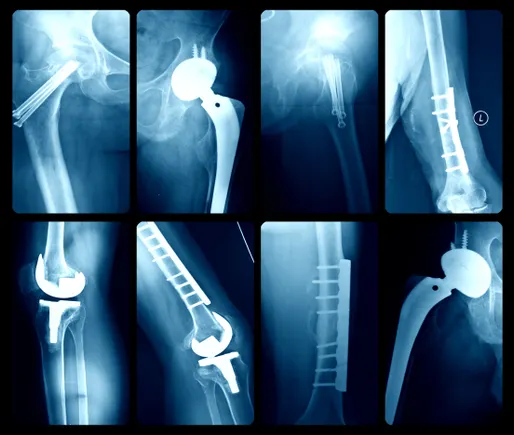
The orthopedic medical device landscape is bracing for a significant regulatory evolution, yet the industry’s heavyweights remain remarkably composed. As the Centers for Medicare and Medicaid Services (CMS) finalizes the Comprehensive Care for Joint Replacement Expanded Model (CJR-X), major manufacturers like Stryker and Zimmer Biomet have signaled that the new financial framework—intended to save the federal government $725 million over five years—is unlikely to disrupt their bottom lines.
The policy, unveiled in late July as part of the broader hospital inpatient payment rule, represents a strategic pivot in how Medicare manages the total cost of care for joint replacement procedures. By holding hospitals financially accountable for the entire 90-day recovery window, CMS is effectively forcing a shift in clinical efficiency. Despite the potential for margin pressure, the industry views this not as a threat, but as a validation of the ongoing transition toward value-based care and outpatient surgical settings.
The Mechanics of CJR-X: Understanding the Regulatory Shift
The CJR-X model, slated to go into effect in 2028, is the successor to previous bundled payment experiments. Under this mandatory program, hospitals are no longer just responsible for the surgical procedure itself; they are accountable for the patient’s health outcomes and associated costs for the 90 days following the surgery.
This encompasses the initial inpatient stay, rehabilitation services, physical therapy, and any complications that might lead to a readmission. Hospitals will effectively operate under a "risk-sharing" agreement: those that manage care efficiently and achieve superior quality outcomes may be eligible for bonus payments from Medicare. Conversely, hospitals that fail to meet spending benchmarks or quality standards will be required to repay a portion of the care costs.
The goal is to eliminate the fragmented, fee-for-service approach that often incentivizes high-volume, high-cost care. Instead, CMS is pushing for a holistic view of the patient journey. While this creates a high-stakes environment for hospitals, orthopedic device firms argue that the cost-saving levers do not lie in the price of the titanium or polyethylene implants themselves.
Chronology of the Policy and Industry Reaction
- July 2024: CMS releases the final hospital inpatient payment rule, formally including the CJR-X expansion.
- Late July 2024: Stryker CEO Kevin Lobo addresses the market on an earnings call, dismissing fears that the rule would depress implant pricing.
- Early August 2024: Zimmer Biomet CEO Ivan Tornos reaffirms the company’s stability, noting that implant pricing has remained resilient for five years despite repeated industry concerns.
- 2028 (Projected): The official implementation date for the CJR-X program.
The reaction from the market was immediate. Throughout the late summer earnings season, analysts pressed executives on whether the impending regulatory pressure would force hospitals to squeeze device manufacturers for lower prices. The consensus from the "Big Two"—Stryker and Zimmer Biomet—was a resounding "no."
The Economic Reality: Why Implants Are Not the Primary Target
The central argument for why orthopedic firms feel shielded from the CJR-X model lies in the math of the procedure.
According to data presented by Zimmer Biomet’s leadership, implants represent a surprisingly small fraction of the total cost of a joint replacement—typically between 14% and 15% in an ambulatory surgery center (ASC) setting. When considering the entirety of a 90-day care episode, the cost of the hardware is dwarfed by post-acute care, facility overhead, and the labor costs associated with surgical teams and therapists.
"For five years now—20 quarters—I’ve been asked whether I thought that pricing was going to get worse, and it hasn’t," said Zimmer Biomet CEO Ivan Tornos. His analysis suggests that if a hospital is looking to reduce costs to meet Medicare’s benchmarks, they will look to "low-hanging fruit": reducing surgical time, minimizing hospital stays, and preventing the expensive readmissions that trigger penalties.
Stryker’s Kevin Lobo echoed this sentiment, noting that the shift toward outpatient facilities—specifically Ambulatory Surgery Centers (ASCs)—is a "good thing" for the firm. As surgeries move out of the high-overhead hospital environment, Stryker’s portfolio is positioned to capture a larger share of the market, effectively offsetting any potential pricing pressures with increased volume and efficiency.
The Analyst Perspective: A Catalyst for Innovation
While the orthopedic firms maintain a defensive posture regarding pricing, market analysts see the CJR-X as a potential "strong catalyst" for the adoption of higher-tech, value-add solutions.
Ryan Zimmerman, an analyst at BTIG, suggests that while manufacturers might not need to lower their hardware prices, they will need to change their sales pitch. Rather than simply selling a knee or hip joint, companies must now sell "outcomes."
"Medtech firms may need to defend their prices by proving their technologies enhance care coordination and prevent readmissions and emergency visits," Zimmerman wrote. This creates a competitive advantage for companies that offer:
- Robotic-Assisted Surgery: Platforms that increase precision, reduce tissue trauma, and speed up recovery times.
- Digital Physical Therapy: Remote platforms that keep patients on track with their recovery at home, reducing the need for costly in-person visits.
- Remote Monitoring: Smart implants and wearable tech that provide surgeons with real-time data on how a patient is recovering, allowing for early intervention before a readmission occurs.
In this context, the Zimmer Biomet Persona IQ—a "smart knee" that tracks range of motion and gait metrics—becomes a strategic asset. By providing data that helps hospitals manage the 90-day episode, such devices shift from being a "cost" to a "risk-mitigation tool."
Implications for the Future of Orthopedics
The implementation of CJR-X is likely to accelerate several long-term trends in the orthopedic sector.
The ASC Migration
The migration of joint replacements from hospital inpatient departments to ASCs is not just a preference; it is now a financial necessity. Because ASCs are inherently lower-cost environments, they provide the best opportunity for hospitals to remain within the Medicare-allotted budget for a joint replacement. Firms that have invested in products specifically designed for the ASC workflow will likely see their market share grow.
The Focus on Data-Driven Care
The days of "set it and forget it" implants are waning. As hospitals take on 90-day financial risk, they will demand devices that provide actionable intelligence. Companies that can demonstrate a decrease in 90-day episode costs—even if the implant itself is premium-priced—will win the preference of hospital value analysis committees.
Consolidation of Vendor Partnerships
Hospitals will likely consolidate their vendor lists. Rather than dealing with a dozen different suppliers, hospitals will seek out "partners" who can provide an ecosystem of care: the robotic arm for the surgery, the implant for the joint, the software for the recovery, and the remote monitoring for the follow-up. This trend favors the larger, vertically integrated firms over niche, single-product manufacturers.
Conclusion: A Regulatory Blessing in Disguise?
While the $725 million in projected government savings suggests a tightening of the purse strings, the orthopedic industry’s reaction suggests that the "threat" of CJR-X has been overstated. By framing the policy as a transition to value-based care rather than a price-cutting exercise, manufacturers have successfully refocused the conversation on innovation and clinical efficiency.
As we move toward the 2028 implementation, the successful orthopedic firms will be those that embrace the spirit of the CJR-X model. They will move away from being simple hardware suppliers and evolve into clinical partners. For Stryker, Zimmer Biomet, and their competitors, the future is not about selling cheaper parts; it is about providing the tools that make the entire 90-day journey faster, safer, and more predictable. In the complex ecosystem of American healthcare, this shift toward accountability may, ironically, become the strongest driver of long-term profitability for the device industry.