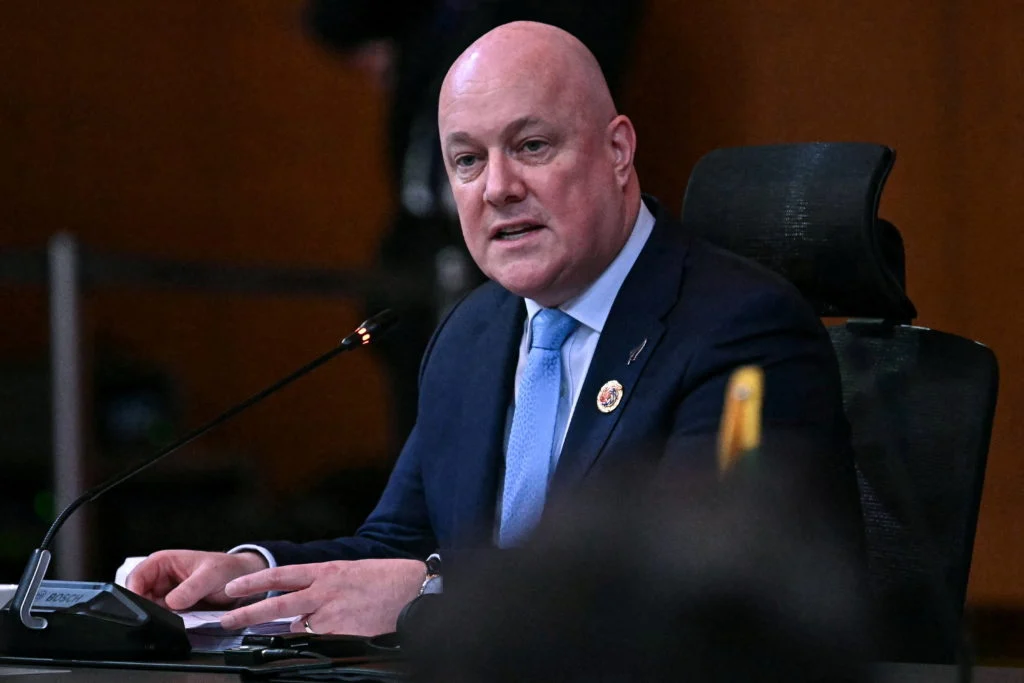
WELLINGTON, New Zealand — In an aggressive move aimed at curbing the influence of digital platforms on the nation’s youth, New Zealand Prime Minister Christopher Luxon has officially unveiled a controversial legislative proposal that would prohibit children under the age of 16 from accessing mainstream social media platforms. The initiative, which Luxon framed as a vital intervention to protect a generation, marks a significant escalation in the global debate over the responsibility of Big Tech in the developmental health of minors.
However, the proposal faces a precarious path to enactment. While the Prime Minister champions the measure as a moral imperative, it has encountered stiff resistance within his own governing coalition, highlighting the complex intersection of digital safety, individual privacy, and political ideology.
Main Facts: The Proposed Legislation
The proposed bill, if passed, would mandate that social media giants—including heavyweights such as Instagram, TikTok, Snapchat, and Facebook—implement rigorous age-verification protocols. Platforms would be legally required to take "reasonable steps" to ensure their user base complies with the age threshold.
Under the framework outlined by the Prime Minister’s party, these steps could include a combination of existing account data, advanced facial age-estimation technology, digital identity services, and government-issued identification. Crucially, the bill aims to spare messaging services like WhatsApp, educational and productivity-focused AI tools (such as ChatGPT, Gemini, and Copilot), and online gaming platforms like Roblox, focusing its regulatory weight specifically on the social networking ecosystems that have been identified as primary drivers of youth screen addiction.
The enforcement mechanism is designed to be punitive for corporations rather than families. No penalties are proposed for parents or children who attempt to bypass the restrictions; instead, tech firms face a draconian financial penalty: fines of up to 10% of their total global revenue for failure to comply with the duty of care and verification standards.
Chronology of a Growing Global Movement
The push for a New Zealand ban does not exist in a vacuum. It follows a wave of international legislative activity prompted by mounting evidence regarding the detrimental impacts of algorithm-driven content.
- 2024: The New Zealand government signals its intent to address digital distraction by enacting a nationwide ban on the use of cellphones during the school day for students of all ages.
- December 2025: Australia becomes the global trailblazer, implementing a comprehensive ban on social media for children under 16. This move serves as the primary legislative blueprint for the current New Zealand proposal.
- January 2026: Following the Australian implementation, social media platforms report the mass deactivation of approximately 4.7 million accounts identified as belonging to minors.
- Early 2026: Following Australia’s lead, nations including Canada, Brazil, and Indonesia begin formalizing their own restrictions.
- October 1, 2026: Parliament dissolves ahead of the November election. The proposal, having missed the required legislative window for three rounds of voting, remains in limbo as the nation heads to the polls.
- Present Day: Prime Minister Luxon pledges to make the ban a cornerstone of his platform should he be reelected, setting the stage for a contentious post-election legislative battle.
Supporting Data: The Case for Intervention
Prime Minister Luxon’s argument is underpinned by 2025 research indicating a crisis in youth digital consumption. The data suggests that a staggering one-third of New Zealand teenagers dedicate at least five hours of their day to social media platforms.
"Social media is exposing them to harmful content, addictive technology and pressures they are not equipped to deal with," Luxon argued during a press conference on Monday. The concerns cited are multi-faceted, covering:
- Mental Health: A correlation between prolonged social media use and increased rates of anxiety, depression, and body dysmorphia among adolescents.
- Educational Outcomes: The displacement of study and critical thinking time by short-form, algorithmically optimized entertainment.
- Physical Well-being: Disruptions to circadian rhythms caused by late-night scrolling and the resulting decline in sleep quality.
- Family Cohesion: The erosion of face-to-face communication within the household unit.
Proponents of the bill argue that self-regulation by tech companies has failed, pointing to the inherent conflict of interest between a platform’s revenue model—driven by user engagement—and the well-being of its youngest users.
Official Responses and Political Friction
The proposal has created a significant rift within the New Zealand government. Luxon leads a coalition that includes his center-right National Party, the libertarian ACT party, and the populist NZ First party.
The latter two have remained steadfast in their opposition, signaling they will vote against the measure regardless of its popularity with the public. This lack of coalition consensus means the bill is currently "dead on arrival" without the support of opposition parties. Chris Hipkins, leader of the center-left Labour Party, has taken a cautious approach, stating that his party has yet to reach a consensus on whether to support the bill, leaving the legislation’s future entirely dependent on post-election negotiations.
Meanwhile, the tech industry and privacy advocates have expressed grave concerns. Privacy groups argue that the requirement for "digital IDs" and "facial age estimation" creates a massive surveillance infrastructure. They contend that such measures are easily bypassed by tech-savvy youth using VPNs, while simultaneously forcing citizens to surrender sensitive biometric data to private corporations.
Implications for the Future of the Digital Age
The debate in New Zealand mirrors a larger existential question facing democratic societies: Where should the line be drawn between the state’s duty to protect minors and the individual’s right to digital participation?
The Privacy Trade-off
Critics warn that the "reasonable steps" required of social media platforms could inadvertently create a honeypot for hackers. If platforms are forced to verify the age of every user through formal identification, the risk of data breaches involving the sensitive personal information of millions of young people becomes a critical concern.
The Enforcement Challenge
Even if the law passes, the technical reality of enforcement remains daunting. As seen in Australia, while millions of accounts were shuttered, the prevalence of decentralized networks and privacy-preserving technologies makes a total ban difficult to maintain. The "cat-and-mouse" game between tech firms and regulators is expected to persist, potentially leading to a fragmentation of the internet where access is increasingly gated by age and location.
A Global Precedent
Regardless of the immediate outcome in the New Zealand Parliament, the fact that such a bill has reached the floor of the legislature is a sign of the times. Governments are increasingly moving away from the "hands-off" approach that characterized the early internet era. Whether this leads to a safer digital environment or an overreaching surveillance state remains the subject of intense public discourse.
As New Zealand moves toward its November election, the social media ban has become more than just a policy point; it is a litmus test for the country’s values. Voters are being asked to decide whether the potential for improved mental health outcomes justifies the necessary technological barriers and the potential privacy costs.
For now, the youth of New Zealand remain in a state of digital limbo, waiting to see if their online lives will be strictly regulated by the state or if the current status quo of unrestricted access will continue to define their adolescence. Prime Minister Luxon’s commitment to this cause ensures that, regardless of the election results, the "digital childhood" debate will remain at the forefront of the national conversation for years to come.