










For decades, the standard approach to oncology has been reactive: administer a potent therapy, monitor for tumor shrinkage, and—too often—wait for the inevitable resurgence of the disease. This "wait-and-see" model, while foundational to modern medicine, may be fundamentally flawed. A groundbreaking study published in the journal Genetics suggests that the key to improving cure rates lies not in how we treat cancer, but in when we change our strategy.
By applying the principles of evolutionary biology—the same logic used to track influenza mutations and combat antibiotic-resistant bacteria—researchers are proposing a "kick it while it’s down" strategy. The goal is to rotate therapies before a tumor has the chance to develop the genetic armor required to survive, potentially turning terminal diagnoses into manageable, or even curable, conditions.
The Evolutionary Arms Race: Why Cancer Returns
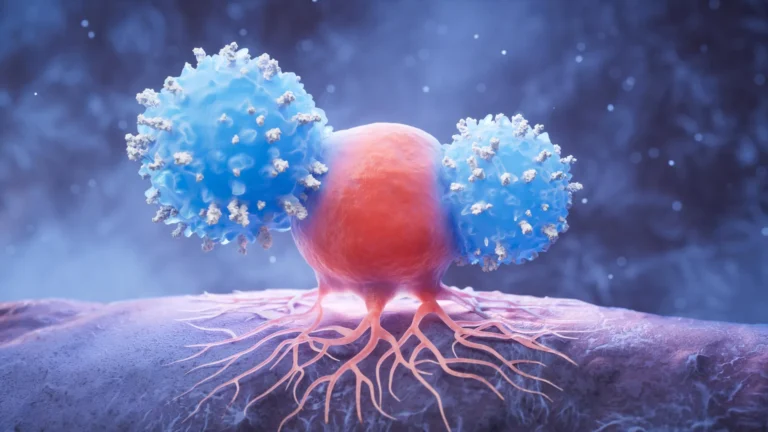
To understand why this shift in strategy is necessary, one must first understand the nature of the adversary. Cancer is not a static monolith; it is an evolving population of cells.
Dr. Robert Noble, Senior Lecturer at the Department of Mathematics at City, St George’s, University of London, and lead author of the study, describes the phenomenon of relapse as an evolutionary inevitability. "Although tumors may at first shrink under therapy," Dr. Noble explains, "in many cases they eventually regrow. These relapses stem from a small number of cancer cells that have gained mutations making the cells resistant to the treatment."
The Mechanics of Resistance
Mutations are random, inherent errors that occur as cells divide. In a healthy body, these are often corrected or lead to cell death. In a tumor, however, these mutations are the engine of survival. When a patient undergoes chemotherapy or targeted therapy, the drug acts as an "environmental pressure." It wipes out the vast majority of susceptible cells.
However, if a single cell carries a mutation that renders it immune to that specific drug, it suddenly faces no competition for resources. It survives the "culling" process, multiplies, and eventually repopulates the tumor with a new generation of cells that are all resistant to that initial therapy. By the time a patient shows clinical signs of relapse, the tumor is no longer the same disease it was at the time of diagnosis; it is a more evolved, more resilient version of itself.
A Paradigm Shift: From Reactive to Proactive
The current clinical standard typically involves adhering to a treatment regimen until imaging or blood tests confirm that the cancer is actively growing again. Only then do oncologists switch to a second-line therapy.
The flaw, according to the research team, is that this wait allows the resistant cells time to develop further adaptations. By the time the second treatment is introduced, the tumor may have already acquired mutations that protect it from that subsequent therapy as well.
The "Kick It While It’s Down" Strategy
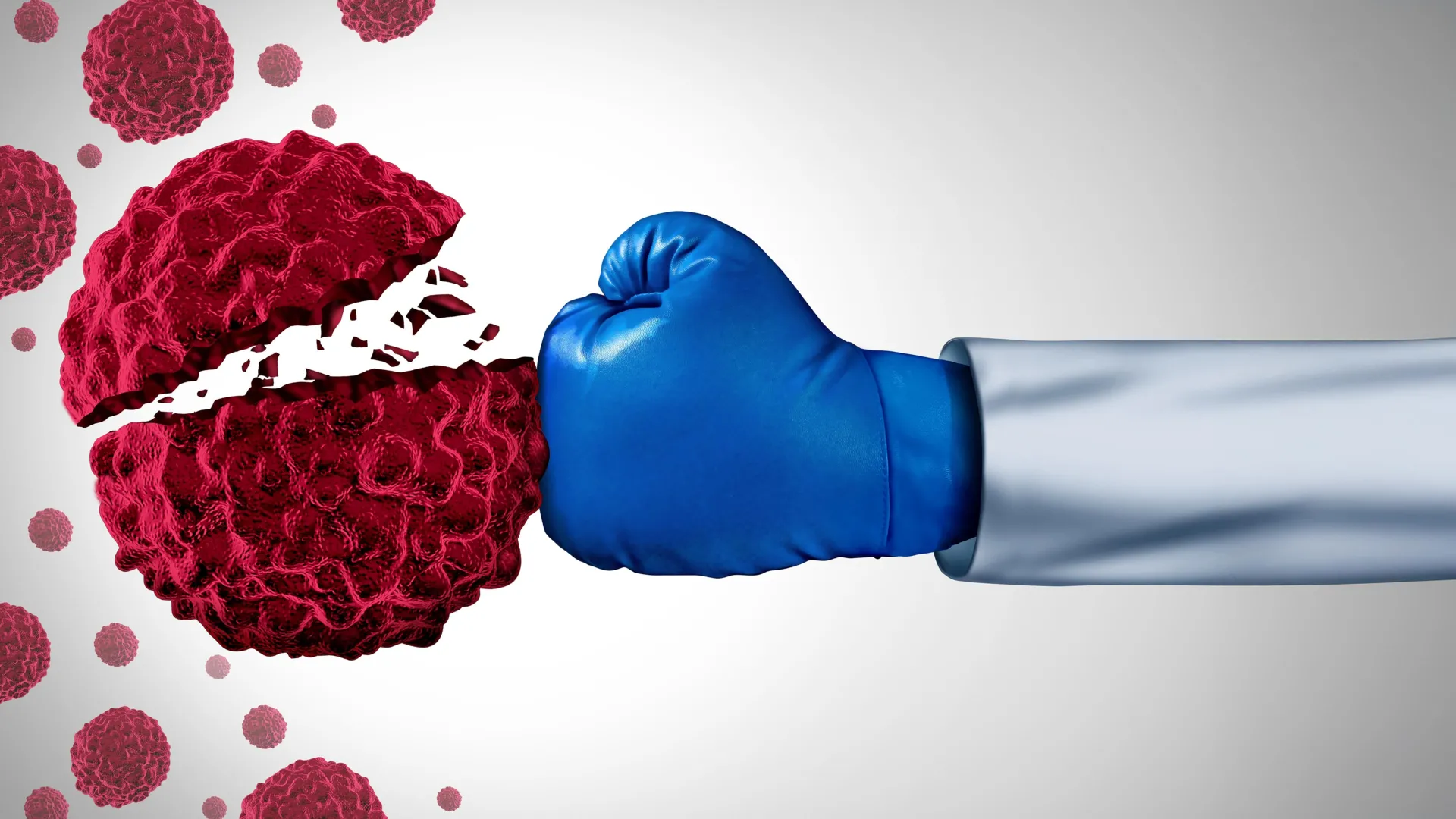
Dr. Noble’s team proposes an aggressive, preemptive approach. Instead of waiting for a treatment to lose its efficacy, they suggest switching to a different therapy while the tumor is still responding to the current one.
This strategy treats the tumor as a dynamic system. By switching drugs early, doctors can disrupt the evolutionary trajectory of the cancer. Each new therapy presents a unique "environmental challenge" to which the cancer must adapt. If the switches are timed correctly, the cancer is kept in a state of constant evolutionary stress, never gaining the foothold required to mount a full-scale comeback.
This concept is heavily informed by success in other fields. As Dr. Noble notes, "Evolutionary approaches have been very successful in other contexts, such as combating antibiotic resistance, or predicting what vaccines we should use in a particular flu season. There is every reason to suppose that similar approaches should work in tumors."
Mathematical Modeling: Mapping the Future of Oncology
The research team did not reach these conclusions through trial and error in a petri dish alone. They utilized sophisticated mathematical models originally designed to track how plants and animals adapt to climate change and other environmental shifts.
Simulating Environmental Pressure
In these models, a cancer treatment is treated as an environmental variable. The researchers input data regarding tumor growth rates, mutation frequencies, and the selective pressure exerted by various drugs. By simulating thousands of different treatment sequences, the team was able to identify patterns that consistently outperformed the current standard of care.
The models revealed a critical insight: while two treatments are significantly better than one, they are often insufficient for larger, more established tumors.
"A sequence of two treatments, even if optimally timed, is likely to succeed only in relatively small tumors," Dr. Noble explains. "But we have reason to hope that switching between three or more treatments, following the same principle, could eliminate larger tumors."
By rotating through a sequence of three or more therapies, the tumor is forced to contend with a complex array of pressures. The mathematical probability of a single cancer cell possessing the specific mutations required to survive all of those pressures simultaneously is exceedingly low.
From Theory to Clinical Reality
While the mathematical models provide a compelling proof of concept, the transition from computer simulation to the bedside is a complex, high-stakes endeavor. The researchers are clear: this is not a universal panacea.
The Hurdles Ahead
- Patient Heterogeneity: Every patient’s cancer is unique. Factors such as tumor size, the specific genetic profile of the malignancy, the patient’s overall health, and the availability of secondary and tertiary therapies must be weighed.
- Optimal Timing: Determining exactly when to switch is the most sensitive variable in the equation. Switch too early, and you waste a potentially potent drug. Switch too late, and the resistance has already taken root.
- Toxicology: Increasing the number of therapies requires careful management of cumulative side effects, as patients are exposed to a wider variety of chemical stressors.
Current Clinical Progress
The theory is already being tested in the real world. There are currently three clinical trials underway—focusing on soft-tissue, prostate, and breast cancers—that are investigating the efficacy of these rotation-based strategies. These trials serve as the ultimate litmus test for the mathematical models, providing the empirical data needed to refine the timing and selection of drugs in a human biological context.
Implications for the Future of Cancer Care
The research, which was a collaborative effort involving an international team of mathematical biologists including Srishti Patil (Indian Institute of Science Education and Research, Pune), Armaan Ahmed (Johns Hopkins University), and Dr. Yannick Viossat (Université Paris Dauphine-PSL), represents a fundamental shift in how we view the relationship between patient and disease.
If validated, this approach would move oncology away from the "all-or-nothing" reliance on a single blockbuster drug. It suggests a future where treatment is a choreographed, preemptive dance—a series of calculated maneuvers designed to keep the cancer trapped in a state of vulnerability.
A New Era of Anticipation
For patients, the implications are profound. If doctors can move from responding to resistance to anticipating it, the psychological and physical burden of cancer could change dramatically. The goal is no longer just to shrink a tumor until it vanishes, but to manage the evolutionary landscape of the body so that the tumor never regains its strength.
While there is still much to learn, the work of Dr. Noble and his colleagues offers a beacon of hope. By looking at cancer through the lens of evolution, we are finally beginning to speak the language of the disease itself—and in doing so, we are finding better ways to silence it.
The full findings are available in the current issue of Genetics, providing a roadmap for future clinical trials that may, in time, redefine the standard of care for patients worldwide.