





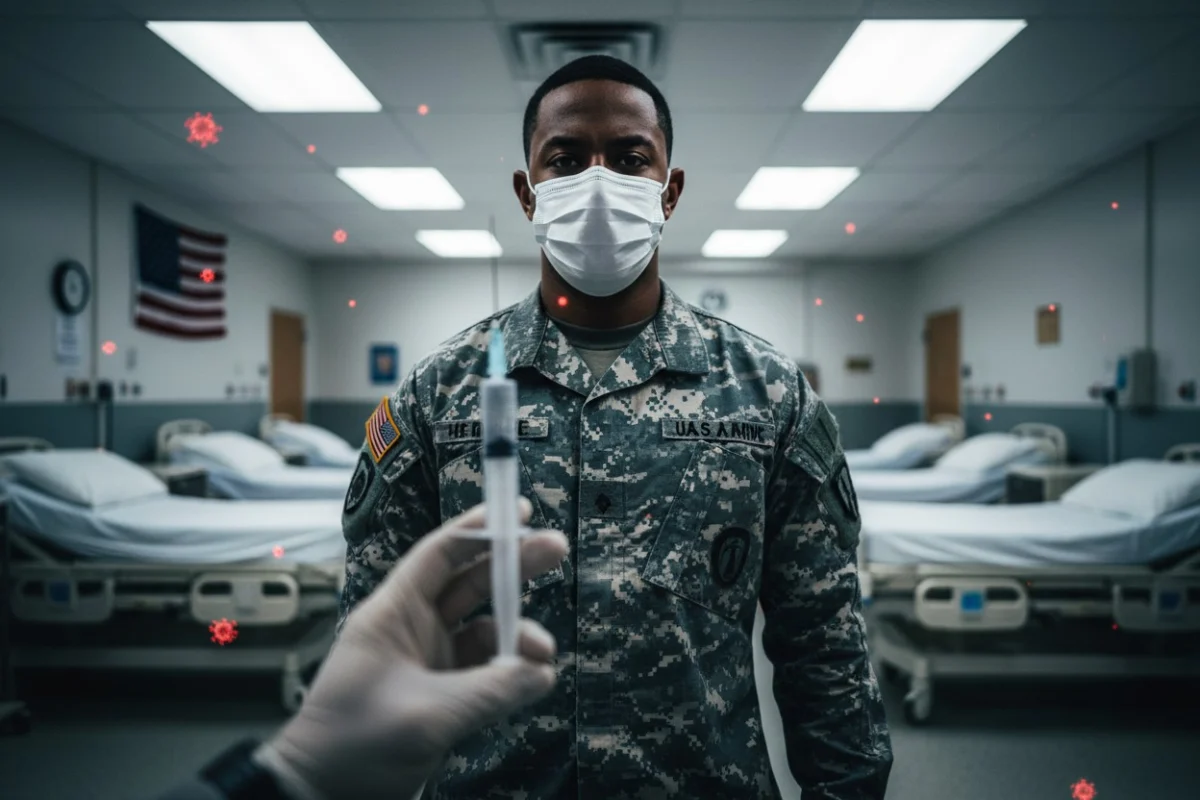
ARLINGTON, Va. — In a significant reversal of policy, the Pentagon announced on June 24 that it will reinstate mandatory influenza vaccinations for all new recruits entering the Army, Navy, and Air Force. This directive comes less than two months after Secretary of Defense Pete Hegseth made the historic decision to end a mandate that had been a staple of military medical readiness since 1945.
The abrupt pivot follows a severe and rapidly spreading influenza outbreak at Joint Base San Antonio-Lackland in Texas. As of late June, the outbreak has resulted in at least 222 confirmed cases among trainees, with several hospitalizations and the tragic, still-under-investigation death of recruit Keon McDaniel. The reinstatement of the mandate highlights the persistent tension between individual medical autonomy and the unique operational requirements of a force that lives, trains, and deploys in close-quarters, high-density environments.
The Evolution of Military Vaccination Policy
For nearly eight decades, the U.S. military maintained a rigid stance on influenza vaccination, viewing it as a cornerstone of "force health protection." Because military recruits are often housed in dense barracks and engage in intensive, high-stress training, they are uniquely susceptible to the rapid transmission of respiratory pathogens.
However, in April of this year, Secretary of Defense Pete Hegseth sought to dismantle what he characterized as "overreaching mandates." In a video statement disseminated via social media, Hegseth argued that the Department of War (DOW) was "restoring freedom to our Joint Force." He stated, "We’re seizing this moment to discard any absurd, overreaching mandates that only weaken our warfighting capabilities. In this case, this includes the universal flu vaccine and the mandate behind it."
Hegseth’s directive, issued on April 21, fundamentally altered the landscape of military health, moving influenza vaccination from a mandatory requirement to a personal choice for service members across all branches. The decision was met with immediate praise from advocates of individual medical autonomy, who argued that service members should not be compelled to accept medical interventions as a condition of their service. Conversely, public health experts and military medical officers expressed immediate concern, warning that the loss of a uniform vaccination policy could lead to preventable outbreaks that threaten both individual health and unit cohesion.
Chronology of the Crisis
The impact of the policy change became apparent with alarming speed. The timeline of events leading to the June 24 reversal is as follows:
- April 21: Secretary of Defense Pete Hegseth issues a directive ending the 79-year-old mandate for annual influenza vaccinations for all service members.
- Late May: Reports of increased respiratory illness begin to surface among recruits at Joint Base San Antonio-Lackland.
- Early June: The outbreak escalates significantly. Approximately 40% of new recruits receive voluntary vaccinations during this period, but the virus continues to spread through the training population.
- June 12: Recruit Keon McDaniel dies at the facility. While an investigation into the cause of death remains ongoing, the timing has intensified scrutiny of the health environment at the base.
- June 23: The number of flu-related diagnoses at Lackland climbs to 222, with at least two recruits requiring hospitalization.
- June 24: Pentagon officials confirm that the influenza vaccine mandate is being reinstated for all new recruits across the Army, Navy, and Air Force.
Supporting Data and the Challenges of "Closed Settings"
The situation at Lackland has provided a stark case study in the dynamics of contagion within military training environments. Public health researchers note that "closed settings"—such as military boot camps, university dormitories, and nursing homes—are prone to rapid transmission regardless of vaccination status. However, the lack of a mandatory, comprehensive vaccination program significantly lowers the threshold for a localized outbreak to become a widespread epidemic.
Data from the Centers for Disease Control and Prevention (CDC) and various medical journals frequently highlight that vaccine efficacy is not absolute. In some instances, outbreaks have been documented even in highly vaccinated populations. For example, documented cases in civilian nursing homes have shown that even when 95% of residents are vaccinated, secondary transmission can still occur.
Critics of the reinstatement argue that the focus on the flu shot ignores the inherent risks of recruit training and that pinning the outbreak solely on the removal of the mandate is scientifically reductive. They point out that vaccine effectiveness varies from year to year based on the match between the vaccine strains and the circulating virus. However, military medical leaders argue that while no vaccine is 100% effective, even partial immunity provides a critical buffer that prevents the worst outcomes, such as hospitalization and death, thereby preserving the medical readiness of the force.
Official Responses and Tactical Adjustments
The Pentagon’s decision to reinstate the mandate was delivered with a sense of urgency. An official speaking on behalf of the Department of Defense indicated that the current cohort of recruits—as well as all future intakes—will be required to receive the vaccine.
"The decision was made in response to the operational impact of the ongoing outbreak," the official stated. "Our primary responsibility is to ensure that our recruits are healthy enough to complete their training and that we do not lose days of instruction to preventable illness."
The military is now navigating the logistical complexities of a sudden policy pivot. Reports suggest that the Department is rushing to utilize existing vaccine stockpiles, some of which are nearing their expiration dates of June 30. This has led to some criticism regarding the logistics of the rollout and the broader rationale for implementing a mandate based on a singular, localized outbreak at one base.
Furthermore, officials have hinted that additional exceptions to the "optional" policy set by Hegseth in April are likely to follow. Expectations are that the mandate will soon be expanded to include deployed troops, healthcare personnel, and other high-risk military populations.
The Implications: Readiness vs. Autonomy
The reinstatement of the flu shot requirement has reignited a deep-seated debate within the American military community. At the heart of this conflict is the question of where the government’s authority over a service member’s body begins and ends.
Legal and Ethical Considerations
Legal scholars suggest that the precedent for military vaccine mandates is rooted in the "exigent circumstances" of military life. Historically, courts have granted the military broad latitude to enforce medical standards to ensure that troops are "fit for duty." However, the political climate surrounding medical mandates has shifted. Proponents of individual choice argue that the military should treat its personnel as autonomous adults, while traditionalists argue that a "total force" approach to health is a requirement of national security.
The Impact on Recruitment
There is also a concern regarding the impact of these policies on recruitment and retention. In an era where the military is struggling to meet recruitment targets, some analysts suggest that mandates—whether for masks, vaccines, or other medical procedures—can act as a deterrent for potential recruits who prioritize personal medical autonomy.
Future Monitoring
Public health officials continue to monitor the situation at Lackland closely. The ongoing investigation into the death of Keon McDaniel looms over the policy reversal, serving as a somber reminder of the stakes involved. While the official cause of death has not been linked to the influenza outbreak, the incident has catalyzed a re-evaluation of how the military manages the health of its newest members.
As the Department of War works to implement the new mandate, the broader questions regarding vaccine efficacy, the necessity of informed consent, and the appropriate limits of government authority remain unresolved. The Pentagon finds itself in a delicate balancing act: attempting to maintain the operational readiness of the most powerful military force in the world while addressing a growing national skepticism toward institutional medical mandates.
The next few months will likely see further adjustments to military health policies as the Department of War evaluates the success of the reinstated mandate in curbing the current outbreak. For now, the "freedom to choose" policy introduced in April has been curtailed, replaced by the pragmatic, if controversial, return to a standardized medical requirement intended to protect the collective health of the United States armed forces.