





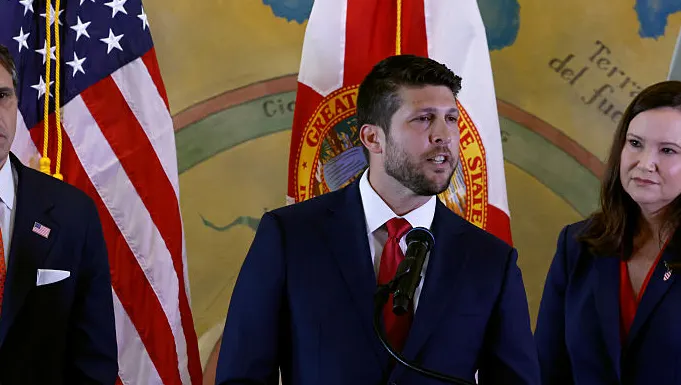
In a legal challenge that could fundamentally alter the landscape of the American pharmaceutical supply chain, Florida Attorney General James Uthmeier has filed a sweeping antitrust lawsuit against Express Scripts and Prime Therapeutics. The litigation targets a strategic partnership formed in 2019, alleging that the collaboration between the two pharmacy benefit managers (PBMs) constitutes an illegal price-fixing scheme that has devastated independent pharmacies across Florida and beyond.
At the heart of the dispute is the role of PBMs—the opaque, influential middlemen that negotiate drug prices, manage formularies, and reimburse pharmacies for dispensing medication. While the industry maintains that these entities generate necessary savings for patients and employers, critics argue that a lack of transparency and increasing consolidation have allowed PBMs to weaponize their market share at the expense of local health providers.
The Genesis of the Agreement: A Shift in Market Dynamics
To understand the gravity of the lawsuit, one must examine the pre-2019 market dynamics. For years, the pharmacy industry operated under a tenuous equilibrium. Express Scripts, a behemoth covering approximately one in every three Americans, held significant leverage. Because of its sheer size, independent pharmacies often felt compelled to accept lower reimbursement rates to remain in the Express Scripts network. Losing access to such a massive pool of patients was, for many small businesses, a death sentence.
Conversely, Prime Therapeutics—historically a smaller player—faced a different set of pressures. To remain competitive and ensure their members had adequate pharmacy access, Prime was forced to offer higher reimbursement rates to pharmacists, paying on average 20% more than their larger rivals.
This competitive pressure vanished in 2019 when Prime Therapeutics entered into a deal with Express Scripts, outsourcing its retail pharmacy networking and drugmaker contracting services to the industry leader. The lawsuit alleges that this was not merely a strategic outsourcing move, but a calculated effort to synchronize reimbursement rates. By aligning its operations with Express Scripts, Prime was effectively able to “fix” its reimbursement rates to match the lower levels set by its larger partner, allowing both firms to split the resulting financial windfall.
Chronology of Legal and Market Escalation
The friction between independent pharmacists and the PBM duopoly did not appear overnight. The 2019 partnership served as a catalyst for a years-long deterioration of the relationship between pharmacies and these middlemen.
- 2019: Prime Therapeutics and Express Scripts finalize a strategic partnership, effectively consolidating drug pricing negotiations and network management.
- 2020–2022: Independent pharmacies report a sharp, sudden decline in profit margins. Many describe a “nightmare scenario” where the reimbursement received from PBMs for a drug fell significantly below the wholesale acquisition cost of the medication itself.
- 2023: A group of independent pharmacies initiates a class-action lawsuit in Wisconsin, alleging that the reimbursement suppression caused by the Prime-Express Scripts agreement violated antitrust laws. While that specific case was eventually dismissed, it signaled a growing trend of collective legal action.
- September 2024: Nearly 5,000 independent pharmacies file a new, massive class-action lawsuit against the two PBMs, echoing the claims of market manipulation and price fixing.
- October 2024: Florida Attorney General James Uthmeier files his formal complaint, alleging violations of the Florida Antitrust Act and the Florida Deceptive and Unfair Trade Practices Act. The state of Florida is now seeking not only civil penalties and damages but also a judicial mandate to force the dissolution of the partnership.
Supporting Data: The Anatomy of a Margin Crisis
The Florida Attorney General’s complaint relies on granular data regarding the financial survival of community pharmacies. According to the filing, the implementation of the partnership resulted in immediate and drastic reductions in revenue. Some pharmacies saw reimbursement rates for specific drugs plummet by as much as 80%.
For an independent pharmacy, the math is unforgiving. These businesses operate on thin margins, often relying on the volume of prescriptions to offset the overhead costs of licensed staff, secure storage, and regulatory compliance. When a PBM dictates a reimbursement rate that is lower than the pharmacy’s acquisition cost, every dispensed pill becomes a net financial loss.
Uthmeier’s filing paints a grim picture: "Dispensing at a loss puts downward pressure on the pharmacies’ margins and may contribute to the ability of the pharmacy to continue to serve customers—or even continue to exist at all." The complaint suggests that this is not an accidental byproduct of market competition, but a deliberate feature of the partnership designed to maximize the PBMs’ bottom line by cannibalizing the retail sector.
Official Responses and Corporate Defenses
The defendants have mounted a robust defense, framing the lawsuit as a fundamental misunderstanding of the PBM business model. A spokesperson for Prime Therapeutics issued a statement emphasizing that the Attorney General’s focus on pharmacy profits ignores the macro-economic benefits that their model provides to the broader healthcare system.
"The Attorney General’s complaint focuses on pharmacy profits but overlooks the impact that higher pharmacy costs have on the patients, employers, health plans, and taxpayers who ultimately pay for prescription drugs," the Prime spokesperson stated. The company further argued that its collaborative approach has delivered lower costs at the pharmacy counter and secured substantial savings for health plans, all while maintaining “broad access” to pharmacies.
Express Scripts, which represents the larger entity in the partnership, remained notably silent, failing to respond to requests for comment prior to the publication of the complaint. This silence has done little to quell the skepticism of regulators, who argue that the lack of transparency in how these "savings" are calculated and distributed remains a black box for both policymakers and patients.
The Broader Implications: What’s at Stake?
The outcome of this litigation will likely set a precedent for how antitrust laws are applied to the modern pharmacy supply chain. If the courts find that the agreement between Prime and Express Scripts constitutes an illegal restraint of trade, it could trigger a wave of divestitures across the PBM industry.
1. The Survival of Independent Pharmacy
For many local pharmacists, this is an existential fight. The trend of pharmacy closures, particularly in rural and underserved urban areas, is often attributed to the squeeze applied by PBMs. If the lawsuit succeeds, it may force PBMs to adopt more transparent, fair-market reimbursement models, potentially stemming the tide of closures.
2. The Future of PBM Oversight
The Florida lawsuit is part of a broader, national movement to regulate PBMs. Legislators in Washington D.C. have increasingly scrutinized the “rebate” system, where PBMs negotiate secret discounts with drug manufacturers. The argument from the Florida Attorney General suggests that the industry has evolved from a tool of cost-containment into an engine of monopolistic price fixing.
3. Patient Access and Drug Costs
The central tension of the case is the competing interest between the pharmacy’s profit and the consumer’s cost. While Prime argues that their actions lower costs for patients, opponents argue that the “savings” cited by PBMs are often retained by the PBMs themselves rather than being passed down to the patient at the counter. The case will force a judicial examination of whether the PBM model truly benefits the end user or merely maximizes the margins of the middleman.
4. Antitrust Jurisprudence
By leveraging both state-level antitrust and deceptive trade practices statutes, Florida is testing the limits of how far a state can go in policing national healthcare contracts. Should the court rule in favor of the state, it could invite other Attorneys General to file similar lawsuits, creating a patchwork of state-level litigation that could ultimately force federal intervention or a complete restructuring of the PBM industry’s contractual frameworks.
As the case moves forward, the healthcare industry remains on high alert. For the millions of Americans who rely on local pharmacies for their life-saving medications, the resolution of this conflict could determine not only the price of their drugs but the accessibility of their local healthcare providers for years to come. The question remains: can the pharmaceutical supply chain function efficiently without the heavy-handed influence of the current PBM regime, or will the removal of these middlemen disrupt the very savings they claim to provide? The courtroom, rather than the pharmacy counter, will be the next theater for this high-stakes debate.