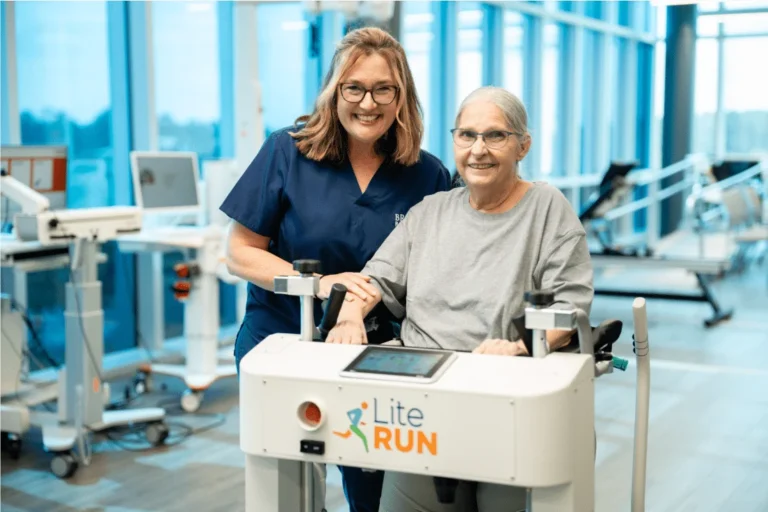
Phoenix, AZ & Remote – [Current Date] – In a landmark collaboration set to redefine the landscape of post-acute care, Gravitrex Inc., an innovative rehabilitation technology startup, has announced a strategic partnership with Enlighten Mobility, a recognized leader in neuromotor innovation. This powerful alliance is specifically engineered to accelerate the development, commercialization, and widespread clinical adoption of next-generation gait training rehabilitation technologies. The overarching goal: to significantly improve access to crucial walking recovery solutions for patients navigating the complex journey of post-stroke, post-injury, or post-illness rehabilitation.
The partnership represents a pivotal moment for both entities and the broader neurorehabilitation sector. It entails the strategic deployment of highly experienced personnel across critical engineering, clinical, and commercialization functions. This infusion of specialized talent is anticipated to substantially bolster Gravitrex’s operational capabilities, enabling the company to scale its groundbreaking initiatives and accelerate its path to market with unprecedented efficiency. For patients and clinicians grappling with the persistent challenges of mobility recovery, this collaboration signals a promising future where advanced, evidence-based solutions are not just available, but readily accessible.
Main Facts: A New Era for Walking Recovery
The core of this strategic partnership between Gravitrex Inc. and Enlighten Mobility lies in a shared vision to transform gait training rehabilitation. Gravitrex, known for its innovative patented technology designed to facilitate safer and earlier walking rehabilitation, gains a formidable ally in Enlighten Mobility, celebrated for its deep expertise in neuromotor innovation and clinical integration. This alliance is not merely a handshake agreement but a comprehensive integration of resources, knowledge, and strategic direction.
The primary objective is unequivocal: to expedite the journey of cutting-edge gait training technologies from the research and development phase into the hands of clinicians and, ultimately, patients. This acceleration is critical given the current healthcare climate, characterized by an aging global population and a rising incidence of neurological conditions such as stroke, which profoundly impact mobility. The partnership is a direct response to the urgent demand for scalable, effective, and accessible rehabilitation services that can meet these evolving needs.
Key immediate benefits of this collaboration include a significant expansion of Gravitrex’s internal capabilities. By integrating Enlighten Mobility’s seasoned professionals, Gravitrex gains a robust team capable of navigating the intricate challenges of medical device development, rigorous clinical validation, and effective market penetration. This strategic infusion of talent across engineering, clinical research, and commercial strategy is expected to streamline product development cycles, enhance the robustness of clinical trials, and forge stronger connections within vital clinical and industry networks. The ultimate promise is a faster, more efficient delivery of life-changing walking recovery solutions to those who need them most in the post-acute care setting.
Chronology: A Trajectory Towards Innovation and Collaboration
The formation of this strategic partnership is the culmination of Gravitrex’s impressive trajectory of innovation and Enlighten Mobility’s established leadership in neuromotor advancements. Gravitrex Inc., headquartered in Phoenix, Arizona, has rapidly emerged as a significant player in the rehabilitation technology space. Its journey began with a clear mission: to revolutionize walking rehabilitation through novel, patented technology that partially supports a person’s weight during walking, thereby making the rehabilitation process safer, easier, and more accessible for patients recovering from stroke, illness, or injury.
Gravitrex’s early momentum was fueled by substantial recognition and funding, underscoring the potential impact of its technology. The company garnered significant attention with its victory in the American Physical Therapy Association (APTA) Academy of Leadership and Innovation (ALI) Shark Tank competition, a testament to its compelling vision and viable solution within the physical therapy community. This domestic accolade was swiftly followed by international acclaim, as Gravitrex secured the prestigious Japan Prize at the global Pitch2Tokyo competition, highlighting its global relevance and innovative edge.
Further reinforcing its development capabilities, Gravitrex received a substantial $250,000 award from the Partnership for Economic Innovation’s WearTech Applied Research Center. This critical funding was specifically allocated to support ongoing research and development (R&D) efforts and the crucial clinical validation of Gravitrex’s lead product, designed to address the pressing needs of walking rehabilitation in post-acute care settings. These milestones collectively established Gravitrex as a startup with not only a promising concept but also a validated pathway towards commercialization and clinical impact.
Enlighten Mobility, on the other hand, brings to the partnership a wealth of experience and a strong reputation for driving neuromotor innovation. While the specific chronology of Enlighten Mobility’s founding and initial achievements is not detailed in the provided text, its recognition as a leader in its field suggests a history of successful product development, clinical integration, and a deep understanding of the complex requirements of neurorehabilitation. Their involvement signifies a strategic alignment with Gravitrex’s "patient-first platform" and commitment to "evidence-based, health-system-integrated solutions."
The timing of this partnership is particularly salient. It coincides with a period of escalating demand within post-acute care, driven by undeniable demographic shifts and medical advancements. The collaborative framework now established between Gravitrex and Enlighten Mobility represents a proactive and powerful response to these evolving healthcare imperatives, building upon Gravitrex’s established foundation of innovation and Enlighten Mobility’s strategic expertise to accelerate the delivery of much-needed solutions.
Supporting Data: The Urgent Need for Advanced Gait Rehabilitation
The strategic partnership between Gravitrex and Enlighten Mobility is not merely an opportunistic business venture; it is a direct response to a critical and growing public health crisis. The need for advanced, accessible gait rehabilitation technologies is underpinned by compelling demographic shifts, alarming health statistics, and significant systemic challenges within healthcare.
Demographic Imperatives and Disease Burden:
The global population is aging at an unprecedented rate. According to the United Nations, by 2050, one in six people in the world will be over age 65 (16%), up from one in eleven in 2019 (9%). In the United States, the Centers for Disease Control and Prevention (CDC) projects that the number of adults aged 65 or older will nearly double by 2060, reaching 98 million. This demographic shift inevitably leads to a higher prevalence of age-related conditions, many of which directly impair mobility.
Among these conditions, stroke stands out as a leading cause of long-term disability worldwide. The American Heart Association reports that nearly 800,000 people in the U.S. experience a new or recurrent stroke each year. A staggering 80% of stroke survivors experience some form of motor impairment, with approximately 30-50% experiencing persistent walking difficulties that severely impact their independence and quality of life. Beyond stroke, conditions like Parkinson’s disease, multiple sclerosis, spinal cord injuries, traumatic brain injuries, and even prolonged hospitalizations from severe illnesses often result in significant gait dysfunction requiring intensive rehabilitation.
Economic and Social Impact of Mobility Impairment:
The economic burden associated with mobility impairment is immense. Direct healthcare costs related to rehabilitation, assistive devices, and long-term care are substantial. Indirect costs, including lost productivity, caregiver burden, and reduced quality of life, further amplify this impact. Patients with impaired mobility often face increased risks of falls, social isolation, depression, and a reduced capacity for independent living, leading to a greater reliance on healthcare systems and family support.
Systemic Challenges in Post-Acute Care:
Despite the critical importance of restoring walking ability, clinicians in post-acute care settings frequently operate within constrained systems. These constraints manifest in several ways:
- Resource Limitations: Many facilities lack the specialized equipment, sufficient staffing, or dedicated space required to deliver high-quality, intensive gait training at scale.
- Staff Shortages: A growing shortage of physical and occupational therapists, particularly in rural or underserved areas, limits access to crucial one-on-one therapy.
- Time Constraints: Reimbursement models and patient caseloads often impose strict time limits on therapy sessions, making it challenging to provide the repetitive, high-intensity training necessary for neuroplastic recovery.
- Safety Concerns: Manual gait training can be physically demanding for therapists and carries a risk of falls for patients, particularly in early recovery stages. This necessitates additional personnel and careful supervision, further straining resources.
The Promise of Rehabilitation Technology:
In this challenging environment, accessible rehabilitation technology is emerging not just as an enhancement but as a critical innovation category. Technologies like Gravitrex’s patented partial weight support device address multiple pain points. By enabling safe, early mobilization and providing consistent, measurable assistance, these devices can:
- Improve Patient Outcomes: Facilitate earlier initiation of walking, promote neuroplasticity, and lead to more significant and lasting recovery of gait function.
- Enhance Safety: Reduce the risk of falls for patients and the physical strain on therapists.
- Increase Efficiency and Scalability: Allow therapists to treat more patients, extend therapy duration, or provide higher intensity training with fewer personnel. This scalability is vital for meeting the surging demand.
- Provide Objective Data: Many advanced devices incorporate sensors and analytics, offering objective measures of progress that can inform treatment plans and demonstrate efficacy.
The global rehabilitation robots and exoskeletons market, a segment related to Gravitrex’s work, is projected to grow significantly, indicating a strong market appetite for technological solutions in this space. Market research suggests this segment could reach billions of dollars within the next decade, driven by technological advancements, increasing demand from an aging population, and the recognized benefits of robotic-assisted therapy. Gravitrex’s focus on a "patient-first platform" and "evidence-based, health-system-integrated solutions" positions it directly at the forefront of this crucial market evolution, ensuring that its technology is not only innovative but also practical and impactful within real-world clinical settings.
Official Responses: Voices of Vision and Collaboration
The strategic alliance between Gravitrex and Enlighten Mobility has been met with enthusiastic affirmations from the leadership of both organizations, highlighting a shared vision and profound understanding of the neurorehabilitation landscape. Their statements underscore the critical need for this collaboration and its potential to drive meaningful change.
Kira Burns, CEO of Gravitrex, articulated the immediate and profound impact of the partnership on her company’s operational capacity and market trajectory. "By joining forces with Enlighten Mobility, we are significantly strengthening Gravitrex’s ability to execute across engineering, clinical, and commercialization functions," Burns stated. Her emphasis on the expansion of the team with "highly experienced talent" speaks to the immediate tactical advantage. This infusion of expertise is not merely about adding headcount but about integrating seasoned professionals who bring a wealth of knowledge and a proven track record in developing and deploying complex medical technologies.
Burns further elaborated on the strategic leverage gained through this collaboration, noting that it "deepens our access to clinical and industry networks, and meaningfully accelerates our path to market." This access is invaluable in the highly regulated and interconnected medical device sector. Strong clinical networks are essential for conducting robust trials, gathering crucial feedback, and fostering early adoption, while industry networks can facilitate partnerships, distribution, and market intelligence. Her concluding remarks powerfully capture the essence of this alliance: "In a space as complex as neurorehabilitation, having partners who understand both the technical and clinical realities is critical—not only for scaling efficiently, but also for ensuring we deliver meaningful impact to patients." This statement reflects a mature understanding that technological prowess alone is insufficient; true success lies in the seamless integration of innovation with practical clinical application and patient needs.
Echoing this sentiment of strategic synergy, Marissa Koscielski, Founder of Enlighten Mobility, emphasized the evolving nature of rehabilitation and the unique positioning of Gravitrex within this transformation. "The field of rehabilitation is evolving, creating a profound need for evidence-based rehabilitation technology across care settings," Koscielski observed. Her insight highlights a paradigm shift, where technology is no longer an optional add-on but a fundamental necessity for effective, scalable care.
Koscielski’s endorsement of Gravitrex was particularly strong, recognizing its "patient-first platform" as strategically positioning them to address the needs within the neurorehabilitation sector. She lauded Gravitrex’s commitment to "evidence-based, health-system-integrated solutions," calling it "rare and represents the gold standard for success." This commendation from an industry leader like Koscielski is significant, validating Gravitrex’s foundational approach and product philosophy. It underscores that Enlighten Mobility chose to partner with Gravitrex not just for its technology, but for its principled and pragmatic approach to innovation within the healthcare ecosystem. "By merging our expertise with Gravitrex’s exceptional team and technology, we are accelerating a future where advanced recovery is accessible to everyone," Koscielski concluded, articulating a bold vision for universal access to advanced rehabilitation. Her statement encapsulates the aspirational goal of the partnership: to democratize access to cutting-edge recovery solutions, moving beyond limited specialized centers to broader clinical application.
Together, the statements from Burns and Koscielski paint a comprehensive picture of a partnership built on mutual respect, complementary strengths, and a shared, patient-centric mission. Their responses clearly delineate how the collaboration will combine Gravitrex’s innovative technology and entrepreneurial drive with Enlighten Mobility’s deep clinical understanding and strategic expertise, forming a powerful force poised to redefine neurorehabilitation.
Implications: Reshaping the Future of Neurorehabilitation
The strategic partnership between Gravitrex Inc. and Enlighten Mobility carries profound implications across multiple facets of healthcare, from individual patient outcomes to the broader landscape of rehabilitation technology and societal well-being. This collaboration is poised to be a significant catalyst for change, ushering in a new era for walking recovery.
For Patients and Caregivers:
Perhaps the most direct and impactful implication is for patients recovering from stroke, illness, or injury, and their dedicated caregivers. This partnership promises improved access to earlier, safer, and more effective gait training. Early mobilization is a critical factor in preventing secondary complications such as muscle atrophy, contractures, and deconditioning, while also promoting neuroplasticity for better long-term functional recovery. By making advanced partial weight support technology more widely available, Gravitrex and Enlighten Mobility can help patients achieve greater independence faster, enhance their quality of life, and reduce the physical and emotional burden on caregivers. The focus on "patient-first" solutions suggests a technology that is intuitive, comfortable, and tailored to individual recovery trajectories, potentially leading to higher patient engagement and adherence to therapy.
For Healthcare Providers and Systems:
The implications for clinicians and healthcare systems are equally transformative. The partnership aims to deliver solutions that enable more efficient and scalable care delivery. For physical and occupational therapists, Gravitrex’s technology, bolstered by Enlighten Mobility’s expertise, can act as an invaluable force multiplier. It can reduce the physical demands of manual gait training, allowing therapists to focus more on complex motor learning and problem-solving, rather than purely on physical support. This efficiency could enable therapists to treat more patients, or provide more intensive, longer-duration therapy within existing timeframes, optimizing resource utilization.
For healthcare systems grappling with budget constraints, staff shortages, and the increasing demand for rehabilitation services, this technology represents a pathway to improved operational efficiency and potentially better patient outcomes, which can lead to reduced readmission rates and long-term care costs. The emphasis on "health-system-integrated solutions" suggests that the technology is designed to fit seamlessly into existing clinical workflows and data management systems, minimizing disruption and maximizing utility.
For the Rehabilitation Technology Market:
This strategic alliance is expected to significantly impact the rehabilitation technology market itself. By combining Gravitrex’s patented innovation with Enlighten Mobility’s commercialization prowess, the partnership is likely to accelerate market penetration and set new benchmarks for evidence-based, clinically validated solutions. This could stimulate further innovation in the sector, encouraging other companies to invest in similar rigorous R&D and clinical validation processes. The success of this collaboration could also attract greater investment into the neurorehabilitation technology space, recognizing its immense potential for both patient impact and financial return. It positions Gravitrex as a potential market leader in the specific niche of gait training devices, influencing future product development and competitive strategies.
For Gravitrex and Enlighten Mobility:
For the collaborating entities, the implications are profound for their respective growth trajectories and market positioning. For Gravitrex, the partnership provides an immediate and substantial boost in human capital, strategic guidance, and access to crucial networks, significantly de-risking its path to market and accelerating its commercialization efforts. It solidifies its standing as an innovative leader and provides the operational framework necessary to scale its technology nationally and potentially globally. For Enlighten Mobility, this collaboration expands its portfolio and influence within the neuromotor innovation space, demonstrating its capacity to identify and nurture groundbreaking technologies that align with its mission. It cements Enlighten Mobility’s reputation as a strategic partner capable of driving the successful adoption of complex rehabilitation solutions.
Broader Societal Impact:
On a broader societal level, this partnership addresses a critical public health challenge. By improving mobility outcomes for an aging population and those recovering from debilitating conditions, it contributes to greater societal independence, reduces the overall burden on healthcare and social services, and fosters a more inclusive environment for individuals with mobility challenges. The vision of "accelerating a future where advanced recovery is accessible to everyone" speaks to a more equitable distribution of cutting-edge healthcare, ultimately enhancing human potential and quality of life across communities.
In conclusion, the alliance between Gravitrex and Enlighten Mobility is far more than a business agreement; it is a strategic commitment to transform neurorehabilitation. By leveraging complementary strengths, addressing critical market needs, and maintaining an unwavering focus on patient-centered outcomes, this partnership is poised to revolutionize how walking recovery is achieved, making advanced rehabilitation not just a possibility, but an accessible reality for countless individuals worldwide.