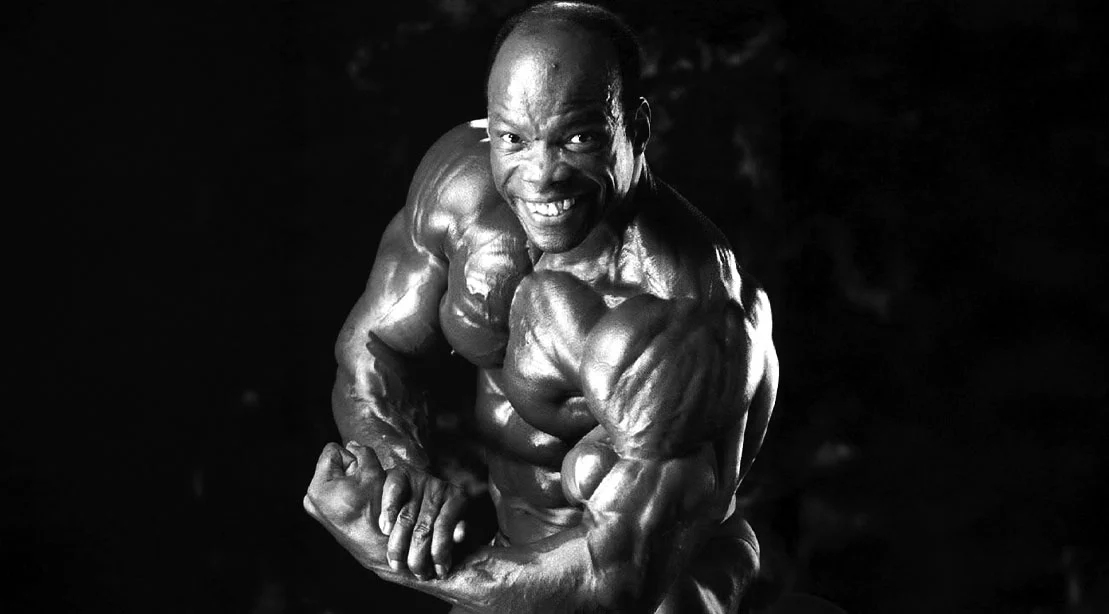
The bodybuilding world is in mourning following the passing of Albert Beckles, a titan of the sport whose career spanned an astonishing four decades. Known affectionately to fans and peers alike as "Ageless," the Barbadian-born British bodybuilder died at the age of 95 on May 17, 2026. His death marks the end of an era, closing the book on one of the most prolific and influential competitive careers in the history of physical culture.
Beckles was more than just a successful athlete; he was a living testament to the possibility of sustained excellence. In a sport often defined by the "peak" years of an individual’s twenties and early thirties, Beckles shattered every convention, stepping onto the Olympia stage with world-class conditioning well into his fifties. His life serves as an enduring masterclass in discipline, longevity, and the pursuit of human potential.
A Career Defined by Unmatched Longevity
The news of Beckles’ passing was first shared by RX Muscle via their official Instagram channel, triggering an outpouring of grief and admiration from across the global fitness community. For those who witnessed his prime, Beckles was the gold standard for symmetry, posing, and aesthetic grace.
His journey into the upper echelons of professional bodybuilding began in the mid-1960s. After placing fifth at the 1965 Mr. Britain competition, Beckles refined his craft with a level of focus that would become his hallmark. By 1970, he had captured both the Mr. Britain and Mr. Europe titles, signaling to the industry that a new force had arrived. His international breakthrough came in 1971 when he secured the prestigious Mr. Universe title, catapulting him into the elite IFBB circuit.
Over the next twenty years, Beckles became a fixture of the sport’s most important stages. He was a three-time winner of the famed NYC "Night of Champions" and made a staggering 13 appearances at the Mr. Olympia contest. His name became synonymous with the sport’s Golden Era, where he battled against legends such as Arnold Schwarzenegger, Frank Zane, and Sergio Oliva, holding his own through sheer technical superiority and artistic presentation.
Chronology of an Iconic Journey
To understand the magnitude of Albert Beckles’ career, one must look at the timeline of his competitive evolution. His trajectory was not one of meteoric rise and sudden fall, but a slow, steady, and deliberate climb toward perfection.
- 1965: Beckles announces his presence on the British bodybuilding scene with a fifth-place finish at Mr. Britain.
- 1970: Achieving his first major double-victory, he takes home the titles of Mr. Britain and Mr. Europe.
- 1971: A pivotal year, marking his ascension to the world stage with a victory at the Mr. Universe competition.
- 1970s–1980s: Beckles establishes himself as a perennial contender at the Mr. Olympia, becoming the most feared and respected "veteran" on the circuit.
- 1985: A defining moment in his career. At the age of 55, Beckles delivers an iconic performance at the Mr. Olympia, pushing the reigning champion Lee Haney to his limits and earning a historic second-place finish.
- 1991: In a feat of longevity that may never be eclipsed, the 60-year-old Beckles wins the Niagara Falls Pro Invitational, becoming the oldest competitor to win an overall title in an IFBB contest.
- 2024: The bodybuilding community honors his monumental impact by inducting him into the Muscle Beach Venice Hall of Fame.
- 2026: Albert Beckles passes away at 95, leaving behind a blueprint for healthy aging and athletic mastery.
The Haney Connection: A Mentor’s Tribute
Perhaps no individual was more intimately acquainted with the impact of Albert Beckles than eight-time Mr. Olympia champion Lee Haney. Following the announcement of Beckles’ passing, Haney took to social media to share a heartfelt tribute that highlighted the personal connection between the two men.
"Out of all the bodybuilders in my lifetime, Albert had the greatest personal impact on me as a competitor," Haney wrote. The two shared more than just a stage; they shared a training regimen and a friendship forged in the gyms of California’s San Fernando Valley.
Haney noted that their Friday night post-training meals were far more than social gatherings. They were intimate sessions of tactical discussion where Beckles would pass down his deep knowledge of posing, stage presence, and muscle control. "The contest tips taught to me by Albert gave me a leg up on my competition," Haney added. "I will forever be grateful."
This revelation underscores the "multiplier effect" of Beckles’ legacy. By mentoring a talent like Haney, Beckles indirectly influenced the trajectory of the sport for years to come. The technical precision that characterized Haney’s reign as the greatest of his time was, in many ways, an extension of the wisdom Beckles had cultivated over decades of trial and error.
Defying the Age Stereotypes: The Science of "Ageless"
The term "Ageless" was not merely a marketing moniker for Beckles; it was a challenge to the scientific and social assumptions regarding human performance. For most of the 20th century, the prevailing wisdom in athletics was that peak physical output was strictly tied to youth. Beckles dismantled this narrative piece by piece.
At 55, when most athletes are long retired, he was arguably in the best shape of his life. At 60, when most were navigating the early stages of senior life, he was standing at the center of the podium, holding a professional trophy. His approach to training was characterized by high-volume, high-frequency, and meticulous attention to nutrition—a protocol that prioritized joint health and muscular longevity over the heavy, ego-driven lifting that often leads to injury.
Beckles proved that if one manages inflammation, prioritizes recovery, and maintains a consistent stimulus, the body remains responsive well into the later stages of life. His physique in his late 50s featured the same separation, density, and flow that it did in his 30s. He became a beacon of hope for an aging population, demonstrating that chronological age is an insufficient metric for defining physical capability.
Industry Implications and Future Reflections
The passing of Albert Beckles leaves a vacuum in the bodybuilding community, but his influence is woven into the very fabric of the modern fitness industry. Today, we see a shift toward "longevity training," a movement that emphasizes the maintenance of muscle mass and functional strength to ensure quality of life. Beckles was the pioneer of this movement long before it had a name.
Industry experts and analysts note that Beckles’ legacy will likely shift the focus of modern bodybuilding toward sustainability. As the sport continues to grow, the question of "how long can you keep going?" is becoming as important as "how big can you get?" The example of Beckles provides the answer: through intelligence, adaptation, and a lifelong commitment to the craft.
Photographer Will Wittmann, who captured many of the sport’s icons, summed up the sentiment of the community perfectly: "One of the greatest to ever do it! Truly a beautiful physique!" It is this combination of "greatness" and "beauty"—the artistic presentation of the human form—that will keep Beckles’ memory alive.
A Final Farewell
As the bodybuilding world reflects on the life of this legend, the lessons he taught remain clear. We are reminded that aging is not a process of inevitable decline, but an opportunity for continuous refinement. Whether it was his signature biceps, his effortless symmetry, or his uncanny ability to hold a pose for longer than anyone else on stage, Beckles was a master of his domain.
The staff at Muscle & Fitness joins the millions of fans worldwide in extending our deepest condolences to the family, friends, and peers of Albert Beckles. His journey from Barbados to the pinnacle of international bodybuilding is a quintessential story of human grit. While he may no longer be treading the boards, the blueprint he created for a life well-lived—and well-trained—remains for all of us to follow.
Rest in peace, Albert "Ageless" Beckles. Your legacy is etched into the iron you moved and the lives you inspired. Your work here is done, but the standard you set will endure for generations to come. 1930–2026.