The intersection of artistic expression, lived experience, and human rights is taking center stage this autumn in Lillehammer, Norway. From September 24-26, the Mad in Norway International Film Festival—an affiliate of the global Mad in America organization—will convene to showcase cinema that challenges traditional psychiatric paradigms. Among the 26 films selected from a global pool of submissions is On My Way to Where, a documentary exploring the life, music, and "madness" of the late Dory Previn.
Directed by Julia Greenberg and Dianna Dilworth, the film serves as more than a biographical retrospective; it is a catalyst for a burgeoning dialogue regarding the "Hearing Voices" and "Mad Pride" movements. As the World Health Organization (WHO) and the United Nations (UN) increasingly call for mental health services to align with human rights frameworks, the festival and this film specifically offer a blueprint for understanding consciousness through a lens of empowerment rather than pathology.
Main Facts: A Festival of Hope and Advocacy
The Mad in Norway International Film Festival is positioned as a pivotal event for activists, clinicians, and individuals with lived experience. Its primary objective is to offer inspiration to those working to reform mental health services. The festival’s programming is explicitly designed to meet the recommendations of the United Nations and the WHO, both of which have recently advocated for a shift away from strictly biomedical models toward person-centered, rights-based care.
The inclusion of On My Way to Where highlights a significant cultural shift. Dory Previn, an Academy Award-nominated lyricist who transitioned from the heights of Hollywood success to a "cult artist" status in the Laurel Canyon scene, spent much of her life navigating what society labeled as mental illness. However, Previn’s own interpretation of her "voices"—which she named and integrated into her art—anticipated modern advocacy movements that view such experiences as variations of human consciousness rather than mere symptoms of a broken brain.
The documentary has already garnered significant attention in the United States, where it is currently available for streaming via PBS. Its journey to Norway signifies the global resonance of Previn’s story and the universal need for representations of recovery that emphasize thriving and social integration over mere stabilization.
Chronology: From Hollywood Scandals to Mad Pride Icon
To understand the weight of the film, one must trace the trajectory of Dory Previn’s life and the subsequent development of the documentary.
The Hollywood Era and the Breakdown
In the 1960s, Dory Previn was a celebrated lyricist, frequently collaborating with her husband, the conductor and composer André Previn. Her work earned her several Academy Award nominations. However, her life took a dramatic turn in 1969 when her husband began a highly publicized affair with actress Mia Farrow. The resulting tabloid scandal and the dissolution of her marriage contributed to a profound psychological breakdown, leading to Previn’s institutionalization.
The Laurel Canyon Re-emergence
The 1970s saw Previn’s "re-emergence." No longer writing for others, she began performing her own songs—darkly funny, brilliantly disturbing, and deeply autobiographical works like "Mythical Kings and Iguanas" and "Lady with the Braid." She became a staple of the Laurel Canyon music scene, a contemporary of Joni Mitchell and Carole King, yet her work was uniquely focused on the internal architecture of her mind.
The Birth of the Film and the Greenberg-Jervert Collaboration
The documentary On My Way to Where was born from a desire to explore this complex legacy. Co-director Julia Greenberg, a musician herself, was initially drawn to Previn’s music but soon became fascinated by her mental health journey.
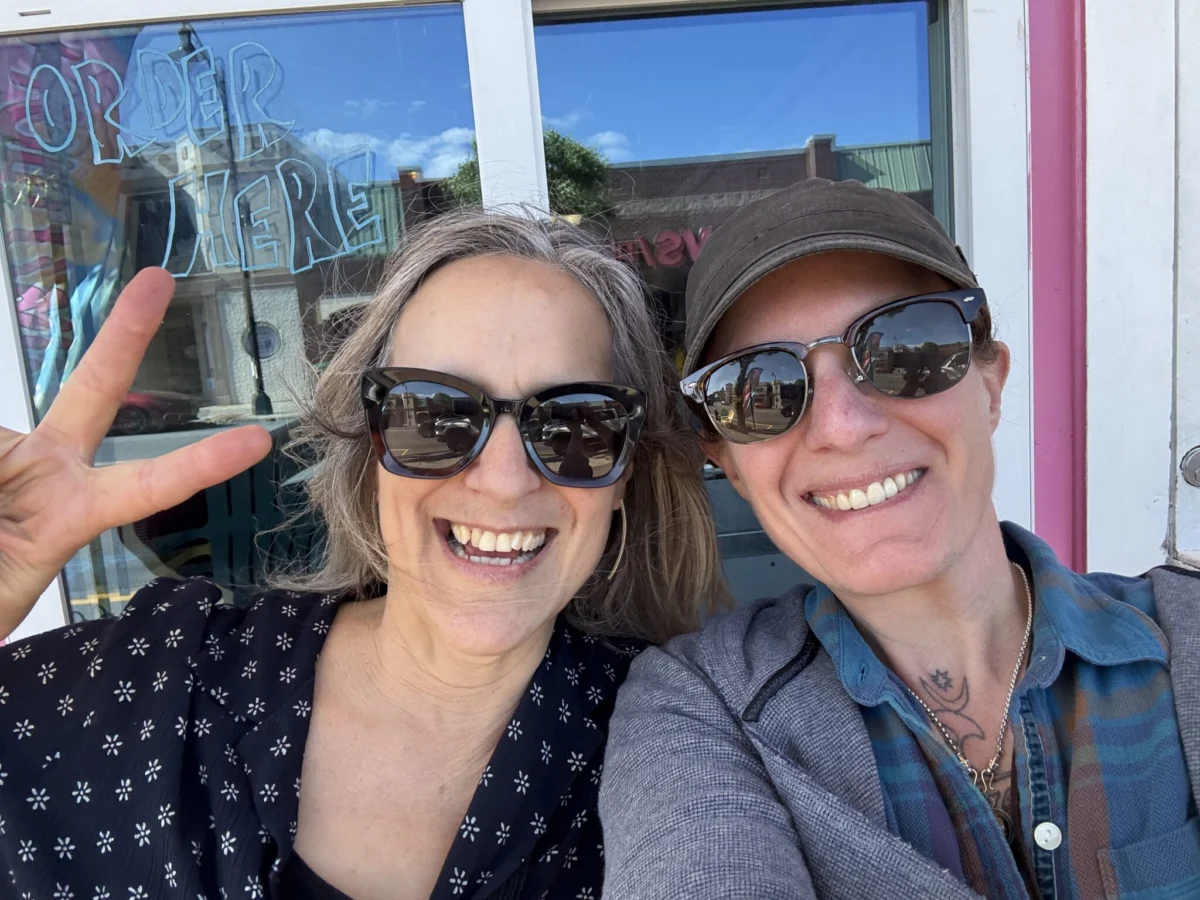
The film’s impact was deepened through a professional collaboration between Greenberg and Karin Jervert, the Mad in the World liaison for Mad in America. The two first met while organizing a panel for a screening of the film at Montclair Film. Jervert, who identifies as a "visions and voices gal," found in the film a rare representation of a voice-hearer who achieved a "happy ending." This meeting sparked a friendship and a series of dialogues that helped bridge the gap between the film’s artistic intent and the practical advocacy of the Mad Pride movement.

Supporting Data: The Context of Voice Hearing and Social Justice
The resonance of Previn’s story is supported by a growing body of social and clinical data suggesting that the "medicalization" of voices can often lead to increased stigma and isolation.
- The Hearing Voices Movement: Unlike traditional psychiatry, which seeks to suppress auditory hallucinations through medication, the Hearing Voices Network (HVN) posits that voices are often meaningful responses to trauma or life events. HVN data suggests that many individuals can lead productive lives by "negotiating" with their voices, much as Previn did with her voices, whom she named Mama, Max, and Lion.
- The "Societal Junk Drawer": Karin Jervert uses this metaphor to describe how individuals labeled as "broken" are often marginalized and stripped of their agency. The film On My Way to Where challenges this by portraying Previn not as a victim of her mind, but as a "creative powerhouse" whose experiences informed her genius.
- Media Representation: Research into mental health in cinema often shows a dichotomy: the "dangerous" psychotic or the "pitiful" patient. The positive feedback from voice-hearers regarding Previn’s documentary suggests a significant gap in the market for stories that show "happy endings" and stable, loved, and thriving individuals who still experience non-consensus realities.
Official Responses: A Dialogue on Duty and Madness
The conversation between Julia Greenberg and Karin Jervert provides a profound "official response" to the traditional psychiatric narrative. Their dialogue explores the philosophical and ethical dimensions of representing mental health on screen.
The Concept of Duty
In their discussions, Jervert recounts a visionary experience at the Raritan River, where she felt a sense of "duty" to live authentically. Greenberg echoes this, stating that as a filmmaker, she felt a duty to portray Previn’s mental health in a way that encouraged empowerment. "It felt important… to portray what is usually referred to as her mental illness in a way that could encourage empowerment over discrimination," Greenberg noted.
Addressing the "Too Easy" Criticism
Some critics have suggested the film makes Previn’s journey look "too easy." Greenberg acknowledges this as a result of narrative choices but defends the storyline as being rooted in Previn’s own journals. Previn documented her transition from terrified institutionalization to a state of being "stable, loved, and thriving." Jervert argues that labeling the journey "easy" discounts the "hard-won peace" that voice-hearers must achieve, asserting that Previn serves as a "shamanic elder" for the community.
The Reality of Madness
The directors and advocates agree that Previn’s most radical contribution was her definition of madness itself. In a quote featured in the film’s discourse, Previn states: "Madness is just another reality. That’s all. And who knows what the real reality is?" This sentiment aligns with the core tenets of Mad Pride—the right to define one’s own experience without the imposition of a singular, medicalized "truth."
Implications: The Future of Mental Health Advocacy
The screening of On My Way to Where in Lillehammer carries significant implications for the future of global mental health policy and artistic expression.
Alignment with UN and WHO Guidelines
The festival is a direct response to the WHO’s "Guidance on Community Mental Health Services," which calls for an end to coercive practices and a greater emphasis on social inclusion. By showcasing films like Previn’s, the festival provides a cultural framework for these policy changes, proving that human rights-based approaches are not just theoretical but are lived realities for many.
Destigmatization Through Art
The film demonstrates that art is a primary vehicle for destigmatization. When the "auditory detritus" of a person’s life—as Jervert describes it—is transformed into music and poetry, it ceases to be a symptom and becomes a contribution. This shifts the societal view of the "voice-hearer" from a patient to an artist, and from a liability to an asset.
Global Solidarity
The collaboration between American filmmakers and Norwegian activists underscores the international nature of the Mad Pride movement. As the film travels, it fosters a sense of global solidarity among those who have felt like "broken things shoved in a societal junk drawer." It offers a moment of recognition: that those with different experiences of consciousness belong in the world and have much to offer.
In conclusion, the Mad in Norway International Film Festival and the documentary On My Way to Where represent a significant step toward a more compassionate and rights-oriented understanding of mental health. By honoring the unique meaning each individual makes of their world, these initiatives move us closer to a society where "madness" is no longer a source of shame, but a recognized facet of the diverse human experience. As Dory Previn herself suggested, the things we cannot see and touch often hold the most tremendous reality; it is time for the world to start listening.