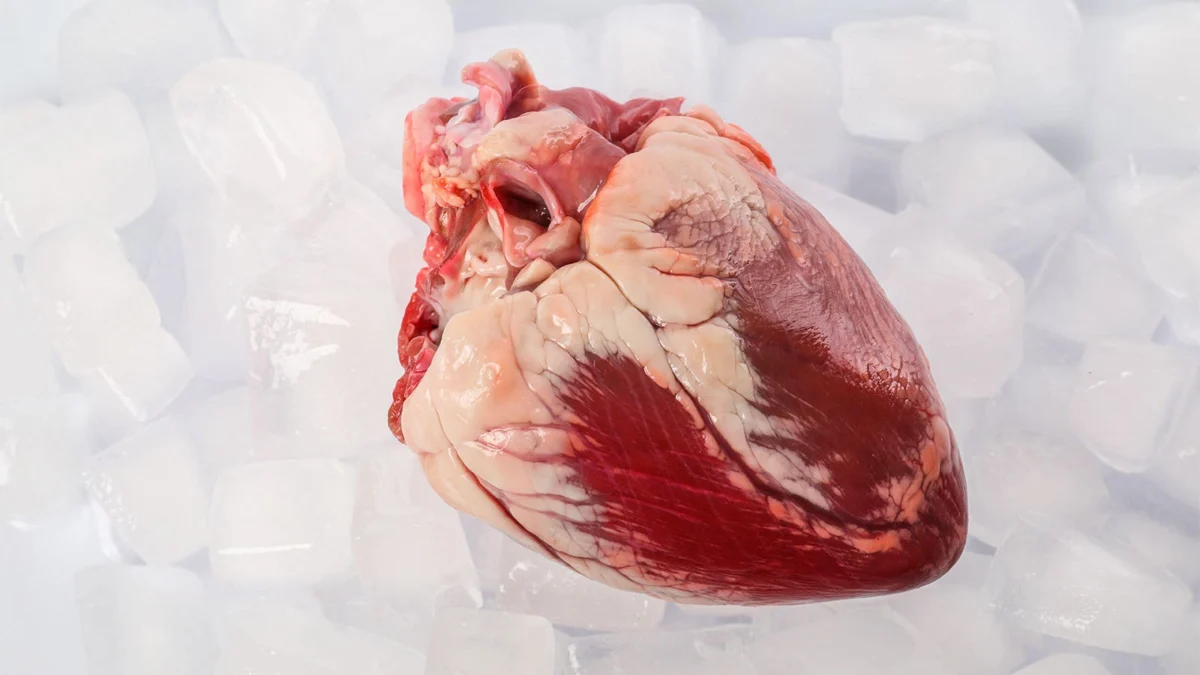
For decades, the field of cardiac transplantation has been guided by a single, unwavering dogma: when it comes to donor organs, colder is safer. Since the inception of heart transplantation, clinicians have relied on static cold storage (SCS) at temperatures between 4°C and 8°C, utilizing ice and crystalloid solutions to "put the heart to sleep" and minimize metabolic demand during transit. However, new research suggests that this long-held "reflexive" approach may be causing more harm than good.
A groundbreaking retrospective analysis, recently published in the journal Circulation: Heart Failure, has challenged this status quo. Led by Dr. Aaron Williams of Vanderbilt University Medical Center, the study suggests that storing donor hearts at a slightly higher temperature—10°C—may significantly improve patient outcomes, reduce graft dysfunction, and even extend survival rates.
Main Facts: Challenging the "Colder is Better" Paradigm
The study, which examined heart transplant outcomes at two high-volume U.S. institutions, indicates that the transition to 10°C preservation represents a potential paradigm shift in transplant medicine. The research focused on adult patients receiving single-organ, donation-after-brain-death (DBD) heart transplants.
The primary finding is striking: hearts preserved at 10°C showed superior early graft function compared to those kept in the traditional 4-8°C range. Despite the 10°C cohort presenting with higher-risk features—such as older donors and recipients, more frequent donor-recipient size mismatches, and a higher prevalence of previous cardiac surgeries—the clinical outcomes were demonstrably better.
Key findings after propensity score matching included:
- Reduced Primary Graft Dysfunction (PGD): A significant drop from 14.6% in the colder group to just 2.9% in the 10°C group.
- Improved Ventricular Function: A marked reduction in both post-bypass left and right ventricular dysfunction.
- Lower Need for Mechanical Support: A substantial decrease in the requirement for new intra-aortic balloon pump (IABP) support (2.9% vs. 22.3%).
- Enhanced Survival: Improved 1-year survival rates, with the 10°C group achieving 95.7% survival compared to 86.2% in the 4-8°C group.
Chronology of the Research
The investigation, conducted by researchers at Vanderbilt University Medical Center and Duke University, spanned a five-year period from 2020 to 2025. This timeframe captures a pivotal transition period in transplant technology, where centers began moving away from basic topical ice storage toward advanced commercial cold preservation systems.
- Data Collection (2020–2025): The team analyzed 365 heart transplant recipients. The cohort was divided into two distinct groups: 113 recipients whose donor hearts were preserved using the 10°C Traferox system, and 252 recipients whose donor hearts were maintained at the traditional 4-8°C using the Paragonix SherpaPak system.
- Exclusion Criteria: To maintain the integrity of the data, the researchers excluded multiorgan transplants, adult congenital heart transplants, and hearts donated after circulatory death (DCD), ensuring the focus remained strictly on standard DBD adult heart transplants.
- Comparative Analysis: The research team performed propensity score matching to adjust for differences in donor and recipient risk profiles, allowing for a more accurate head-to-head comparison between the two preservation temperatures.
- Reporting (2024–2025): The final analysis was compiled and submitted to Circulation: Heart Failure, marking the first time a study has compared adult heart transplant outcomes using these two specific, controlled, and commercially available temperature preservation systems.
Supporting Data: Why Hypothermia Is a Double-Edged Sword
To understand why 10°C might outperform the traditional 4°C, one must look at the physiological toll of extreme cold on heart tissue. While cold storage is intended to slow metabolism and reduce the heart’s oxygen requirements during the ischemic period (the time the heart is without blood flow), it is not without significant biological consequences.
In an accompanying editorial, Dr. Yuliya Tipograf and Dr. Monica Colvin of the University of Michigan Health, Ann Arbor, explain that while hypothermia is "protective," it is also "injurious." Excessive cold has been linked to:
- Protein Denaturation: The structural breakdown of vital proteins within the cardiac muscle.
- Conduction-System Injury: Damage to the heart’s electrical pathways, which can lead to arrhythmias post-transplant.
- Irreversible Diastolic Dysfunction: A hardening of the heart muscle that impairs its ability to relax and fill with blood, a common cause of organ failure in the immediate postoperative period.
The research team argues that 10°C may represent a "sweet spot"—a temperature that provides the necessary delay in metabolic decay to allow for transport, while avoiding the cellular damage associated with deeper, more intense hypothermia. This aligns with findings emerging from the lung transplant field, where similar research into warmer preservation has already initiated randomized clinical trials.
Official Responses and Expert Perspective
The medical community has reacted with cautious optimism. While the data from Dr. Williams and his team are compelling, experts emphasize that this is a retrospective, observational study and not the final word on the matter.
Dr. Tipograf and Dr. Colvin, while supportive of the potential of 10°C preservation, highlighted a significant limitation in the study design: the "center effect." Because Vanderbilt largely transitioned to 10°C preservation in 2023, and Duke largely utilized 4-8°C, it is difficult to isolate the variable of temperature from other institutional differences. As they noted, "Propensity matching can balance measured donor and recipient characteristics, but it cannot disentangle a few degrees of storage temperature from differences in surgical technique, perioperative protocol, recipient selection, and the secular improvements in care."
Despite this, the authors of the study remain confident that their findings provide a "sound rationale" for a shift in practice. They suggest that the immediate benefits seen in graft function are too significant to be ignored and warrant further, more rigorous investigation.
Implications: The Future of Heart Transplantation
If the findings of the Williams study are validated by larger, multicenter randomized trials, the implications for the transplant community are profound.
Expanding the Donor Pool
One of the most exciting prospects is the potential to extend the "ischemic window." Currently, many donor hearts are declined because the travel time—and thus the ischemic time—is deemed too long for the heart to remain viable under current storage conditions. If 10°C preservation provides greater myocardial tolerance to ischemia, it could theoretically allow for longer transit times, thereby increasing the geographic reach of donor hearts and reducing the number of organs that go unused.
Improving Patient Quality of Life
The reduction in Primary Graft Dysfunction is a critical clinical outcome. PGD is a leading cause of early mortality and morbidity in heart transplant recipients. A simple, cost-effective change in storage temperature that results in a 10% or greater reduction in PGD would be a massive advancement in transplant medicine, leading to shorter hospital stays, lower costs, and better long-term health for patients.
A Testable Variable
Perhaps most importantly, this research gives the transplant community a well-defined, actionable variable to test. In a field where many surgical variables are deeply entrenched and difficult to change, storage temperature is a logistical parameter that can be modified relatively easily.
"Until that trial is completed, the work of Williams and colleagues provides a sound rationale for 10°C preservation and gives the field a well-defined, eminently testable question for one of the few preservation variables that any program could change tomorrow," concluded Tipograf and Colvin.
As the medical community looks toward the next generation of transplant technologies, the 10°C preservation method stands as a prime example of how questioning long-standing "reflexive" principles can lead to safer, more efficient, and more successful patient outcomes. The road ahead will require rigorous, non-industry-funded, multicenter randomized trials, but for now, the data suggest that in the delicate balance between cold and injury, the heart may prefer a little less "chill."