Updated July 22, 2026
In an era defined by hyper-connectivity and the relentless pursuit of external validation, the modern individual is often pulled into a fragmented state of existence. We are conditioned to measure our worth by our productivity, our physical aesthetic, and our ability to navigate a world that demands constant optimization. Amidst this noise, the profound, quiet act of simply "being" has become a radical pursuit. For many, this disconnection manifests as a physical and emotional distance from the body—a loss of touch with the breath, the heart, and the inherent wisdom of the self.
Yoga, often mischaracterized in mainstream media as a pursuit of physical perfection or athletic flexibility, offers a different path. It is an invitation to return—not to a past version of oneself, nor to an idealized future, but to the reality of the present moment. It is, at its core, a practice of self-love.
The Genesis of a New Perspective: A Journey Through Adversity
The realization that yoga is a sanctuary rather than a performance art is often born from the crucible of experience. For those who have faced life-altering trauma, the traditional fitness-centric approach to movement can feel exclusionary or even hostile.
The philosophy of accessible yoga—a movement gaining significant momentum in 2026—suggests that healing does not begin with the eradication of limitations, but with the radical acceptance of them. Following a life-changing accident that fundamentally altered their relationship with their physical form, many practitioners have found that the path to recovery is not paved with "fixing" what is broken, but with discovering the wholeness that persists despite injury or chronic pain.
When the body can no longer meet the demands of societal expectations, the act of listening becomes the primary form of movement. This is the foundation of the modern accessible yoga movement: moving with patience, presence, and a deep, unyielding compassion. It is the transition from grieving a lost version of oneself to falling in love with the body that remains.
The Philosophy of Inclusivity: Yoga for Every Body
As an accessible yoga teacher and wheelchair user, the reality of the "yoga gap" is undeniable. Many prospective students hesitate to step onto the mat—or into the studio—because they carry the heavy weight of trauma, grief, or physical difference. They operate under the belief that yoga is a discipline reserved for the able-bodied or the pain-free.
However, the essence of the practice is inherently democratic. The moment a student is welcomed into a space that honors their specific anatomy and emotional state, a psychological softening occurs. They begin to feel "seen." This is not merely a metaphor; it is a physiological shift. As the nervous system moves from a state of fight-or-flight into a state of rest-and-digest, the breath deepens, and the individual begins the process of rebuilding trust within their own skin.
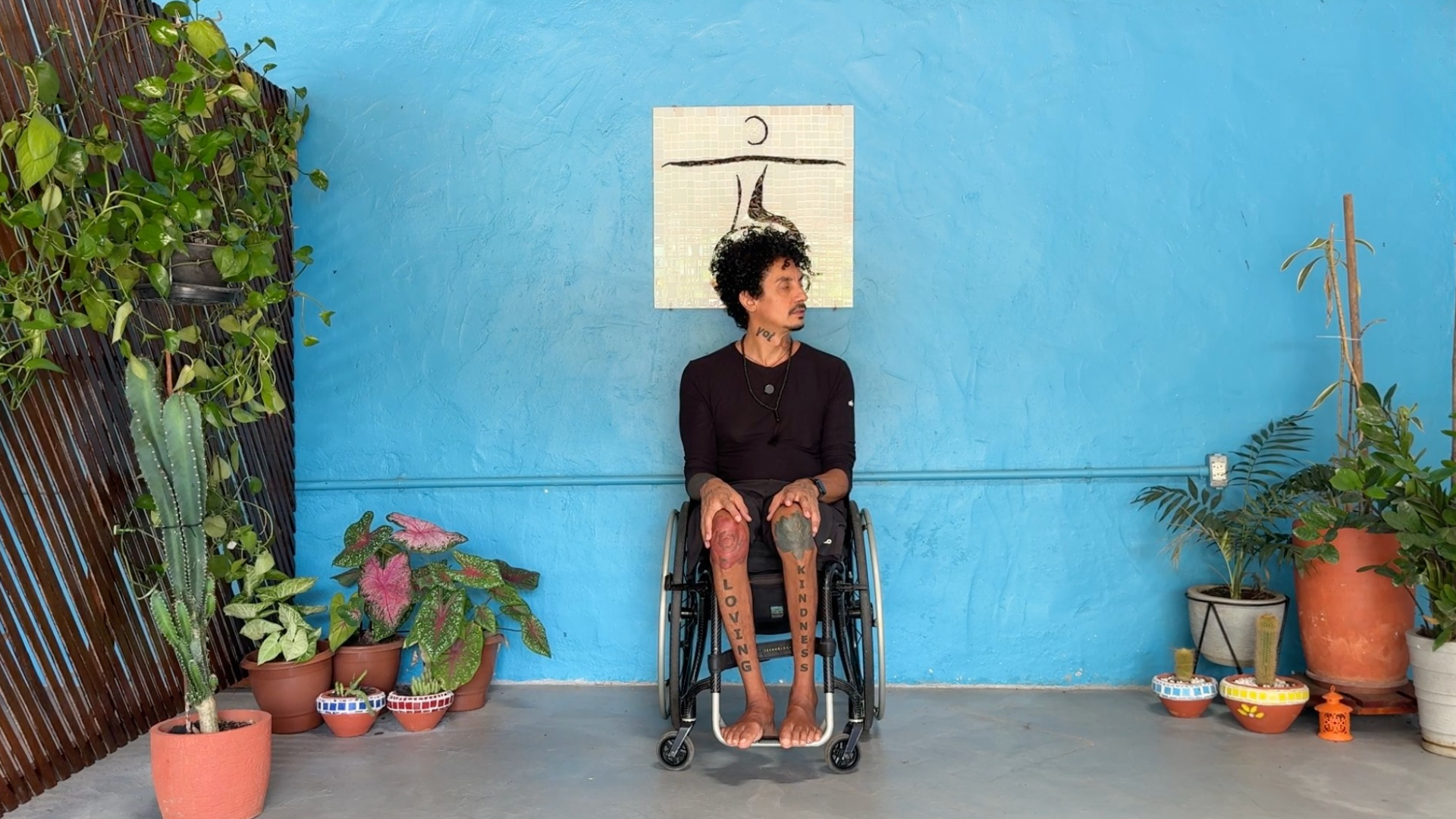
Self-love, in this context, is not about changing one’s nature to fit an archetype. It is about simple, consistent choices: choosing rest over force, choosing a conscious, restorative breath during a chaotic day, and choosing kindness when the internal monologue turns critical. These micro-moments of compassion serve as the building blocks for long-term emotional resilience.
20-Minute Accessible Yoga for Self-Love: A Structured Routine
To facilitate this "return to home," a 20-minute seated practice has been developed, specifically designed to bridge the gap between the mind and the heart. This sequence is intended to be performed in a chair, emphasizing grounding and internal awareness over external achievement.
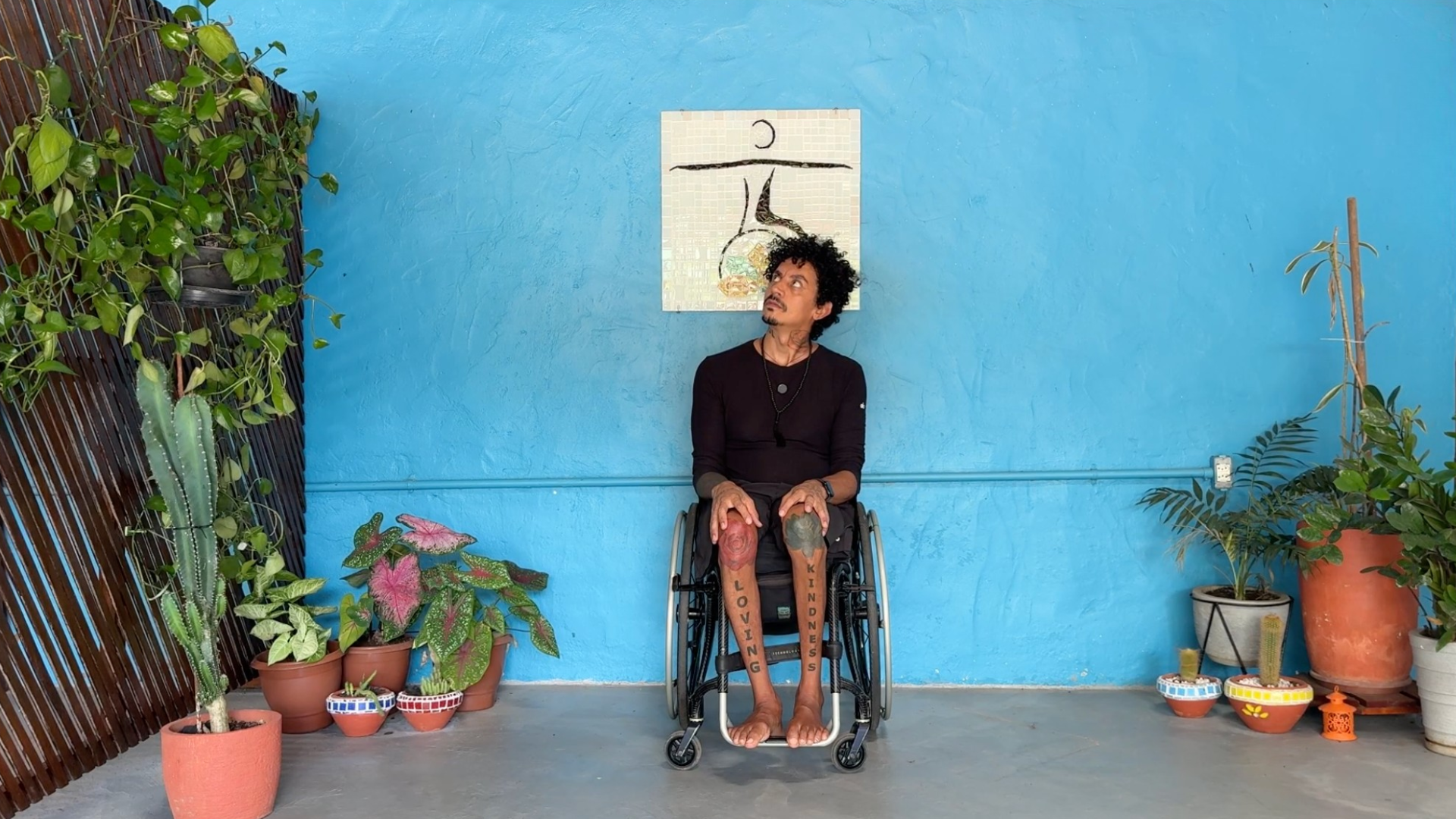
Centering: The Heart as an Anchor
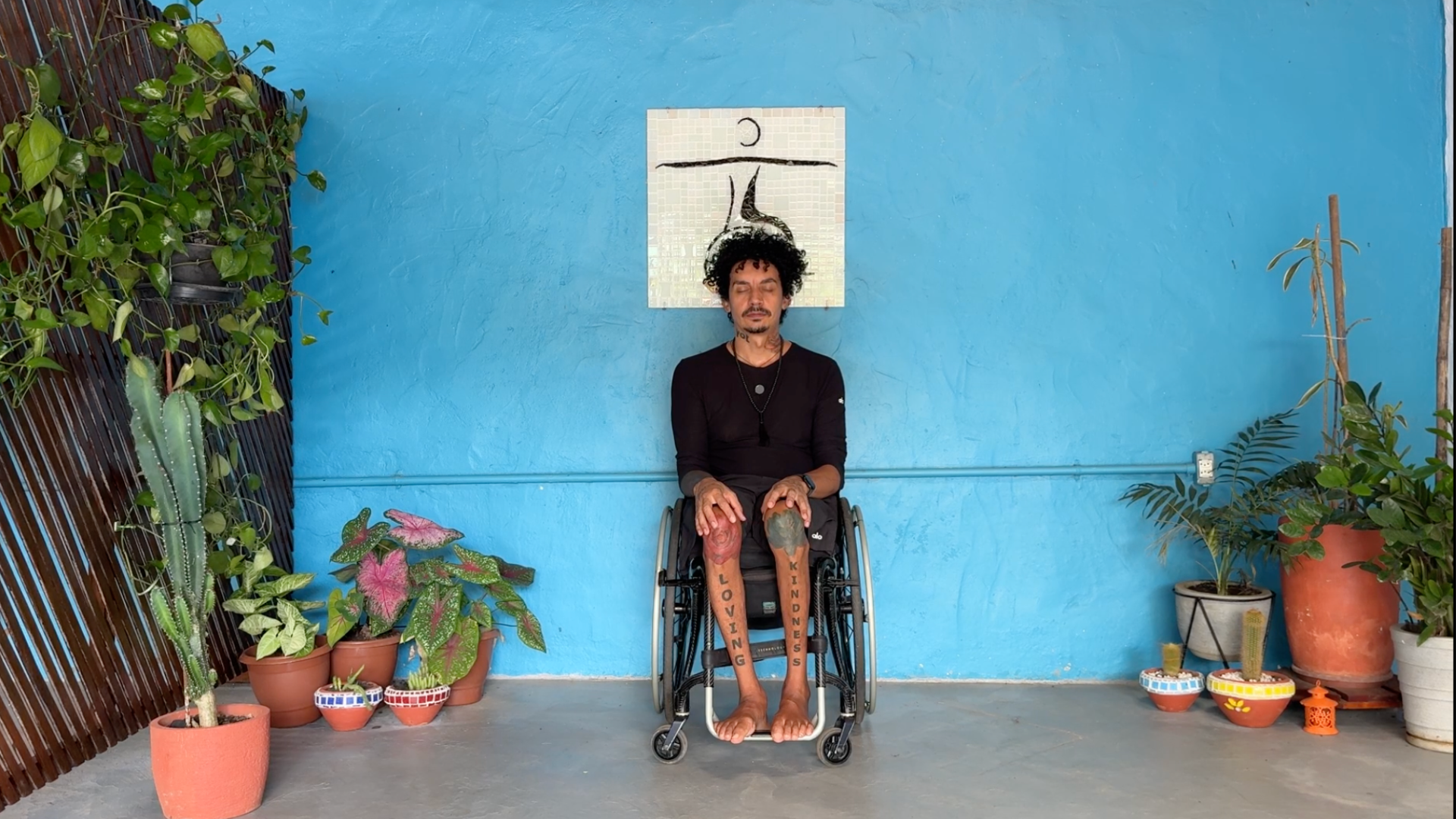
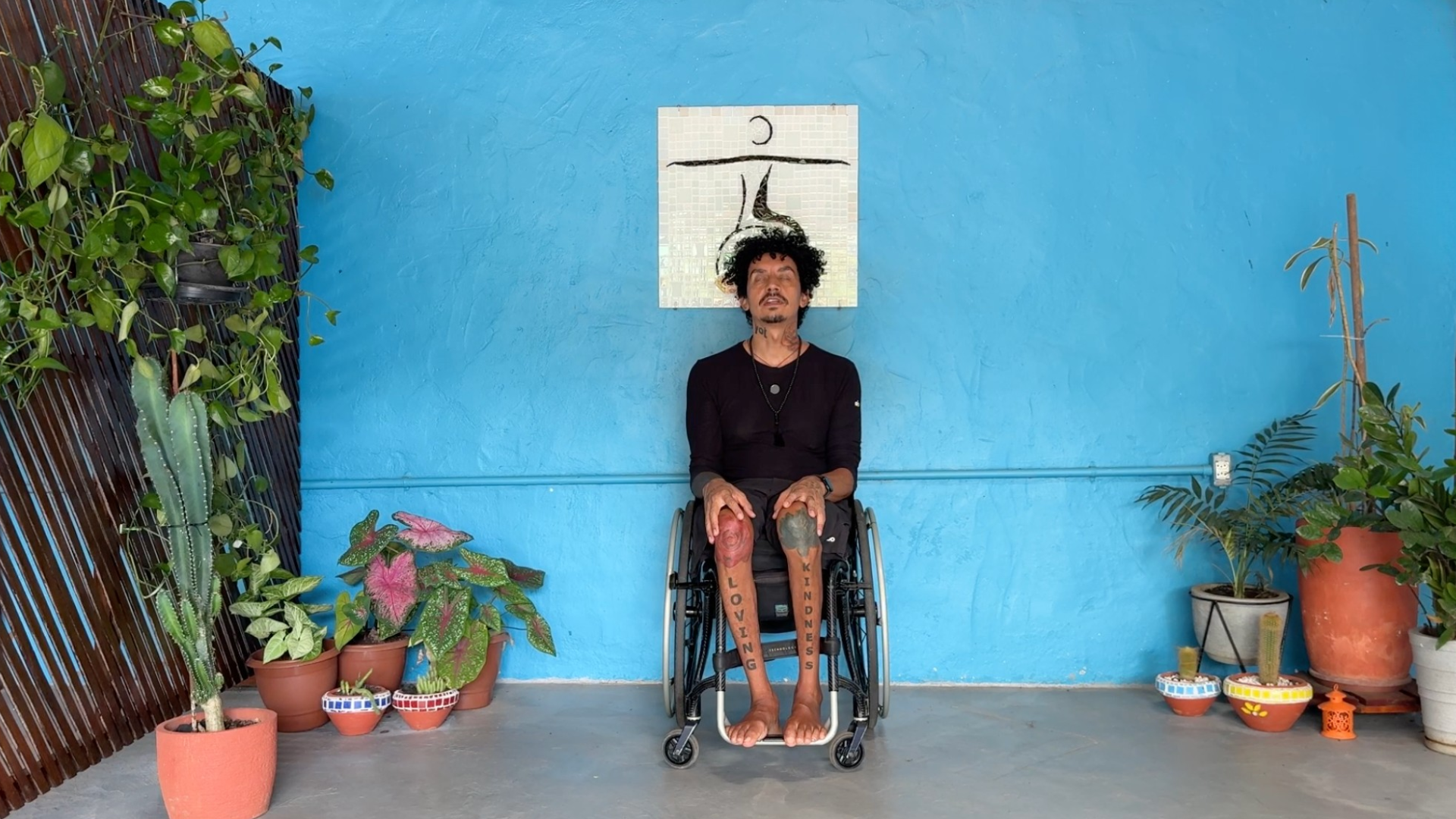
The practice begins with the establishment of a comfortable seat. Whether grounding through the feet or the sitting bones, the goal is to shift weight consciously, noticing the subtle sensations of the body. By placing hands on the thighs—or in a chosen mudra—and closing the eyes, the practitioner enters an introspective space.
During this phase, any sensations that arise are treated as visitors. There is no requirement to analyze or judge them. If the mind wanders into the common territory of anxiety or to-do lists, the heart is used as an anchor. By placing a hand over the chest and feeling the rhythmic pulse of the heartbeat, one regains a sense of safety and presence.
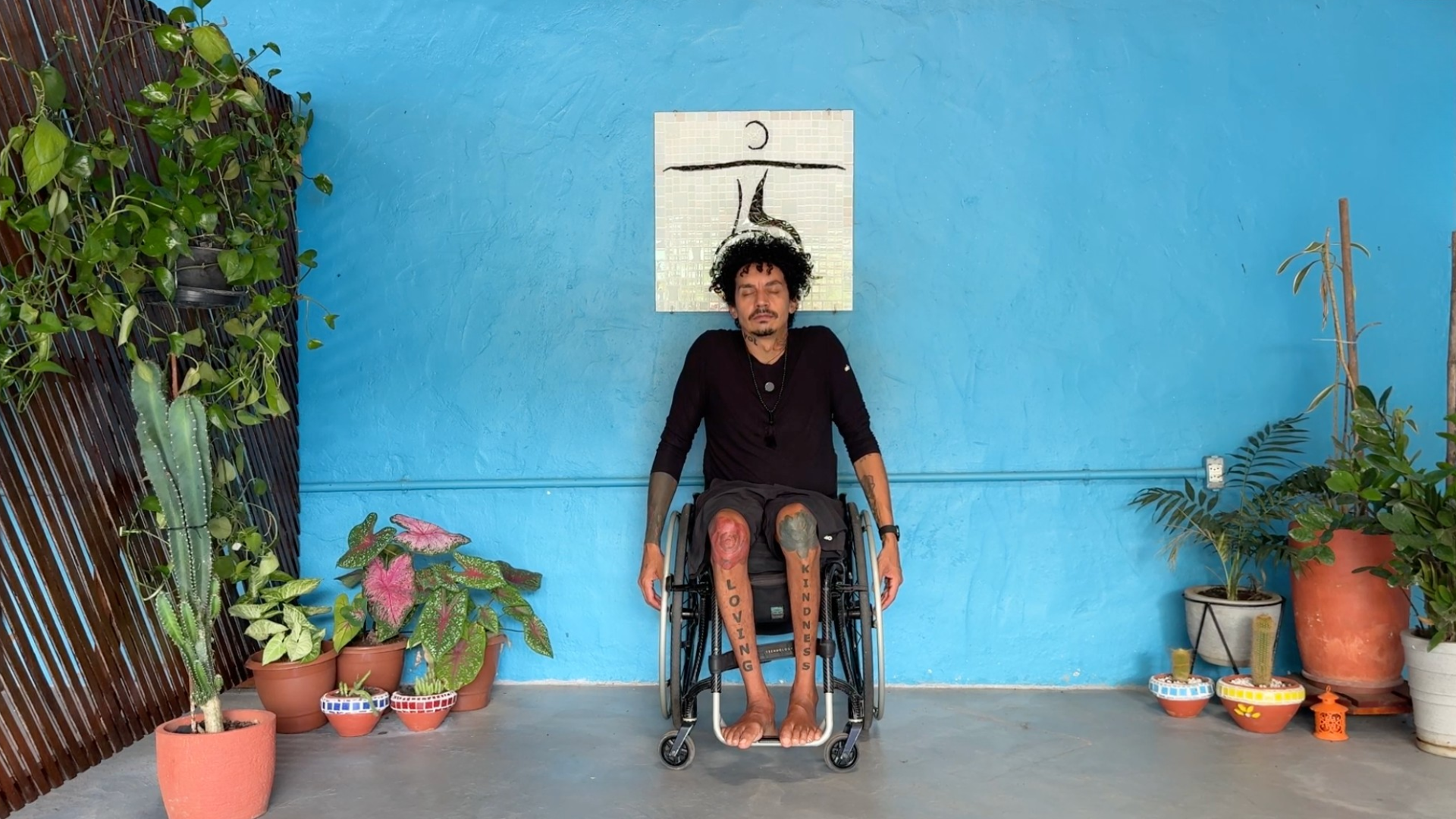
Neck Rolls and Spinal Elongation
The transition into movement begins with Tadasana (Mountain Pose), the foundation of all asanas. By elongating the spine and lifting the heart center, the practitioner signals to the body that it is safe to inhabit its own space.
The sequence incorporates neck rolls synchronized with the breath. By inhaling as the gaze rises toward the ceiling and exhaling as the chin moves toward the chest, the practitioner learns to link movement with intention. Lateral stretches—lowering the ear toward the shoulder—provide a gentle release for the trapezius and sternocleidomastoid muscles, which often hold the tension of the day.
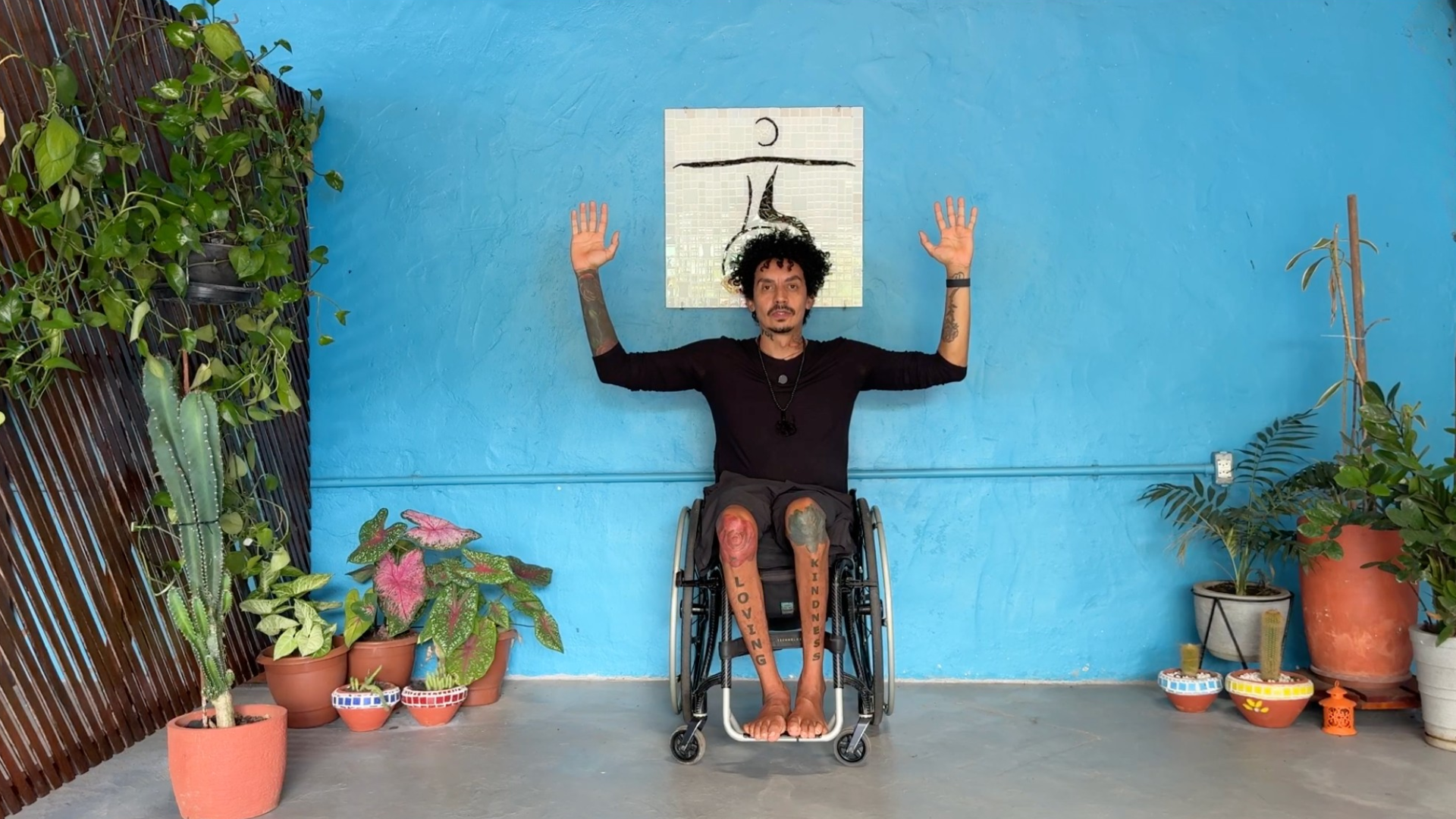
Arm and Shoulder Strengthening
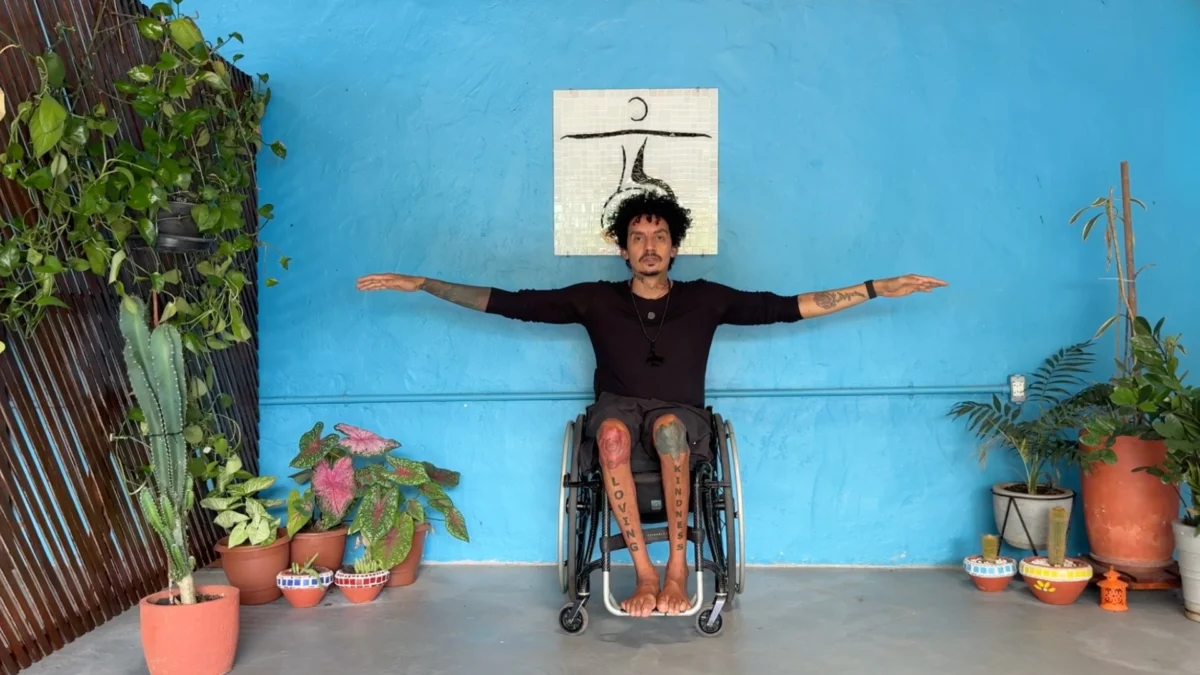
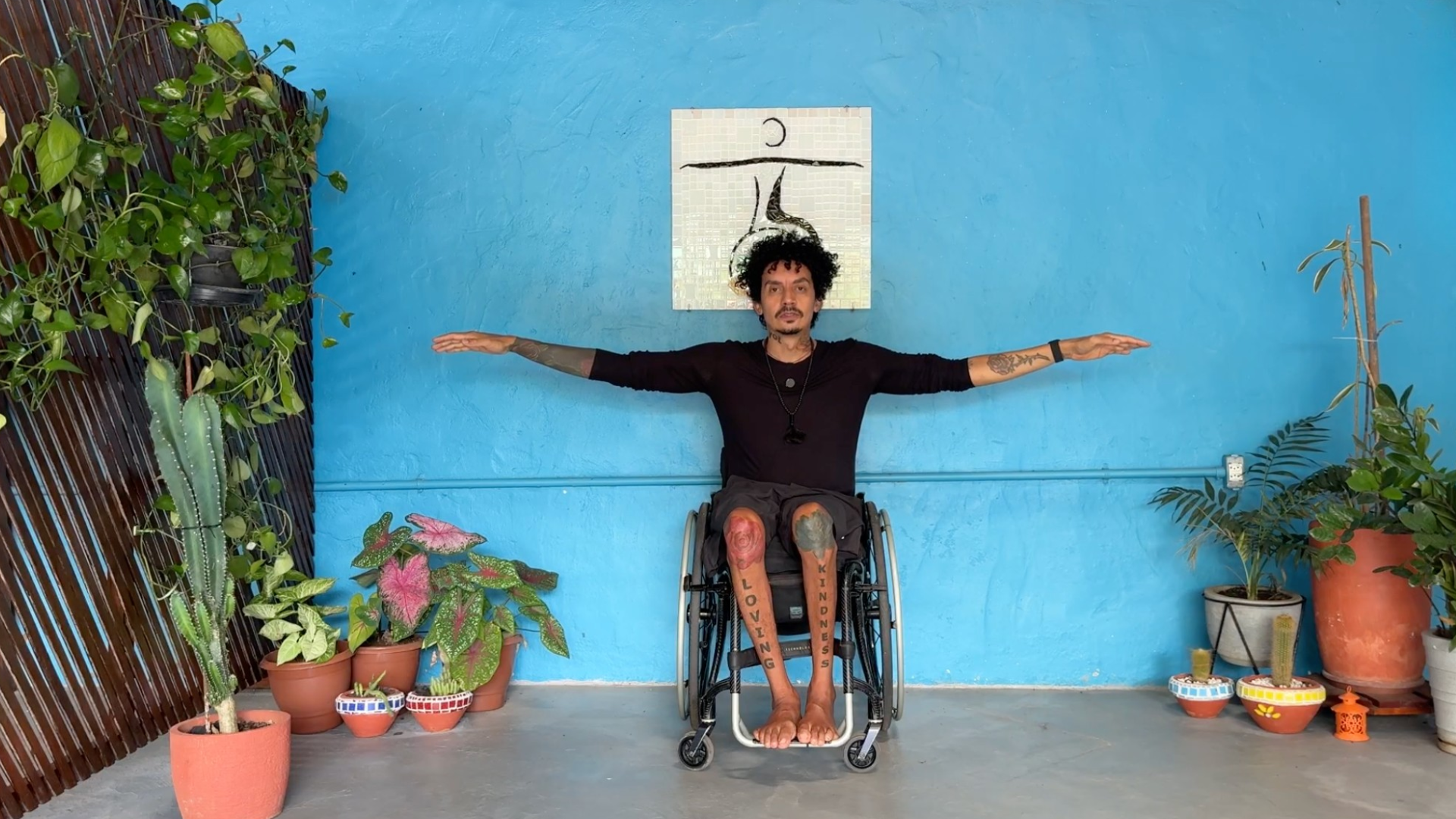
To build stability and presence, shoulder shrugs are utilized to release accumulated stress. Following this, the "Arm and Shoulder Strengthening" sequence invites the practitioner to extend their arms, palms facing down, before rotating them upward during the inhalation. This movement is not just muscular; it is energetic. By pressing the feet down and turning the palms, one consciously engages with the concept of prana, or life force, flowing through the limbs.
The Cactus Flow and Dynamic Cobra
Seated "Goddess Pose" (or Cactus Flow) serves to broaden the chest and open the heart center. By inhaling as the arms draw together and exhaling as they spread wide, the practitioner physically mimics the act of opening oneself to the world.
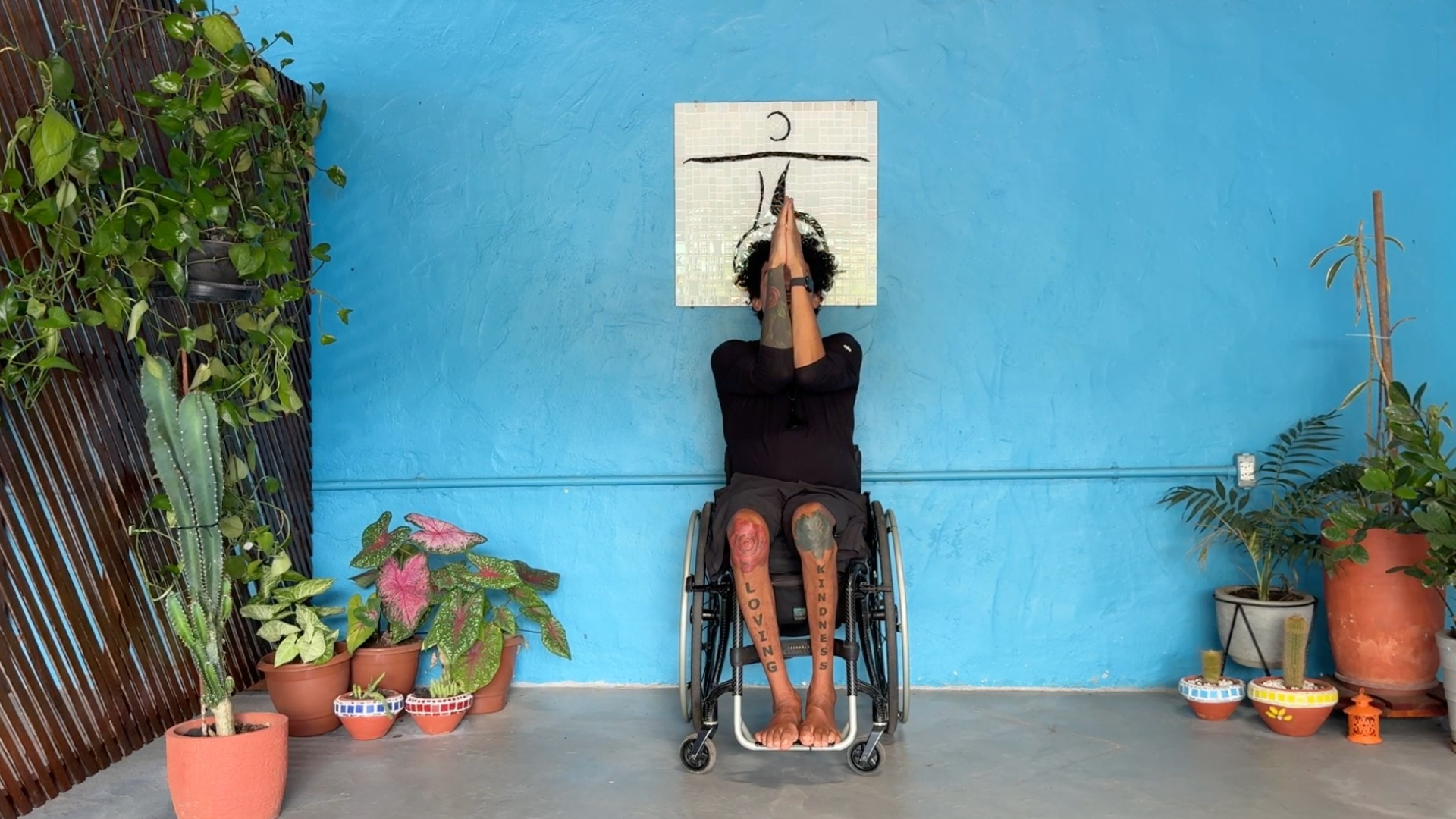
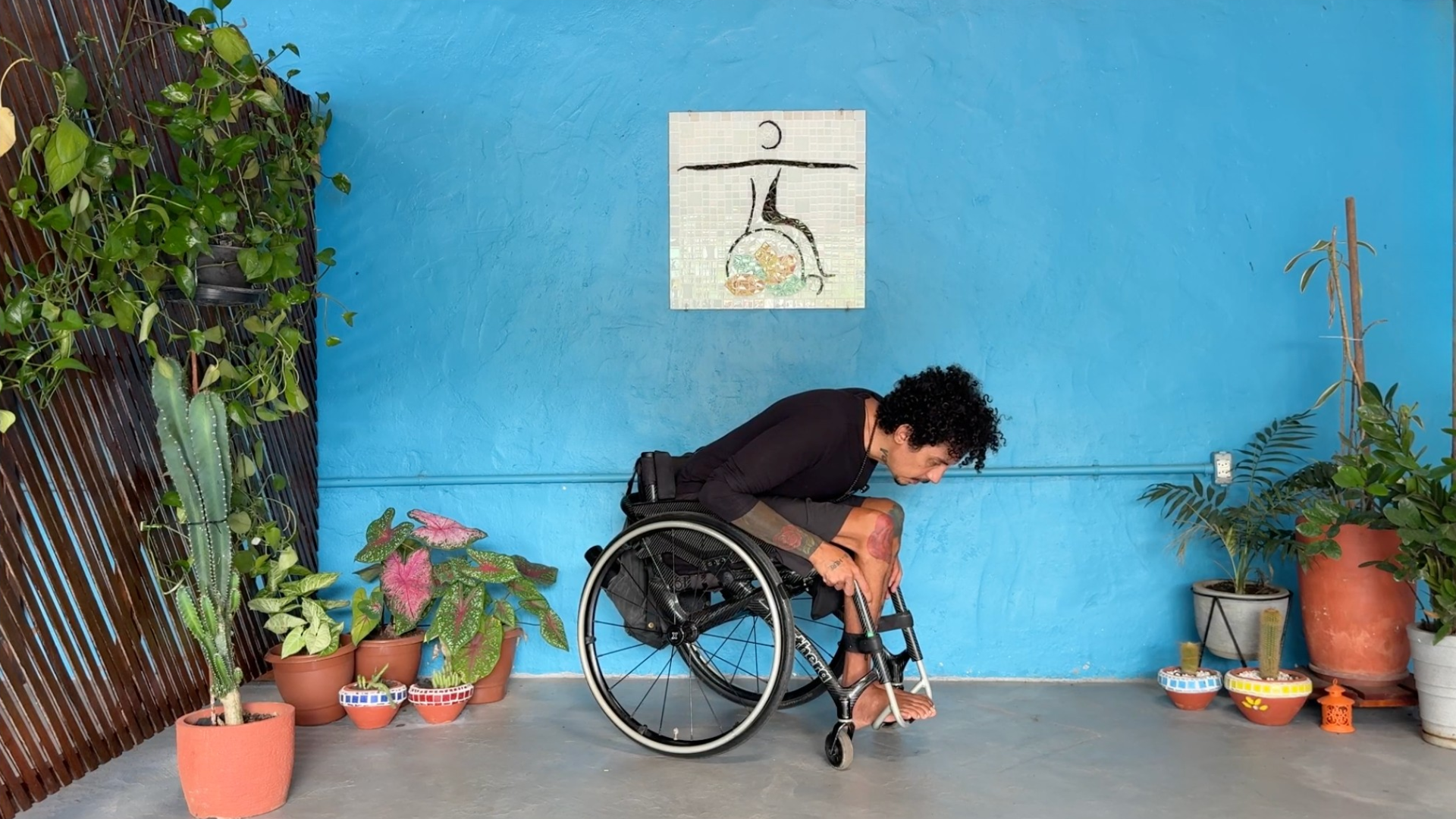
The "Dynamic Cobra" provides a therapeutic way to mobilize the spine. By holding the frame of the chair or the knees, the practitioner arches the back on the inhale to broaden the chest, and exhales while rounding the spine in a soft, forward dive. This rhythmic, fluid motion helps to discharge stored emotional energy and encourages spinal flexibility.
Side Bending and Thread the Needle
The "Side Bending Flow" introduces a specific breathing technique: the "birthday candle" breath. By pursing the lips and exhaling as if blowing out candles on an 80th birthday cake, the practitioner emphasizes a long, soft exhalation. This specific breath type is highly effective at calming the parasympathetic nervous system.
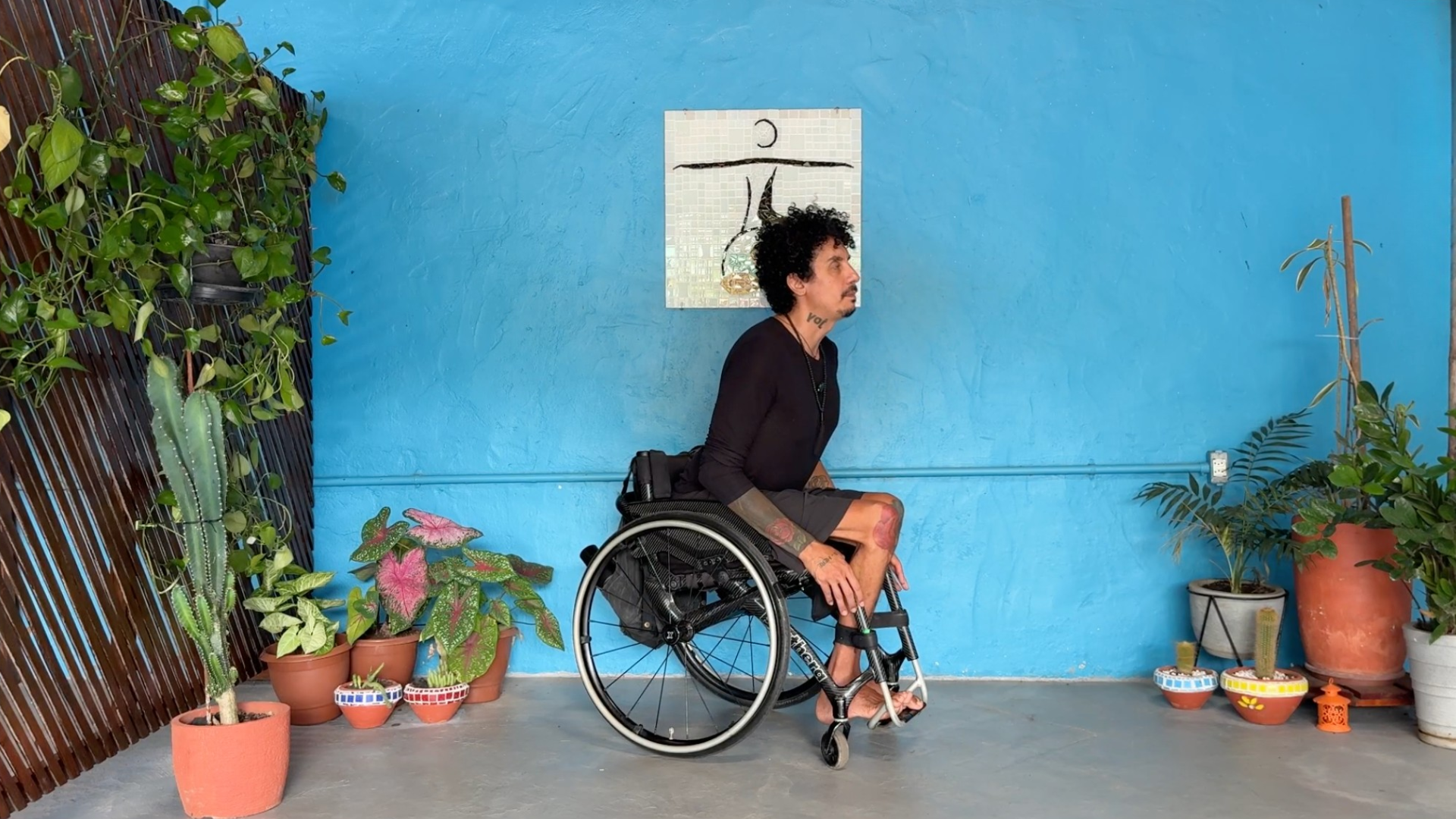
The "Thread the Needle" variation is adapted for chair use, focusing on the rotation of the torso. By bringing the elbow toward the opposite knee and raising the opposing arm, the practitioner facilitates a gentle twist that massages the internal organs and promotes spinal health, all while maintaining the focus on a slow, deliberate breath.
Implications for Mental and Physical Well-being
The implications of this practice extend far beyond the 20 minutes spent in the chair. Clinical observations and student testimonials alike suggest that consistent engagement with accessible, self-compassionate yoga leads to:
- Reduction in Chronic Stress: The emphasis on the "long exhalation" actively lowers cortisol levels.
- Improved Interoception: Practitioners report a heightened ability to recognize and respond to the body’s needs before they reach a point of crisis.
- Enhanced Emotional Regulation: By practicing non-judgmental observation on the mat, students develop the capacity to remain calm during stressful external situations.
Conclusion: The Eternal Place of Consciousness
As the practice closes, the practitioner is encouraged to return to the silence. By placing one hand on the belly and one on the heart, they are reminded that they are the architects of their own peace. The closing affirmations—I am loved, I am enough, I am safe—are not merely words; they are intentions designed to rewire the brain’s response to the self.
Yoga does not ask us to become someone else. It does not demand that we transcend our limitations or ignore our pain. It is, quite simply, an invitation home—to the body, to the breath, and to the wellspring of self-love that has been waiting within us all along. The calmness and gratitude nurtured during this practice are not products of the yoga itself, but a recognition of what was already present, waiting to be acknowledged.