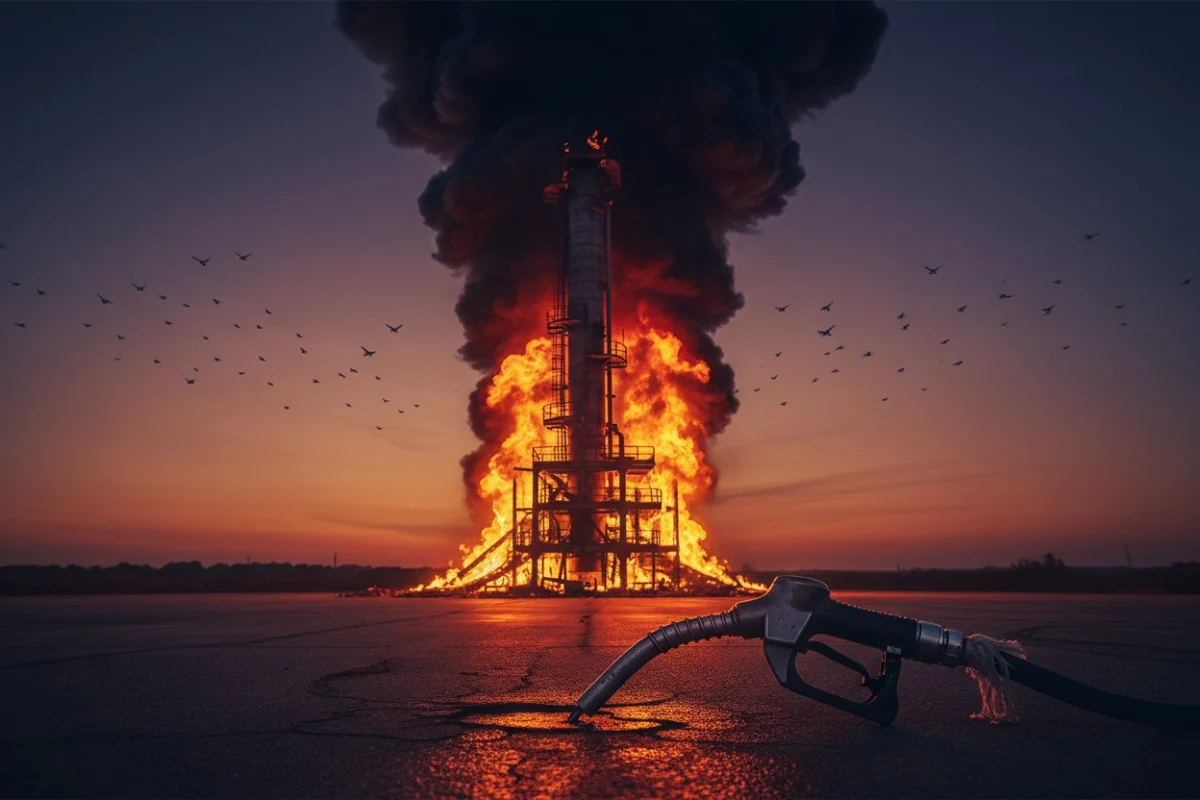
In a move that underscores the deepening fragility of Russia’s energy sector under the weight of sustained aerial bombardment, Deputy Prime Minister Alexander Novak announced an immediate, comprehensive ban on all diesel exports. The decision, finalized during a high-level government session with President Vladimir Putin, marks a significant escalation in Moscow’s attempts to stave off a domestic fuel crisis. By closing the final remaining loophole—which had previously permitted vertically integrated oil companies to export fuel produced in their own facilities—the Kremlin has signaled that the domestic market is now in a state of critical emergency.
The ban, scheduled to remain in force through the end of July, represents a desperate pivot from a global energy superpower struggling to maintain its own internal supply lines. As long-range Ukrainian drones continue to systematically target the backbone of Russia’s oil infrastructure, the Kremlin is increasingly forced to choose between the preservation of its national economy and the maintenance of its export-driven revenue streams.
The Anatomy of the Crisis: A Chronology of Escalation
The current prohibition is not an isolated policy shift but the latest in a series of desperate measures aimed at stabilizing a market in freefall.
- September 2023: Recognizing early signs of supply volatility, Moscow implemented its first major, temporary ban on both diesel and gasoline exports. At the time, the government touted the measure as a necessary step to "saturate the fuel market" and curb the rising cost of living for Russian consumers.
- April 2026: As domestic demand surged ahead of the peak summer season, the government expanded the gasoline export ban to include all producers, effectively locking the doors on international trade for refined fuels.
- June 2026: Reports from Moscow indicated that the situation had moved beyond mere market volatility into a tangible shortage. Long queues began to snake around petrol stations, with some regions reporting total depletion of fuel stocks.
- July 7, 2026: The crisis reached a turning point when a Ukrainian long-range drone strike successfully struck the Gazprom Neft Omsk refinery, Russia’s largest fuel processing facility. The strike disabled the primary crude distillation unit (ELOU-AVT-11), which accounts for 40% of the plant’s operational capacity.
- Current Status: The immediate imposition of the total diesel ban follows this series of crippling blows, forcing Russia to seek imports from regional partners to cover a massive 20% deficit in domestic production.
The Technological Shift: Drones and Deep-Strike Capabilities
The vulnerability of Russia’s energy sector has been exposed by a radical evolution in Ukrainian military technology. The strike on the Omsk refinery was particularly alarming for Russian security services; the facility is located in western Siberia, over 2,500 kilometers from the Ukrainian border.
Military analysts note the use of the upgraded "Fire Point FP-1" drone, which features a redesigned wing geometry that doubles as an auxiliary fuel tank. This innovation allows the unmanned aerial vehicles (UAVs) to achieve an operational range of up to 3,400 kilometers, effectively placing virtually every refinery within the Russian Federation within striking distance.
According to data provided by the Ukrainian Defense Ministry, more than 16 major refineries and fuel terminals have been hit since the onset of the campaign. These strikes have cumulatively reduced Russia’s oil refining capacity by more than 30%. With flagship facilities—such as the massive refinery in Moscow—expected to remain out of service for at least six months, the damage to the infrastructure is not merely a temporary setback but a long-term economic handicap.
Official Responses and Market Manipulation
The Kremlin’s official narrative remains one of "market protection." Deputy Prime Minister Alexander Novak and government spokespeople have consistently framed the export restrictions as a proactive measure to ensure that domestic demand for agriculture and public transport is met. However, the tone from independent energy analysts suggests a more precarious reality.
"Even here, the authorities cannot guarantee fuel supplies," noted a recent BBC report, highlighting the disconnect between the government’s rhetoric and the reality on the ground in Russian provinces.
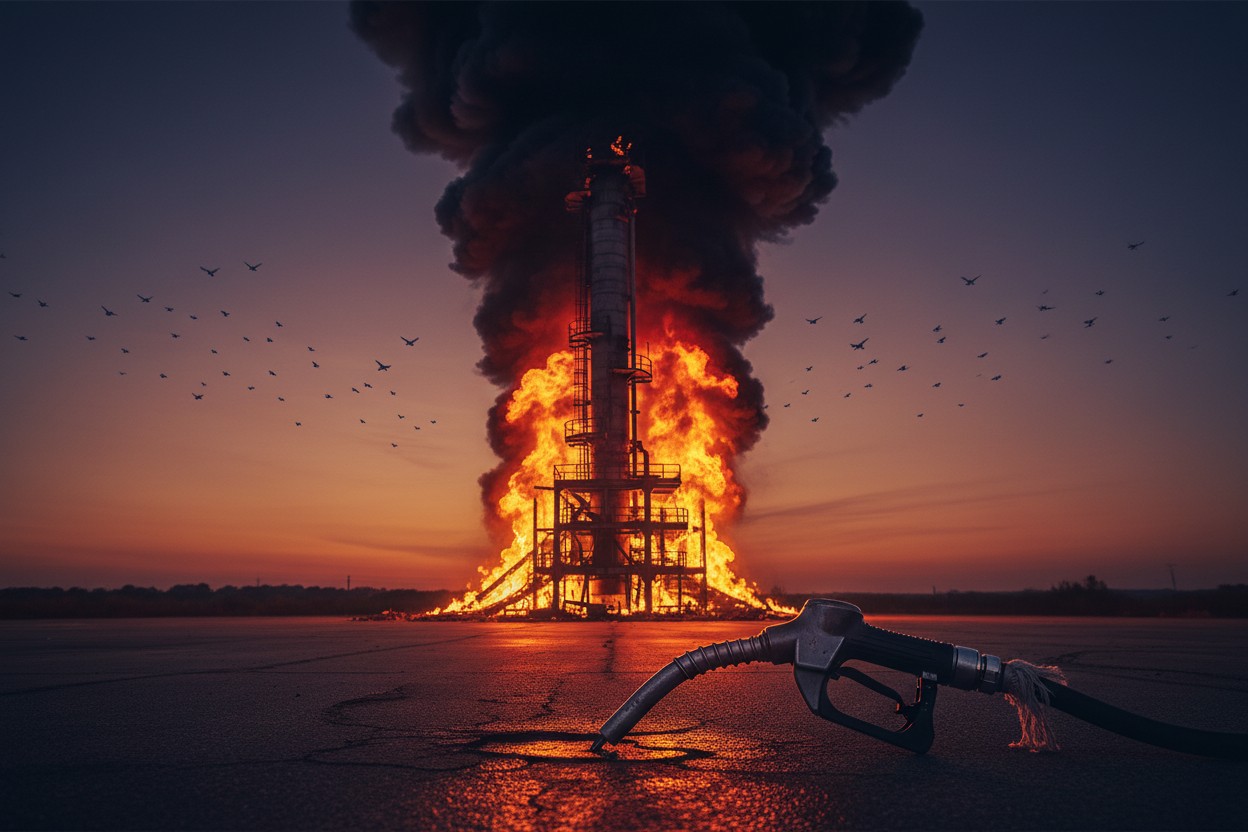
To bridge the 20% production shortfall, Moscow has turned to an unconventional solution: the importation of fuel. Russian energy firms have begun sourcing up to 400,000 tonnes of fuel per month from neighboring countries. Notably, shipping data confirms the receipt of at least 60,000 metric tonnes of petrol from India’s Nayara Energy refinery. This creates a circular, highly controversial supply chain: Russia sells discounted crude to India, which is then refined and sold back to Russia at a premium—a phenomenon some observers have dubbed "oil laundering."
Implications for Global Energy Security
The impact of this export ban extends far beyond the borders of the Russian Federation. Historically, Russia’s energy dominance—supported by its control of 26% of the world’s natural gas reserves—served as the primary lever of its geopolitical influence. Today, that influence is being redirected toward domestic survival.
1. Tightening Global Distillate Supplies
The sudden removal of Russian diesel from the global market comes at an inopportune time. With the Strait of Hormuz facing increased instability due to U.S.-Iran tensions, global diesel prices were already trending upward. The withdrawal of Russian supply is expected to trigger price shocks in both emerging and developed markets.
2. The Domino Effect on Global Food Prices
Diesel is the lifeblood of the global agricultural sector. As prices climb, the cost of farming, harvesting, and transporting food is likely to spike. Analysts have warned that if the Russian ban persists beyond July, the global supply chain could face a "second wave" of inflation, potentially leading to food shortages in regions reliant on imported grain and fuel.
3. A Shift in Sanctions Policy
In an ironic twist of realpolitik, some Western nations have begun quietly easing their own sanctions on Russian-origin fuels. The interconnected nature of the global energy supply chain means that a total collapse of the Russian fuel market is not in the interest of Western economic stability. This tension between geopolitical posturing and economic necessity remains one of the defining challenges of the current energy landscape.
Conclusion: A War of Attrition
The Russian government’s decision to ban diesel exports is a direct admission that the country’s industrial infrastructure is losing the war of attrition against Ukrainian long-range strikes. While the Kremlin continues to project strength and stability, the logistical reality of empty gas stations and the forced reliance on "recycled" imports tells a different story.
As the conflict continues, the endurance of Russia’s refining capacity will be the ultimate litmus test for the country’s economic longevity. Whether this ban is a temporary measure that will be lifted after a quick recovery, or the precursor to a permanent, systemic decline in Russian energy exports, remains to be seen. What is clear, however, is that the strategic decision to target the energy sector has fundamentally altered the global commodity map, with ripple effects that will be felt by consumers from Moscow to the global south for months, if not years, to come.