Main Facts: A Chemical Transformation of the Wilderness
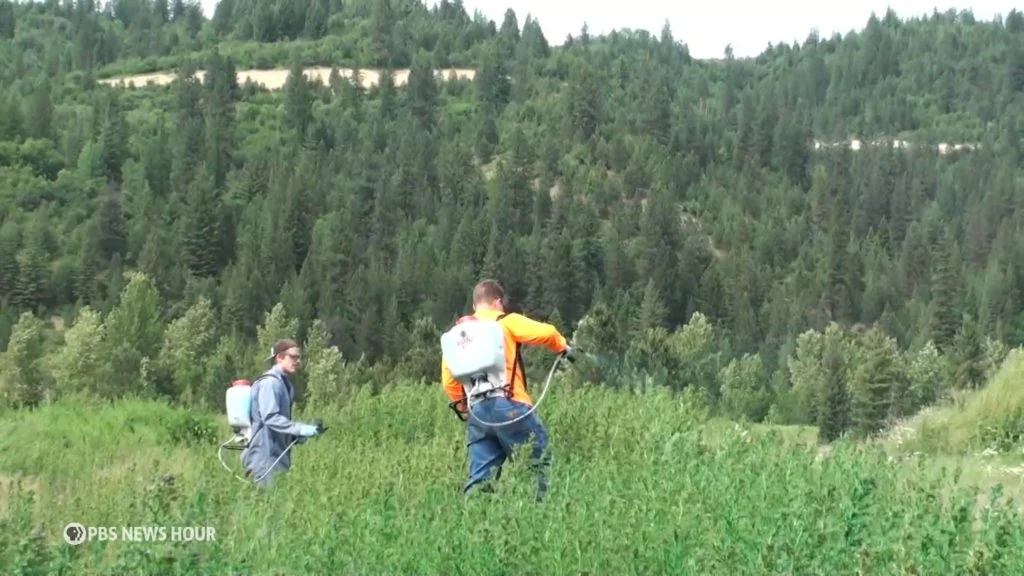
Across the verdant landscapes of California, a quiet but potent chemical transformation is taking place. A yearlong investigation by the Center for Investigative Reporting (CIR) has uncovered that glyphosate—the active ingredient in the widely used herbicide Roundup—is being deployed in record volumes across the state’s timberlands and national forests. While the U.S. Forest Service and private timber companies champion the practice as a necessary tool for reforestation and timber yield management, local residents and health advocates are raising alarms, citing potential carcinogenic risks and the lack of community oversight.
Glyphosate is utilized by forestry managers primarily to eliminate brush, shrubs, and weeds that compete with young, commercially valuable conifer trees for sunlight, water, and soil nutrients. By clearing this "competing" vegetation, managers argue that they can accelerate the growth of pine and fir stands. However, the reliance on this chemical comes as the scientific community remains deeply divided over its safety, and after billions of dollars in legal settlements have been awarded to plaintiffs who allege that long-term exposure to Roundup contributed to their development of cancer.
Chronology of a Controversial Practice
The integration of glyphosate into forest management is not a recent development, but its intensity has spiked significantly over the last two decades.
- The 2000s – Early Adoption: Following the publication of industry-backed research, the U.S. Forest Service adopted guidelines that leaned heavily on the efficacy of herbicides to ensure the survival of replanted trees in harvested or fire-damaged areas.
- 2015 – The WHO Warning: A pivotal moment occurred when the World Health Organization’s International Agency for Research on Cancer (IARC) classified glyphosate as "probably carcinogenic to humans." This sparked a global re-evaluation of the chemical’s safety profile.
- 2017 – The Litigation Surge: As lawsuits against Monsanto (the original manufacturer of Roundup) began to move through the courts, internal company documents were unsealed. These documents, including emails and depositions, suggested a pattern of corporate interference in scientific research, including the ghostwriting of studies that favored glyphosate’s safety.
- 2018 – Corporate Shifts: Bayer AG completed its acquisition of Monsanto, inheriting a massive legal liability. In recent months, Bayer created a new entity, Ruveon, to specifically manage its glyphosate-based portfolio, signaling a strategic effort to insulate the parent company from the ongoing legal fallout.
- 2023–2024 – Record Spraying Levels: Current data analysis indicates that glyphosate spraying in California forests has quadrupled over the last 20 years. The practice continues even as public scrutiny intensifies following the devastating wildfires of recent years, where the Forest Service has used herbicide applications in burn recovery zones like the site of the 2021 Caldor Fire.
Supporting Data: The Scale of Application
The sheer volume of chemical application is documented through an analysis of over five million individual pesticide reports. In the Lassen National Forest alone, plans are underway to spray approximately 10,000 acres near residential areas.
The visual contrast in treated versus untreated forests is stark. In areas where spraying has occurred, the undergrowth is systematically eradicated, leaving behind barren forest floors devoid of the natural brush that usually accompanies forest regrowth. Conversely, in areas where herbicides are not utilized, native flora, shrubs, and diverse plant life provide a complex ecosystem for wildlife and soil stabilization.
The scientific foundation for the Forest Service’s current policy relies on a 15-year-old internal study that purported to prove the safety of glyphosate. However, the CIR investigation revealed that five of the seven primary peer-reviewed studies cited in that report were either authored or heavily influenced by Monsanto. One of the most frequently cited studies, the "Williams, Kroes, and Munro" paper (2000), was retracted last year by the journal that published it due to "serious ethical concerns" and the failure to disclose Monsanto’s active role in the paper’s production.
Official Responses and Corporate Defense
The conflict pits the federal government’s desire for efficient timber production against the health concerns of citizens living on the "wildland-urban interface."
The Forest Service Perspective
When questioned, district rangers—such as Russell Nickerson of the Lassen National Forest—often frame the use of glyphosate as a purely operational necessity. According to the Forest Service, brush outcompetes young conifers, and by suppressing the brush, the agency ensures the health and density of future timber crops. When pressed on the integrity of the science supporting these practices, officials frequently deflect, stating that such policy decisions are handled by the Washington, D.C. headquarters. Notably, the Chief of the Forest Service declined to comment for this investigation, leaving local administrators to defend policies based on research that has been widely discredited.
The Manufacturer’s Stance
In a formal statement provided to the News Hour, the newly formed company Ruveon maintained its position: "We stand behind the safety of our glyphosate-based products, which have been tested extensively, approved by regulators, and used around the globe for 50 years." The company continues to argue that regulatory bodies worldwide have deemed the chemical safe for human use when applied according to the label, despite the contradictory findings of the IARC and the recent wave of successful litigation against their products.
Implications: A Community Under Siege
For residents like Joe Van Meter, who operates a resort in Lassen National Forest, the issue is not just scientific—it is deeply personal. Having survived multiple catastrophic wildfires, Van Meter and his neighbors feel betrayed by an agency that they view as prioritizing timber yields over the long-term safety of the inhabitants.
"This is our backyard. This is where my children play," says Van Meter, who has a two-month-old infant. The proximity of the spraying to residential water sources and recreational areas has fueled a growing movement among Tahoe residents and other mountain communities to demand more transparency and local control over land management practices.
Environmental and Health Concerns
The implications of this policy extend beyond individual health concerns. There are broader questions regarding:
- Water Quality: Residents are concerned that runoff from sprayed areas will contaminate the pristine mountain water sources that feed downstream communities.
- Ecological Integrity: By suppressing non-timber vegetation, the Forest Service is actively discouraging forest biodiversity. This shift toward "monoculture-style" timber management may have unforeseen consequences for forest resilience, particularly in the face of climate change and worsening fire seasons.
- Public Trust: The revelation that the Forest Service relied on "ghostwritten" and manipulated science to justify chemical usage has severely eroded public confidence in the agency’s stewardship.
The Path Forward
As the Trump administration and other political factions push for the expansion of logging on millions of acres of national forestland, the debate over the use of herbicides will likely intensify. The case in California serves as a microcosm of a larger national struggle: can the government manage public lands for profit without compromising the environmental health and physical safety of the communities residing within them?
For now, the spraying continues. The residents of the Sierra Nevada and beyond are left waiting for a change in federal policy that acknowledges the risks of glyphosate, demands higher standards of scientific integrity, and grants communities a meaningful voice in the management of the land they call home. As Nate Halverson’s report illustrates, the battle over the forests of California is far from over—it is, quite literally, being written into the soil.