










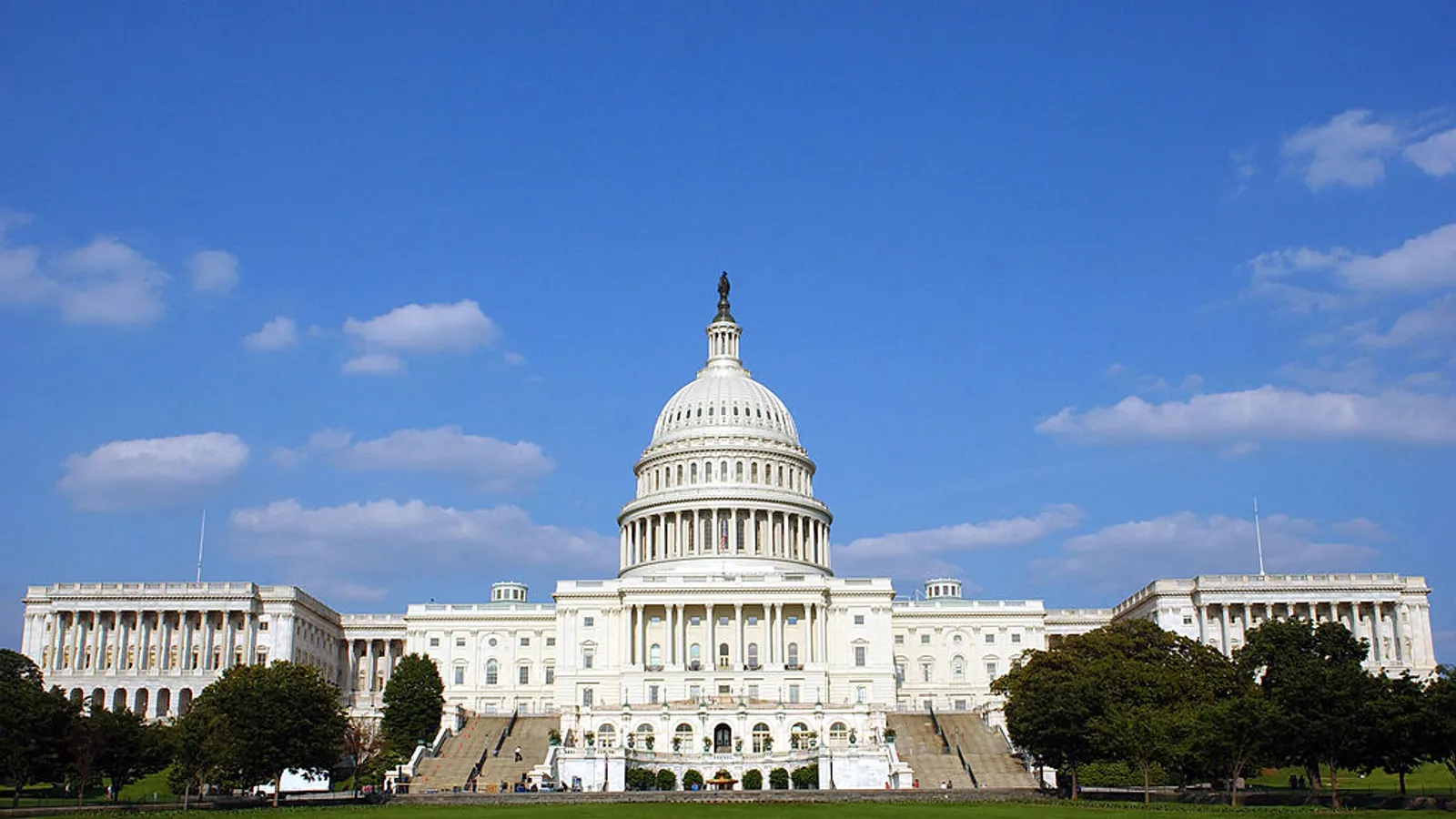
As the political landscape in Washington prepares for a significant transition, the business community is bracing for potential shifts in U.S. trade policy. With the Democratic Party poised to assume control of Congress next year, trade lawyers and industry analysts are closely monitoring whether a new legislative majority can build the bipartisan momentum necessary to challenge President Donald Trump’s aggressive use of executive authority to impose tariffs.
For years, the Trump administration has leveraged specific provisions in U.S. trade law—primarily Sections 232, 301, and 338—to reshape global trade. These statutes grant the President wide discretion to set duty rates, often bypassing traditional legislative approval. However, as supply chains face increasing strain from volatile costs and geopolitical friction, the possibility of a "rebalancing" of power between the White House and Capitol Hill has moved from a theoretical debate to a high-priority watch item for corporate boardrooms.
The Legislative Landscape: A New Front in Trade Policy
Under the current legal framework, the executive branch possesses expansive, almost unilateral authority to impose duties. President Trump has utilized this to its fullest extent:
- Section 232: Invoked to impose a 50% levy on steel and aluminum from Canada and Mexico.
- Section 301: Used to implement tariffs ranging from 10% to 12.5% on imports from over 60 trading partners.
- Section 338: Utilized to slap a 50% tariff on a wide array of Canadian goods, citing concerns over discriminatory trade practices against U.S. dairy, automotive, and alcohol products.
While Congress has largely remained on the sidelines during these implementations, trade experts believe the tide may be turning. Mark Ludwikowski, chair of Clark Hill’s International Trade Practice, points to three specific pieces of legislation that, if moved forward, could fundamentally alter the executive branch’s ability to act alone.
"That could be additional leverage to force the administration to be more flexible," Ludwikowski noted. The bills in question—S. 5390, S. 1272, and H.R. 7557—represent a concerted effort to claw back oversight authority that has been dormant for decades.
Chronology of Legislative Challenges
The push to restrain presidential tariff authority is not entirely new, but the legislative vehicles currently under consideration have gained renewed relevance as the business community’s patience with "tariff-fueled inflation" wears thin.
The Legislative Pipeline:
- February 12, 2025: Reps. Linda Sánchez (D-Calif.) and Mike Turner (R-Ohio) introduced H.R. 7557, the Respect NATO Allies Act. This bipartisan bill seeks to prevent the President from unilaterally imposing trade restrictions on NATO partners without prior congressional approval.
- April 3, 2025: Sen. Maria Cantwell (D-Wash.), with bipartisan support from Sen. Chuck Grassley (R-Iowa) and others, introduced S. 1272, the Trade Review Act of 2025. This bill introduces a "check-and-balance" mechanism, requiring the President to notify Congress within 48 hours of any new tariff implementation, accompanied by a detailed justification and an assessment of the economic impact on U.S. businesses. Crucially, these tariffs would sunset after 60 days unless Congress passes authorizing legislation.
- September 14, 2025: Sen. Chuck Schumer (D-N.Y.) introduced S. 5390, the End Trump’s Tariff Tax Act. This bill is the most aggressive of the three, specifically targeting the Section 338 levies on Canadian goods. It mandates the repeal of these specific tariffs and requires U.S. Customs and Border Protection to issue refunds for duties paid within 30 days of the bill’s enactment.
Supporting Data: Why Businesses are Pushing Back
The rationale behind these bills is grounded in the mounting economic frustration of U.S. businesses. Jonathan Todd, co-lead of the transportation and logistics practice at Benesch, argues that the bipartisan nature of these bills is driven by constituent pressure.
"I think there’s a lot more behind tariff and trade policy that is bipartisan than many people would believe," Todd said. "Many sectors and the public are clearly unhappy with the current state and trajectory of trade policy."
Data from various trade organizations suggest that the cumulative cost of these tariffs has reached billions of dollars annually. For small to mid-sized enterprises (SMEs), these costs are often impossible to absorb, leading to:
- Reduced Capital Expenditure: Businesses are delaying expansion plans to cover duty payments.
- Supply Chain Inefficiency: Companies are forced to pivot toward less efficient, high-cost domestic or third-country suppliers to avoid Section 301 or 338 duties.
- Price Pass-Throughs: Consumers are seeing higher costs for everything from construction materials to consumer electronics, as businesses pass on the "tariff tax."
Official Responses and Political Realities
While the legislation offers a clear path toward reform, the political hurdle remains high. Even if these bills clear their respective chambers, they face the looming specter of a presidential veto. Proponents of these bills would need a two-thirds majority in both the House and the Senate to override such a veto—a difficult threshold in a polarized Washington.
However, experts like Blake Harden, a managing director at EY’s Washington Council practice, note that even if the legislation fails to pass, a Democrat-controlled Congress has other tools at its disposal.
"They can use the power of the purse to try to influence what’s going on in the administration," Harden explained. Through aggressive oversight hearings, the appropriations process, and intense public pressure, Congress can force the administration to provide more transparency and potentially moderate its stance on tariff negotiations. By making the "cost of doing business" politically uncomfortable for the White House, legislators may achieve indirect results without needing to pass formal law.
Strategic Implications for Global Trade
For supply chain managers and global trade firms, the current environment necessitates a "prepare for anything" strategy. The lawyers interviewed for this report suggest that businesses should not wait for legislative relief but should instead optimize their internal processes to mitigate risk.
Recommended Corporate Actions:
- Classification and Audit: Businesses should verify that their products are classified correctly under the Harmonized Tariff Schedule (HTS). Many firms are leaving money on the table by failing to utilize existing exclusion processes or by incorrectly classifying goods that may be subject to specific Section 301 relief.
- Landed Cost Tracking: It is no longer sufficient to treat tariffs as an "extra" expense. Companies must integrate duty costs into their total landed cost models to ensure that pricing strategies remain profitable.
- Supply Chain Mapping: Companies should conduct a deep dive into the origin of their inputs. Identifying "tariff-free" alternatives or considering light manufacturing/finishing operations within the U.S. can provide a hedge against future, unpredictable duty adjustments.
- Engagement: Industry groups are currently the most effective lobbyists in Washington. Businesses are encouraged to share their specific tariff-related pain points with their congressional representatives, as real-world data remains the most potent tool in changing the minds of skeptical lawmakers.
Conclusion
As the next session of Congress looms, the trade policy arena is set for a high-stakes showdown. While the executive branch currently holds the "upper hand" in trade enforcement, the emergence of bipartisan legislation suggests that the appetite for unrestrained executive action is waning. For businesses, the coming months will require a blend of tactical compliance, proactive supply chain management, and diligent monitoring of legislative developments.
The shift toward a more balanced approach to trade may not happen overnight, but the mere existence of these bills indicates that the status quo is under review. Whether through legislative mandate or the "power of the purse," the era of unchallenged tariff imposition may be nearing a significant inflection point. Industry stakeholders must remain agile, ensuring their operations can withstand both the continuation of current policies and the potential for rapid, reform-driven change.