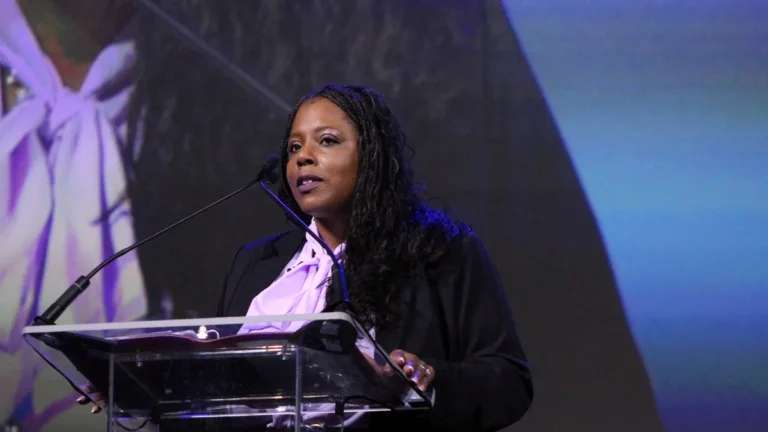
In a move that marks a definitive turning point for the company’s corporate trajectory, STAAR Surgical has officially announced the appointment of former CEO David Bailey as its new Chief Commercial Officer. This high-profile hire is the latest chapter in a sweeping leadership overhaul following the dramatic collapse of Alcon’s proposed $1.6 billion acquisition of the company. Bailey, who previously helmed the organization from 2001 to 2008, now transitions from his role as president of DB Consulting to take the reins of STAAR’s global commercial strategy, reporting directly to CEO Warren Foust.
The Main Facts: A Return to the Fold
The appointment of David Bailey is not merely a personnel change; it is a strategic realignment. Bailey’s history with STAAR is extensive, spanning his tenure as President and CEO (2001–2008) and later as President of International Operations (2008–2011). His return comes at a pivotal time as the company seeks to stabilize its operations and capitalize on the unique, reversible nature of its implantable lens technology.
By joining the executive committee, Bailey will be tasked with steering the company through a period of post-activist transition. His mandate is clear: translate the company’s technological advantages—specifically the proprietary material used in their lenses—into a more aggressive and efficient global sales footprint.
Chronology: From Resistance to Rebuilding
The current state of STAAR Surgical’s boardroom is the direct result of a turbulent eighteen-month period defined by investor unrest and a rejected acquisition bid.
- 2001–2011: David Bailey serves in various executive capacities at STAAR, including a seven-year stint as CEO.
- 2024–2025: Alcon initiates a $1.6 billion takeover bid. During this period, Bailey becomes a vocal critic of STAAR’s existing leadership, citing "self-inflicted operational challenges." He works closely with activist investor Broadwood Partners to mobilize shareholders against the acquisition.
- January 2026: Shareholders officially reject the Alcon deal. CEO Stephen Farrell steps down. A new board is formed, including Broadwood’s Neal Bradsher and Richard LeBuhn, as well as Christopher Wang of Yunqi Capital.
- August 2026: Warren Foust is appointed as permanent CEO, concluding his tenure as interim co-CEO alongside Deborah Andrews.
- September 2026: David Bailey is appointed as Chief Commercial Officer, signaling a full-circle return for one of the company’s fiercest critics-turned-architects.
Supporting Data and Technological Advantage
The core of STAAR’s value proposition—and the primary focus of Bailey’s commercial strategy—lies in its differentiation from traditional laser eye surgery. Unlike LASIK or other permanent corneal-altering procedures, STAAR’s technology is entirely removable and reversible, preserving the natural anatomy of the cornea.
Bailey’s public statements emphasize the "durable growth opportunity" afforded by the company’s proprietary material, which competitors have historically struggled to replicate. While the company has seen success in its core markets of China, Japan, and the U.S., the roadmap for future growth is geographically ambitious. Bailey has identified substantial, largely untapped potential in South and Southeast Asia, South America, and Africa. By focusing on these emerging populations, the company aims to move beyond its traditional market strongholds and establish a foothold in regions where vision correction needs are rising but remain underserved.

Official Responses and Strategic Vision
In his first official statement regarding the appointment, Bailey underscored his confidence in the firm’s future. "STAAR’s technology is differentiated from laser eye procedures because it is a removable and reversible approach that preserves the natural cornea and addresses a broad spectrum of myopia and astigmatism," Bailey stated. He noted that the company is prepared to "open entirely new markets and patient populations," a sentiment echoed by the board’s commitment to a more aggressive growth strategy.
CEO Warren Foust has expressed enthusiasm for the addition of a seasoned veteran to his leadership team. The partnership between Foust—who brings recent experience from the interim leadership phase—and Bailey—who possesses deep institutional knowledge and a track record of past success—is viewed by industry analysts as a "balanced ticket" designed to reconcile the company’s historical strengths with a modern commercial imperative.
Implications for the MedTech Landscape
The return of David Bailey carries profound implications for both STAAR Surgical and the broader ophthalmic medical device industry.
1. Stability After Activist Intervention
The integration of Bailey, along with the recent additions of board members from Broadwood Partners, signals that the activist campaign was not merely a destructive force aimed at blocking a deal, but a constructive effort to steer the company toward a specific vision. The leadership team is now composed of individuals who have either successfully navigated the company in the past or who were key architects of its recent independence.
2. Operational Accountability
Having previously criticized the company for operational inefficiencies, Bailey now faces the challenge of walking the walk. The "self-inflicted" issues he identified during the Alcon negotiations will be the first areas under his microscope. Investors will be looking for improved margins, tighter control over international distribution channels, and a faster conversion rate for patients interested in refractive surgery.
3. The Reversible Procedure Advantage
As global awareness regarding the long-term impact of permanent corneal surgery grows, STAAR is uniquely positioned to capture the "risk-averse" patient demographic. By emphasizing the reversibility of their implants, Bailey aims to make STAAR the premium choice for patients who are hesitant to undergo permanent laser alterations. If successful, this could shift the market standards for myopia and astigmatism correction.

4. A New Chapter for Talent Retention
The return of both Bailey and CFO Deborah Andrews (who retired in 2020 and returned in 2025) suggests a cultural shift. The company is actively courting "legacy" talent who understand the nuances of the brand’s identity. This strategy may prove effective in retaining institutional knowledge that was at risk of being lost during the potential integration with a larger conglomerate like Alcon.
Conclusion: Looking Ahead
The appointment of David Bailey is a calculated gamble on historical competence. By bringing back a former CEO to serve as CCO, STAAR Surgical is signaling to the market that it is finished with defensive maneuvering and is ready to transition into a phase of offensive growth.
While the shadows of the Alcon deal have largely receded, the pressure remains on the current leadership team to prove that remaining independent was the correct decision for shareholders. With a refreshed board, a permanent CEO in Warren Foust, and a seasoned commercial strategist in David Bailey, STAAR is setting the stage for a critical fiscal year. Whether this "reunion" of talent will translate into the sustained, profitable growth that shareholders were promised during the activist campaign remains the central question for the company as it moves into the final quarter of the year.
The path forward is defined by geographic expansion and the continued defense of its unique technological moat. If Bailey’s past success is any indicator, STAAR is prepared to defend its market share with the same vigor it used to protect its corporate autonomy.