By International Affairs Desk
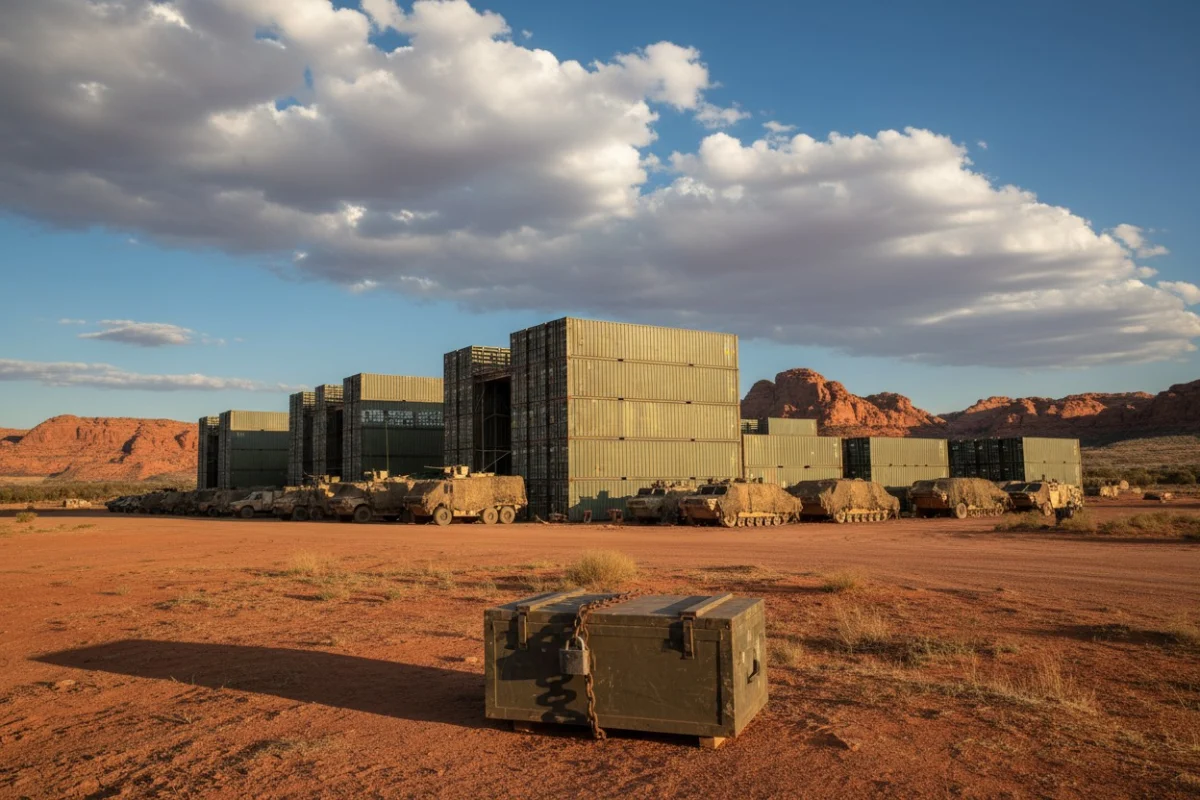
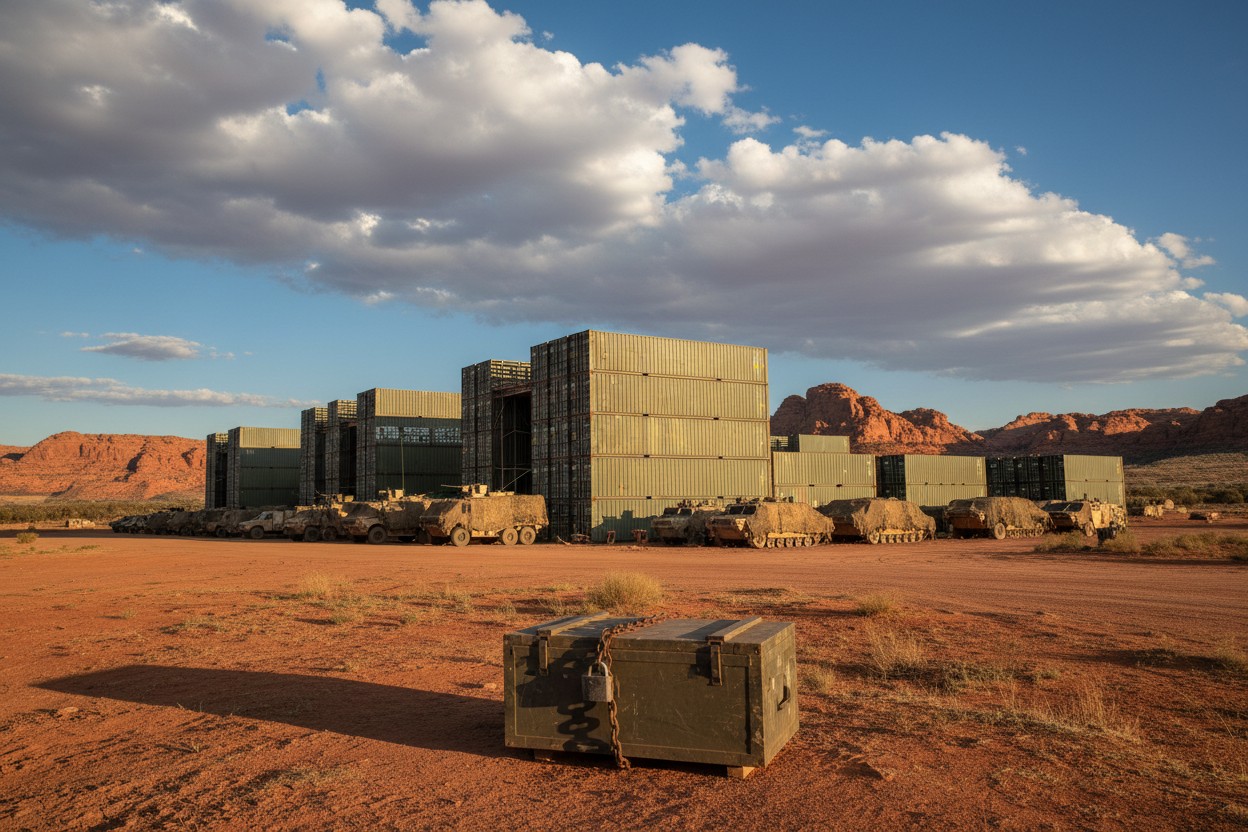
In a move that marks a significant evolution in the U.S. military footprint within the Indo-Pacific, the United States is establishing a permanent, battle-ready weapons stockpile in Australia. According to tender documents reviewed by AFP and confirmed by U.S. officials, the initiative is designed to bolster regional deterrence capabilities, ensuring that the U.S. Marine Corps (USMC) maintains a robust, ready-for-issue inventory for operations and exercises across the theater.
The project, centered at the Bandiana military base in Victoria, represents a calculated strategic shift. With an initial investment of $30 million allocated by the U.S. Navy for the construction of specialized warehouses and administrative facilities, the stockpile is projected to reach full operational capacity by 2028. This development signals a long-term commitment to a "distributed lethality" model, moving away from centralized, vulnerable bases toward a more resilient network of supply depots across allied territories.
Main Facts: A New Pillar of Indo-Pacific Logistics
The logistics of the Bandiana facility are intricate, reflecting both the operational necessity of the move and the delicate legal framework governing foreign military presence in Australia. Because Australian law strictly prohibits the establishment of sovereign foreign military bases on its soil, the depot will be managed by civilian contractors rather than active-duty U.S. servicemen.
The U.S. Navy’s plan involves hiring approximately 110 skilled personnel—including engineers, mechanics, and safety experts—to oversee the maintenance and security of the arms. While initial storage will be handled in Melbourne, the equipment will be systematically relocated to the permanent Bandiana infrastructure as construction phases conclude.
A spokesperson for the U.S. Marine Corps confirmed the strategic intent, stating that the activity "supports integrated global sustainment by maintaining ready-for-issue equipment and supplies for operations and exercises across the Indo-Pacific." This stockpile is not merely a backup; it is a critical component of the Pentagon’s broader "Global Sustainment" strategy, intended to reduce the reaction time for Marine expeditionary units in the event of a regional crisis.
Chronology: From Concept to Deployment
The path to the Bandiana stockpile has been paved by a series of strategic maneuvers over the last several years:
- 2021: The signing of the AUKUS pact between the U.S., the U.K., and Australia formalizes a deep-tier defense partnership, setting the stage for increased military integration.
- Late 2025 – Early 2026: Internal Pentagon planning identifies significant gaps in regional logistics following the strain placed on existing inventories by the conflict with Iran.
- June 2026: The U.S. Navy officially publishes tender documents for the construction of warehouse and administrative facilities at Bandiana, Victoria.
- Late 2026: The first U.S. stockpile in the region is scheduled to go live in the Philippines, serving as a template for the Australian facility.
- 2027: The Department of War requests $500 million from Congress specifically for the prepositioning of equipment and fuel across the Asia-Pacific to deter Chinese military expansion.
- 2028: Projected date for the Bandiana depot to reach full operational capacity.
Supporting Data: Strains on the U.S. Military-Industrial Complex
The impetus for the Bandiana stockpile is rooted in a sobering reality regarding the sustainability of U.S. military operations. A recent report from the Center for Strategic and International Studies (CSIS) highlighted that during the 39-day conflict with Iran, the U.S. exhausted critical weapon inventories at a rate that would necessitate three or more years of production to return to pre-war levels. This "logistics fatigue" has forced the Pentagon to reconsider how it positions supplies.
Furthermore, the U.S. War Department faces structural financial challenges. For the sixth consecutive year, the department has failed its annual audit, with $3.8 trillion in assets and $4 trillion in liabilities deemed insufficiently documented. This financial opacity, coupled with a heavy reliance on foreign supply chains—specifically for rare earth elements controlled by China—creates a strategic vulnerability. Analysts at the South China Morning Post have repeatedly warned that Beijing’s dominance over these mineral supply chains grants it "indirect leverage" that could dictate the duration and cost of any potential U.S. military conflict.
Official Responses and Geopolitical Friction
The announcement has triggered a sharp rebuke from Beijing. Chinese Foreign Ministry Spokesperson Lin Jian accused the U.S. of fostering a "Cold War mentality" and undermining regional stability. "China develops its military capabilities for purely defensive purposes," Jian stated, urging Canberra to refrain from "hyping the ‘China threat’."
This diplomatic friction is exacerbated by competing claims regarding strike capabilities. While the Lowy Institute previously suggested that Beijing possessed the range to strike northern Australia from its outposts in the South China Sea, Beijing has vehemently denied these assertions. Military analysts note, however, that the Bandiana stockpile is geographically positioned in southern Australia, placing it well outside the current reach of Chinese ballistic missiles, a strategic choice that minimizes the risk of a pre-emptive strike on U.S. assets.
International reactions extend beyond the Pacific. Russian Security Council Secretary Sergey Shoigu recently cautioned that Australia’s participation in the AUKUS pact could eventually lead to the hosting of U.S. nuclear assets. While Washington and Canberra have not confirmed such plans, the mere suggestion of nuclear-capable infrastructure in the region has heightened the sensitivity of the diplomatic discourse.
Implications: A Permanent Footprint?
The establishment of the Bandiana depot carries profound implications for the future of the Indo-Pacific. Historically, the "temporary" nature of U.S. military deployments has frequently evolved into permanent presence. Author James McCartney has noted that once U.S. infrastructure is embedded in a host nation, the political and operational costs of withdrawal often lead to a permanent footprint, citing the longevity of U.S. presence in Afghanistan as a case study.
Moreover, the rapid scale-up of military infrastructure echoes the escalation patterns of the early Cold War. As the U.S. balances its commitments across the globe—with Secretary of War Pete Hegseth emphasizing that the U.S. is not "turning its back" on Asia—the stockpiling of materiel in Australia serves as an insurance policy against the "tyranny of distance."
For Australia, the move represents a delicate balancing act. By allowing the U.S. to store equipment under the management of civilian contractors, the government seeks to balance its alliance commitments with the domestic legal prohibition on foreign bases. However, the presence of such a facility inevitably makes Australia a more central player in the strategic calculus of both Washington and Beijing.
As the 2028 completion date approaches, the Bandiana depot will likely become a barometer for the broader U.S.-China competition. Whether this stockpile serves as an effective deterrent or an accelerant for regional arms buildup remains the central question. As the U.S. continues to integrate its supply chains with regional allies, the line between "logistical support" and "frontline posture" continues to blur, signaling a new era of military preparedness in the Indo-Pacific.
Summary of Strategic Risks
- Supply Chain Dependency: Continued reliance on Chinese rare earth minerals threatens the sustainability of the stockpiles.
- Logistical Fragility: The inability to replenish weapons stocks rapidly, as evidenced by the Iranian conflict, necessitates these prepositioned depots.
- Escalation Risks: Permanent weapon sites invite counter-posturing from regional rivals, potentially increasing the risk of miscalculation or tactical escalation in the South China Sea and beyond.
This report is based on current tender documentation, Pentagon briefings, and independent geopolitical analysis. Future updates will track the construction progress at Bandiana and any subsequent shifts in regional military policy.