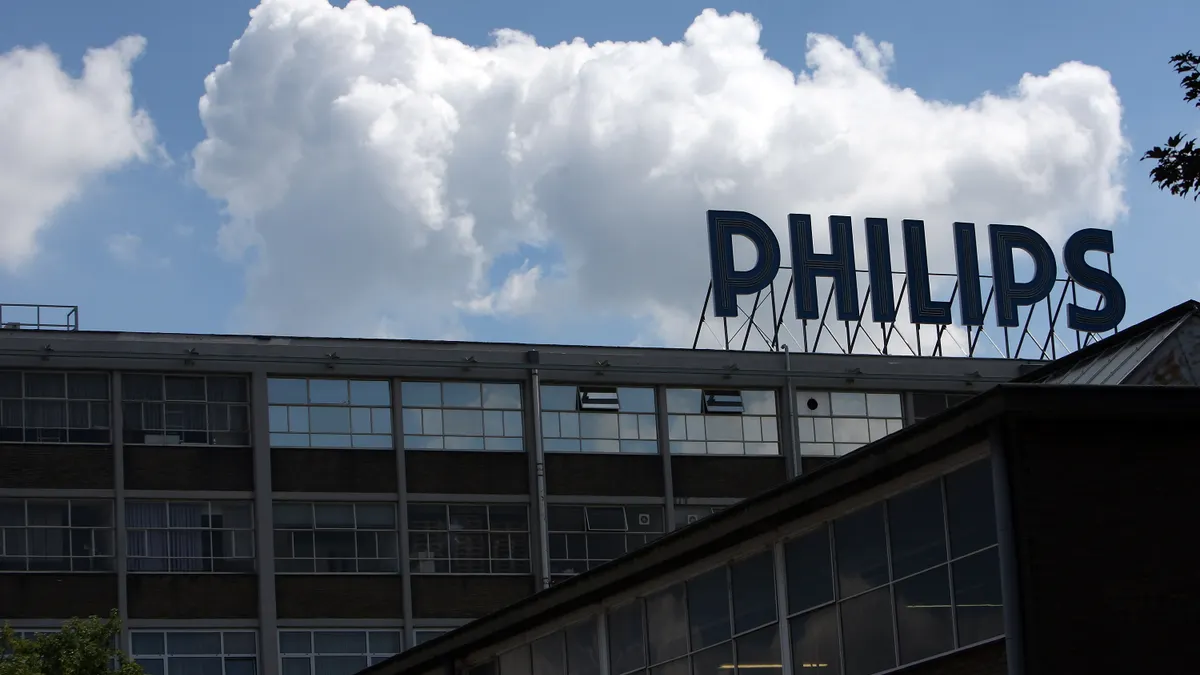
In a move that signals a stabilizing influence on one of Europe’s most storied technology conglomerates, Royal Philips has announced a revised agreement with Exor, the powerhouse holding company controlled by Italy’s billionaire Agnelli family. This development, framed by both parties as a resounding vote of confidence, serves as a cornerstone for Philips’ ongoing multi-year strategic transformation. As Philips navigates a complex global medical technology landscape, the strengthened ties with Exor provide not only financial stability but also a long-term collaborative framework aimed at fostering innovation and operational excellence.
The Evolution of the Partnership: A Chronology
The relationship between Philips and Exor is not a sudden development but the result of a deliberate, multi-year engagement strategy.
- 2023: The Foundation. The partnership was first established in 2023, when Exor made its initial entry into the Philips capital structure. At the time, the move was seen as a strategic pivot for the Agnelli family’s investment vehicle, signaling a desire to move beyond its traditional stronghold in the automotive sector (Ferrari, Stellantis) and into the high-growth, high-barrier-to-entry world of medtech.
- 2024: Deepening Governance. Recognizing the need for tighter alignment, Philips invited Benoît Ribadeau-Dumas, a senior Exor executive, to join its supervisory board. This move was pivotal, providing Exor with direct oversight and a seat at the table during the most critical phases of Philips’ restructuring efforts.
- Early 2025: Portfolio Assessment. In his 2025 letter to shareholders, Exor CEO John Elkann explicitly listed Philips as one of the four pillars of the firm’s investment strategy, alongside Ferrari, Stellantis, and CNH. This public endorsement served to reassure markets of Exor’s long-term commitment.
- 2026: The Strategic Revision. In mid-2026, the partnership was formally revised. The new agreement reaffirms Exor’s role as a long-term anchor investor while granting the firm the continued right to nominate a member to the Philips supervisory board. Concurrently, Exor promoted Ribadeau-Dumas to Deputy CEO, cementing the link between the two organizations.
Exor’s Strategic Pivot: From Diversification to Concentration
To understand the weight of this partnership, one must examine the broader transformation occurring within Exor. Traditionally defined by its deep roots in the Italian industrial landscape, Exor has undergone a significant metamorphosis under the leadership of John Elkann.
Historically, Exor’s portfolio was characterized by a high volume of diverse investments. However, recent market pressures and a period of underperformance in several smaller holdings forced a radical rethink. The company’s 2026 strategy has been defined by "simplification"—the shedding of non-core assets to concentrate capital in larger, more resilient companies that offer sustainable growth trajectories.
This shift was evidenced by the divestment of Lifenet, an Italian healthcare manager, and three other entities. These divestments were not mere liquidations; they were tactical moves designed to free up over €3.5 billion ($4 billion) for "significant new investments similar in scale and ambition to Philips." By pruning its portfolio, Exor is concentrating its resources on a "Big Four" strategy, with Philips playing a central role in the company’s healthcare and technology exposure.
Official Perspectives: Confidence and "Constructive Engagement"
The rhetoric surrounding the revised agreement has been deliberately calibrated to convey stability. Feike Sijbesma, Chairman of the Philips Supervisory Board, has been vocal about the value Exor brings to the table.
"The long-term commitment from Exor is a testament to the confidence they have in our strategy and our ability to execute," Sijbesma noted. He specifically highlighted the "constructive engagement" provided by the Exor delegation, suggesting that the partnership is not a passive investment but an active, collaborative effort to refine Philips’ business model.
On the other side of the partnership, John Elkann has maintained a consistent narrative. For Exor, Philips represents a unique opportunity to gain exposure to the digital health revolution, AI-driven diagnostics, and the ongoing modernization of hospital infrastructure—all sectors that align with the long-term thematic growth trends favored by the Agnelli family office.
Implications for the MedTech Sector
The consolidation of this relationship carries profound implications for the medical technology industry at large.
1. Stability Amid Market Volatility
For Philips, having a "patient capital" partner like Exor acts as a buffer against short-term stock market volatility. In the medtech sector, R&D cycles are long and capital-intensive. Having an anchor investor that is committed to a multi-year horizon allows Philips management to focus on long-term value creation rather than being beholden to the whims of quarterly earnings cycles.
2. Governance and Strategic Oversight
The presence of a senior Exor executive on the supervisory board ensures that the Agnelli family’s industrial philosophy—which prizes engineering excellence and disciplined capital allocation—is embedded in the governance of Philips. As Philips works to simplify its own operations and focus on its core health technology offerings, this oversight serves as a safeguard against strategic drift.
3. The "Anchor Investor" Model
This partnership may serve as a blueprint for other European industrial conglomerates looking to modernize. By pairing traditional European industrial legacy with modern medtech focus, both Philips and Exor are positioning themselves to capitalize on the aging global population and the resultant surge in demand for sophisticated diagnostic and monitoring equipment.

Challenges and Future Outlook
While the narrative is one of confidence, the path forward is not without challenges. Philips continues to work through the complex integration of its various business units and the ongoing remediation of historical issues, including product recalls and regulatory scrutiny in key markets.
Exor’s investment is effectively a bet on the success of these remediations. The decision to promote Benoît Ribadeau-Dumas to Deputy CEO of Exor—placing him in a position of even greater influence—is a double-edged sword. It deepens the integration, but it also increases the reputational risk for Exor should Philips face further operational hurdles.
However, the liquidity position of Exor—with its multi-billion euro "war chest"—suggests that they are prepared to provide further support if necessary. The stated intent to pursue further investments of "Philips-like" scale indicates that Exor is moving into a new era of global expansion, where healthcare technology will be a permanent and dominant feature.
Conclusion: A Synergistic Future
The revised agreement between Philips and Exor is more than a financial transaction; it is a strategic alliance between two of Europe’s most significant corporate players. For Philips, the partnership provides the stability needed to execute a difficult but necessary transformation. For Exor, it represents a sophisticated evolution of its portfolio, moving away from disparate industrial holdings toward a concentrated, high-conviction investment strategy in the future of medicine.
As the industry looks toward the latter half of the decade, the collaboration between the Dutch medtech giant and the Italian holding company will likely be viewed as a defining partnership—one that proved that even in the face of immense change, disciplined, long-term, and collaborative investment remains the most effective path to sustainable value creation. The alignment of interests between the Agnelli family and the Philips leadership team suggests that this is merely the beginning of a long-term strategic marriage, one that will likely reshape the competitive landscape of the global healthcare technology market for years to come.