









For decades, the fitness industry has preached the gospel of the "crunch"—a repetitive, forward-folding movement that has become synonymous with ab training. However, as our understanding of biomechanics and aging has evolved, so has the expert consensus on what constitutes a truly healthy core.
For individuals over 60, the goal of core training isn’t just to achieve a "six-pack"; it is to foster structural stability, protect the spine, and maintain functional independence. Jacob Siwicki, founder of Siwicki Fitness, an NCSF and AFAA-certified trainer, and former top-tier Equinox instructor, argues that we have been training our abdominals incorrectly for years.
"I turn to these movements over crunches because they train the core to do what it’s actually for: keeping your spine steady, not folding you up like a lawn chair a hundred times," Siwicki explains. "Crunches only hit one muscle, and they tend to wreck an older neck and low back."
The Science of the Core: More Than Just Abs
To understand why shifting your training focus is vital, one must first redefine the "core." It is not merely the rectus abdominis—the front-facing muscles often highlighted in magazines. Rather, the core is a sophisticated, three-dimensional corset of muscles encompassing the obliques, the deep abdominals (transverse abdominis), the multifidus and erector spinae of the back, the hips, and the pelvic floor.
When this integrated system is strong, it acts as a stabilizing force that protects the spine during daily activities—whether you are lifting a grocery bag, gardening, or simply rising from a chair. As we age, the integrity of these muscles directly correlates to fall prevention, posture, and the mitigation of chronic back pain.
The Problem with Traditional Crunches
The traditional crunch encourages excessive flexion of the spine. For an older population, this repetitive motion can put significant pressure on the cervical spine (the neck) and the lumbar discs. Siwicki notes that crunches are often performed with poor form, leading to neck strain and potential long-term spinal issues. Furthermore, crunches are "isolation" exercises. In real life, our core muscles are rarely required to isolate; they are required to stabilize the body against external forces while our limbs move.
Four Foundational Moves for Lifetime Stability
Siwicki advocates for a transition toward "anti-extension" and "anti-rotation" movements—exercises that challenge the core to keep the spine neutral. Below are the four essential, expert-recommended movements to replace the outdated crunch.
1. The Dead Bug: Precision Core Control
The Dead Bug is the gold standard for teaching the body how to keep the spine flat against the floor while the limbs are in motion.
- Why it works: It forces the deep core muscles to engage to prevent the lower back from arching. It is highly effective for improving coordination and trunk stability without placing the neck under load.
- Execution: Lie on your back with arms extended toward the ceiling and legs in a tabletop position. Slowly lower your right arm behind your head while simultaneously extending your left leg straight out. Return to the center and switch sides. Keep your lower back pressed firmly into the floor throughout the entire movement.
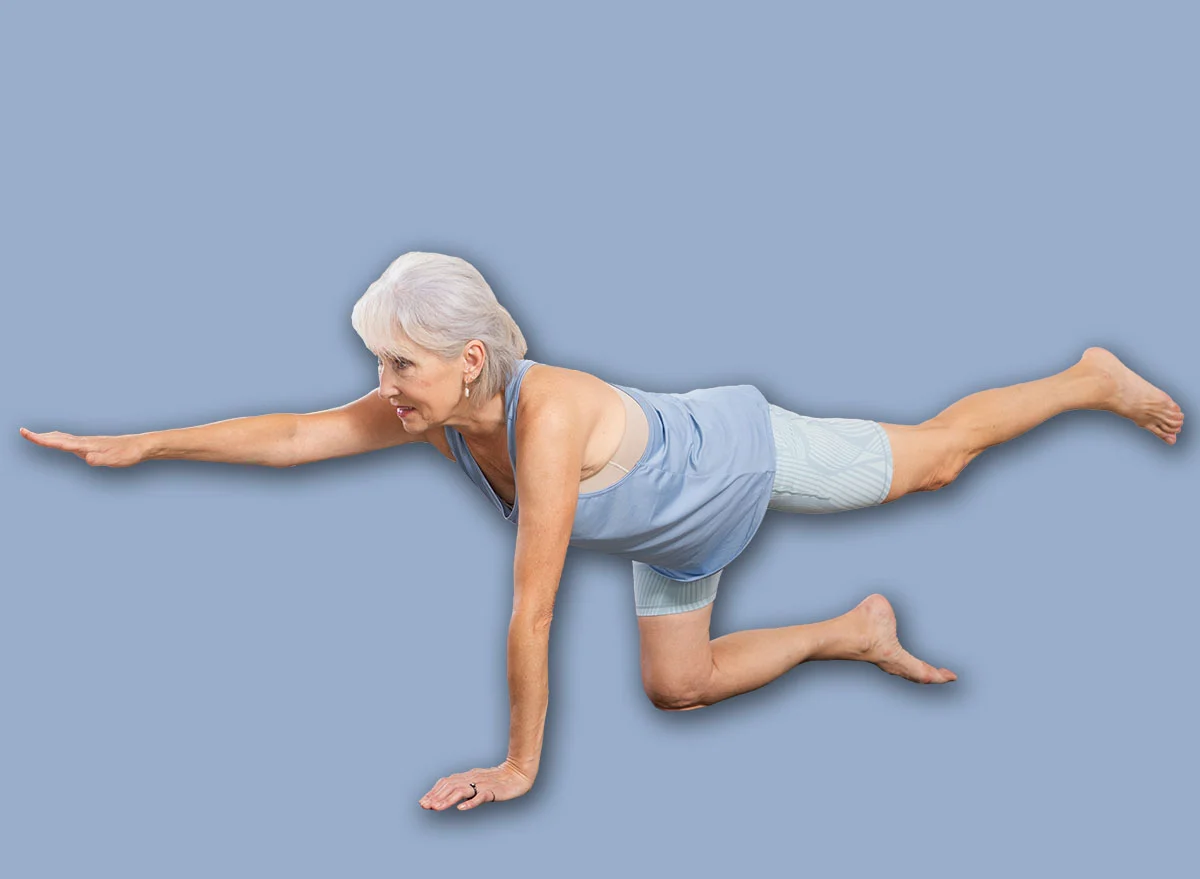
2. The Bird-Dog: Cross-Body Stability
The Bird-Dog is a masterclass in balance and spinal alignment. By moving the opposite arm and leg, you force the obliques and back muscles to engage in a cross-body stabilization pattern.
- Why it works: It promotes spinal alignment and engages the posterior chain, including the glutes and erectors, which are crucial for maintaining an upright posture.
- Execution: Start on all fours in a tabletop position. Simultaneously reach your right arm forward and your left leg backward, keeping them parallel to the floor. Your hips should remain square to the ground—do not rotate. Hold for a brief moment, focusing on maintaining a flat back, then return to the starting position and repeat on the opposite side.
3. The Plank: The Ultimate Anti-Extension Tool
The plank is the ultimate exercise for endurance and isometric strength. It teaches the body to resist the force of gravity, which seeks to pull the spine into an arched, compromised position.
- Why it works: It engages the entire core as a unit. Unlike a crunch, a plank requires total-body tension, including the glutes and shoulders, which are vital for upper-body support as we age.
- Execution: Start in a push-up position or on your forearms. Keep your body in a straight line from your head to your heels. Squeeze your glutes and pull your belly button toward your spine. Hold this position for as long as you can maintain perfect form, focusing on steady, deep breathing.
4. The Glute Bridge: Posterior Chain Power
While often categorized as a leg exercise, the glute bridge is actually a critical core-stabilizing movement. It strengthens the pelvic floor and the lower back while reversing the effects of sitting for long periods.
- Why it works: A strong posterior chain is the foundation of a healthy back. By training the glutes to extend the hips, you take the load off the lower lumbar spine, which is often overworked in sedentary adults.
- Execution: Lie on your back with knees bent and feet flat on the floor, hip-width apart. Push through your heels to lift your hips toward the ceiling. At the top of the movement, squeeze your glutes hard. Ensure your spine remains neutral and avoid arching your lower back. Lower down with control.
Implications for Longevity and Quality of Life
The shift from "aesthetic-focused" training to "function-focused" training is a critical pillar of healthy aging. According to data from the National Institute on Aging, fall-related injuries are a leading cause of loss of independence in adults over 65. Core strength is the primary defense against such events, as it dictates how well an individual can recover their balance after a trip or stumble.
Furthermore, chronic low back pain is frequently linked to a "weak link" in the kinetic chain. By performing these four movements regularly—which require minimal equipment and can be performed in the comfort of your living room—individuals can significantly reduce their risk of injury.
Conclusion: A New Standard of Fitness
Siwicki’s approach is part of a larger, necessary trend in the fitness industry that prioritizes longevity over intensity. For those over 60, the goal is not to perform a thousand crunches, but to build a body that can carry you through the next decade with ease and grace.
By incorporating the Dead Bug, Bird-Dog, Plank, and Glute Bridge into your routine, you are doing more than just exercising; you are investing in your long-term mobility. These movements do not ask you to "fold up like a lawn chair"—they ask you to stand tall, move with intention, and build a core that truly supports the life you want to lead. Start slowly, focus on your form, and remember that consistency, rather than intensity, is the key to lasting strength.