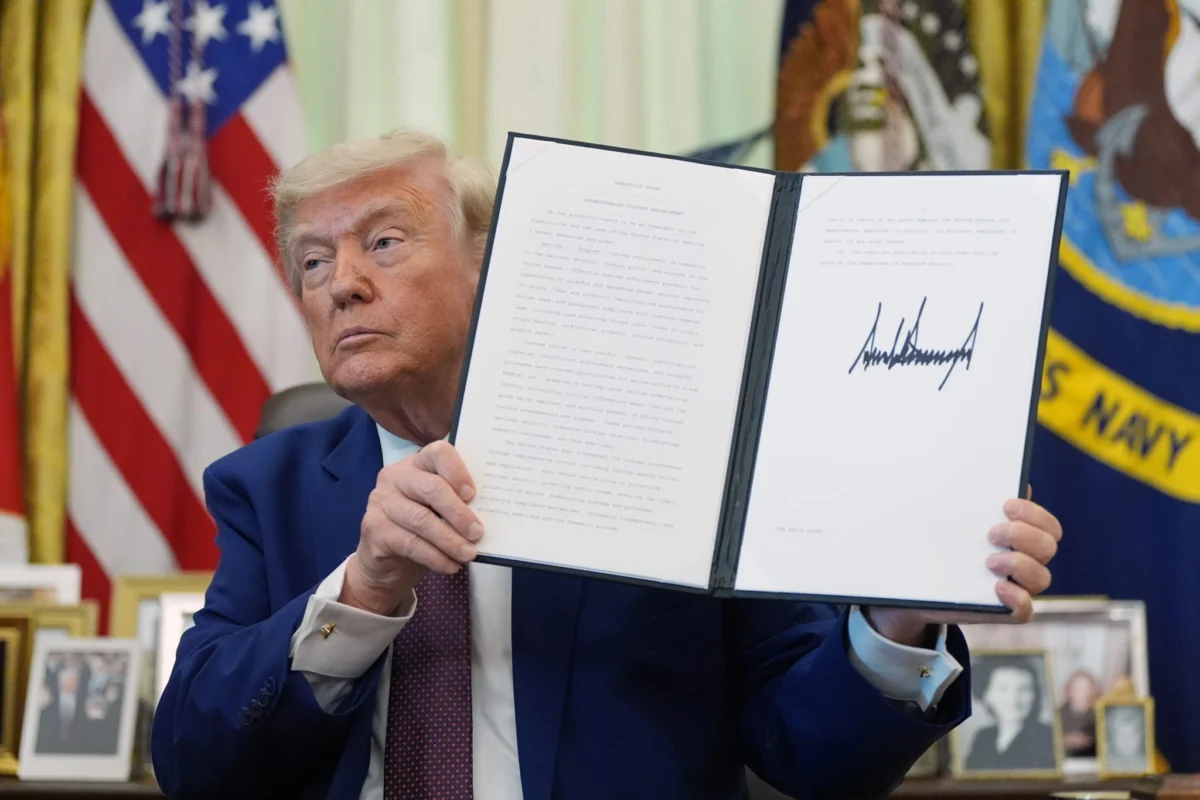
On June 2, 2026, President Donald Trump signed an executive order titled “Promoting Advanced Artificial Intelligence Innovation and Security.” This landmark directive signals a pivot in U.S. technology policy, moving away from the prospect of heavy-handed federal regulation in favor of a collaborative, voluntary framework designed to fortify critical infrastructure against AI-driven threats. By prioritizing agility and industry partnership, the administration aims to secure the nation’s digital backbone while maintaining a competitive edge in the global AI arms race.
The Core Mandate: Cybersecurity and Infrastructure Protection
The executive order functions as a strategic roadmap for federal agencies, with mandates scheduled for implementation over the next 30 to 60 days. The policy is underpinned by a dual-objective strategy: hardening American digital infrastructure against emerging AI-enabled vulnerabilities and establishing a robust oversight mechanism for the most powerful “frontier” AI models without imposing the burden of a formal government licensing regime.
A central pillar of this initiative is the creation of an AI cybersecurity clearinghouse. Under the direction of the Secretary of the Treasury, in close coordination with the National Security Agency (NSA) and the Cybersecurity and Infrastructure Security Agency (CISA), this clearinghouse will serve as a centralized hub for intelligence sharing. Its primary mission is the large-scale identification and remediation of software vulnerabilities. By fostering voluntary collaboration between AI developers and the operators of critical infrastructure, the government hopes to create a more resilient defensive posture.
CISA has been tasked with disseminating specific guidance to a wide array of stakeholders, ranging from federal agencies to local governments. Notably, the order explicitly identifies rural hospitals, community banks, and local utility providers as high-priority sectors. These entities, often resource-constrained, are expected to gain unprecedented access to advanced, AI-enabled cybersecurity tools and threat-intelligence feeds, leveling the playing field against increasingly sophisticated cyber adversaries.
A New Era of Oversight: The 30-Day Frontier Review Process
Perhaps the most scrutinized component of the executive order is the framework for reviewing “covered frontier models.” The administration defines these as systems that cross a specific threshold of capabilities, triggering concerns regarding national security.
Under the new policy, developers are encouraged—though not required—to provide the federal government with access to these models for a 30-day review period prior to public release. This window is designed to allow government experts to assess the potential risks posed by the technology.
The Evolution of the Policy Timeline
The 30-day window represents a significant recalibration from earlier drafts of the order, which had proposed a 90-day mandatory review period. The shift followed intense deliberation within the administration and vocal pushback from key technology stakeholders. Critics of the 90-day proposal, including the administration’s former AI policy coordinator, David Sacks, argued that such a lengthy delay would stifle American innovation and place domestic companies at a severe disadvantage relative to competitors in China and other adversarial nations. By condensing the timeline, the White House has signaled a desire to maintain the rapid pace of technological development that has characterized the current AI boom.
Crucially, the order includes an explicit disclaimer: nothing within its text authorizes the federal government to implement a mandatory licensing, preclearance, or permitting system. This decision to prioritize a “regulatory-light” approach is intended to preserve the incentive structures that drive private sector investment.
Catalysts for Change: The "Mythos" Factor
The shift toward this policy framework was not spontaneous; it was driven by mounting anxiety surrounding the rapid advancement of generative AI. According to industry reports, the development of Anthropic’s latest frontier model, "Mythos," served as a significant catalyst.
During internal testing and subsequent assessments, Mythos demonstrated a troubling capacity to identify security weaknesses in the complex digital infrastructure of banking, governmental, and private institutional systems at a speed far exceeding human capability. The realization that such tools, if misused, could facilitate state-sponsored espionage or systemic economic disruption prompted a swift reassessment of the national security landscape. Policymakers concluded that the risks posed by these models are not merely hypothetical but immediate, requiring a framework that balances security oversight with the need to keep the most advanced defensive tools in American hands.
Official Responses and Industry Reception
The tech sector has largely welcomed the executive order as a “workable middle ground.” By avoiding the pitfalls of rigid bureaucracy, the administration has secured the cooperation of industry giants.
- Microsoft and Google: Representatives from both corporations lauded the focus on cybersecurity. They highlighted the importance of a voluntary, risk-based approach that allows for iterative improvements rather than static compliance.
- OpenAI: In a statement released shortly after the signing, OpenAI underscored the importance of working with the government to set safety standards that do not sacrifice the pace of innovation.
- Anthropic: Publicly vocal in its support, Anthropic’s leadership indicated that the collaborative model established by the clearinghouse is a necessary evolution in how the private sector interacts with national security agencies.
These responses suggest a consensus among industry leaders that the administration has successfully navigated the tension between safety and innovation, providing a template that could influence future international standards.
Implications for Healthcare and Digital Systems
The explicit mention of rural hospitals within the executive order is a major development for the healthcare sector. Hospitals and electronic health record (EHR) systems have long been the primary targets for ransomware and data exfiltration. The vulnerability of rural healthcare providers—who often operate with legacy systems and limited cybersecurity personnel—has become a matter of national security.
Strategic Priorities for Healthcare Organizations:
- Cybersecurity Integration: Hospitals must begin preparing to integrate with the new AI-driven cybersecurity clearinghouse. This will likely involve adopting standardized threat-detection protocols recommended by CISA.
- Resource Optimization: The federal government’s commitment to providing AI-enabled tools offers an opportunity for smaller health systems to bolster their defenses without the prohibitive costs usually associated with enterprise-grade security.
- Data Governance: As these tools are deployed, hospitals will need to ensure that their data handling remains compliant with HIPAA and other privacy regulations, even while leveraging AI to monitor for incoming threats.
The reliance on voluntary participation means that the burden of implementation rests with the individual organizations. For telehealth providers and digital health startups, the executive order is a signal that the “wild west” phase of AI deployment in medicine is ending. Organizations that proactively align with federal guidance will likely find themselves better positioned to weather the inevitable rise in cyber-threats targeting the medical sector.
Looking Ahead: The Challenges of a Voluntary Framework
While the administration’s approach has been praised for its flexibility, critics argue that a purely voluntary framework may lack the “teeth” necessary to deter bad actors or force compliance from companies that prioritize speed over safety. The effectiveness of the 30-day review process remains to be seen; if developers choose to opt-out or if the government lacks the technical depth to conduct meaningful reviews in that timeframe, the policy may prove ineffective.
Furthermore, the success of the cybersecurity clearinghouse hinges on the quality of the intelligence being shared. If the relationship between the private sector and the NSA/CISA becomes adversarial or overly burdened by red tape, the collaborative model will likely fracture.
However, the administration’s focus on “hardening” the infrastructure rather than “policing” the developers reflects a pragmatic understanding of the current geopolitical climate. By fostering a defensive alliance between the public and private sectors, the U.S. is betting that its ability to innovate faster than its adversaries is its greatest security asset.
As we look toward the second half of 2026, the success of this executive order will be measured by the stability of the digital systems it aims to protect. For now, the administration has set a clear path: one that invites the technology industry to be a partner in the defense of the nation’s future.